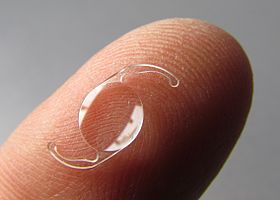
Intraocular lens
44
MENTIONS
13
EPISODES
10
PODCASTS
Search complete. 44 mentions across 13 episodes found for "Intraocular lens".
Sep 20, 2026

Matthew BrinkGUEST
But honestly, to a lot of these folks, it doesn't matter, especially if they're going for a premium lens.
Matthew BrinkGUEST
Now, the differential isn't that huge between self-pay and going for whatever they want in terms of a premium IOL.
Uday DevganHOST
Now, in your limited study that you did through your practice, tell us what were the kind of important findings? Well, it
Matthew BrinkGUEST
mirrored pretty closely.
13 MINS LATER
Uday DevganHOST
Mind you, I'm not a glaucoma guy, but you know when I taught my residents at County Hospital? Oh, no, for sure.
Uday DevganHOST
It's kind of like South Africa.
Uday DevganHOST
So I'd have patients come in with NVG, neovascular glaucoma, and we'd do Dave Aston, and then the same night, we'd take them to the operating room, take out their cataract, put on the indirect ophthalmoscope, shoot down 2,000 spots of PRP, put the IOL in, and put the ombalve in in one
Matthew BrinkGUEST
sitting.

John KitchensHOST
Yeah, so every academy for at least the last three or four years, there's been a lot of talks on IOL fixation techniques.
John KitchensHOST
And I'll tell you, you know, when we look at it, still Gore-Tex sutured IOLs, that's the four-point fixation IOLs, and the Yamani IOLs are kind of the two most popular techniques.
John KitchensHOST
We talked to Frank Brody about his device that looks amazing for the, you know, dislocated eye wells capsular bag compromise and whatnot but there's a really nice section it's how do i do it it's on saturday at 3 45 and 3 52. omesh gupta is going to be talking about gore-tex scleral fixated iol techniques and then for the show mu autumn is going to be talking about yamani technique iol placement And it's going to be great to be able to hear these two talks on their particular tips and techniques and how they've refined these surgeries over the years.
Scott KrzywonosHOST
Mu was on our show talking about IV-less surgery.
Scott KrzywonosHOST
So if you missed that episode, go back and take a listen.

Kendall O'ConnorHOST
Part one of our two-part ESCRS coverage begins with Alcon, which launched its Clarion Panoptix Pro trifocal IOL and Clarion TruePlus monofocal IOL in Europe.
Kendall O'ConnorHOST
To learn more about the IOLs and their characteristics, we spoke with Semba Leone, President Surgical at Alcona International.
Semba LeoneSOUNDBITE_SPEAKER
Super excited to be here in London where we're introducing a number of new technologies.
Semba LeoneSOUNDBITE_SPEAKER
Today I'd like to highlight a couple of launches that we're making in the IOL space, one being Clarion Panoptix Pro.
7 MINS LATER
Christian RatchenSOUNDBITE_SPEAKER
It's 100% Swiss-made, manufactured in our facilities and CE-approved.
Christian RatchenSOUNDBITE_SPEAKER
Together with UNIQA we are launching EPIC.
Christian RatchenSOUNDBITE_SPEAKER
EPIC is a femtosecond laser utility for the bladeless implantation of fake IOLs.
Christian RatchenSOUNDBITE_SPEAKER
EPIC fits perfectly to premium offerings.

Brendan CummingsGUEST
But, but now we're trying to hold, you know, community optometry, uh, sessions where we invite our local community optometrists to learn about what the clinic's doing, and it's often a mix of, I suppose, introducing them to the type of technologies that we're using, the type of patients that the technology's suitable for.
Brendan CummingsGUEST
'Cause Arthur, who's the medical director of the, of the clinic, is a world leader in a lot of these spheres, including keratoconus and ICL and LASIK.
Brendan CummingsGUEST
So- Uh, we're always trying to be at the cutting edge of the technology
Lorcan ButlerHOST
Push boundaries
Brendan CummingsGUEST
I mean, it, the start of all of our consultations and even the patient information that they receive, we'll explain to them how their eye is gonna change over their lifetime.
Brendan CummingsGUEST
Because I think if you're gonna make a decision to have surgery on your eye, it's imperative that you understand what the impacts of that decision are long term.
Brendan CummingsGUEST
So if I meet a 20-year-old who is, you know, minus five and they wanna get out of glasses, or even minus two maybe, to make it more difficult, um, I would explain to them from the get-go, if you have laser refractive surgery or if you have ICL surgery now to correct your distance vision, because of the fact that your lens is flexible, you will be out of glasses until your mid-40s, but then you'll need reading glasses.
Brendan CummingsGUEST
It's really important they know that, 'cause there's this, you know, this LASIK wore off and all this kind of...
Tushya Om ParkashGUEST
So basically, in summarizing, when you are following all these anterior hyaloid phase friendly maneuvers, Whenever in a case of PCR or a pre-existing defect, you can still save your case.
Tushya Om ParkashGUEST
You can still continue FACO and put your IOL in the bag or in the sulcus.
Tushya Om ParkashGUEST
So that is the whole thing.
Uday DevganHOST
What I thought was so innovative is that normally we think, the old way of thinking is the capsule broke the vintage pro lab but you said no no there are two separate events the first thing and then breaking the anti-halid face of the just pull up to the second event So if you just have the break of the capsule and you see it fluttering back and forth, that's telling you that the actual antiretroviral phase is still intact and you can still see the case.
43 MINS LATER
Tushya Om ParkashGUEST
And then you lower down your parameters.
Tushya Om ParkashGUEST
And then you phacomulsify the central core.
Tushya Om ParkashGUEST
And then you can use an IOL scaffold, like put an IOL underneath.
Tushya Om ParkashGUEST
So these two things we especially use in harder cataracts, more gagging cataracts, where the PC is very floppy.

Gary WörtzGUEST
And it's usually pretty low stress for the patients.
Joseph AllenHOST
Now, you mentioned that, of course, there's the IOL, which is the lens implant.
Joseph AllenHOST
And there's a couple of different lenses available now that patients, in fact, have a say of what type of lens gets put in.
Joseph AllenHOST
Because I think a lot of people don't know that with these implants, they can accommodate for some level of what they had previously had in their glasses prescription.
27 MINS LATER
Joseph AllenHOST
Perfect.
Joseph AllenHOST
And then, you know, we could, we'll leave who's going to be a candidate for that for the discussion.
Joseph AllenHOST
If somebody's going in for surgery, they can have that discussion with their surgeon because if somebody's got a really minor amount, they may not suggest an implant to TORIC IOL versus if somebody has a whole lot, they may have to consider a few different factors.
Joseph AllenHOST
But the other lenses that may come up in that discussion include ones that you mentioned, the EDOF or EDOF lenses, and also the light adjustable lens or LALs.

Ben LaHoodHOST
Mm
Başak BostancıGUEST
... on how they start their journey with Galaxy, I always advise them to start with the standard cases, which are the cases who are suitable for a diffractive IOL.
Başak BostancıGUEST
Like, um, good pupils, um, angle alphas less than, you know, 0.6, and, um, people without any anopia, a very good ocular surface, you know, like a standard case that will be very suitable for a diffractive lens.
Ben LaHoodHOST
Yeah.
Ben LaHoodHOST
Mm
Başak BostancıGUEST
... a post-LASIK eye is now the standard for me because in the past, I was quite unsure about, you know, whether it is okay to go with a full field lens in a, a post-LASIK eye with, um, you know, like because these patients are asking for more.
Başak BostancıGUEST
They don't accept, you know, like, um, because once they tasted the spectacle freedom and they had the wow effect after LASIK and they want to experience the same thing with an IOL that you are putting in.
Başak BostancıGUEST
We all know that the two experiences are not the same, and now we have an altered cornea, and we are trying to put a full field lens inside.

Miguel BusquetsGUEST
Yes, and a specific focus on complexity would help alleviate a lot of this.
Miguel BusquetsGUEST
And it's interesting in our data, we actually showed that the more complex cases, the complex RDs, the 67113 code, IOL exchanges, 66986 code, those types of cases suffered the most from a financial efficiency standpoint for these centers.
Miguel BusquetsGUEST
98 to 99% less efficient per minute.
Miguel BusquetsGUEST
And again, that's not a reflection on a surgeon's efficiency.
Filomena RibeiroGUEST
But at that time, what, what really moved me, um, I, I think to complement our clinical practice, we need, uh, also to, to get together with some research and some, uh, educational field.
Filomena RibeiroGUEST
So everything complements our clinical activity, right? So at that time, I was really, really puzzled with the, the IOL power calculation and the guides, you know.
Filomena RibeiroGUEST
And yeah, so I thought physics can explain, uh, all of this.
Filomena RibeiroGUEST
We, we don't see any kind of manufacturer of a, I don't know, telescopic, uh, lenses doing formulas to, to achieve the best results.
Filomena RibeiroGUEST
The pupil, everything.
Filomena RibeiroGUEST
The, the, the sensitivity of different, uh, frequencies, for instance.
Filomena RibeiroGUEST
So ev- e- all this stuff we can simulate if we have a proper, uh, pseudophakic eye model that allowed us, of course, knowing the exact, uh, parameters of the IOL, which is kind of difficult.
Filomena RibeiroGUEST
As you know, the manufacturers don't, don't release this information.
3 more episodes mention Intraocular lens.
Create an account to see the whole feed, search across every transcript, and follow the entities you care about.