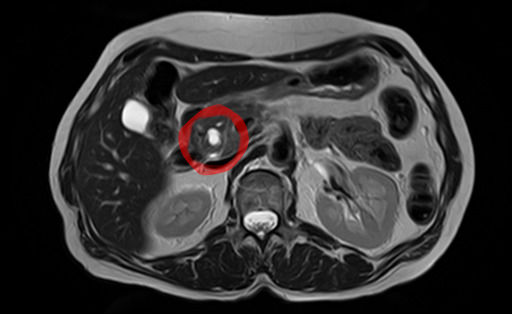
Intraductal papillary mucinous neoplasm
Condition
18
MENTIONS
5
EPISODES
5
PODCASTS
Search complete. 18 mentions across 5 episodes found for "Intraductal papillary mucinous neoplasm".
Sep 24, 2026

Marc BarthetGUEST
Dear friends and dear colleagues, uh, so I just want to present, uh, our new study, which is going to be published in Gastrointes- Gastrointestinal Endoscopy.
Marc BarthetGUEST
And this is a, a, a paper about the treatment by radiofrequency, uh, EUS guided for, uh, side branch IPMN, uh, and, uh, only with worrisome features, but also some cases of high-risk stigmata.
Marc BarthetGUEST
Uh, as you know, we have very few literature about it.
Marc BarthetGUEST
I just published, uh, four years ago the first results in a few patients.
Marc BarthetGUEST
And, uh, if you look to the literature, of course, we have some, uh, detail and data about, uh, neuroendocrine tumor or pancreatic metastasis, but very few about, uh, um, uh, IPMN with worrisome features.
Marc BarthetGUEST
And, uh, we have some papers about ethanol ablation and paclitaxel ablation or low macrohole ablation, but not with, uh, radiofrequency ablation.
Marc BarthetGUEST
So, uh, looking, uh, to the literature, we have a ve- uh, one very interesting paper, but with, uh, uh, ethanol ablation and paclitaxel showing that if you do that instead of surgery, you decrease the risk of, uh, uh, adverse events, uh, and, uh, you improve the long-term outcome.
Marc BarthetGUEST
This was published in, uh, Clinical Gastroenterology and Hepatology, uh, in two thousand and twenty-four.

Matthew DavenportGUEST
What they did is they looked at over 20,000 individuals who were purchasing this imaging test And they said, how often do you find something in the pancreas that's a small cystic lesion in the pancreas? This is something that's familiar to a lot of radiologists, where when we do MRI scans and CT scans, we find small cystic lesions in the pancreas.
Matthew DavenportGUEST
A lot of times we'll reflexively call them branch duct IPMNs or dilated side branches.
Matthew DavenportGUEST
The reason why this was an interesting question is because when one of these is detected, it often triggers a cascade of downstream additional testing.
Matthew DavenportGUEST
So there's all sorts of guidelines that talk about how frequently that testing should be performed, but many of them suggest doing follow-ups initially, maybe six to 12 months, and then many cases annually for up to 10 years, in some cases for the rest of somebody's life.
Matthew DavenportGUEST
They kind of vary depending on the strength of how many surveillance scans you end up getting, but they are a cause of a lot of healthcare consumption.
Matthew DavenportGUEST
The reason why people do it is because there's this belief that there's an association between having these small cystic lesions and the development of pancreas adenocarcinoma, which everyone obviously recognizes as a serious killer.
Matthew DavenportGUEST
So the idea is if you have one of these little branch duct IPMNs or small cystic lesions, then maybe your risk will be slightly elevated of having cancer.
Matthew DavenportGUEST
So then if you do surveillance of them over a long period of time, maybe you can help patients.

Michael WallaceGUEST
Our team is particularly focused on one of the pathways towards pancreatic cancer, which is through cystic neoplasms.
Michael WallaceGUEST
These are cysts called IPMNs or mucinous cystadenomas that are known precursors.
Michael WallaceGUEST
And yet, They're very common.
Michael WallaceGUEST
Most will not turn malignant, but some do.

speaker_1GUEST
Exactly.
speaker_1GUEST
We’re talking about IPMNs, which are intraductal papillary mucinous neoplasms, MCNs, and SPNs.
speaker_3HOST
Okay.
speaker_1GUEST
These are largely premalignant mucin-producing cysts.