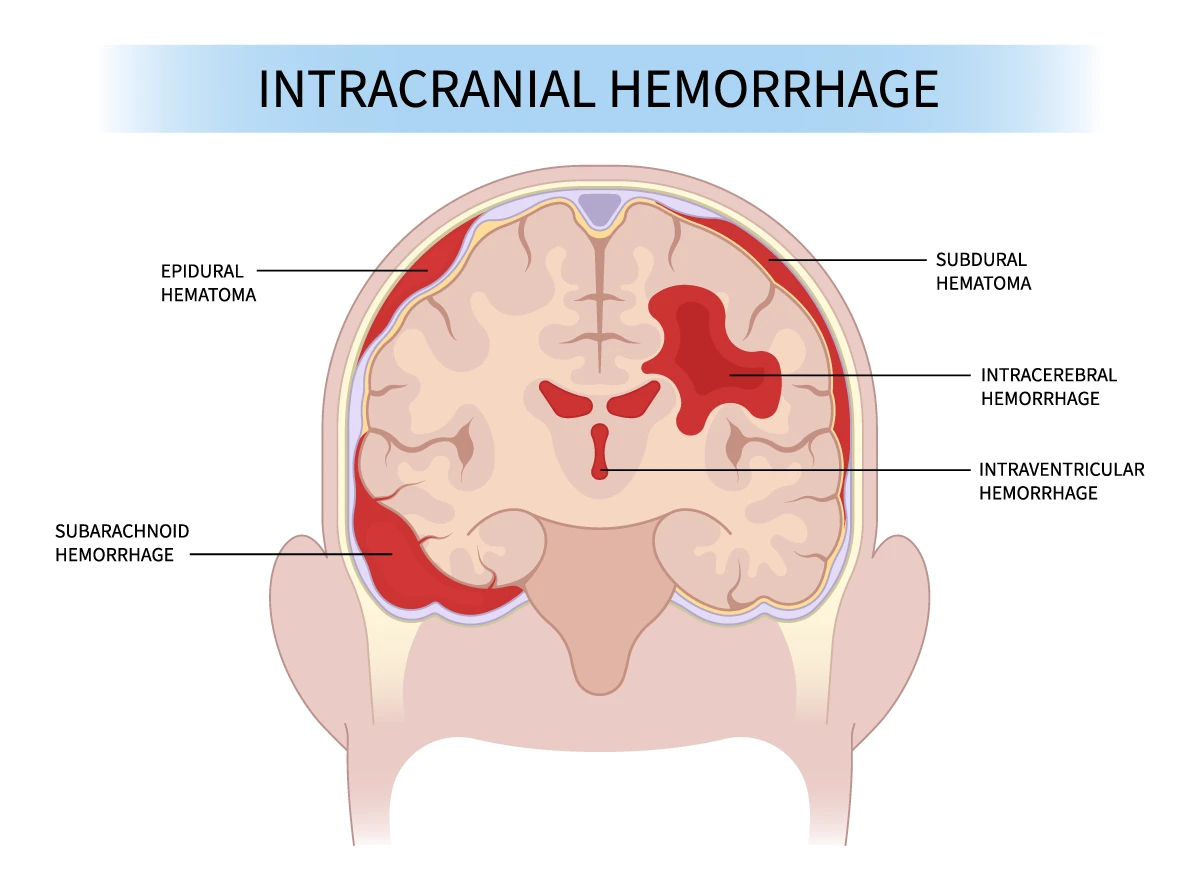
intracranial hemorrhage
Medical conditionWikipedia
45
MENTIONS
6
EPISODES
6
PODCASTS
Search complete. 45 mentions across 6 episodes found for "intracranial hemorrhage".
Sep 15, 2026

Bhoomi ParikhGUEST
They had an objective of evaluating the effect of Sigamidex on change in GCS and analgo-sedation requirements in the emergency department.
Bhoomi ParikhGUEST
They had the goal of filling gaps in literature by being a multi-state and system multi-center study, including a larger sample size of patients and refocusing on traumatic brain injury or TBI and spontaneous intracranial hemorrhage or ICH.
Bhoomi ParikhGUEST
Being a multicenter retrospective observational court study, as I mentioned earlier, and it included patients with a primary diagnosis of TBI or spontaneous ICH that received rocuronium either in the emergency department or pre-hospital.
Bhoomi ParikhGUEST
And all patients also received Sigamidex in the emergency department for neurologic evaluation.
Bhoomi ParikhGUEST
By including pre-hospital administration of rocuronium, this makes the results more generalizable and reflective of real practices in states where emergency medical services can do rapid sequence intubation.
Bhoomi ParikhGUEST
The focus was on TBI and spontaneous ICH and specifically excluded status epilepticus and ischemic stroke patients because lack of neurologic exam and those may not change acute or initial management.
Bhoomi ParikhGUEST
Patients also had to have a GCS score documented at baseline and within 30 minutes after SIGAMIDEX administration.
Bhoomi ParikhGUEST
The primary outcome assessed was a increase in GCS of at least one point within 30 minutes post-Sigamidex administration.

Niraj SharmaHOST
We'll examine what their different results tell us about symptoms, rhythm burden, and beta blockers.
Niraj SharmaHOST
Then we'll turn to dual energy ablation, structured exercise, individualized substrate ablation, and edoxaban after intracranial hemorrhage.
Niraj SharmaHOST
The central question isn't simply whether an intervention changes a rhythm recording.
Niraj SharmaHOST
It's whether that change produces additional benefit that matters to the patient and at what cost in treatment burden and risk.
24 MINS LATER
Niraj SharmaHOST
The EP Edge take, a feasible dual energy strategy with useful procedural data, not evidence of superiority over another platform.
Niraj SharmaHOST
The next step is prospective lesion guidance and controlled comparisons using comparable monitoring.
Niraj SharmaHOST
Our final trial asks a difficult question: After intracranial hemorrhage, does anticoagulation improve the overall outcome for a patient with AF? This is ENRICH-AF, presented by Ashkan Shamanesh at the August 2026 European Cardiology Society Congress.
Niraj SharmaHOST
Nine hundred forty-eight patients were randomized.

Rich ChoiHOST
We have Dr. Andy Webb.
Rich ChoiHOST
And we are going to be talking about an article that came out in Neurocritical Care Journal, which is titled "Effect of Desmopressin on Attaining Therapeutic Hypernatremia with Hypertonic Saline Continuous Infusion in Intracranial Hemorrhage," which was authored by Villegas et al.
Rich ChoiHOST
Now, Dr. Webb, you're very well-known to the Neurocritical Care Society, to the Neurocritical Care podcast as well, having been featured in multiple episodes.
Rich ChoiHOST
I still remember fondly that episode about the Indexa trial when it had come out.
8 MINS LATER
Andrew WebbGUEST
Now, that dose cap of twenty micrograms is actually somewhat common.
Andrew WebbGUEST
It actually comes from Canadian package labeling, where that dose came from studies that were done in the hemophilia population that's oftentimes extrapolated to this population.
Andrew WebbGUEST
Essentially, what they wanted to look at is in patients with general intracranial hemorrhage, so spontaneous and traumatic, who received the DDAVP dose and were also started on this institution sort of hypertonic three percent, uh, saline sliding scale targeting a goal of, uh, one-fifty to one-fifty-five, whether or not patients achieved that hypertonic, you know, sodium goal less often if they had received desmopressin versus those who had not received desmopressin.
Andrew WebbGUEST
They excluded, you know, their exclusion criteria were relatively straightforward, you know, patients who were baseline hyponatremic, pa- patients who had baseline SIADH, those with burns or those with ESRD where you might have a little bit harder time managing their electrolytes.

Syeda Maria MuzammilGUEST
Plasmin can also indirectly affect platelet function, so there may be a dysfunction of platelet as well that may additionally contribute to some hemorrhage.
Syeda Maria MuzammilGUEST
The reason why some patients develop post-thrombolytic ICH and some don't, there are certain risk factors.
Syeda Maria MuzammilGUEST
Generally, patients who are older may be more likely to develop post-thrombolytic ICH.
Syeda Maria MuzammilGUEST
Those studies have not definitively shown that patients who have coagulopathy for unknown reason, low platelet counts, atrial fibrillation, small vessel disease, or amyloid angiopathy may be more at risk for developing hemorrhage.
Syeda Maria MuzammilGUEST
Another thing to mention would be uncontrolled hypertension.
Syeda Maria MuzammilGUEST
In order to administer thrombolytics, you have to have a systolic blood pressure less than one eighty-five.
Syeda Maria MuzammilGUEST
And then once thrombolytics have been administered, the blood pressure goal is further lowered and is to be maintained at less than one eighty for the next twenty-four hours.
Syeda Maria MuzammilGUEST
So if you have a patient who has received thrombolysis but has uncontrolled hypertension, those patients are at higher risk for developing post-thrombolytic ICH.

Eva RochaHOST
Yes.
Eva RochaHOST
Um, there, there is an issue that there was, um, greater incidence of death in symptomatic, uh, ICH in these patients treated after 24 hours, so that's something that we should be mindful about.
Eva RochaHOST
Al- although there was a better functional outcome, there were als...
Eva RochaHOST
there was also a greater risk of death, 6 versus 1.8% in symptomatic ICH, 8% versus 0% in the control group, right?
Felipe A. MontellanoGUEST
Yeah.
Felipe A. MontellanoGUEST
Yeah, so, uh, I think that's, uh, that's an important point.

speaker_0HOST
Today, we are looking at the paper by Enjitama and colleagues.
speaker_0HOST
It was published in Open Heart in August 2026, and it’s titled Walking a Tightrope: The Safety and Efficacy of Oral Anticoagulants in Atrial Fibrillation Patients With Prior Intracranial Hemorrhage, a Systematic Review and Meta-Analysis.
speaker_1HOST
It is a fundamentally important paper for our field.
speaker_0HOST
I, I agree.
speaker_0HOST
And before we get into the weeds, we need to provide our initial practical summary for neurologists who are pressed for time.
speaker_1HOST
I mean, that’s crucial.
speaker_0HOST
So in patients with atrial fibrillation and a history of intracranial hemorrhage, direct oral anticoagulants are associated with a significantly lower risk of recurrent intracranial hemorrhage compared to vitamin K antagonists.
speaker_1HOST
Mm.