Intertropical Convergence Zone
12
MENTIONS
9
EPISODES
8
PODCASTS
Search complete. 12 mentions across 9 episodes found for "Intertropical Convergence Zone".
Nov 24, 2026

David SchwadererGUEST
They get it back up.
David SchwadererGUEST
Now, when all the weather breaks loose in the wintertime along the equator, it's called the intertropical conversion zone, ITCZ.
David SchwadererGUEST
And in the dark, over there near South America, a large block of storms broke off and drifted south, and they hit them.
David SchwadererGUEST
and it flipped the airplane right on its side.

Tianle YuanGUEST
They adjust it so that they smooth out the contrast.
Tianle YuanGUEST
And that can have implications, for example, ITCZ movement.
Tianle YuanGUEST
Yes,
Leon SimonsHOST
that's an intertropical convection zone and that relates to the monsoon and the rainfall patterns, especially in the tropics.
Tianle YuanGUEST
Exactly, exactly.
Tianle YuanGUEST
As well as subtropics, because, for example, there was a big drought in Sahel and Sahel really just sits on the edge of the ITCZ and any movement of the ITCZ is going to affect the Sahel region, because Sahel's precipitation is mostly coming from that convective activities in the ITCZ.
Tianle YuanGUEST
And if it moves away from Sahel, then you have a big drought.
Tianle YuanGUEST
If you move closer to Sahel, then you have like abundant rain.

speaker_3NARRATOR
Near the equatorial Atlantic, the journey reaches another broad feature of the atmosphere.
speaker_3NARRATOR
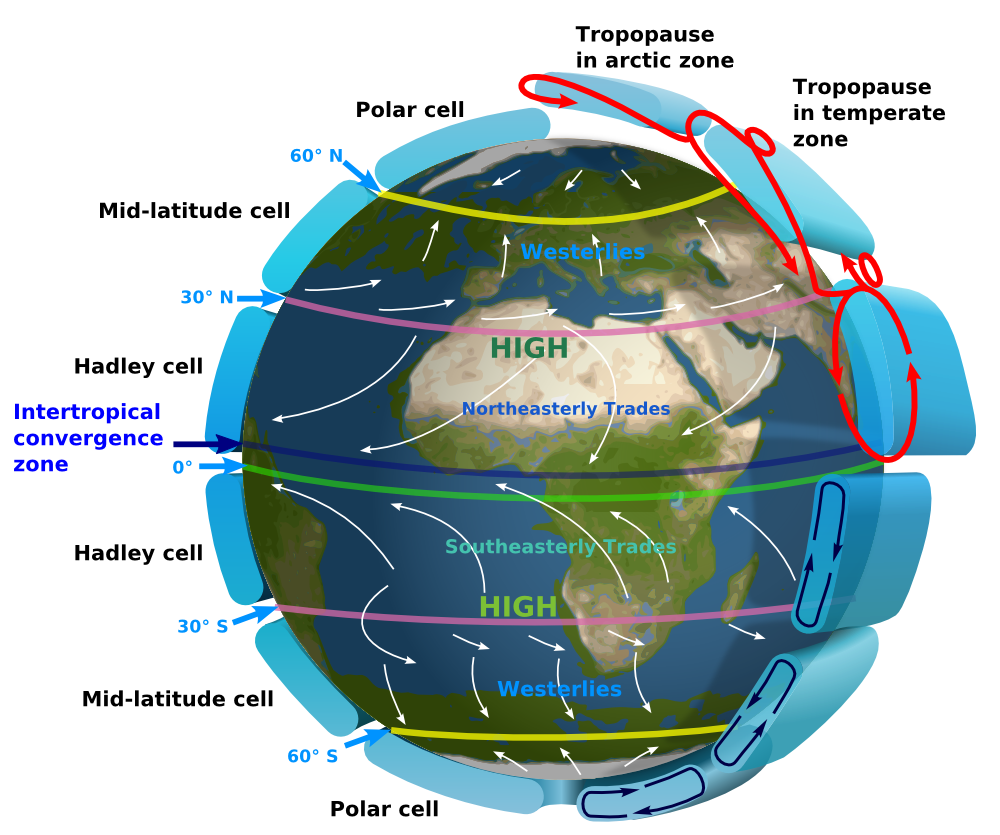
Here, tropical air flows from the two hemispheres approach one another in a region called the intertropical convergence zone.
speaker_3NARRATOR
The name is long, but its central meaning is simple.
speaker_3NARRATOR
A tropical belt where winds meet.

speaker_0NARRATOR
It will continue to affect Cagayan Valley and Aurora from Sunday to Monday, November 22 to 23.
speaker_0NARRATOR
Meanwhile, the Intertropical Convergence Zone will bring scattered rains and thunderstorms over parts of the Visayas and Mindanao, including central Visayas, Leyte, southern Leyte, and Palawan.
speaker_0NARRATOR
Mindanao will also experience rain showers and thunderstorms as the ITCZ continues to affect the region.
speaker_0NARRATOR
Stay updated with the latest news.
speaker_0NARRATOR
Cagayan, Isabela, Apayao, and Aurora may receive 50 to 100 millimeters of rain.
speaker_0NARRATOR
Meanwhile, the northeast monsoon may bring light rains over Batanes and the Babuyan Islands, while the ITCZ may trigger scattered rains and thunderstorms over parts of Mindanao and eastern Visayas.
speaker_0NARRATOR
Stay updated with the latest news.
speaker_0NARRATOR
Visit our website at www.mb.com.ph or follow us on social media.

Colleen GoljaGUEST
I guess I don't know the likelihood that they would do it.
Colleen GoljaGUEST
My thinking is that if you're going to do something like SAI, there's a... plays into your second question if you were to do it in only one place because of the circulation the stratosphere is always trying to take material from the equator to the pole so and it circulates this material so that's a very non-local um type intervention you can't just keep it as like a thing to reflect over just your little pocket of um So one big risk from something like SAI is if you do it in just the northern hemisphere, because the Earth is constantly trying to be in this kind of energetic balance, you kind of shove some of the energy, you kind of export energy over the kind of equator and you shift that rain band around the tropics, the ITCZ, the intertropical convergence zone south, in order to achieve this energetic balance.
Colleen GoljaGUEST
So there's relatively high risk.
Colleen GoljaGUEST
if you were to do this in one hemisphere without an equal forcing in the other hemisphere, that you would have a very, I would say, non-optimal type outcome, especially with regard to the precipitation patterns.

speaker_1HOST
This uneven distribution of solar energy drastically affects global climate systems, particularly the major rain belts.
speaker_1HOST
The study mentions that this shifting climate directly moved a system called the ITCZ.
speaker_0HOST
The intertropical convergence zone.
speaker_0HOST
What is that practically speaking?
speaker_1HOST
Practically, it's the Earth's weather equator.
speaker_1HOST
It's a massive migrating belt of low pressure circling the globe, where the trade winds from the northern and southern hemispheres crash into each other, generating immense amounts of thunderstorms and heavy rainfall.
speaker_1HOST
Because of the orbital stretching, the ITCZ was being physically pushed further north and pulled further south across the African continent, dragging the torrential rains with it.
speaker_0HOST
Which caused these intense, prolonged wet and dry cycles over southern Africa.

Hannah KimaniGUEST
We're having March, April, May, and then October, November, December.
Hannah KimaniGUEST
So the ITCZ brings us rainfall when it is moving either north of the equator or south of the equator.
Hannah KimaniGUEST
So I'll concentrate on the October, November, December rainfall season because that is what you're talking about.
Hannah KimaniGUEST
Yes.
Hannah KimaniGUEST
So in October, November, December rainfall season, then ITCZ is moving from the north to the south.
Hannah KimaniGUEST
And that is when it brings us rainfall.
Hannah KimaniGUEST
So with or without the amino signal, we will always have rainfall from October, November, and December.

Greg ThompsonCORRESPONDENT
We had one hurricane for the season, a couple of named storms, but most of the activity remains quiet.
Greg ThompsonCORRESPONDENT
Out in the open Atlantic, across the tropical belt, we have some showers and some thunderstorms associated with what we call the ITZ, or the Intertropical Convergence Zone.
Greg ThompsonCORRESPONDENT
That's where a lot of showers and thunderstorms form across the globe, near the equator, or just north of the equator, actually.
Greg ThompsonCORRESPONDENT
And then in the Gulf of Mexico, as well as the Western Caribbean, a lot of moisture being pulled out of the Pacific, courtesy of that dip in the jet stream.