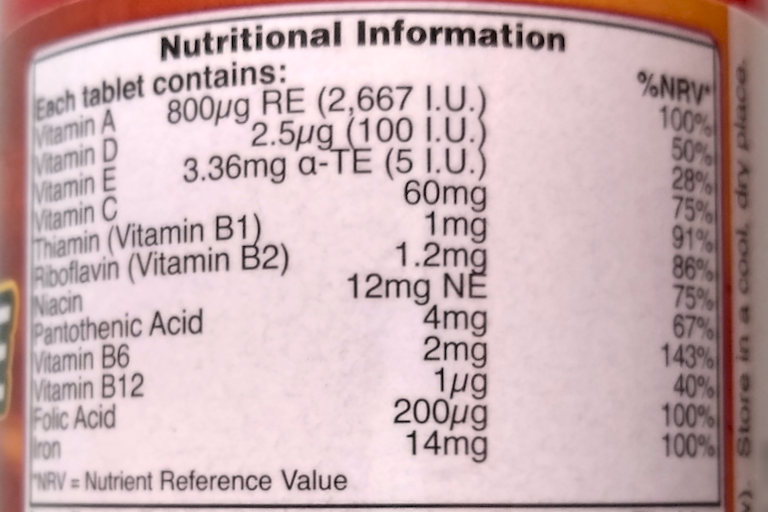
International unit
Unit of biological activityWikipedia
73
MENTIONS
12
EPISODES
11
PODCASTS
Search complete. 73 mentions across 12 episodes found for "International unit".
Sep 14, 2026

Dave CroslandHOST
She's done a lot of work, and she's definitely a very clued-up bunny as well.
Scott McNallyHOST
So 60-year-old male starting GH in a few weeks for the first time.
Scott McNallyHOST
He's going to start with two IUs.
Scott McNallyHOST
He's going to work his way up to four IUs.
Scott McNallyHOST
He's planning to get full comprehensive.
Scott McNallyHOST
He's getting a CMP.

Bryan ArdisHOST
Previous work suggested that higher UVB doses from the sun were associated with higher vitamin D concentration, leading to reduction in cytokine storm and the killing of bacteria and viruses that participate in pneumonia.
Bryan ArdisHOST
A clinical trial involving postmenopausal women living on Long Island in New York with an average vitamin D level of 19 found that supplementing with 2,000 international units of vitamin D resulted daily in significantly fewer upper respiratory tract infections, including the flu, than a placebo or supplementation with 800 IUs of vitamin D.
Bryan ArdisHOST
So when they took 2,000 international units of ID, you saw a significant reduction in upper respiratory tract infections.
Bryan ArdisHOST
Well, I recommend 5,000 IUs every day, and that's our minimum dose of our product.
Bryan ArdisHOST
A high dose, check this out.
Bryan ArdisHOST
This is probably the most exciting vitamin D study I'm going to reference today.
Bryan ArdisHOST
And it went down even further.
Bryan ArdisHOST
So it went from 36 days in the hospital.

Ian JenningsHOST
If you are reporting in units per deciliter, international units per deciliter, it's implying an accuracy of a method that isn't really there.
Ian JenningsHOST
There's very little difference between a result of 100 and a result of 100.1 IU per deciliter.
Ian JenningsHOST
There's always a risk even with these larger numbers of missing decimal places or them going in the wrong place.
Ian JenningsHOST
And certainly when you're dealing with very small numbers, when you're reporting in international units per mil, there's more chance of misreading a decimal place and causing errors.
Ian JenningsHOST
So liaison with the manufacturers to see if we can encourage them to change their package inserts, change over to iu per deciliter for their calibration plasma values is a starting point.
Ian JenningsHOST
Publicising this as much as we can with laboratories I think is a major thing to do.
Ian JenningsHOST
We are aware that a lot of laboratories have got hospital information systems, IT systems that are hardwired to interpret results and report results in IU per mil and that won't be an easy change.
Ian JenningsHOST
won't be a quick change and it's something that we could just encourage laboratories when they are updating systems to consider changing their unitage at that point.

Jim Stephenson Jr.GUEST
They're photo-liable products that are created past the D3 point.
Jim Stephenson Jr.GUEST
So as you stay in the sun, and that's why they say you can go in the sun and you can make 20,000 IU of D3.
Jim Stephenson Jr.GUEST
That's just the pass-through, really.
Jim Stephenson Jr.GUEST
Only a certain amount of it stays D3, and that lines up with how we really don't want to take very much, even if you look at people that say you should take it, like the godfather of vitamin D. Hector DeLuca said you don't want to take more than 2,000 IU of vitamin D, but you can go in the sun and make 20,000.
Jim Stephenson Jr.GUEST
But most of the literature will tell you that it breaks down to an inactive molecule, and it's absolutely not true.
Jim Stephenson Jr.GUEST
Lumisterol is anything but inactive.
25 MINS LATER
JustinHOST
Um, that's the argument that a lot of people make, you know, um, in our side, but he says that, um, so if it were, so if a rat were 250 grams or half a pound, it would take about 3,928.
JustinHOST
I use of Coley calciferol to induce death, which doesn't sound like much.

Alex KikelGUEST
... officially to growth hormone peptides because the enzymatic down regulations you have to replace with exogenous growth hormone.
Alex KikelGUEST
Now, again, I think people hear that and we're not talking about athletic doses of growth hormone, but usually we're talking about like for a male, and this might be pushing, I think two IUs and lower is perfect.
Alex KikelGUEST
Men and women can get away with that dosage, only get benefits, control glucose metabolism, control blood pressure.
Alex KikelGUEST
But if all that's fine and you don't have any tumors, obviously you're only going to improve longevity, healing, soft tissue, cartilage synthesis, everything, right? That we talked about.
Alex KikelGUEST
The three IU range, you're kind of like, okay, I'm more pushing towards an athlete.
Alex KikelGUEST
I'm kind of in longevity, but I'm kind of playing with a little bit of fire maybe.
Alex KikelGUEST
And then once you go to four IUs plus, that's more of the athletic ranges.
Alex KikelGUEST
With that being said, though, I think we all know some of the bodybuilders that have been on four to six IUs of growth hormone for 10 years, 20 years, 30 years.

SteveHOST
Uh, I, I don't mind giving stuff away for free, but then at least support me by using my code.
SteveHOST
"What should be my dose of hCG on 300 milligrams test weekly? Daily injections, low aromatizer." Uh, 500 IOs Monday, Wednesday, Friday, assuming you want to keep your fertility going, your testicles active, and get some sort of neurosteroids, uh, production, like DHEA and pregnenolone.
SteveHOST
500 IOs three times a week.
SteveHOST
Do your blood work four weeks into it, and you just have to check your estradiol and total testosterone levels to see, uh, what changed, to how much extra testosterone, extra estradiol you get for this 8, uh, 1500 IOs, not 8.
SteveHOST
[laughs] 1500 IOs of hCG that you're injecting per week.
SteveHOST
"If I tolerate Tren A's at 350 to 400 milligrams pretty well, is that a good sign I will tolerate Deca and NPP as well?" No.
SteveHOST
No.

Monica MinjeurHOST
Now, before we go a bit deeper with some of the main things to know about vitamin D, I do want to address a couple of common myths that we find.
Monica MinjeurHOST
So a lot of people will tell me, "Well, my prenatal vitamin already has vitamin D in it." However, most prenatal vitamins contain anywhere from 400, maybe upwards of 800 units or international units, or sometimes it's just read as IU.
Monica MinjeurHOST
This is oftentimes not nearly enough to replete the stores that women are deficient in.
Monica MinjeurHOST
In fact, most women need somewhere between 4 to 5,000 international units daily to both reach and maintain those optimal levels.

RobarockGUEST
So I will tell people with growth hormone, some people get a lot of side effects, some people don't.
RobarockGUEST
So start at one IU.
RobarockGUEST
One IU a day.
RobarockGUEST
That's it.
RobarockGUEST
And, and run that for a couple of weeks just to see what you're gonna have.
StevesmiHOST
Both the same dose?
RobarockGUEST
Yeah.
RobarockGUEST
Well, women sometimes start at a half of IU.

Liz DanielsHOST
Like really, really low.
Liz DanielsHOST
Babies need about 400 IU of vitamin D daily.
Liz DanielsHOST
That comes after some research and understanding kind of what is our sort of threshold, and at what point does it not benefit us any further? And, you know, 400 seems to be that number.
Liz DanielsHOST
Now, breast milk only offers us about 0.6 IU per ounce, which is really not much.
Liz DanielsHOST
So if we had about 24 ounces a day, there's a particular study that looked at a pretty large group of women, um, and found that they had about really 77 IU a day in their milk, and that's kind of interesting because that is remarkably low and shows us really we're only getting about 20% of what babies really need for that, um, complete amount of vitamin D.
Liz DanielsHOST
Now, then you might ask the question, okay, if that's just one study, then what about other places in the world? 'Cause maybe those women didn't have enough, and they were just deficient in the first place.
Liz DanielsHOST
Maybe.
Liz DanielsHOST
But there's a study called the Milk Study, M-I-L-Q, really cool by the way, and they looked at breast milk from mothers across the world, including regions where they have adequate access to vitamin D just from the sunlight alone, and moms' vitamin D concentrations were great, but their milk still only had about 60 to 80% of what the babies needed.
Scott McNallyHOST
Yeah.
Dave CroslandHOST
But what, what I wouldn't do is start saying, "Oh, I'm gonna take five IU of insulin, so therefore I'm gonna take an extra 100 grams of carbs," or whatever it is.
Dave CroslandHOST
Um-
Scott McNallyHOST
Formula being one, one unit of insulin per 10 grams of carbs?
Dave CroslandHOST
It varies, doesn't it? There's been a few theories over the years.
Dave CroslandHOST
Where I, I, I've always used quite a sorta Heath Robinson, very basic approach.
Dave CroslandHOST
Whereas I would start with one to two IU of insulin with a meal, fast acting.
Scott McNallyHOST
Mm-hmm.
2 more episodes mention International unit.
Create an account to see the whole feed, search across every transcript, and follow the entities you care about.