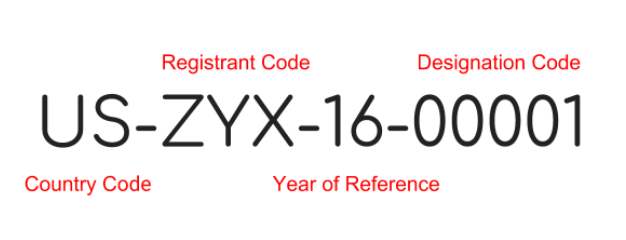
International Standard Recording Code
44
MENTIONS
20
EPISODES
14
PODCASTS
Search complete. 44 mentions across 20 episodes found for "International Standard Recording Code".
Nov 2, 2026

Ari HerstandSOUNDBITE_SPEAKER
So somewhere in the, you know, my publisher sending the information to the MLC, somewhere along the line, something got dropped.
Ari HerstandSOUNDBITE_SPEAKER
The ISRCs weren't connected, whatever.
Ari HerstandSOUNDBITE_SPEAKER
There's a lot of these codes that are all in there.
Ari HerstandSOUNDBITE_SPEAKER
Anyway.

Michael HuppeGUEST
It's, you take care of the music, we'll take care of the noise.
Michael HuppeGUEST
All that stuff about data and databases and delivery platforms and codecs and ISRCs and who owns what.
Michael HuppeGUEST
Your members who are so talented at making the music that they make, they shouldn't have to worry themselves with all of this.
Michael HuppeGUEST
They should focus on their craft so that they can bring more joy and more creativity to the world.

Tim LuckowGUEST
And so we have a thing called credits.fm, which works on this a little bit.
Tim LuckowGUEST
And it basically has all of the open ISRC codes, ISWC codes, and then also IPI, ISNI, and UPC.
Tim LuckowGUEST
And my view is basically those five codes kind of make up the public domain of music metadata outside of the credits fields and things like that.
Jakob WredstrømHOST
Amazing.
Tim LuckowGUEST
So, I mean, it's very much an active work in progress, but it's been exciting to see the more adoption we get across the industry, the faster it goes.
Tim LuckowGUEST
And at this point, the adoption is much wider than I ever would have expected this fast because I think it's solving problems in new ways through APIs that I guess I would say a lot of the predecessors couldn't do because of deal restrictions.
Tim LuckowGUEST
And, you know, I think a key insight for us is this idea of an ISRC is kind of a public code at this point.
Tim LuckowGUEST
That's not really like unique IP anymore, nor is an ISWC because of the MLC.

Monet LittleGUEST
All the data starts there, like what we're sending to, you know, release things.
Monet LittleGUEST
So like your ISRC, which is like the unique identifier for your recording, like your track.
Monet LittleGUEST
ISWC, which is on the work side, like publishing side.
Monet LittleGUEST
So the actual composition in the recording has its own code.
6 MINS LATER
Alison T. McNeilHOST
Run reports to see what the trends are.
Alison T. McNeilHOST
And so I'm hearing a lot of that and what and what it's exactly the same.
Alison T. McNeilHOST
Yeah, we'll use the ISRC,
Monet LittleGUEST
you know, to identify that recording and then I can use the ISRC to find pretty much.

RomoneGUEST
That's the PRS splits and the master split as well.
RomoneGUEST
And the PPL, which is the performance, that has to be uploaded to the distribution service, but you have to have the ISRC code, which is like a separate thing that you need to...
FarisHOST
you
RomoneGUEST
have to have like your verticals of spotify but then like you're running ads on meta as well like it's just like so many moving parts and i'm just like but it made me realize how badly i want it because i was i was in that bitch i was glued to the laptop like yeah we've got to do it we've got to figure it out Does anyone have a spreadsheet? No, listen, I made the spreadsheet.

DeeHOST
Exactly.
DeeHOST
It means possessing your own ISRC codes and your UPC or EAN codes.
DanHOST
Let's clarify that for a second.
DanHOST
If you think of your song as a car, the ISRC code is essentially the VIN number stamped on the engine block.
DanHOST
That's
DeeHOST
a great way to look at it.
DanHOST
Even if someone steals your track and slaps a new title and artwork on it, like giving it a fresh coat of paint, that unique ISRC code proves exactly who manufactured it and when.
DeeHOST
That is exactly how it functions.
Jay GilbertHOST
You've said recently in some really great articles I've read that the single biggest unsolved problem in music data is having authoritative links between the musical work and the sound recordings available to everyone.
Jay GilbertHOST
But for someone with no prior knowledge, can you explain the difference between an ISRC code and the ISWC code? And why are these two identifiers so important?
Mark IsherwoodGUEST
OK, so the ISRC code is the unique global number assigned to each sound recording.
Mark IsherwoodGUEST
And the ISWC is the unique code assigned to each musical work.
Mark IsherwoodGUEST
So when an artist goes into the studio, they sing the musical work, assuming they're singing.
DanHOST
What do they find?
DeeHOST
They find missing ISRC's.
DeeHOST
They find audio files sitting on hard drives literally named, uh, final master real final three dot wav [chuckles] with zero metadata attached.
DanHOST
We've all been guilty of that naming convention.
DanHOST
That's a nightmare for a lender.
DeeHOST
It is.
DeeHOST
When critical identifiers like an ISRC are missing, and that's basically the digital fingerprint for your audio file, the royalties often end up trapped in a black box, completely untraceable.
DanHOST
And the financial institution simply cannot advance money against income it can't legally verify.
DeeHOST
And to navigate it, we need to clearly separate the recording from the composition.
DeeHOST
In the music industry architecture, an ISRC, an International Standard Recording Code, identifies a specific master sound recording.
DanHOST
That's the physical file you stream on your phone.
DeeHOST
Right.
DeeHOST
But an ISWC, an International Standard Musical Work Code, identifies the underlying intellectual property, the lyrics and the melody.
DanHOST
Okay, so I could have 50 different cover bands record 50 different versions of Hallelujah, generating 50 different ISRCs, but all of them must point back to the exact same ISWC so Leonard Cohen's estate gets paid.
DeeHOST
Precisely.
DeeHOST
Now, imagine the Audu AI perfectly recognizes a local band's original song.

David Andrew WiebeHOST
I'm going to have to update it with my own data.
David Andrew WiebeHOST
Again, there's a lot of stuff here, including BPM, ISRC versions, DistroKid, Bandcamp, SoCan, YouTube.
David Andrew WiebeHOST
On it goes.
David Andrew WiebeHOST
I may not give all that detail right now, but I guess to the extent possible, I'm going to put this all in I'm wondering if there's a section for artists here.
David Andrew WiebeHOST
Click a track's title to see its card.
David Andrew WiebeHOST
Everything about one track is here.
David Andrew WiebeHOST
Status is released as metadata, files, and codes like ISRC.
David Andrew WiebeHOST
Search looks through everything on a track filter, show only the track filter, show only the tracks you need by platform status here and more.
10 more episodes mention International Standard Recording Code.
Create an account to see the whole feed, search across every transcript, and follow the entities you care about.