Internal fixation
18
MENTIONS
6
EPISODES
5
PODCASTS
Search complete. 18 mentions across 6 episodes found for "Internal fixation".
Sep 24, 2026

David GoodspeedPANELIST
Right.
David GoodspeedPANELIST
I think sometimes, at least at our place, logistics does drive almost decision-making at times just because of availability of surgeons that are gonna be ORIF surgeons versus arthroplasty.
David GoodspeedPANELIST
I would say that although we're not fifty-fifty, we're definitely increasing the percent that get arthroplasty, and we're making strategic plans to have our shoulder arthroplasty docs more available and having some, a little bit of slack in their system to absorb some of these patients.
David GoodspeedPANELIST
So I-- that was actually a, an important thing.
David GoodspeedPANELIST
And it was actually, uh, fairly close to the same.
David GoodspeedPANELIST
I mean, their odds ratios were very close to one high p-value, so that this was statistically really similar in terms of op versus non-op between the different low and high ADI groups.
David GoodspeedPANELIST
Same thing for the type of surgery, whether it was arthroplasty or ORIF.
David GoodspeedPANELIST
Again, very similar and no specific difference seen between high and low ADI groups.

speaker_4GUEST
It was.
speaker_4GUEST
In the ORIF group, 25% of the patients required a return to the operating
Mohamed ImamHOST
theater.
Mohamed ImamHOST
A 25% re-operation rate for the internal fixation group.
7 MINS LATER
speaker_4GUEST
However, the TEA patient typically has a shorter acute hospital length of stay because they achieve immediate joint stability and can commence active rehabilitation on postoperative day one.
Mohamed ImamHOST
So they avoid the prolonged immobilization.
speaker_4GUEST
They avoid that, and they avoid the intensive community nursing care often required by an ORIF patient navigating a tenuous fixation or a protracted nonunion.
Mohamed ImamHOST
The economic value of preventing an elderly patient from losing their independence and transitioning into a permanent residential care facility far offsets the initial implant costs.

Christopher DoroHOST
So just be careful how it's asked.
Christopher DoroHOST
And then, Dr. Summers, what comments do you have on delayed total elbow after a failed RAF?
Lauren SummersGUEST
Yeah, that's a great question because it's one of those things where if an attempt at fixing it that fails would make their final outcome from total elbow arthroplasty worse overall, you know, that just kind of has to factor into your decision.
Lauren SummersGUEST
But they like to kind of quote this Giffen study from 2014 saying, found that even if you had attempted ORIF and then it failed and they were converted to total elbow, there was no difference in outcomes, reoperation rates, or complication rates compared to patients who had an acute or immediate total elbow arthroplasty for distal humerus fracture.
Lauren SummersGUEST
It's interesting that they'll test that concept as well as the two prior papers that support early total elbow arthroplasty.
Lauren SummersGUEST
But the phrase of the test question differently, as we talked about the vignettes for supporting acute total elbow, this will be more so kind of directly asking you if there's a difference in outcomes, if you fail an ORF and then go on to total elbow.
Christopher DoroHOST
I mean, I don't remember the last time we tried non-operative care for a C-type distal humerus fracture.
Christopher DoroHOST
And I think they just want you to know that sort of historic treatment isn't really done anymore.

Audrey McLaughlinHOST
So say, God forbid, you broke your leg.
Audrey McLaughlinHOST
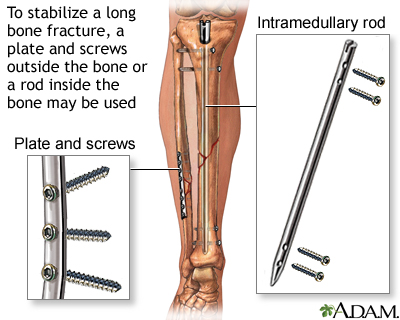
The surgeon does an ORIF, which is a plate and screws, right? Surgery is, that's ORIF stands for open reduction internal fixation.
Audrey McLaughlinHOST
So plate and screws or something like that.
Audrey McLaughlinHOST
Surgery, complete success.

Josh LambGUEST
When you looked at it, it was shocking.
Josh LambGUEST
It was in linked datasets where you're looking at the primary and the revision and any possible revision afterwards plus ORIF.
Josh LambGUEST
Periprosthetic fracture almost equaled the same number of cases if you added together infection and loosening.
Josh LambGUEST
I mean, that was mind-boggling because it was way more than, than we thought, you know.
Benjamin WhartonGUEST
Of this cohort, the mean age was 66 years, and 77% of them were female.
Benjamin WhartonGUEST
This study looked at surgical treatment, which was the surgeon's choice of ORIF versus Hemi, versus non-operative treatment being a sling and following up with rehab.
Benjamin WhartonGUEST
The primary outcome of this study showed that there's no clinically or statistically significant difference in the Oxford Shoulder Score at 6, 12, or 24 months.
Benjamin WhartonGUEST
And there's also shown to not be any differences with complications, secondary surgery, or mortality as well.
6 MINS LATER
Alex CrespoHOST
The Delphi trial was a multi-center RCT from Norway, I believe, with 124 patients
Benjamin WhartonGUEST
patientsThey were within the age range of 65 to 85 who had displaced three and four-part proximal humerus fractures.
Benjamin WhartonGUEST
The comparison between these two groups was a reverse total shoulder versus ORIF with a locking plate.
Benjamin WhartonGUEST
And the clinical takeaway here was when the surgery is indicated in these elderly patients with complex, specifically the four-part fractures, the reverse total shoulder provided superior functional outcome as compared to the locking plate fixation.