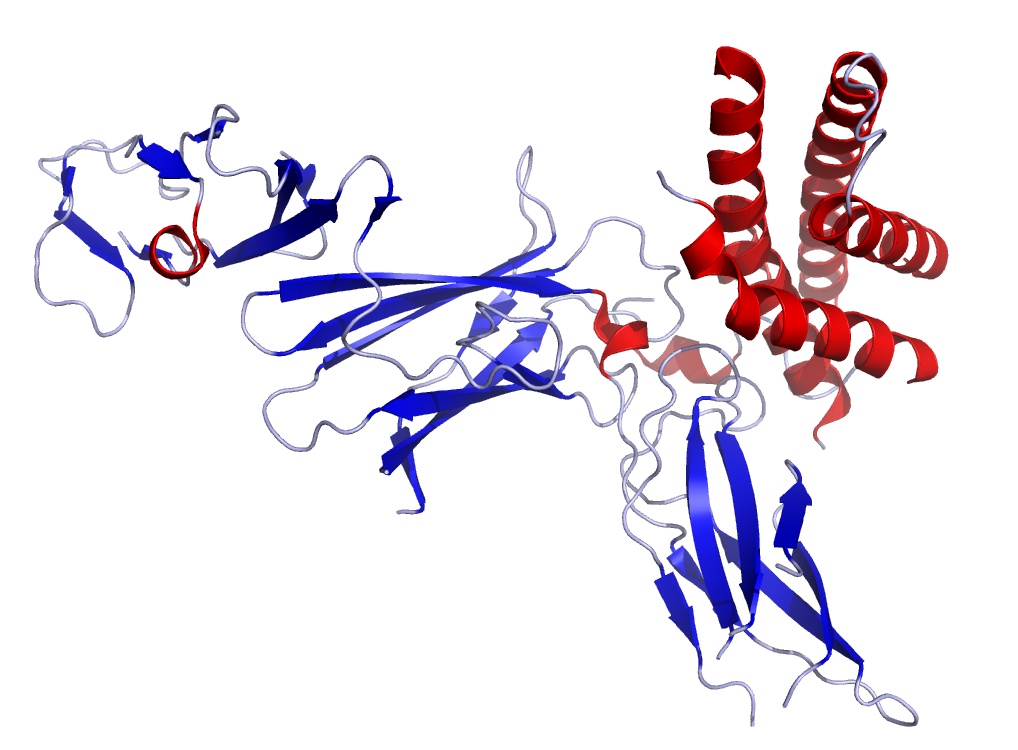
interleukin 12
ProteinWikipedia
20
MENTIONS
11
EPISODES
11
PODCASTS
Search complete. 20 mentions across 11 episodes found for "interleukin 12".
Oct 2, 2026

Jack CushHOST
There's a lot of data, but it's observational data, right? They did show that biologic use lowered the risk of future PSA by 46%, and that was significant.
Jack CushHOST
It was very significant for IL-17 inhibitors, where it dropped at 35%, and the IL-23 or the IL-12-23, where it dropped it by 54%.
Jack CushHOST
They, in this study, compared IL-23 inhibition to IL-17 and showed that IL-23 was superior to IL-17 inhibition by as much as 33% in preventing future PSA.
Jack CushHOST
Get together with your derm colleagues.

Scott SnapperGUEST
Tridon another agent didn't work.
Scott SnapperGUEST
tried an IL-12 or IL-23 blocker, and this patient went into remission in like overnight, okay? Overnight.
Scott SnapperGUEST
And these are, you know, Stelara is what blocks IL-12 and 23, and there's several molecules that block only IL-23.
Scott SnapperGUEST
And what was very, very interesting is we had initially this one patient that had these findings that responded so dramatically to IL-1223.
Scott SnapperGUEST
And we then studied that patient as well as the other six patients that had the same phenotype.
Scott SnapperGUEST
They had very severe disease, mostly involving their colon and refractory to other medications.
Scott SnapperGUEST
But when we studied them, it turned out by deep, detailed computational analyses that that their IL-23 pathway was markedly upregulated, markedly upregulated.
Scott SnapperGUEST
So we had a group, a panel of genes by studying the blood and biopsies of these patients that when you study them all together, showed that their IL-23 and IL-12 signaling was markedly upregulated.

Raven LirioHOST
and upregulating the T cell and monocyte-attracting chemokines CXCL10 and CCL3, thereby reproducing the immune infiltration observed in naturally aged skin.
Raven LirioHOST
IgG-activated macrophages produced IL-12, which stimulated T cells to release INF gamma, and this effect was reduced by blocking IL-12.
Raven LirioHOST
Elevated INF gamma expression was also found in skin T cells from both IgG-injected and naturally aged mice.
Raven LirioHOST
INF gamma treatment significantly reduced collagen gene expression in dermal fibroblasts, linking IgG accumulation to the collagen loss that underlies dermal atrophy in aging skin through the IL-12-INF gamma access.
Raven LirioHOST
In short, IgG accumulates in the dermis with age and activates macrophages to recruit immune cells and produce IL-12, which stimulates T-cell INF gamma release that suppresses fibroblast collagen synthesis.
Raven LirioHOST
This positions IgG as an upstream driver of skin-inflammaging and suggests that IgG-lowering therapies, such as anti-FCRN antibodies, could be explored for skin aging.
Raven LirioHOST
We'll now jump into an article published in Pediatric Dermatology entitled Clinical Characteristics, Management, and Complications of Infantile Hemangiomas Involving the Ear and Periorricular Region by Bayan Matarne, Nicole Stefanko, Anthony J. Massini, et al.

Marco DavilaMODERATOR
So I present on IL-18, Yihan on IL-36 gamma, Sebastian on some kind of features of cytokine receptors in general.
Marco DavilaMODERATOR
So there's obviously lots of great cytokines that have impacts on immune system, T cells, the microenvironment, IL-2, IL-7, IL-12, 15, 36, 18.
Marco DavilaMODERATOR
What are kind of the defining features that we should look at as designers of CARs to go, these are really the important features to be able to combine with a CAR T-cell, specifically when attacking a solid tumor cell therapy.
Marco DavilaMODERATOR
So I'll kind of pitch that to you all.

Axel DignaßHOST
We covered now I think already quite a fair amount of drugs and something I always like when you talk about pregnancy the oldest drugs are usually the best because you have the highest exposure over a long long time but you already mentioned some of the newer drugs and some even if you consider the mechanisms are really safe.
Axel DignaßHOST
So I think we have a fair amount of data with IL-12, IL-23.
Axel DignaßHOST
Now the IL-23s come out and a lot of colleagues feel this is a very safe drug.
Axel DignaßHOST
I should even put a patient and start with this.
Axel DignaßHOST
How would you recommend for clinical practice you have a newly diagnosed patient who wants to become pregnant and is in a critical age to become pregnant, would you start with an IL-23 or would you better use something of the older drugs like infliximab or vidulizumab or IL-1223, ustekinumab? What is your position on this?
Uma MahadevanGUEST
So I always think that the best course is to treat the patient.
Uma MahadevanGUEST
So what is the drug you would use if this patient wasn't planning on pregnancy? And so for any woman, what is the best drug for her case is how you should think about it.

Brenda RaudHOST
That's really cool.
Brenda RaudHOST
Because the original mammalian cell-produced IL-12 is just not too much work for the bacteria.
Brenda RaudHOST
You just look for alternative versions.
Brenda RaudHOST
As long as they stimulate the receptor, I guess that's all you need, really.

Sunil PaiGUEST
These are infusions or injections.
Sunil PaiGUEST
And they're affecting these markers, IL-1, IL-6, IL-12, IL-17, TNF alpha blockers, for example, that when you see for Crohn's disease, ulcerative colitis, psoriatic arthritis, any of these things, you'll see them all over television.
Sunil PaiGUEST
Every day, very, very heavily marketed.
Sunil PaiGUEST
One of them is the most common.

Tanner BaldwinHOST
At Strand, Tasuku and his team are developing technologies such as self-replicating RNA, circular RNA, and logic gated mRNA circuits to engineer the next generation of RNA medicines.
Tanner BaldwinHOST
Strand's lead program, STX1, is designed to express IL-12 locally in tumors, and has already entered clinical testing in patients with advanced solid tumors.
Tanner BaldwinHOST
I'm truly thrilled to have Dr. Kitada with us today.
Tanner BaldwinHOST
Tasuku, thank you so much for joining us.
38 MINS LATER
Tasuku KitadaGUEST
And so, yeah.
Tanner BaldwinHOST
Yeah, both extremely exciting.
Tanner BaldwinHOST
And, you know, it strikes me that these therapeutic mechanisms of action, right, the autologous, uh, CAR T, which you're trying to make, uh, in vivo, and, uh, you know, the IL-12, uh, you know, immunotherapy, both of these have, uh, some precedent or at least, you know, proof of concept, right? What you guys are doing is really changing the sort of delivery platform, and with that, the, the specificity, the safety profile.
Tanner BaldwinHOST
So, um, I guess I'm wondering, to what extent do you see this as being a true platform that you can sort of take these RNAs, your RNAs, and, you know, program anything you want into them, right, to get tissue specificity, to get cell type specificity? Um, the thinking is that you could go anywhere, right, um, to all sorts of disease contexts.

Luke JohnsonHOST
No differences in infections, serious infections or otherwise, and no differences in a bunch of other stuff the authors thought to study.
Luke JohnsonHOST
Height, weight, vaccination responses, and serum levels of cortisone, eosinophils, IL-4, IL-10, IL-12, and IL-31.
Luke JohnsonHOST
Wow.
Luke JohnsonHOST
Yeah, I know.
1 more episode mentions interleukin 12.
Create an account to see the whole feed, search across every transcript, and follow the entities you care about.