Interleukin 10
39
MENTIONS
14
EPISODES
13
PODCASTS
Search complete. 39 mentions across 14 episodes found for "Interleukin 10".
Oct 8, 2026

Dan McCartneyGUEST
So while this adaptive immune response is pushing forward, eradicating the virus, causing some damage to our tissues as well, including lung damage, you need something to switch that off.
Dan McCartneyGUEST
And they discovered that this little pulse of IL-6 at the right time stimulates the release of IL-10.
Dan McCartneyGUEST
IL-10 stimulates these particular type of white cells called Treg cells, and in turn, they switch off interferon gamma.
Dan McCartneyGUEST
And it's that standing down of interferon gamma that allows you to progress from Th1, which is this very aggressive type of adaptive immunity, towards a much more tolerogenic, gentler Th2 response.
Dan McCartneyGUEST
But guess what?
Dan McCartneyGUEST
So vitamin D attaches to two specific gene promoter regions, and it pushes that IL-6.
Dan McCartneyGUEST
It's all dependent on that.
Dan McCartneyGUEST
So if you can't have sufficient vitamin D to switch on those genes, you fail to switch on your IL-10, you fail to switch on the Treg cells, and you get this persisting Th1, this very aggressive, uh, immune response.

Nadia SundlassGUEST
In terms of atopic dermatitis, there was a 2025 study in pediatric allergy and immunology that measured urinary levels of phthalates in children and found that higher levels of phthalates in their urine increased the risk of atopic dermatitis.
Nadia SundlassGUEST
They were able to link that to showing that phthalate exposure resulted in higher levels of IL-5 and decreased levels of IL-10.
Nadia SundlassGUEST
So again, basically you're increasing Th2 inflammation and kind of decreasing the amount of anti-inflammatory cytokines.
Nadia SundlassGUEST
In terms of hydradenitis suppurativa, there was a 2025 study in the Journal of Investigative Dermatology showing a link between the severity of a patient's disease being linked to the amount of plastic exposure they had from food through packaging or eating out.

Daniel GriffinHOST
but they do seem to reprogram.
Daniel GriffinHOST
And so what you're gonna see with the B cells is they're gonna move into more of an IL-10 responsive, um, IL-8 capable.
Daniel GriffinHOST
So they're gonna have the ability to, uh, neutrophil recruit.
Daniel GriffinHOST
They're gonna remain relatively non-inflammatory.

Richard HorowitzGUEST
And when this particular switch gets turned on, you get these very inflammatory molecules.
Richard HorowitzGUEST
It's like pouring gasoline on a fire with TNF alpha, interleukin-1 beta, IL-6, IL-8, IL-10.
Richard HorowitzGUEST
All these inflammatory molecules come out from these very small cells in the brain called microglial cells.
Richard HorowitzGUEST
Now, what causes the microglial activation? Well, infections can cause it.

Scott SnapperGUEST
But a family came to him in the first weeks of life where a child had very severe inflammatory bowel disease within a month of life.
Scott SnapperGUEST
And they're now coming to a hematologist, right? And Christoph discovered that this patient actually had a mutation in a new gene or an old gene, but new in humans, identified in humans, called the IL-10 receptor.
Scott SnapperGUEST
And if you lack the IL-10 receptor, like if you lack the Wiskott-Aldrich syndrome protein gene, actually your presentation is with inflammatory bowel disease.
Scott SnapperGUEST
And first of all, it was remarkable that standard genetic approaches identified this new immune deficiency.
Scott SnapperGUEST
But IL-10 and IL-10 receptor, people have been studying, this is a hormone in the blood that suppresses the immune system.
Scott SnapperGUEST
So if you don't have this hormone that suppresses the immune system, you have an overactive immune system.
Scott SnapperGUEST
People had been studying this in mice and humans for quite some time.
Scott SnapperGUEST
And even there were a mouse model of inflammatory bowel disease that was discovered in the 1990s that if you lacked IL-10, people knew mice would get inflammatory bowel disease.
Richard HorowitzGUEST
And when this particular switch gets turned on, you get these very inflammatory molecules.
Richard HorowitzGUEST
It's like pouring gasoline on a fire with TNF alpha, interleukin-1 beta, IL-6, IL-8, IL-10.
Richard HorowitzGUEST
All these inflammatory molecules come out from these very small cells in the brain called microglial cells.
Richard HorowitzGUEST
Now, what causes the microglial activation? Well, infections can cause it.

Alice MolloyGUEST
They're all present, but so are the signals that will actively suppress the immune system.
Alice MolloyGUEST
So IL-10, um, TGF-beta.
Alice MolloyGUEST
So the body is inflamed, but also immune suppressed at the same time, which is part of the reason why that tissue survives so well instead of being cleared.
Alice MolloyGUEST
There's also lesion-devised extracellular vesicles.

Graham MorganHOST
Those promote and amplify the inflammatory response.
Graham MorganHOST
They also measured interleukin 10, or IL-10, which acts as an anti-inflammatory cytokine.
Dana MahoneyHOST
So IL-10 is the peacekeeper that tries to cool the inflammation down.
Graham MorganHOST
Precisely.
Dana MahoneyHOST
So the hypothesis going into the blood analysis is pretty obvious.
Dana MahoneyHOST
What exactly did the ELISA tests show?
Graham MorganHOST
Well, in the placebo group, as expected, the cytokine levels remained stagnant.
Graham MorganHOST
In the probiotic group, the researchers did observe a slight numerical reduction in the pro-inflammatory cytokines and a slight increase in the anti-inflammatory IL-10.

Kathy MaupinHOST
they've done enough research to know that testosterone actually lowers, and you may not know what these are, but IL-1B, which is one of our immune substances, IL-6, TNF, and all other pro-inflammatory mediators by the monocytes and by macrophages.
Kathy MaupinHOST
It increased the production of anti-inflammatory, IL-10, by T cells.
Kathy MaupinHOST
And it inhibited...
Kathy MaupinHOST
IL-6.

Yuan ZhaoHOST
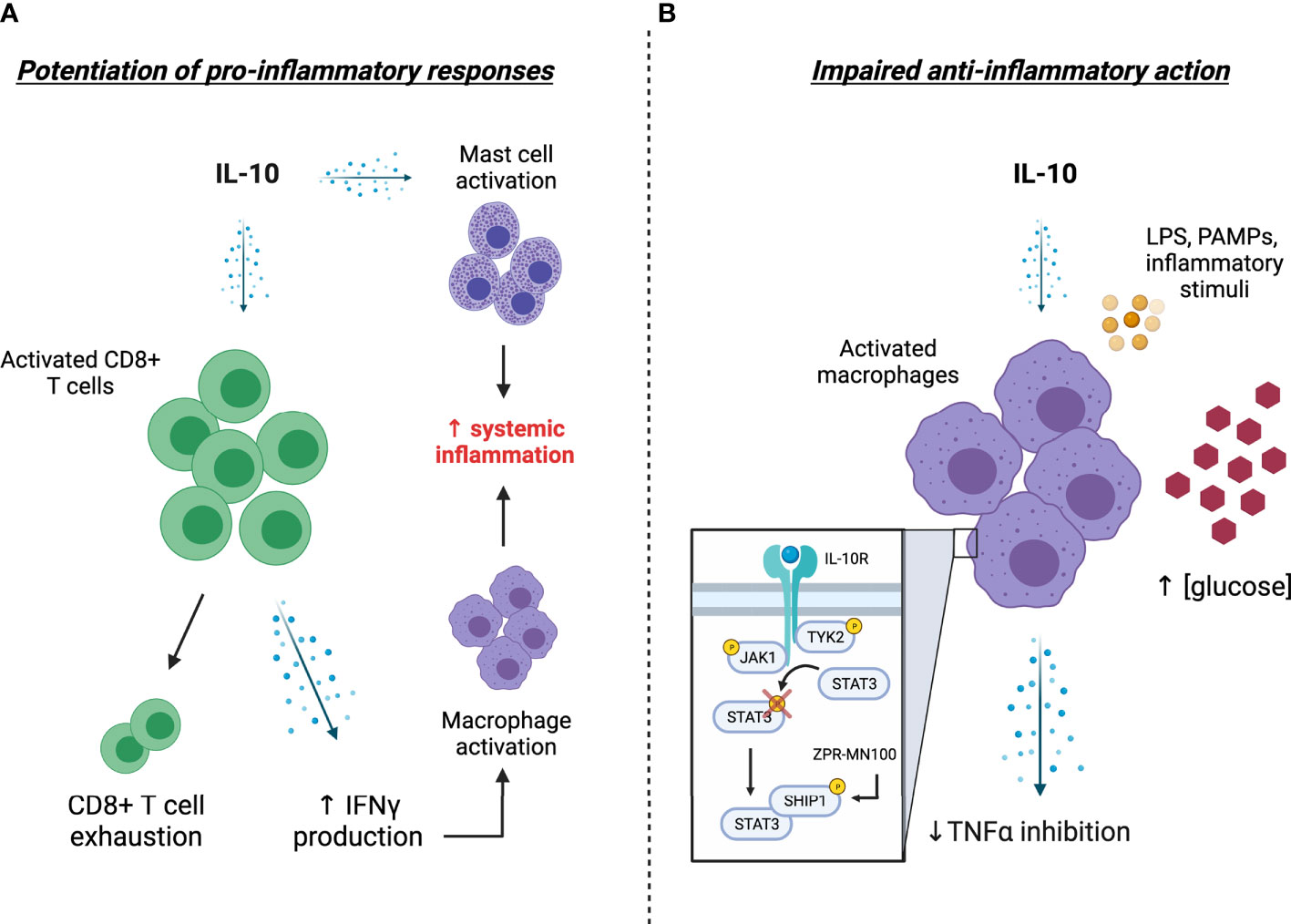
Older mutant mice developed increased hepatic B-cell and macrophage infiltration and fibrosis while simultaneously showing improved glucose metabolism and liver insulin action.
Yuan ZhaoHOST
The authors suggest that increased IL-10 production in peripheral tissues, including visceral adipose tissue and spleen, may contribute to preserve metabolic homeostasis despite progressive liver abnormalities.
Yuan ZhaoHOST
These findings illustrate how partial SHP1 dysfunction can produce different effects depending on cell and tissue context.
Yuan ZhaoHOST
Reduced SHP1 activity can enhance inflammatory responses in immune cells while relieving inhibitory control over insulin signaling in insulin-responsive tissues.
4 more episodes mention Interleukin 10.
Create an account to see the whole feed, search across every transcript, and follow the entities you care about.