Instrument landing system
200
MENTIONS
54
EPISODES
27
PODCASTS
Search complete. 200 mentions across 54 episodes found for "Instrument landing system".
Oct 31, 2026

speaker_18NARRATOR
DME receivers typically need a minute or two of stabilized flight directly to or from a VORTAC before displaying accurate GS or time to station information.
speaker_18NARRATOR
Some DME installations have a hold feature that permits a DME signal to be retained from one VOR TAC, while the course indicator displays course deviation information from an ILS or another VOR TAC.
speaker_18NARRATOR
VOR-DME RNAV Area Navigation, RNAV, permits electronic course guidance on any direct route between points established by the pilot.
speaker_18NARRATOR
While RNAV is a generic term that applies to a variety of navigational aids, such as LORAN-C, GPS, and others, This section deals with VOR-DME based RNAV.
2 HRS 44 MINS LATER
speaker_10NARRATOR
Use maximum elevation figures, MEFs, and other easily obtainable data to minimize chances of an in-flight collision with terrain or obstacles.
speaker_10NARRATOR
Airport.
speaker_10NARRATOR
What lights are available at the destination and alternate airports? VASI or PAPI or ILS glide slope guidance? Is the terminal airport equipped with them? Are they working? Will the pilot need to use the radio to activate the airport lights? Check the notices to airmen, NOTAMs, for closed runways or airports.
speaker_10NARRATOR
Look for runway or beacon lights out, nearby towers, etc.

Scott ManleyHOST
This would require an instrument approach, something, of course, that they trained for and flown many, many times.
Scott ManleyHOST
The T-38 as a training aircraft included nav radios that could be operated with things like ILS, VOR, and TACAN, which is the military radio navigation system.
Scott ManleyHOST
With flying on instruments, the idea is to use radio navigation to guide yourself to the destination and keep your aircraft away from the terrain.
Scott ManleyHOST
Nowadays, we have GPS everywhere.
Scott ManleyHOST
And these have been designed by specialists at the FAA who follow the Terminal Instrument Procedure Rules or TERPs.
Scott ManleyHOST
For a given airport, there'll be different approaches to each runway, and there might be different approaches using different technologies.
Scott ManleyHOST
For example, there might be an approach that uses a VOR beacon at the field, another one that uses ILS next to the runway, and these days you might have GPS.
Scott ManleyHOST
Those are actually found on most runways these days.
Scott ManleyHOST
And as they rotated into the air, they just didn't have enough lift.
Scott ManleyHOST
They ended up hitting the ILS.
Scott ManleyHOST
The plane crashed.
Scott ManleyHOST
A number of people were killed.

EmmetHOST
Air traffic control continued giving the crew radar vectors to line them up at the runway.
EmmetHOST
The crew tuned their navigation radios to the ILS frequency for runway 8L, the longest runway at Honolulu.
EmmetHOST
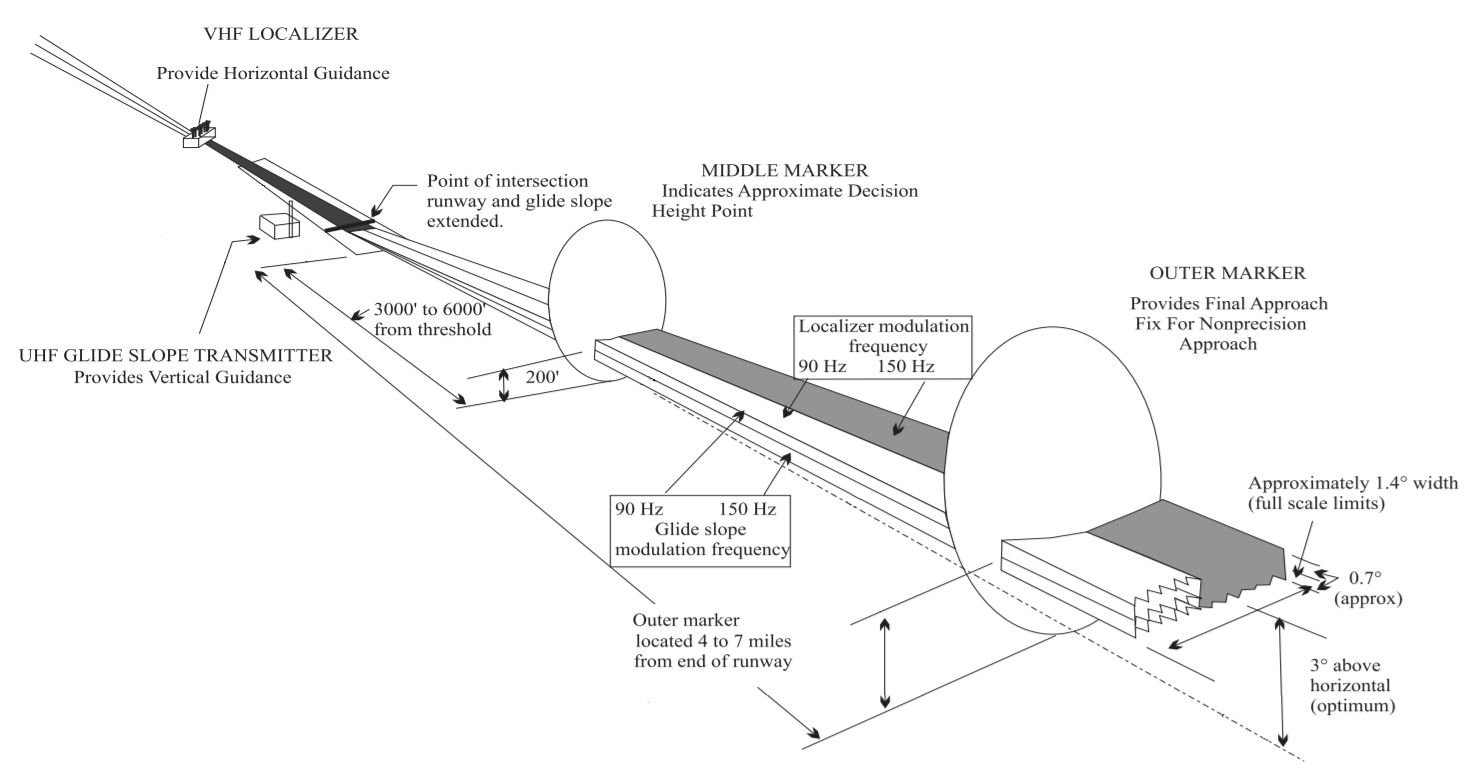
An ILS approach would allow them to use their instruments to accurately determine whether they were on the correct path to the runway, even if clouds or rain obscured their view.
EmmetHOST
At 17 miles from the runway, the crew began experimenting with the flaps.
EmmetHOST
If they could get them extended, it could potentially be life-saving.
Scott ManleyHOST
And these fan beacons would actually continue to operate even after the four-way beacon was replaced by something more modern.
Scott ManleyHOST
they would become the outer, middle, and inner marker beacons used by ILS approaches.
Scott ManleyHOST
And so, yes, some of these beacons still exist today.
Scott ManleyHOST
And of course, there were instrument approaches that used the four-way beacons.

Alpha GolfHOST
Almost
Romeo HotelHOST
like an ILS.
Romeo HotelHOST
Just set them up like an ILS.
Alpha GolfHOST
Yeah.
Romeo HotelHOST
In fact, a lot of crews want the ILS.
Romeo HotelHOST
At night.
Alpha GolfHOST
Just something for controllers to think about.
Romeo HotelHOST
We went to Spokane.

AaronHOST
the sound you had to think that the hell was just gonna like tear apart the aircraft Geez.
RyanHOST
I'm sure if it was a sunny day, they had to shoot the ILS approach on that one.
RyanHOST
Yeah.
RyanHOST
Well, just roll down the window and stick your head out the side.

C.W. LemoineHOST
It broke the gear.
C.W. LemoineHOST
He hit one of the ILS antennas, the, uh, coming into the runway and that broke the gear and was unlandable configuration.
C.W. LemoineHOST
And then you know, he had to eject and was unsuccessful because he was ejecting at the ground.
C.W. LemoineHOST
But it's interesting that the T-6, you know, it seems like it's been pretty sturdy aircraft.

Art WhittenGUEST
Maybe you can talk him into it someday.
Art WhittenGUEST
But anyway, we went out and flew, shoot an ILS approach into Elmendorf, which was right next door to Fort Rich, and went back.
Art WhittenGUEST
And that was my first and last Black Hawk flight.
Mike SwaniganHOST
That's an impressive helicopter.
Mike SwaniganHOST
And if they're not right, they can fly us somewhere we don't want to go.
Tom ClarkNARRATOR
Yeah.
Art WhittenGUEST
Very, very seldom, unless, let's say, a lawnmower working around an ILS glide slope antenna might have bumped it or something.
Art WhittenGUEST
Just that little bump would send that signal off.

MikeHOST
Also, another thing I do is I can teach you in our class, which we do in the, I teach you how to use Jepson charts worldwide, not just in the U.S.
MikeHOST
So this is the Jepson chart for London Heathrow for the ILS runway 27 left.
MikeHOST
So we have a class in actually showing you how to use Jepson charts.
MikeHOST
We use Jepson and FAA charts, just so you know.
8 MINS LATER
MikeHOST
This, if you ever go there, you got to be on your toes because you might get whacked.
MikeHOST
So I'll tell you why.
MikeHOST
There are just three ILS approaches in the Phoenix Valley.
MikeHOST
One is Sky Harbor.
44 more episodes mention Instrument landing system.
Create an account to see the whole feed, search across every transcript, and follow the entities you care about.