inferior vena cava
VeinWikipedia
143
MENTIONS
11
EPISODES
9
PODCASTS
Search complete. 143 mentions across 11 episodes found for "inferior vena cava".
Oct 27, 2026

Amin AfrasiabiHOST
What should change in practice tomorrow? First, define the thrombus level precisely before surgery.
Amin AfrasiabiHOST
Do not accept a report that simply says IVC thrombus.
Amin AfrasiabiHOST
Infrahepatic, retrohepatic, suprahepatic, and atrial extension are different operations.
Amin AfrasiabiHOST
Second, when thrombus reaches the hepatic veins or above, think of chemotherapy as operative risk reduction.
Amin AfrasiabiHOST
The mature oncologic question is not, can this tumor be removed now? It is, what sequence gives this child the safest complete resection with the least irreversible cost? Practice Pearl 1.
Amin AfrasiabiHOST
In Wilm's tumor, thrombus height predicts surgical complexity.
Amin AfrasiabiHOST
IVC thrombus is not an adequate operative description.
Amin AfrasiabiHOST
Practice PERL-2.

Christopher LabosHOST
She rattles off a whole bunch of tests and, uh, clearly this is a scenario where somebody googled how do you diagnose a blood clot and just copy and pasted all those tests because she lists off, like, three tests.
Christopher LabosHOST
She says, "We should get a CT, a VQ scan, and prep for an IVC filter." You wouldn't do all of those things.
Christopher LabosHOST
First of all, you do either a CT or a VQ scan.
Christopher LabosHOST
You don't do both, right?
Robyn FlynnHOST
Okay.
Christopher LabosHOST
One or the other is gonna make the diagnosis, and you would not put in an IVC f- an IVC filter is basically like a little umbrella that you put in the main vein of your body so that if clots are gonna travel from your leg into your lungs, you put that little umbrella there to catch, catch the clots.
Christopher LabosHOST
If it's already in your lungs, the IVC filter's not gonna do anything, and you just need to anticoagulate patients.
Christopher LabosHOST
It's a very complicated situation after surgery, 'cause if you give somebody a blood thinner, they're gonna bleed more.

speaker_0HOST
This is something we talk about in the clinical arena not infrequently, but also is probably often somewhat misunderstood.
speaker_0HOST
Then we will dive into something that has come kind of totally full central focus when it comes to fluid assessments and assessing that venous side, and that is the IVC inferior vena cava assessment as well as the VEXIS assessment.
speaker_0HOST
Um, hopefully all these things together will help us, uh, better understand kind of venous pressure, systemic venous congestion, fluid tolerance versus intolerance versus fluid responsiveness and all that good stuff.
speaker_0HOST
Ultimately, our goal is by the end of this episode, we connect some of that underlying venous physiology with some practical bedside assessments to help guide us when we're thinking about volume resuscitation in the critically ill patient.
16 MINS LATER
speaker_0HOST
Uh, we do always link the YouTube video in the description for the podcast.
speaker_0HOST
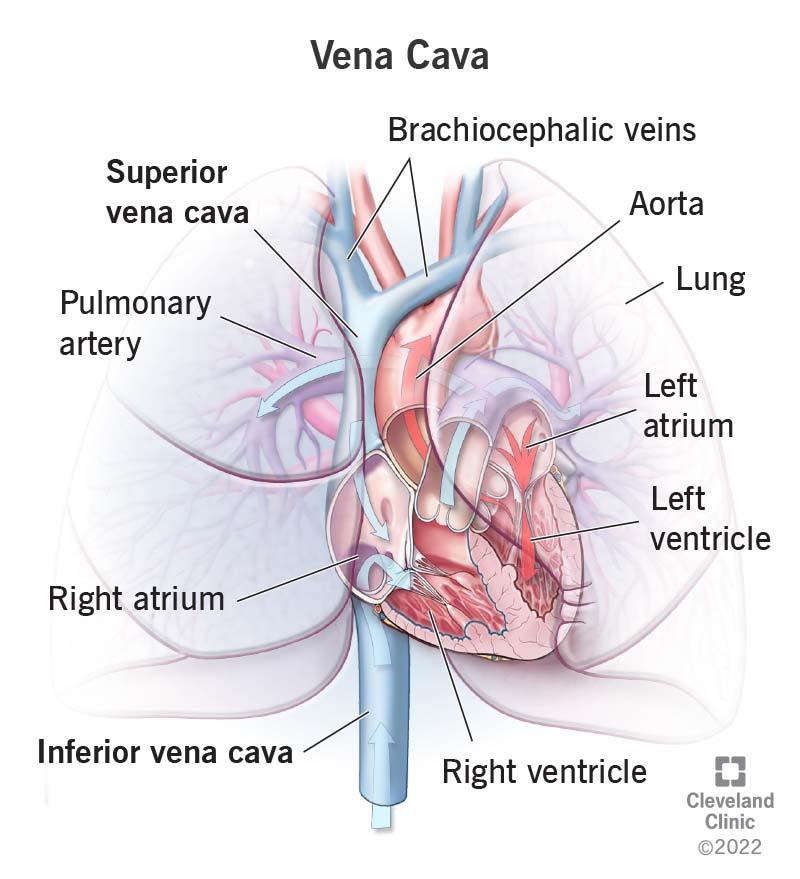
So heart again, right atrium, right ventricle, left atrium, left ventricle.
speaker_0HOST
And you have your superior vena cava and your inferior vena cava, right? IVC, SVC.
speaker_0HOST
And the way you measure it is you have a central venous catheter that you place usually into the internal jugular vein or the subclavian vein, and it, you want it to sit kinda right at this cavoatrial junction, the junction between the SVC and the right atrium.

Mark CreagerGUEST
But the data, and we mentioned this in the guidelines, that's been studied and published is that pulmonary embolism response teams reduce the time to therapeutic anticoagulation.
Mark CreagerGUEST
They also provide advice on whether or not an IVC filter should be used.
Mark CreagerGUEST
And frankly, since we've been using our teams, there's been a decrease in the use, the unnecessary use of IVC filters per implementations associated with reduced hospital and ICU length of stay.
Mark CreagerGUEST
And there's evidence that in some situations it may reduce mortality, but that's been disputed with other evidence.
Mark CreagerGUEST
But at the end of the day, it really helps us manage these patients in a much more prompt manner.
22 MINS LATER
Mark CreagerGUEST
Obviously, it's a very worrisome situation, and we do have recommendation regarding removing that, particularly trying mechanical thrombectomy or something like that.
Mark CreagerGUEST
surgical treatment.
Mark CreagerGUEST
IVC filters, I think, were pretty clear.

Eric NyHOST
Where do you want to go? I
Titus LeongHOST
was just going to say, so it goes from the deep veins of the legs up to your iliac veins, your common iliac veins, and then up the IVC and then into the right atrium, right? And then the right atrium, right ventricle, and then it hits to the pulmonary arteries.
Sithum FernandoHOST
Yeah.
Sithum FernandoHOST
Eric went too specific.

Benjamin RistauGUEST
Understand where the adrenal vein enters.
Benjamin RistauGUEST
It's almost always quite posterior into the IVC.
Benjamin RistauGUEST
And, and it can be hard to find, especially if there's a large adrenal mass.
Benjamin RistauGUEST
I mean, y- y- it doesn't take much retraction to avulse it, and then you probably don't have a lot of exposure in a, in tiger country.

Michael ChenHOST
I, I appreciate clarification on that.
Michael ChenHOST
Um, now getting a little more technical, I was particularly, you know, I liked your schematics of the hemiazygos and azygos connections to the IVC and the ascending lumbar system, and it made me really appreciate how challenging it mu- this must be, particularly since the anatomy can be pretty variable.
Michael ChenHOST
And to what extent, when you're trying to catheterize this venous space, uh, do you have to rely on, um, sort of just exploration or, or imaging? Because what, what seems to me challenging about this is that your target is oftentimes determined on myelography, uh, whereas if you're gonna go for transvenous embolization, you may not necessarily have that live, uh, target available for you to see.
Michael ChenHOST
And, uh, just how do you reconcile that? And, um, how do you feel confident that where you do end up choosing to embolize, you know, you, you're truly at your target and, and you can avoid important things like radicular medullary veins and, and things like that?
1 more episode mentions inferior vena cava.
Create an account to see the whole feed, search across every transcript, and follow the entities you care about.