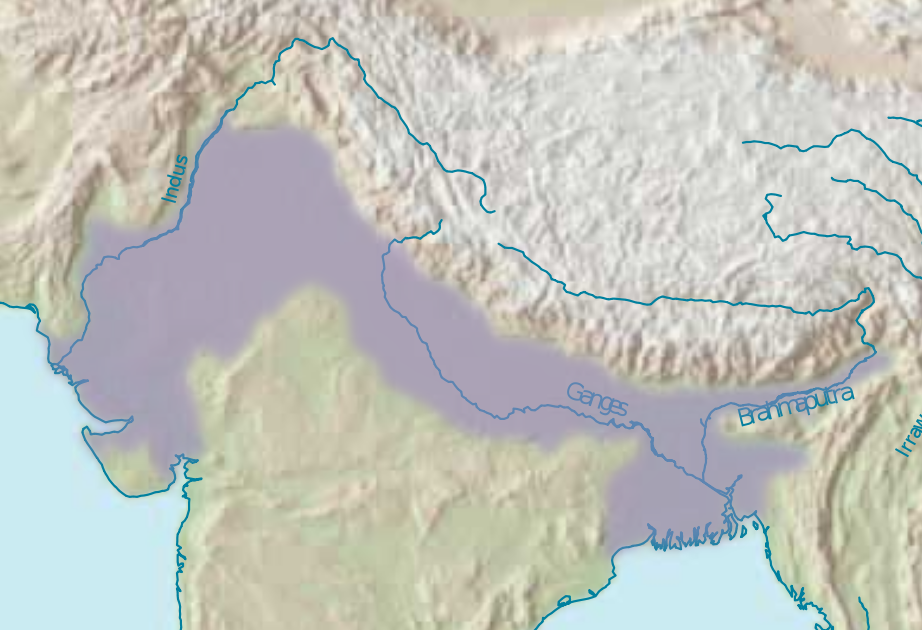
Indo-Gangetic Plain
PlainWikipedia
15
MENTIONS
7
EPISODES
6
PODCASTS
Search complete. 15 mentions across 7 episodes found for "Indo-Gangetic Plain".
Sep 21, 2026

Asad RahmaniGUEST
Now it is Uttarakhand onwards.
Asad RahmaniGUEST
Whichever Tarai is between the Bhabar or the low Himalayas and the Gangetic plains, the foothills, is long and it's a very productive land.
Asad RahmaniGUEST
because of the rivers, because of the monsoon, because of the things.
Asad RahmaniGUEST
And then it was present up to, from here to Bengal.

Nachiket KelkarGUEST
So I was somewhere always interested, just that it became a full-time vocation or you can say passion only from when I got a chance to really do my own independent project on freshwater dolphins.
Anish BanerjeeHOST
So you mentioned a Gangetic River Dolphin.
Anish BanerjeeHOST
What is its current distribution and conservation status across India and the wider subcontinent?
Nachiket KelkarGUEST
The Ganges River Dolphin, which is called Platanista gangetica, it's the scientific name, it's distributed across the Ganga, Brahmaputra, Meghna and the Karnapuli-Sanghu basins of India, Bangladesh and Nepal.
Nachiket KelkarGUEST
There's also a sibling species, the Indus River Dolphin, which is found in Pakistan and a very small population exists in India's Punjab also.
Nachiket KelkarGUEST
But the Ganges River Dolphin is relatively much widespread.
Nachiket KelkarGUEST
It occurs in almost all the major perennial rivers of the Gangetic Plains of India and Bangladesh, including the Brahmaputra, of course, and other basins like the Meghna and Karnapuli Sanghu, which is in southeastern Bangladesh.
Nachiket KelkarGUEST
And that covers almost a fairly large range in terms of riverine habitat, even though that habitat is fragmented and by dams and other things.

Patrick WymanGUEST
And eventually, after centuries of trying to mitigate these effects, they realize, "We can't live here in the numbers that we have before." Tons of people just move out.
Patrick WymanGUEST
They mostly move to the Gangetic Plain, and this ends up being the genesis much later for the second state system that emerges in South Asia.
Patrick WymanGUEST
You know, centuries and centuries and centuries later, this ends up being the roots of that.
Patrick WymanGUEST
But you've got a, you know, thousand years in between where there's no states.

Manisha Lath GuptaHOST
Orissa is also a good state which has a lot of diversity of rice ecologies.
Manisha Lath GuptaHOST
And of course, some amount of eastern Bihar, Jharkhand, Gangetic Plains.
Manisha Lath GuptaHOST
Basically, this crop is one of a floodplain.
Manisha Lath GuptaHOST
If you are on the banks of a river that floods up during the monsoon season, then on the banks of this river is where rice was grown traditionally.

Patrick WymanGUEST
Tons of people just move out.
Patrick WymanGUEST
They mostly move to the Gangetic Plain.
Patrick WymanGUEST
And this ends up being the genesis much later for the second state system that emerges in South Asia.
Patrick WymanGUEST
You know, centuries and centuries and centuries later, this ends up being the roots of that.

Leon SimonsHOST
Sorry.
Leon SimonsHOST
Um, and, and then in this, this smaller region, the Indo-Gangetic Plain, um, I don't know how d- how you pronounce it in, in Hindi, but, um-
Dan MillerHOST
Yeah
Leon SimonsHOST
... there's al- already 900 million people living.
Sanatan DekaGUEST
So if we see Manas landscape, Manas, I told before also, this is unique because of the geographical location of Manas.
Sanatan DekaGUEST
It's, it is situated in a confluence of the Brahmaputra Valley, then Gangetic Plain, the Eastern Himalaya.
Sanatan DekaGUEST
It's a confluence.
Sanatan DekaGUEST
So on the northern side, because they are in the history, like it was, there are dwars.