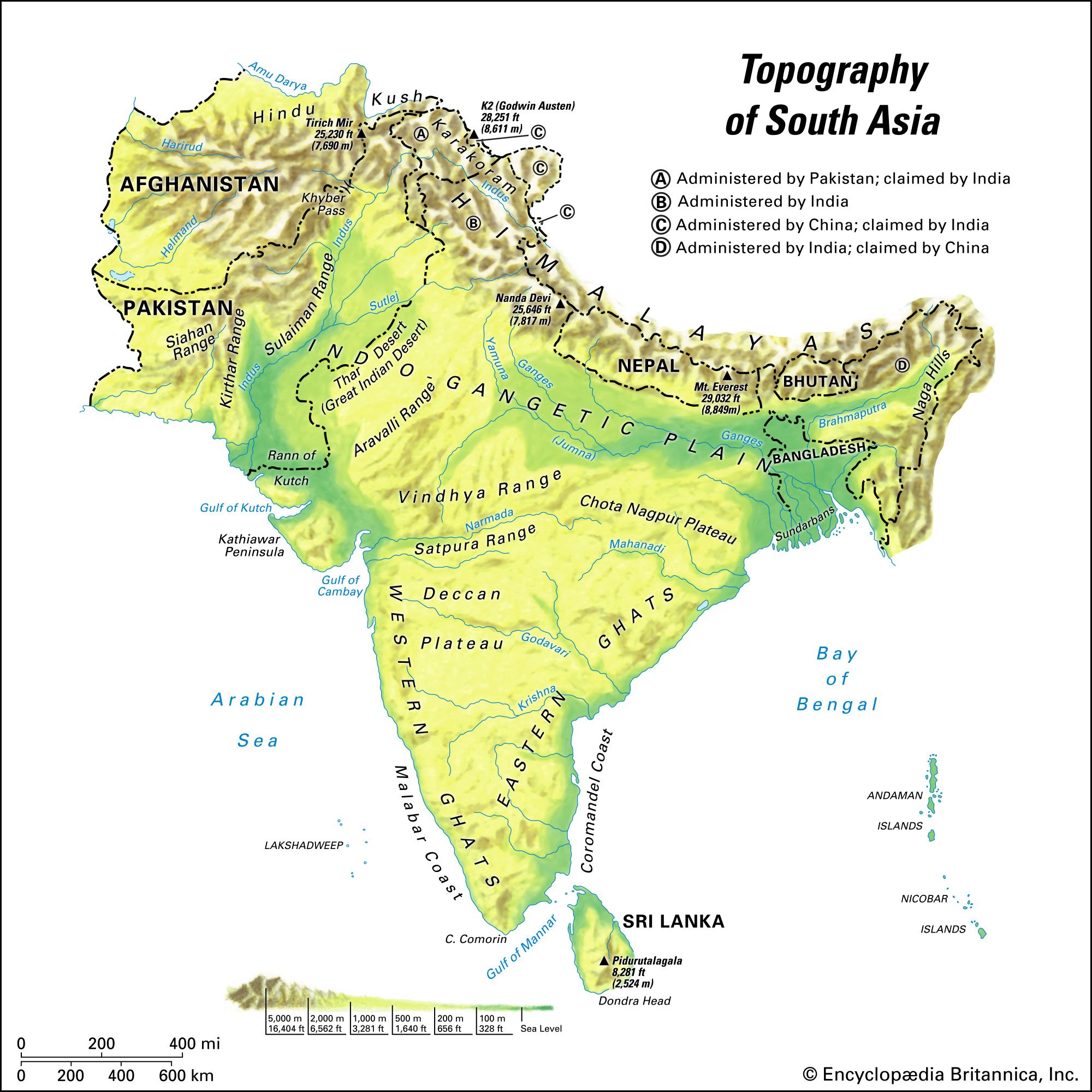
Indian subcontinent
Region in AsiaWikipedia
16
MENTIONS
12
EPISODES
12
PODCASTS
Search complete. 16 mentions across 12 episodes found for "Indian subcontinent".
Nov 3, 2026

J.P. WinslowVOICE_ACTOR
When I first saw the signs of the strange weapons, I was inclined to think so, but the remarkable character of the footmarks caused me to reconsider my views.
J.P. WinslowVOICE_ACTOR
Some of the inhabitants of the Indian Peninsula are indeed small men, but none could have left such marks as this.
J.P. WinslowVOICE_ACTOR
A Hindu proper has long, thin feet.
J.P. WinslowVOICE_ACTOR
The sandal-wearing Mohammedan has the great toe well separated from the others, because the thong is commonly passed between them.

Sami SadatGUEST
Al-Qaeda is still active.
Sami SadatGUEST
Al-Qaeda in Indian subcontinent has exploded exponentially.
Sami SadatGUEST
They have enlarged themselves.
Sami SadatGUEST
They have thousands of fighters.
Sami SadatGUEST
for a sightseeing.
Sami SadatGUEST
Whenever they travel to Afghanistan, they come with a purpose and they come with an intent to achieve their objectives and go back to Iran.
Sami SadatGUEST
As for Al-Qaeda in Indian subcontinent, at the moment they're recruiting a lot of people and using them against Pakistan in support of TTP, but also sending fighters to Sahel.
Sami SadatGUEST
This year, their transport of fighters from Afghanistan via Iran to Sahel has been hindered dramatically.

Mo FakhroGUEST
It became a a significant merchant company in the region.
Mo FakhroGUEST
He built it up to be an importer and exporter of products from the Indian subcontinent to the Arab world and then vice versa.
Mo FakhroGUEST
And then even within the Arab world, from Bahrain to Basra and then Basra to Dubai and Dubai to Qatar.
Mo FakhroGUEST
You
13 MINS LATER
Mo FakhroGUEST
But unfortunately, it ended, I would say, after colonialism ended.
Mo FakhroGUEST
So that didn't really get updated in our region.
Mo FakhroGUEST
It will happen in due course, but it's a reality in places like, primarily in the Middle East, Indian subcontinent, you see it in those places.
Mo FakhroGUEST
So I would say be careful with that.

speaker_6NARRATOR
an example will suffice.
speaker_6NARRATOR
In discussing the distribution of earthquakes, it is noted that the great earthquakes which shook the Mississippi Valley in 1811 to 1812 are among the very few instances of violent and long-continued shocks in a region far from any volcano, and the obsolete Humboldtian notion of connection with West Indian volcanoes is quoted approvingly, while the notable shocks that have devastated both sides of the Indian Peninsula, far from volcanoes, though about the depositing grounds of great rivers, and even our own Charleston earthquake, which, through the studies of Dutton, threw more light on seismism than any other recorded in history, are ignored.
speaker_6NARRATOR
It is chiefly on the dynamic side, or the side of agency, that the old and the new are thus confused.
speaker_6NARRATOR
On the descriptive side, the chapters are generally up to date, while in paleontology, especially in connection with vertebrate fossils, the work stands in the van of modern knowledge.

speaker_4NARRATOR
The greater part of the passengers from Brindisi were bound for India, some for Bombay, others for Calcutta by way of Bombay, the nearest route thither.
speaker_4NARRATOR
Now that a railway crosses the Indian Peninsula.
speaker_4NARRATOR
Among the passengers was a number of officials and military officers of various grades, the latter being either attached to the regular British forces or commanding the sepoy troops, and receiving high salaries ever since the central government had assumed the powers of the East India Company.
speaker_4NARRATOR
For the sub-lieutenants get £280, brigadiers £2,400, and generals of divisions £4,000.
15 MINS LATER
speaker_4NARRATOR
This railway does not run in a direct line across India.
speaker_4NARRATOR
The distance between Bombay and Calcutta, as the bird flies, is only from one thousand to eleven hundred miles, but the deflections of the road increase this distance by more than a third.
speaker_4NARRATOR
The general route of the great Indian peninsula railway is as follows.
speaker_4NARRATOR
Leaving Bombay it passes through Salsette, crossing to the continent opposite Tana, goes over the chain of the western Gouts, runs thence northeast as far as Burhampur, skirts the nearly independent territory of Bundelkund, ascends to Allahabad, turns thence easterly, meeting the Ganges at Benares, then departs from the river a little and descending southeastward by Burdivan and the French town of Chandernagor, has its terminus at Calcutta.

Manjesh RanaGUEST
...
Manjesh RanaGUEST
this is something that we have seen in this particular part, Indian subcontinent, in India as well, as well as in the other parts, that there is a democratic backsliding that doesn't always happen through, uh, outright cancellation of elections like in some countries.
John AntiqueraHOST
Yes.
Manjesh RanaGUEST
But it can also occur through different ways, like through weakening oversight institutions or sh- uh, through, uh, putting some limitations or restricting civil society, or limiting, uh, independence of media, or also undermining the confidence of EMBs themselves.

Lars JensenHOST
More and more deep sea services are being switched to a Suez routing.
Lars JensenHOST
This is, as I've also said previously, undeniably good news, normalizing the Asia-Europe trade and now also some services, the India subcontinent to Europe trade, India subcontinent to US East Coast trade.
Lars JensenHOST
Taking that by Suez again, definitely good news.
Lars JensenHOST
The risk here is the Houthis.

Robin D. LawsHOST
Yeah.
Robin D. LawsHOST
And let's start out with How Maritime Trade in the Indian Subcontinent Shaped the World, Ice Age to Mid-Eighth Century by Nick Collins.
Kenneth HiteHOST
Now, I would have bought this book even if it had been a straight book with that title and on that subject matter.
Kenneth HiteHOST
But as I was flipping through it in the store, Robin, I believe I mentioned to you oh, he's talking about the global flood of 5600 BC, as though it's a thing, as opposed to a crazy idea.
2 more episodes mention Indian subcontinent.
Create an account to see the whole feed, search across every transcript, and follow the entities you care about.