Indian country
87
MENTIONS
19
EPISODES
13
PODCASTS
Search complete. 87 mentions across 19 episodes found for "Indian country".
Sep 24, 2026

Mike CliffordHOST
Next, tribal colleges in Montana and across the country are facing steep federal funding cuts and inconsistent support, according to a new report.
Laura HatchCORRESPONDENT
The American Indian College Fund and the Brookings Institution Study finds chronic underfunding in Indian Country.
Laura HatchCORRESPONDENT
Fort Peck Community College Interim President Elijah Hopkins says federal grants have become extremely competitive and his college has lost several of them over the past few years.
Elijah HopkinsSOUNDBITE_SPEAKER
And the same amount of students, the support services to pay for staffing and for other technological supports has really entered our ability to provide qualitatively strong services to all

Joey CliftGUEST
And the book, if you're not familiar with it, it's a comedy satire textbook about all the, you know, Native American history, culture, and notable people that aren't taught about in schools.
Joey CliftGUEST
Kind of like if The Onion or The Daily Show wrote a book about Indian country.
Orli MatlowHOST
Yeah, I learned a lot from the book, including stories of Native badassery.
Orli MatlowHOST
And so as a screenwriter, what story from Native history do you want most to see adapted into a movie?
Joey CliftGUEST
So one of the things that was so great about researching this book and writing this book is, you know, like I'm enrolled Cowlitz.
Joey CliftGUEST
I grew up on the Toledo Preservation.
Joey CliftGUEST
I'm native, but I'm not like an expert of all things, you know, Indian country.
Joey CliftGUEST
I, you know, I know what I know from lived in experiences.

Kash PatelSOUNDBITE_SPEAKER
These subjects are literally the worst of the worst, and this is what happens when you pick up the phone and call your partners.
Kash PatelSOUNDBITE_SPEAKER
Indian Country is something that's deeply important to me and something that I didn't want to have forgot.
Kash PatelSOUNDBITE_SPEAKER
So Operation Steadfast Promise is the largest ever surge to Indian Country across our country.
Kash PatelSOUNDBITE_SPEAKER
We have almost 500 FBI employees dedicated to this mission alone that has never happened in the history of the FBI.
Kash PatelSOUNDBITE_SPEAKER
We also launched Voices Not Forgotten for Indian Country.
Kash PatelSOUNDBITE_SPEAKER
If you're a missing person, if you're a victim, if you have information regarding the most high-profile cases on Indian Country, this FBI quadrupled the reward to at least $25,000, and it's going to be an enduring, continuing program.
Kash PatelSOUNDBITE_SPEAKER
We have investigated more and opened more Indian Country investigations during these last 18 months than any FBI before.
Catherine ChristianPANELIST
We've also opened up the Billings, Montana field office to add resources to

James F. JordanHOST
Who is it that actually owns that outcome from step A to step B to step C to step D all the way to Z?
Mo Brings PlentyHOST
By rights, it should be Indian country, but they don't.
Mo Brings PlentyHOST
You know, in the other episode, I talked about the importance of leadership.
Mo Brings PlentyHOST
Here's where the people in Indian country need to start questioning and start looking at the leaders that have been elected and sitting in those positions that could be the game changer that can make or break Indian country or even make or break their own communities.
Mo Brings PlentyHOST
If they're not doing their job that they've been elected to do or have been hired to do, then get rid of them.
Mo Brings PlentyHOST
Because then you're not going to see the outcomes.
Mo Brings PlentyHOST
You won't.
Mo Brings PlentyHOST
And even that individual who may have a buddy, let's take healthcare, for example, and why I keep bringing up healthcare, because healthcare is a great avenue for Indian country to utilize.

Che JimHOST
But even when the federal government acknowledges a tribe's sovereignty, it can still have a lot of control.
Che JimHOST
State laws may not be enforced in Indian Country, But Congress can give states some power over tribal affairs in ways that diminish native sovereignty.
Che JimHOST
And it's done so before, without consulting native nations first.
Che JimHOST
For example, in 1953, Congress enacted Public Law 280, which gave state law enforcement control that they didn't previously have on native lands in six states.
Che JimHOST
Alcatraz was the beginning.
Che JimHOST
It was also giving permission to everybody in Indian Country that it's okay, you can stand up for your rights.
Che JimHOST
In the years that followed, plenty of Natives heeded that call, pushing the US government toward a more just relationship with Native nations, and that work is ongoing.
Che JimHOST
For example, the National Association of Food Distribution Programs on Indian Reservations consults with the U.S. Department of Agriculture to advocate for better access to fresh and traditional foods.
Che JimHOST
And really, all these layers are connected.
Che JimHOST
Take the term Indian country.
Che JimHOST
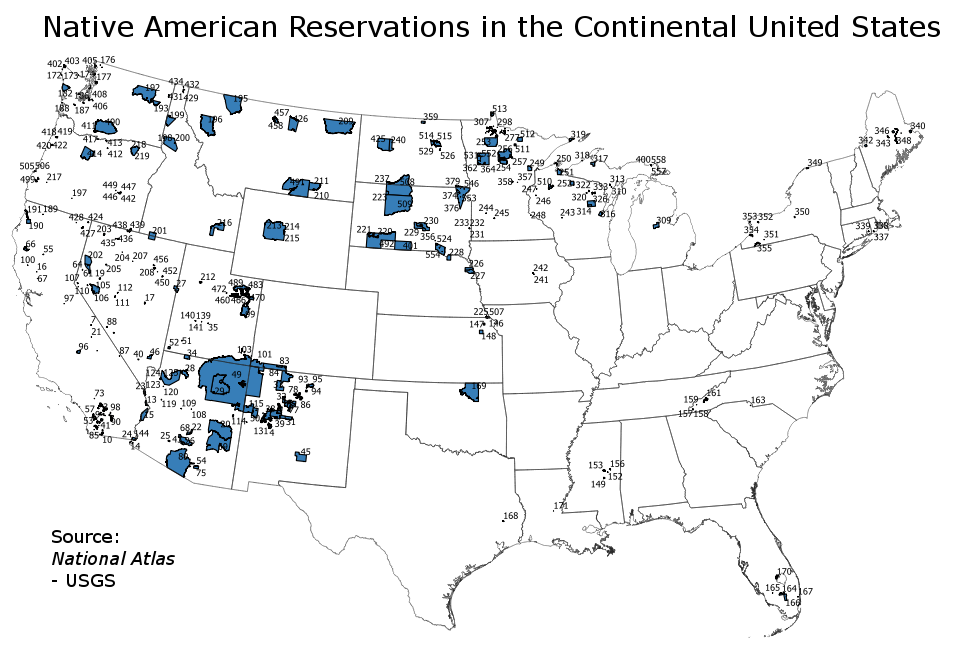
To us, that's just another word for home, but it's also a legal term that broadly describes land held in trust for Native American tribes, which includes lots of different types of lands.
Che JimHOST
all of it governed by federal Indian law.
Che JimHOST
All told, about 56 million acres of land in Indian Country is held in trust by the federal governments.
Che JimHOST
That means while the land officially exists for the benefit of the individual tribe or Indian, the federal government holds its legal title.
Che JimHOST
Which means tribes face far more barriers to using their land than private landowners would.
Lily GladstoneHOST
This has caused an untold number of Native women's stories to effectively disappear.
Lily GladstoneHOST
To make matters worse, crimes in Indian Country are difficult to bring to justice because, in many cases, Native American law enforcement isn't able to prosecute non-Native criminals.
Lily GladstoneHOST
We get more into this and other complications of federal Indian law in episode 16.
Lily GladstoneHOST
Thankfully, Native activism is making some headway on this front.
Che JimHOST
Basically, it means the U.S. government has agreed to use its authority mostly to defend tribal sovereignty and help repair the damage of centuries past.
Che JimHOST
and that means tribes have more direct involvement in the public services that are maintained and delivered in Indian Country.
Che JimHOST
But things aren't perfect, and tribal agencies often have to navigate a maze of bureaucracy to get the support that they need.
Che JimHOST
We're talking miles of red tape.
Che JimHOST
Land-back.
Che JimHOST
It shows up on t-shirts, billboards, flags, and street art across Indian Country.
Che JimHOST
But what does it actually mean? Is it a political movement? A philosophy? A form of protest? Well, it's sort of all of the above.
Che JimHOST
Basically, land-back describes any effort by Native people to reclaim authority over stolen land and resources.
9 more episodes mention Indian country.
Create an account to see the whole feed, search across every transcript, and follow the entities you care about.