Impella
20
MENTIONS
13
EPISODES
10
PODCASTS
Search complete. 20 mentions across 13 episodes found for "Impella".
Nov 3, 2026

BillGUEST
A doctor told me that she was likely going to need a heart transplant because her...
BillGUEST
Her heart function had dropped precipitously, and they had elected to put her on the Impella pump to give her heart a chance to recover.
Lauren Bright PachecoHOST
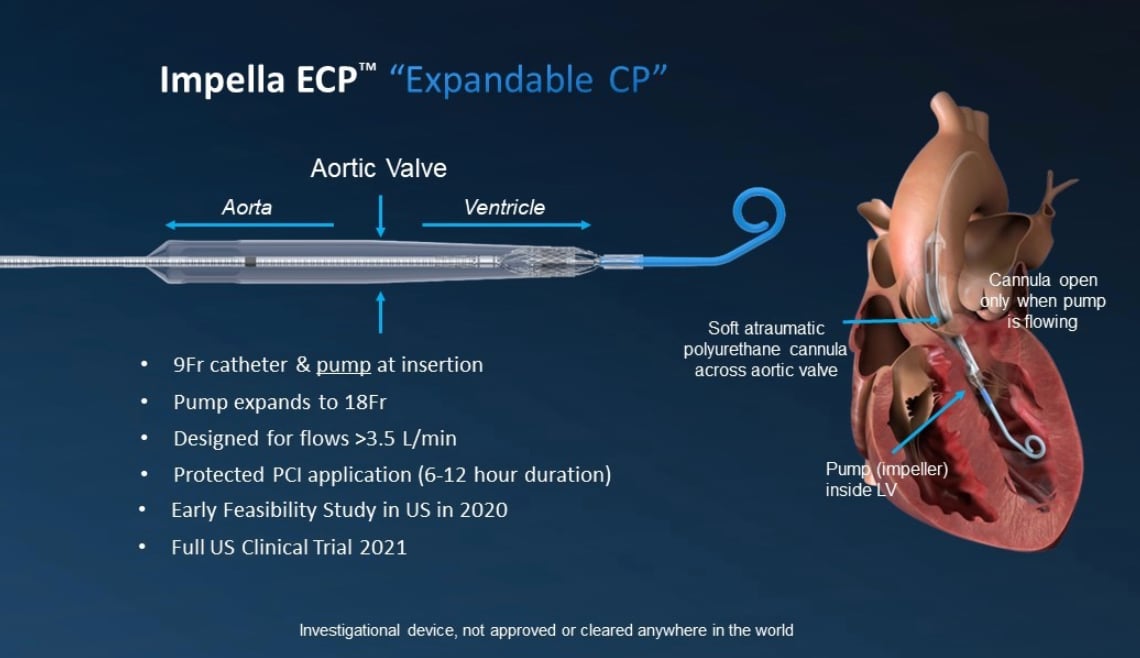
An impella heart pump is a device used temporarily.
Lauren Bright PachecoHOST
It is often referred to as a backup heart.

Heather BardelebenGUEST
It was already 50, 60% blocked and the spasm closed it up the rest of the way.
BillGUEST
A doctor told me that she was likely going to need a heart transplant because her heart function had dropped precipitously and they had elected to put her on the Impella pump to give her heart a chance to recover.
Lauren Bright PachecoHOST
An impella heart pump is a device used temporarily.
Lauren Bright PachecoHOST
It is often referred to as a

Gina MilnerGUEST
And the one other thing that I will say, I know you asked Dr. Corbett whether the product was internal or external.
Gina MilnerGUEST
And I do just want to clarify that while you can use our products around the vascular access sites and around Impella's and ECMO devices and things like that, the indication for all of our products is temporary topical external.
Gina MilnerGUEST
So we are not an internal absorbable product, which means no non-perpressible areas of the body like liver, spleen, kidney, abdominal aorta.
Gina MilnerGUEST
So just wanted to clarify that one thing for the audience.

Venu MenonGUEST
When you put an intra-aortic balloon pump, it would selectively, by causing afterload reduction in the arterial system, potentially has the benefits to reduce the shunt fraction and improve anti-grade perfusion.
Venu MenonGUEST
Now, there's a number of case reports where folks have used an Impella and other devices to support patients, so intra-aortic balloon pump is not the only supportive device we could use.
Venu MenonGUEST
But the way this question was framed, it was clearly the correct answer.
Venu MenonGUEST
Now, the other part that appears in the guidelines for the first time, because this has not been previously mentioned, is there are very few guidelines where the level of evidence is based on expert consensus.

Kayleigh SummersGUEST
I was on ECMO.
Kayleigh SummersGUEST
I had something called Impella for my heart.
Kayleigh SummersGUEST
And most notably for this conversation, I required a hysterectomy and the removal of one of my ovaries in order to save my life.
Amanda WhiteHOST
Yeah.
Venu MenonGUEST
In fact, most studies in cardiogenic shock have more than fifty percent of people with cardiac arrest.
Venu MenonGUEST
So the question does come, is the benefit o-of the Impella device in danger because of the device itself or because of our ability to exclude patients who would not have benefited from putting in the device, that is arrest patients? And that's a question we certainly can't answer.
Venu MenonGUEST
The second part was the trial took a whole ten years to enroll, and while the, the mortality benefit is clear-cut, the frailty index of the trial is fairly small.
Venu MenonGUEST
So a few patients not meeting the endpoint could have changed the results of the study.

John MandrolaHOST
Now, speaking of cost, let's talk microaxial flow pump cost analysis of the DANGER-SHOCK trial.
John MandrolaHOST
Of course, the microaxial flow pump is Impella, but on this podcast, we try to use generic names rather than brand names.
John MandrolaHOST
Now, JACC has published a research letter from the DANGER-SHOCK researchers on hospital cost of the microaxial flow pump in patients in DANGER-SHOCK.
John MandrolaHOST
These are patients with cardiogenic shock due to MI.
John MandrolaHOST
Now, before I tell you about cost, let's briefly review DANGER-SHOCK.
John MandrolaHOST
It's one of the most important trials of 2024.
John MandrolaHOST
Recall that before DANGER-SHOCK, there was zero, zero compelling RCT-level evidence that the microaxial flow pump, brand name Impella, uh, actually improved outcomes in MI-related cardiogenic shock.
John MandrolaHOST
Now, the DANGER-SHOCK trialists were careful about who got into this trial.

Meg HarrellGUEST
Like really simple.
Meg HarrellGUEST
This is how you troubleshoot the Impala.
Meg HarrellGUEST
This is what this alarm means on the A-line.
Meg HarrellGUEST
This is how to zero out the A-line.

Renee MinogueGUEST
He came there and, uh, it was an artificial heart company, which sounds really cool, but it turns out that wasn't a viable product that most patients could have.
Renee MinogueGUEST
And so he found this technology called Impella.
Renee MinogueGUEST
It's the world's smallest heart pump.
Renee MinogueGUEST
He invested in it.
3 more episodes mention Impella.
Create an account to see the whole feed, search across every transcript, and follow the entities you care about.