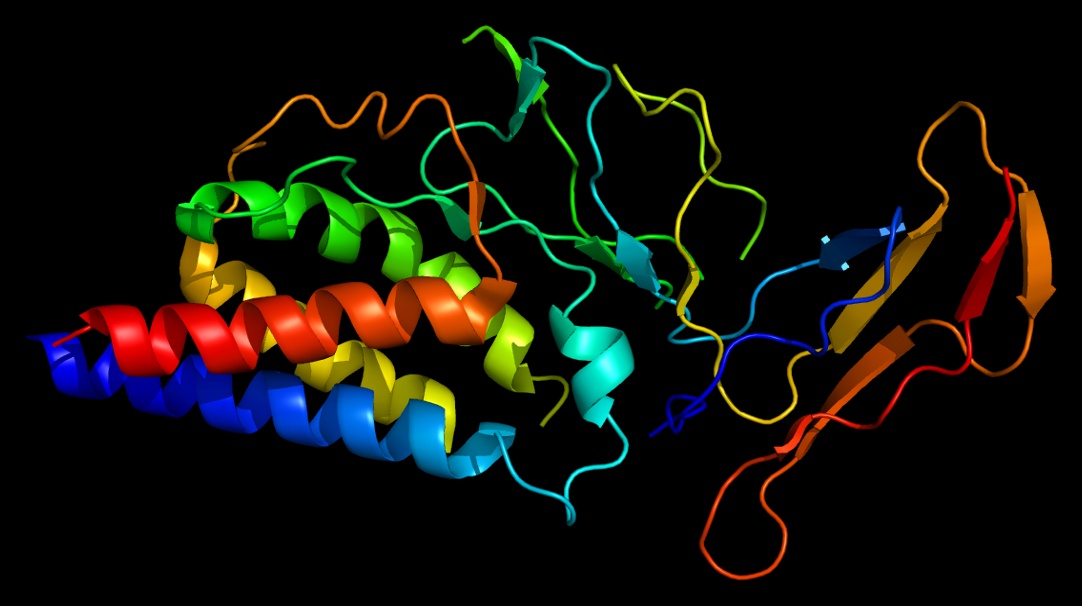
IL2RA
ProteinWikipedia
29
MENTIONS
11
EPISODES
8
PODCASTS
Search complete. 29 mentions across 11 episodes found for "IL2RA".
Nov 24, 2026

Daniel J. GuerraHOST
This is the detail I gave you before, but I'm going to go through it slowly and with more integrated phenotypic markers.
Daniel J. GuerraHOST
So DN1 is CD44 positive, but CD25 minus.
Daniel J. GuerraHOST
DN2 becomes CD25 positive and remains CD44 positive.
Daniel J. GuerraHOST
DN3 is loses CD44 but maintains CD25 expression, and then DN4 becomes CD44 minus and CD25 minus, excuse me.
Daniel J. GuerraHOST
Now, why it goes through that change in protein expression on the surface of the cell allows those cells to be processed during these events.
Daniel J. GuerraHOST
So it's not just that we measure this and call them double negative and double positive.

Sunil BhandariGUEST
One is Campath, which is a CD52 drug, which basically depletes your lymphocytes.
Sunil BhandariGUEST
Or Basalixamab, which is CD25 and blocks interleukin-2, which allows the immunosuppressive cascade.
Sunil BhandariGUEST
And rather than give you a lecture on immunosuppression, just to make it simple about the other drugs.
Sunil BhandariGUEST
So we have the calcineurin inhibitors, totacrolimus and cyclosporine.
Daniel J. GuerraHOST
And where we see that, what stage? Well, we see it in the double negative one stage.
Daniel J. GuerraHOST
So still double negative for the CD4, CD8, but the DN1 stage, looking at other proteins, it's going to have this phenotype, CD25 minus CD44 positive.
Daniel J. GuerraHOST
at the DN1 stage.
Daniel J. GuerraHOST
So constitutive expression of NOTCH1 signaling in the hematopoietic stem cells definitely blocks B-cell differentiation and leads to ectopic development of an immature double positive T-cell in the bone marrow.
Daniel J. GuerraHOST
And there are many functions for that receptor, essentially involving protection from activation-induced cell death.
Daniel J. GuerraHOST
So, under a steady-state condition, CD4 positive, CD25 positive, FOXP3 positive Tregs will constitutively express high levels of the GITR gene.
Daniel J. GuerraHOST
Remember, that's a glucocorticoid-induced tumor necrosis factor receptor, okay? Now, that is found specifically with that genotype, CD4, CD25, FOXP3.
Daniel J. GuerraHOST
Now, that's going to be a different phenotype for those Tregs than your standard CD4 positive, CD8 positive T-cells.
Daniel J. GuerraHOST
Now the outcome of the GITR signaling, with its high level of expression in Tregs, is functional inactivation.
Daniel J. GuerraHOST
And if there is a polymorphism, either in the cytokine itself, interleukin-2, or the receptor it binds to on the Treg cell, which is the interleukin-2 RA, we see that particular polymorphic response in type 2 diabetes, which, as you know, is a chronic pro-inflammatory disease.
Daniel J. GuerraHOST
So, pro-inflammatory cytokines, like interferon gamma, tumor necrosis factor alpha, they directly affect Treg activity.
Daniel J. GuerraHOST
So many of the Treg-associated interactions on its surface are with the multiple receptors on the surface, such as CD25, the GITR, the interferogamma receptor, the tumor necrosis factor receptor, the OX40 receptor, and VEGF factors on the surface of the Treg cells.

Dave FarinaHOST
IL+, CD69+, CXCR3+, and CXCR6+.
Dave FarinaHOST
ILC2s express surface markers such as IL7RA, CD25, ST2, SCA1, and KLRG1.
Dave FarinaHOST
ILC3s are NK1.1-, NKP46+, CD127+, and CCR6+.
Dave FarinaHOST
One of the earliest identified ILC subsets was characterized as CD4+, CD3-, hematopoietic cells involved in the generation of lymphoid tissues during fetal development.
Daniel J. GuerraHOST
Now, once the pathogen appears to be effectively controlled by the immune response, regulatory T cells, the Tregs, inhibit the Th response.
Daniel J. GuerraHOST
And indeed, Tregs comprise about 10, sometimes up to 15% of all the peripheral CD4 positive T cells expressing the surface protein CD25, which of course is the IL-2 receptor alpha chain.
Daniel J. GuerraHOST
So that's acting as a subtractive modulator of the immune response, thereby preventing autoimmune response.
Daniel J. GuerraHOST
See? Now, except when it fails.

Jason GoldsmithHOST
So they found that transwell separation completely prevented this...
Jason GoldsmithHOST
CD25 loss on the basophils induced.
Jason GoldsmithHOST
But mast cells didn't reduce the CD25 expression.
Jason GoldsmithHOST
Remember, basophils kind of regulate mast cells.
Jason GoldsmithHOST
And this mast cell effect that they had found was only very modestly affected by loratadine.
Jason GoldsmithHOST
But that's why they kind of looked at the mast cells as like, hey, what's going on? But they went back to the basophils.
Jason GoldsmithHOST
and said, okay, the basophils are touching the Tregs, but not all of their effects on the signaling seem to be through loratadine, only part of them.
Jason GoldsmithHOST
And they found that it's cleaving, this protease cleaves CD25 on the Tregs and blocks the

BasharHOST
We really don't want to miss a hairy cell leukemia because it's actually very easily treatable.
BasharHOST
So, in this special second tube, we would expect the extra markers, things like CD25, CD103, CD123, and CD200 to all be brightly positive.
BasharHOST
The other distractor is what used to be called hairy cell variant, but it's now, again, that mouthful that we talked about last week.
BasharHOST
That is splenic B-cell lymphoma with prominent nucleoli as per the WHO5 update.
BasharHOST
This is CD103 positive and also CD11C positive, but CD25 and CD123 negative.
NickHOST
often you will have run an extra tube for your hairy cell interrogation because, again, you've run out of markers.
NickHOST
So, you're mostly left, if there's nothing in that tube, so you don't have a hairy cell and this extra tube's been run, and you're still in the CD5, negative CD10, negative bucket, what you're left with is marginal zone lymphoma and lymphoplasmocytic lymphoma.
BasharHOST
And then finally, you need to know hairy cell leukemia.

speaker_0NARRATOR
The minor criteria include 1. any activating KIT mutation with either high-sensitivity KIT assays on peripheral blood if available or via bone marrow aspirate, 2.
speaker_0NARRATOR
Aberrant mast cell markers such as CD25, CD2, or CD30, 3.
speaker_0NARRATOR
Elevated basal serum tryptase levels, or 4.
speaker_0NARRATOR
Atypical spindle-shaped mast cells.

Jeff MartinHOST
Okay.
Jeff MartinHOST
So here you've got these Tregs, and it's got CD25 is the IL-2 receptor.
Jeff MartinHOST
They tend to express the alpha subunit of this receptor, whereas unactivated T lymphocytes, like effector T cells, the anti-cancer ones, they don't express the alpha subunit.
Jeff MartinHOST
They just express beta gamma.
1 more episode mentions IL2RA.
Create an account to see the whole feed, search across every transcript, and follow the entities you care about.