idiopathic pulmonary fibrosis
IllnessWikipedia
39
MENTIONS
10
EPISODES
9
PODCASTS
Search complete. 39 mentions across 10 episodes found for "idiopathic pulmonary fibrosis".
Nov 3, 2026

Paul RobbinsGUEST
You can measure some disease outcome that you can treat.
Paul RobbinsGUEST
So, you know, people have looked at fibrosis, idiopathic pulmonary fibrosis, because it's a death sentence.
Paul RobbinsGUEST
If you're diagnosed with IPF, you know, there could be significant liver disease, you know, fibrotic disease, liver and other tissues.
Paul RobbinsGUEST
These are things where people are saying, OK, Now we can see if this works because these are lethal conditions with ineffective treatments currently.
Paul RobbinsGUEST
So that's where many of these approaches will be tested.

Gregory TinoGUEST
Yeah, no, there's no question.
Gregory TinoGUEST
And I've been fortunate in my career to be involved with two diseases, IPF being one and now bronchiectasis, where we finally broke through with effective therapy that we have to be approved.
Gregory TinoGUEST
And so I think the situation with bronchiectasis is akin to what we've seen with ILD to previous years with COPD, asthma, where there's a clinical focus, there's some science here.
Gregory TinoGUEST
And with the pace of medical discovery, I don't think there's any question that we're at the brink of really a number of new drugs, and a number of new approaches that are coming down the pike.

Keith MurphyGUEST
moving it into additional liver diseases, rare liver diseases, primary sclerosing, cholangitis is really attractive, things like that, where I think there's brick walls in front of the industry that we can break through.
Keith MurphyGUEST
IPF, you know, doing more in IPF.
Keith MurphyGUEST
Vizient has established an IPF model as well.
Keith MurphyGUEST
And then...
Keith MurphyGUEST
And then, you know, at VivoSim, we're basically at the tipping point for, you know, really fast growth with this in the liver tox services as well as we repurposed.

speaker_1HOST
So the AI found the novel target and then the generative side of their platform drew the exact molecule to block it.
speaker_0HOST
And it is now in a phase three trial called Genesis IPF3.
speaker_0HOST
And this isn't a small safety check, right? They are enrolling 320 patients across 47 centers.
speaker_1HOST
Yep, for a 52-week, double-blind, placebo-controlled trial.

Tara SperanzaGUEST
And so I said to the guys on the board who had asked me, you know, after we executed that deal, If I'd like to come in, I said to them, you know, with pleasure, but we really need to do a bit of a pivot because even though the drug's been doing so well up until the early clinical studies, diseases that they were looking at are such big diseases.
Tara SperanzaGUEST
And I said to them that a company of this size, given that you have such nice data in animal models of lung fibrosis, the company should be going after an idiopathic pulmonary fibrosis disease, or IPF, because it is, in my opinion, and the opinion of many KOLs that I speak to, an unmet need in that whilst there are a couple of drugs that are approved and on the market for IPF, these drugs are aimed at slowing the progression of the fibrosis in the lungs in this disease.
Tara SperanzaGUEST
And We had this data in animals that suggested that our drug actually reverses the fibrosis.
Tara SperanzaGUEST
And so by doing that, we get sort of access to what we see as an rare disease.
Tara SperanzaGUEST
So they give you a little bit of help to get through those early clinical development milestones.
Tara SperanzaGUEST
And so, you know, I got the board to sort of agree with me and we've started to pivot into that direction.
Andrew MusgraveHOST
Now, that lead asset that you mentioned, which is VB0004 for idiopathic pulmonary fibrosis, for investors that aren't new to that story, what is IPF and why is there such a significant unmet need?
Tara SperanzaGUEST
Yeah, great question.

Maya PatelHOST
A quick recap.
Maya PatelHOST
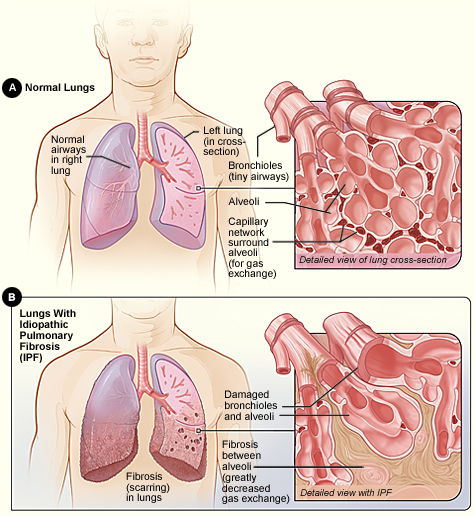
From idiopathic pulmonary fibrosis, or IPF, a progressive scarring of the lungs.
Maya PatelHOST
Bristol-Myers Squibb's Phase III aloft IPF trial tested admilpirant, an LPA1 antagonist, at 60 and 120 milligrams twice daily against placebo.
Maya PatelHOST
The primary endpoint was the change in forced vital capacity over 52 weeks.
Maya PatelHOST
a lung function measure of how much air a person can forcefully exhale.
Maya PatelHOST
BMS hasn't explained the split, and it doesn't by itself mean the lower dose works better.
Maya PatelHOST
The full data will have to account for it.
Alex MercerHOST
Syndax has stopped in IPF.

Graig SuvannavejhHOST
Um, we're gonna pivot the conversation to data, uh, from the week.
Graig SuvannavejhHOST
Uh, we're gonna start off in the IPF space where Bristol Myers Squibb had a drug, uh, I think it's called Admilparent, Admilparent.
Graig SuvannavejhHOST
Sorry about that.
Graig SuvannavejhHOST
Um, they had a successful phase three study, but maybe not so successful phase three, and there are some read-throughs to some other companies.
Graig SuvannavejhHOST
Um, so with that in mind, I think what I'll do is maybe I'll turn it over to, to Paul, uh, or Brian, whoever wants to lead off, uh, on the discussion on the IPF data.
Paul MatteisHOST
Uh, I'm happy to kick it off and then, yeah, love to hear Skorney's view.
Paul MatteisHOST
Um, I, uh...
Paul MatteisHOST
So yeah, so maybe for context, Bristol reported data that, you know, they are a hundred percent, um, describing as positive and I think they're probably right that it's positive for them in terms of getting a drug likely approved and a drug that could be a big product, um, for their drug that is, uh, an LPA-one receptor antagonist for idiopathic pulmonary fibrosis.
speaker_1HOST
There's Rentosertib.
speaker_1HOST
It's an AI-associated inhibitor developed for idiopathic pulmonary fibrosis.
speaker_0HOST
IPF.
speaker_0HOST
Yeah.
speaker_1HOST
The top-line numbers released to the public looked amazing.

Steve HorvathGUEST
Sure.
Steve HorvathGUEST
that originally are targeted to IPF or certain lung fibrosis, but interestingly, they rejuvenate also certain proteomics clocks, you know, so that's where we're at here.
George MurphyHOST
Sure.
George MurphyHOST
And then lastly, and you can choose to answer this question or not.