Idiopathic intracranial hypertension
ConditionWikipedia
19
MENTIONS
3
EPISODES
3
PODCASTS
Search complete. 19 mentions across 3 episodes found for "Idiopathic intracranial hypertension".
Oct 2, 2026

SarahGUEST
Yeah.
SarahGUEST
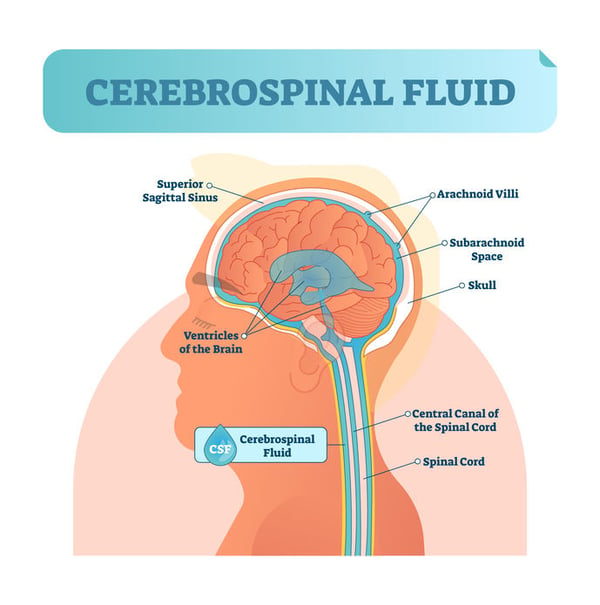
So I'm here today because September is, um, the awareness month for a condition called IIH, which is idiopathic intracranial hypertension, and what that means is, idiopathic means unknown cause, intracranial is inside the head or skull, and hypertension is high pressure.
SarahGUEST
So it's a condition where the cerebral spinal fluid either doesn't drain properly from your brain or over-produces in the brain, and it's not very well understood in the medical community or the wider community.
SarahGUEST
So the point of September being the awareness month for it is to let more people know that this condition exists and also to let more people know about what people with this condition can experience, because I have it myself.
SarahGUEST
Uh, some people get spinal fluid leaks where they'll b- have a clear liquid running from their nose.
SarahGUEST
Um- But that's less common.
SarahGUEST
And when I s- talk about common, so IIH is considered a rare disorder, and in New Zealand, rare disorders are considered anything that's, uh, less common than one per 2,000 people.
SarahGUEST
And IIH, the diagnosis rate is somewhere between one and 13 per 100,000 people.

Clete BarrickHOST
So the optic nerve comes up one more time here, but this time it's good news.
Clete BarrickHOST
So there's a condition called idiopathic intracranial hypertension, or IIH, where the pressure of the fluid around your brain runs too high.
Clete BarrickHOST
It mostly affects younger women with obesity, and it causes very severe headaches and can damage vision by squeezing the optic nerve.
Clete BarrickHOST
In a small trial, 15 women with IIH had pressure monitors implanted and on exenatide, the pressure came down close to 20% within two and a half hours of a dose, which is far too fast for it to be a weight loss effect.
Clete BarrickHOST
A larger database study found that IIH patients on GLP-1s needed fewer than half as many procedures as similar patients on standard treatment.
Clete BarrickHOST
So if you have IIH, that's worth raising with your neurologist or your eye doctor.
Clete BarrickHOST
With seizures, there's no sign that these drugs provoke them.
Clete BarrickHOST
Two database studies this year in patients with diabetes actually showed fewer new seizures on GLP-1s, but that doesn't make GLP-1 an epilepsy treatment, to say the least.

Leonard MessnerGUEST
It's a pleasure to be here.
Hamza ShahHOST
Today's publication is titled The Effect of GLP-1 Receptor Axenatide on Idiopathic Intracranial Hypertension, a Randomized Clinical Trial by James Mitchell and Colleagues.
Hamza ShahHOST
Dr. Mesner, can you share the different mechanism of action of a GLP-1 medication and how they're suspected to be helpful in patients with IIH?
Leonard MessnerGUEST
Sure.
Leonard MessnerGUEST
I think that really gets to the fundamental issue of the significance of this paper and perhaps where future therapeutic modalities go for the treatment of idiopathic intracranial hypertension.
Leonard MessnerGUEST
The choroid plexus is replete with receptors for GLP-1.
Leonard MessnerGUEST
And it's been shown in animal model studies that GLP-1 agonists significantly reduce intracranial pressure, specifically as it relates to the down regulation of CSF production.
Leonard MessnerGUEST
They were able to measure intracranial pressure very, very accurately at periods of two and a half hours 24 hours, and then at three months.