ICAM-1
ProteinWikipedia
16
MENTIONS
7
EPISODES
4
PODCASTS
Search complete. 16 mentions across 7 episodes found for "ICAM-1".
Sep 10, 2026

Perry WilsonHOST
Yeah, a nice systematic review in the Journal of the Academy of Nutrition and Dietetics in 2012 looked at 15 randomized trials, which randomized people to higher linoleic acid intake versus other fats, and not a single one showed an increased C-reactive protein in the high linoleic acid group.
Perry WilsonHOST
There was also no effect on IL-6, TNF-alpha, ICAM-1, LNP-selectin, fibrinogen, platelet activity, or any of the measured prostaglandins or thromboxane.
Perry WilsonHOST
So if you have a favorite inflammatory marker-
Emily OsterHOST
Thrumboxine did cause me concern.

Daniel J. GuerraHOST
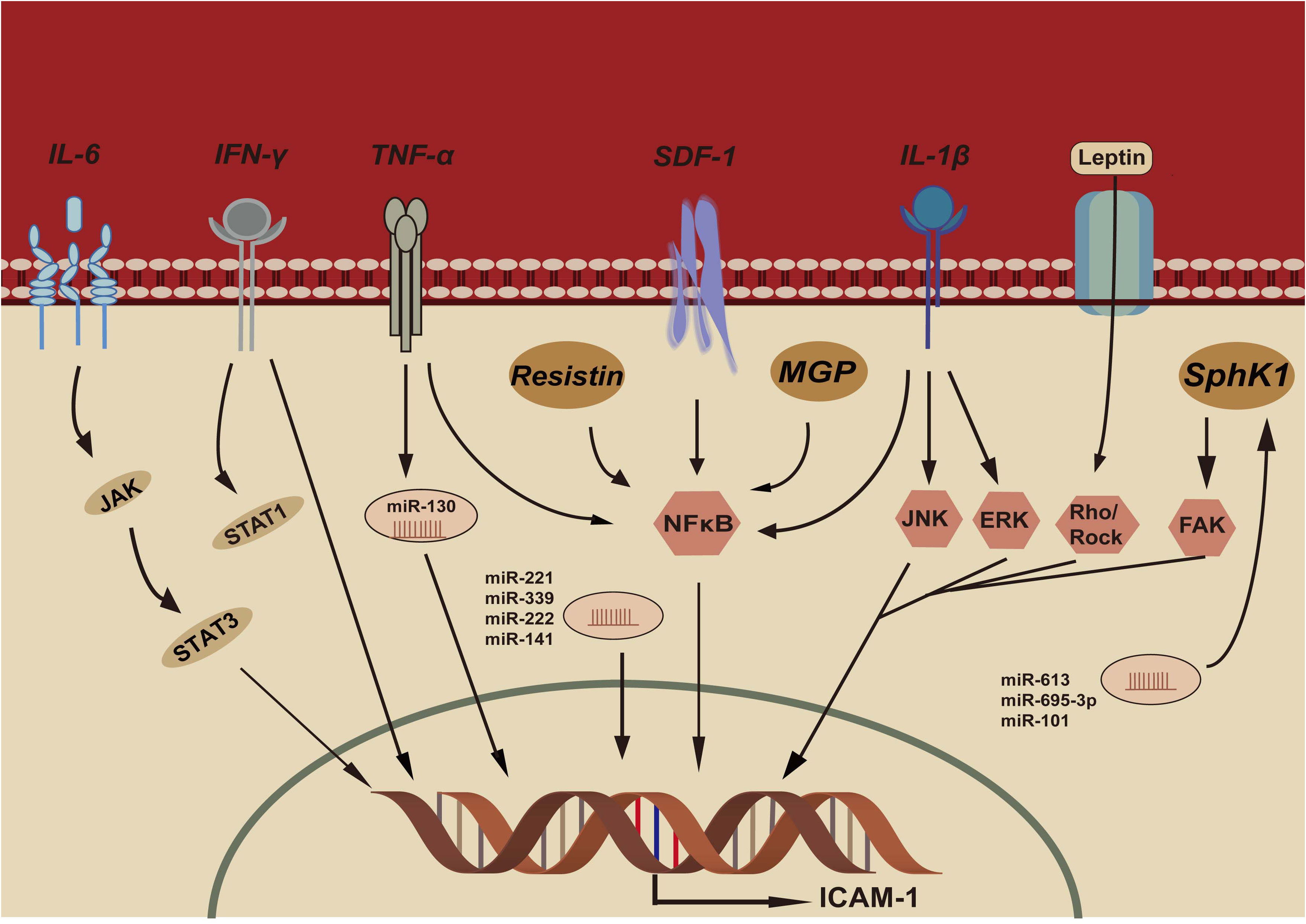
Both the P38 alpha MAP kinase and the neutral sphingomyelinase 2 are linked in the literature with TNF-alpha stimulated upregulation of adhesion molecules, proteins in particular.
Daniel J. GuerraHOST
That would include the vascular cell adhesion molecule 1, BCAM1, and the intracellular adhesion molecule that's called ICAM1.
Daniel J. GuerraHOST
And that's actually totally independent of the transcription factor N of kappa B, which normally controls the regulation of the expression of those adhesion proteins.
Daniel J. GuerraHOST
So what does that demonstrate? That the P38-MAF kinase functioning upstream of the neutral sphingomyelinase 2 is telling you that the neutral sphingomyelinase 2 is indeed a response to pro-inflammation initially induced by TNF-alpha.

Jacob RulloGUEST
So you probably want to reduce inflammation, get those tears filled with inflammatory mediators and toxic cytokines out of the eye.
Jacob RulloGUEST
either short-term steroids, transition to T-cell mediated or ICAM1 inhibitors, things that interfere with T-cells, then you can focus on getting the tears supplement in there that's going to give you a little bit more retention time.
Jacob RulloGUEST
But yes, I think from a very practical standpoint, anything that retains water is going to help Whether it's coming from the form of lack of tear production or from a lack of lipid in the tears, it's still going to give some help.
Jacob RulloGUEST
But again, as we already hinted, there is a generation of eye drops now that's adding in second, third, fourth types of elements that are trying to truly mimic the tri-layered tear film.
Daniel J. GuerraHOST
Now, lipoprotein lipase hydrolysis products generated from the VLDL fraction seem to be the ones that are associated to increase TNF-alpha secretion from the endothelial cells, and then increase intercellular adhesion molecule one.
Daniel J. GuerraHOST
That's the ICAM-1.
Daniel J. GuerraHOST
Remember this? ICAM-1 expressed at the transcriptional level, and then obviously the protein synthesized after translation.
Daniel J. GuerraHOST
Now, that occurs on the endothelial cells.
Daniel J. GuerraHOST
Now, in breast cancers, ICAM-1 is upregulated by TNF-alpha, and ICAM therefore seems to be involved, ICAM-1, in tumor cell invasion and metastasis.
Daniel J. GuerraHOST
It does so by promoting intravasation through the vasculature.
Daniel J. GuerraHOST
However, the role of lipoprotein utilization products generated by the LPL on cytokine secretion in breast cancer, that's a different process entirely.
Daniel J. GuerraHOST
So if you haven't figured out already, we're in the synthesis phase of these lectures.
Daniel J. GuerraHOST
I guess I got carried away with my prolegomena, right? [chuckles] Uh, what else we observed were surface ICAM.
Daniel J. GuerraHOST
So ICAM protein, ICAM-1 expression is, uh, is again on the surface of these cells, and that's following PCSK9 treatment.
Daniel J. GuerraHOST
You see a reduction in the ICAM on the surface.
Daniel J. GuerraHOST
And what is ICAM doing? Of course, yeah, next question is the function.
Daniel J. GuerraHOST
Well, it's required for cholesterol-rich lipid microdomains to stabilize in the membrane.
Daniel J. GuerraHOST
So that's a cholesterol protein interaction.
Daniel J. GuerraHOST
So you see reduced ICAM after treating with that convertase, and what, because the convertase obviously is also involved with altering many proteins on the surface of the plasma membrane of the cytotoxic T lymphocyte, like ICAM.

speaker_1GUEST
No primary A-landogen.
speaker_1GUEST
And without B7.2 and ICAM-1, the structural antenna is required to physically dock with the T-cell to deliver the secondary activation signal.
speaker_1GUEST
They're just missing.
speaker_0HOST
They just don't have the hardware.
speaker_1GUEST
No primary A-landogen.
speaker_1GUEST
And without B7.2 and ICAM-1, the structural antenna is required to physically dock with the T-cell to deliver the secondary activation signal.
speaker_1GUEST
They're just missing.
speaker_0HOST
They just don't have the hardware.