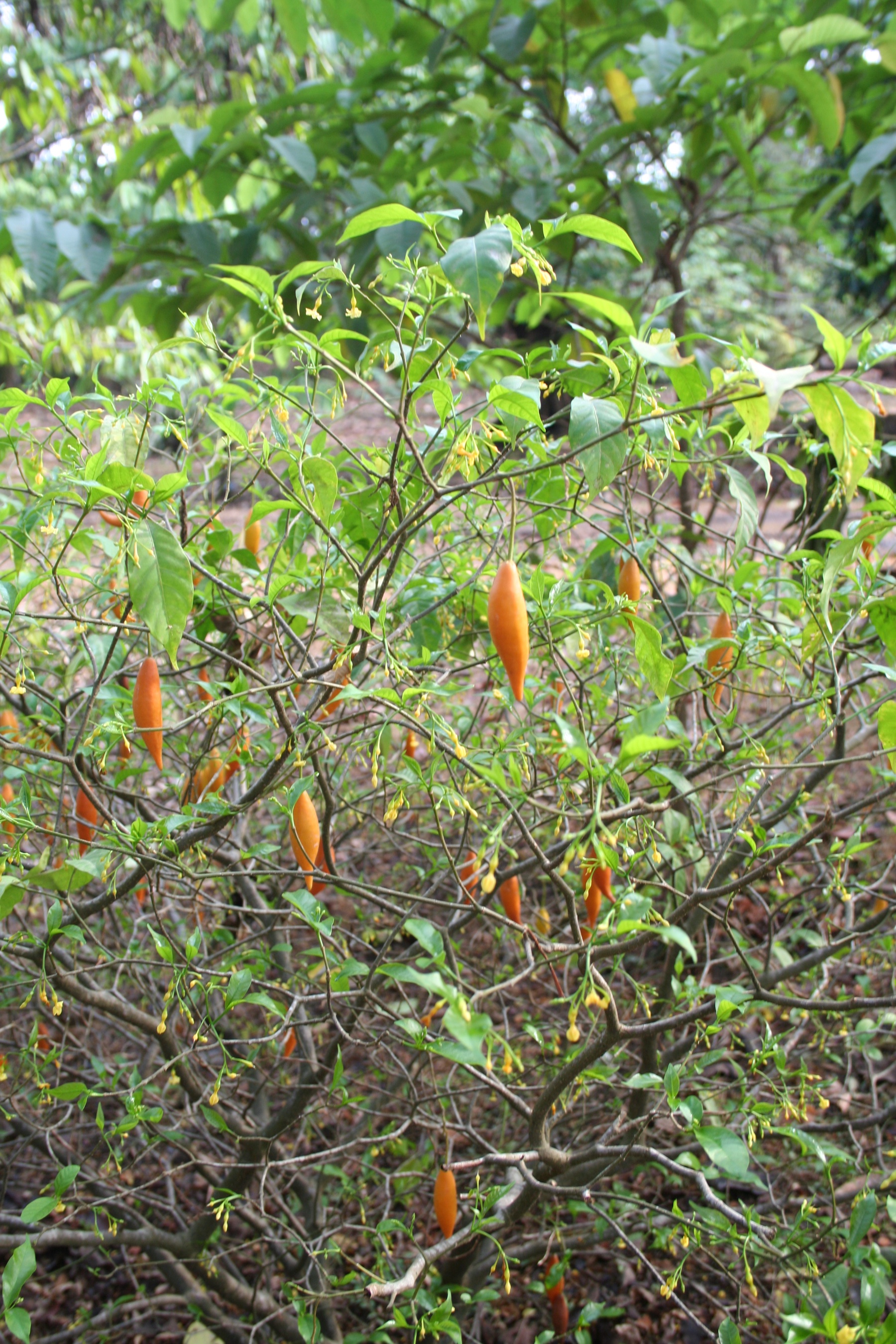
Iboga
PlantWikipedia
161
MENTIONS
11
EPISODES
11
PODCASTS
Search complete. 161 mentions across 11 episodes found for "Iboga".
Oct 27, 2026

speaker_1NARRATOR
She's an accomplished author, educator, conference host, entrepreneur, and international researcher and speaker, and the host of Dr. Charnelle's TruTV on YouTube.
speaker_1NARRATOR
She's joining us again today to share with us her experience with iboga, which opened her up to an entirely new chapter of her life, ultimately leading her to writing the book, Grandfather Iboga, exploring the factory reset of trauma, addiction, grief, neuroplasticity, and the human experience through plant medicine.
speaker_1NARRATOR
Please welcome my friend, Dr. Sharnell.
ShannaHOST
Thank you so much, Dr. Sharnell.
ShannaHOST
Yeah.
ShannaHOST
So thank you for that.
ShannaHOST
And then also your newest book, The Grandfather Iboga.
Sharnael Wolverton-SehonGUEST
Yes.

BlossomHOST
Today, we take you to Gabon, a Central African country where a sacred plant is at the center of a growing debate over culture, medicine, and ownership.
BlossomHOST
Now, the debate about this plant, this plant is called Iboga.
BlossomHOST
Iboga.
BlossomHOST
And for generations, it has played an important role in the spiritual traditions of local communities.
BlossomHOST
You may ask, why is it now getting very popular? It is because international interest in its medical benefits is beginning to increase, so concerns are growing over who should control it and who should benefit from its commercial use.
BlossomHOST
Iboga is a shrub native to the rainforest of Central Africa.
BlossomHOST
Its roots contain powerful substances, including ibogaine, which can affect the human brain and produce intense psychological experiences.
BlossomHOST
For generations, the plant has been used in Twed spiritual traditions, particularly in Gabon.

Molly HelfendGUEST
Yeah, of course.
Molly HelfendGUEST
So I am a journalist and I went to Gabon to investigate iboga.
Molly HelfendGUEST
And so iboga is a shrub native to Central Africa and its root bark contains psychoactive compounds.
Molly HelfendGUEST
um one of those alkaloids is ibogaine and so i think it's it's a pretty well-known substance now kind of making the news across america um but really it comes from this plant called iboga that's very important to the weedy traditions so the gabonese people who practice these these weedy traditions and i went to gabon to understand how many of these weedy people feel about the globalization and the commercialization of not only Ibogaine, but Iboga.
Molly HelfendGUEST
And that's what my investigation was.
Molly HelfendGUEST
And so much has happened through this journey.
Molly HelfendGUEST
It's very hard to get a visa.
Molly HelfendGUEST
It's very hard to build trust.

Samantha SweetwaterGUEST
Well, and what I would add is not only pr- so a book preserves.
Samantha SweetwaterGUEST
A farmer lives in living experience and process that lives in time, in bodies, in relationships, right? So not, so p- not only preserve but, um- Because preserve sort of implies put on a shelf where it's shelf stable.
Samantha SweetwaterGUEST
And but, but, um, create contexts where life is doing the most possible livingness in real places, in real bodies, on real land, in the context of biophysical change, right? We're, we're heading into an unprecedented time of climate disruption, an unprecedented time of, um, shifts in hydrology, uh, ecology, uh, temperature.
Samantha SweetwaterGUEST
So the, the goal wants to be something even more audacious than preservation, which is to create contexts where the contin- continuity of evolution in living in seeds, in soils, in hands, in hearts, in cultures is prot- protected and, um, kind of upheld as the very center of where our greatest hope lives for continuing to exist 10,000 years from now.
Alistair LangerHOST
I, I, I couldn't agree more.
Alistair LangerHOST
And so what I really love about this encounter is we're both, uh, I don't know, with one of our tentacles, right, and the many arms of the bodhisattva vow we, I reckon we both took, right? Um, um-
Samantha SweetwaterGUEST
Yeah, I've been a seed farmer, a biodynamic seed farmer in, in Southern Oregon for two years.
Samantha SweetwaterGUEST
And so, you know, I also speak from the experience of, of being a permaculturalist and a, a seed farmer and a biodynamic engagement, you know, person in, in living context, actually harvesting seeds, which is the full cycle of how do you-- You know, I, so I, I speak from a lot of understanding in this space.

Dan KieranHOST
And these are then often, in the literature at least, slightly trivialized as being nothing more than examples of extreme brain chemistry.
Dan KieranHOST
So this week I wanted us to visit Eva Franush, who's a friend of mine who's been working with plant medicines for many years, and Eva has just come back from an experience of iboga, which is known as the queen of psychedelics.
Dan KieranHOST
And the episode begins with Eva explaining about that experience.
Dan KieranHOST
There's no sign-off at the end, so I hope you enjoy the episode and I'll see you next time.
Ewa FranusGUEST
That's what I've heard.
Ewa FranusGUEST
So it came, I came across it a few years ago.
Ewa FranusGUEST
It's called iboga, and it didn't resonate 'cause I thought it's only for people who are addicted to opioids.
Dan KieranHOST
Okay.

Kat CourtneyGUEST
It's an attitude, not just something that is quote unquote natural, because everything comes from the natural world anyway.
Kat CourtneyGUEST
So that's the first thing that Ibogaine taught me in my treatment, my experience with it is like, honey, sacredness is an attitude, isn't just monopolized by the natural world.
Kat CourtneyGUEST
mindbend
speaker_0NARRATOR
non-ordinary and extraordinary states of consciousness for mindbend creative
Matthew DunehooHOST
have you.
Matthew DunehooHOST
There's so much that we can talk about.
Matthew DunehooHOST
And before we started rolling, we kind of decided to spend some time with Ibogaine today for sure.
Matthew DunehooHOST
The clinic that you are a part of opened about a year ago and previously you were involved in one way and now you're involved in a new multiple ways.

Jonathan DickinsonGUEST
So I picked up a book at one point by Daniel Pinchbeck, um, it was "Breaking Open the Head." At the time, it was a really, like, breakthrough story about, um The kinds of things that happened when you immersed yourself in the psychedelic experience, and his book starts in Gabon getting initiated into Bwiti Oh, wow.
Jonathan DickinsonGUEST
Iboga.
Jonathan DickinsonGUEST
So that's where I first heard about it.
Luke StoreyHOST
Wow, that's, that's pretty, uh, forward-thinking, you know, at that-
25 MINS LATER
Luke StoreyHOST
And then have a bit of bedrock to stand on to then build a life of recovery around that.
Jonathan DickinsonGUEST
Yeah.
Jonathan DickinsonGUEST
And I would say even in cases where-- 'cause you should have the choice, right? And, you know, you go back home, the whole world around you didn't take Ibogaine.
Jonathan DickinsonGUEST
It's the same world that you...

Justin StellmanHOST
But it was really fun to hear him talk about Ibogamine and the Iboga plant and things they're doing with addiction down, I think he was just coming back from the, what was it, the clinic Crossroads? The Crossroads Clinic.
Justin StellmanHOST
Yeah,
Aubrey MarcusGUEST
it's actually called Ibogaine, not Ibogamine, but yeah.
Justin StellmanHOST
Oh, Ibogaine.
Justin StellmanHOST
Okay.
Justin StellmanHOST
And yeah, so tell us a little bit about your journey into all that, that whole world, because I think it's really important for people to know, like our audience, I don't think is really very well educated on this type of subject matter and just knowing there's these types of plant medicines that are out there.
Aubrey MarcusGUEST
So ayahuasca can be a really important tool in the healing modalities just depending on how it's used and depending on how the person integrates after the experience.
Justin StellmanHOST
Yeah, totally.

TonyHOST
Yeah, it's a pleasure.
TonyHOST
So in the Western world, ibogaine is becoming extremely popular.
TonyHOST
I'm seeing it all over YouTube, all over Instagram, and what's becoming popular is the physical side.
TonyHOST
A lot of veterans are using it for PTSD, physical trauma, and I think that's really valuable.
TonyHOST
But what we don't see a lot of is the spiritual side of ibogaine.
TonyHOST
And as somebody who has studied with and been initiated by the Bwiti tribe themselves, we're really excited to talk to you about the spiritual side.
TonyHOST
So if somebody were only to listen to the first, let's say, three to five minutes of this podcast, what would you wanna share with them about the spiritual side of ibogaine?
Marissa FrancoGUEST
Mm.
1 more episode mentions Iboga.
Create an account to see the whole feed, search across every transcript, and follow the entities you care about.