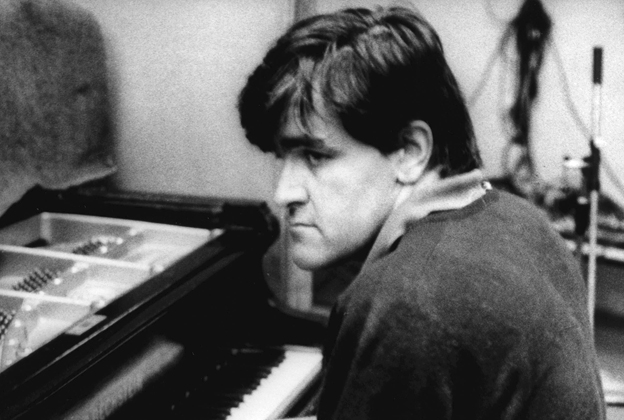
Ian Stewart
Scottish keyboard playerWikipedia
17
MENTIONS
10
EPISODES
9
PODCASTS
Search complete. 17 mentions across 10 episodes found for "Ian Stewart".
Oct 12, 2026

Tim FriedmannHOST
Rock and Roll was number two.
Tim FriedmannHOST
That's Ian Stewart, the co-founder of the Stones.
Tim FriedmannHOST
Played piano on it.
Tim FriedmannHOST
John Bottom thought up that wonderful, incredible open.

P.P. ArnoldGUEST
Uh, Andrew had the Immediate record label, which is one of the first independent record labels, uh, of, of that time.
P.P. ArnoldGUEST
And a- actually, it was Ian Stewart who was the catalyst.
P.P. ArnoldGUEST
It was Ian Stewart who, like, made the suggestion, I think, to Andrew that Andrew, that he should check me out, uh, 'cause I was the lead singer with the Ikettes at that time, because it was a new group, and I had kind of been u- you know, uh, made the lead singer.
P.P. ArnoldGUEST
And so Stu suggested that, uh, Andrew check me out for, for the label.
P.P. ArnoldGUEST
And so like, yeah, so they, they had a little plan, and Mick like, you know, was like, because Mick and I was really close, it went through Mick and, and so then Mick and Andrew invited me to stay.

James CampionHOST
[upbeat rock music] The thing that almost got Keith kicked out of The Rolling Stones is his absolute obsession with Chuck Berry.
James CampionHOST
Everybody were all blues purists, Jagger, Jones, Ian Stewart.
James CampionHOST
What are you playing that rock and roll crap for? And they realized that the kids wanted to hear this, so they were ...
James CampionHOST
And even today, Jagger will tell you in his 80s, "Yeah, we were a rock and roll band.

Donal GallagherGUEST
He, he's in another building.
Donal GallagherGUEST
Can I tell him who's calling?" And the guy said, "Oh, uh, my name is Ian Stewart." So I knew immediately he was the Stones' keyboard and road manager.
Donal GallagherGUEST
He had founded the Stones, in fact.
Donal GallagherGUEST
So I said, "Oh my God, uh, uh, Mr. Stewart of London, I'll tell him." So I tried to wake Rory.

Dónal GallagherGUEST
I'll go and look for you," I said, "but it'll take about 10, 15 minutes." 'Cause I'd, I'd, I had recognized the accent kind of straight away.
Dónal GallagherGUEST
And I said, "Who shall I say is calling?" And he said, "Oh, Ian Stewart." And I was about, and I said, "Oh, Ian Stewart of, uh, London?" And he said, "Yeah." And so anyway, I said, "Call back in 15 and I'll see if I can find him." Knocked on Rory's bedroom, Rory, woke Rory up, and I said, "Oh," I said, "Rory, The Stones want you.
Dónal GallagherGUEST
That phone call was from The Stones." And, uh, there had been a lot of specula- speculation who it would be or not, and, uh, anyway, Rory thought it was a wind-up and thought, "No, I'm not gonna rise to the bait and go back to bed." [laughs]
Matt CooperHOST
But he went to meet them in Amsterdam, was it, and Mick Jagger collected him at the, uh, the airport and brought him to record with him.

Dónal GallagherGUEST
He'll call back in 20 minutes or so," knowing Rory had gone to bed.
Dónal GallagherGUEST
And the guy said, "Oh, uh, my name is Ian Stewart." So I knew immediately he was The Stones' keyboard and road manager, uh, and part of the band really.
Dónal GallagherGUEST
He had founded The Stones, in fact.
Dónal GallagherGUEST
And, uh, so I said, "Oh my God, uh, uh, Mr. Stewart of London, I'll tell him." So I tried to wake Rory.

Art HollidayGUEST
Sure.
Art HollidayGUEST
So Rolling Stones fans will probably recognize the name Ian Stewart.
Art HollidayGUEST
for the very early Rolling Stones.
Art HollidayGUEST
I mean, he was there at the very beginning of the band.
Art HollidayGUEST
And he's the one who told Mick Jagger and Keith Richards, that's Johnny Johnson, that piano player with Chuck Berry you love so much, that's Johnny Johnson.
Art HollidayGUEST
So then you fast forward to the mid-1980s, and for some reason...
Art HollidayGUEST
Ian Stewart pulled Keith Richards aside and said, don't forget, Johnny Johnson's alive and still playing in St. Louis.
Art HollidayGUEST
You need to go find it.

Steven HydenGUEST
And I was like, I wonder if he's ever talked about five-piece bands.
Steven HydenGUEST
Because I knew that he had played a role in Ian Stewart, who was the original piano player in the Rolling Stones.
Steven HydenGUEST
The Rolling Stones used to be a six-piece band.
Steven HydenGUEST
And then he encouraged them to demote Ian Stewart.
Steven HydenGUEST
Right.
Steven HydenGUEST
So they became a five-piece band.
Steven HydenGUEST
And the rationale was always, Ian Stewart looks too normal.
Steven HydenGUEST
So he can't be in the Rolling Stones.
Frank OstHOST
Mick Jagger, Keith Richards, Mick Taylor, Bill Wyman, and Charlie Watts.
Frank OstHOST
Additional contributions were made by longtime Stones collaborators, including saxophonist Bobby Keys and keyboardist Billy Preston, Jack Nietzsche, Ian Stewart, and Nicky Hopkins.
Frank OstHOST
Now, I believe we featured almost every one of them in our little-known big contribution category.
Frank OstHOST
As with all the other albums of the Rolling Stones in the late 60s and early 70s period, it was produced by Jimmy Miller.

Karl SorochinskiHOST
Think about the organ and piano in Southern rock and blues rock.
Karl SorochinskiHOST
The Allman Brothers had Greg Allman, playing this growling soulful hammond b3 organ that was central to their whole sound and later chuck lavelle joined on piano and gave them that beautiful rolling piano listen to the instrumental jessica that's piano driven joy the keys stepping right out front and leading the band The Rolling Stones had a not-so-secret weapon in Ian Stewart, a fantastic boogie-woogie piano player who played on their records for years.
Karl SorochinskiHOST
Leon Russell, Nicky Hopkins, Elton John, in his rootsy moments, a whole generation of rock keyboard players were pouring barrel house, boogie, and gospel piano into rock music.
Karl SorochinskiHOST
So the keys never left.