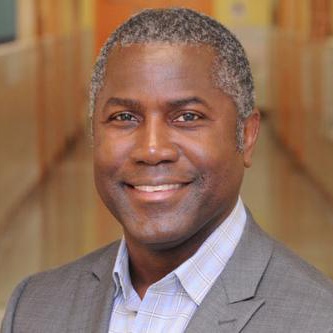
Ian Rowe
Enterpriser
17
MENTIONS
9
EPISODES
9
PODCASTS
Search complete. 17 mentions across 9 episodes found for "Ian Rowe".
Sep 30, 2026

Alicia Thomas-SearcyHOST
The article I want to talk about comes from the New York Post.
Alicia Thomas-SearcyHOST
It's an opinion piece by Ian Rowe, and of course, we know Ian.
Alicia Thomas-SearcyHOST
It's entitled, Nicole Hannah-Jones Accidentally Gave Us a Vital Lesson on School Choice.
Alicia Thomas-SearcyHOST
And so if you are paying any attention to the world of education and opinion pieces and essays in the last seven days, you have heard about, maybe read for yourself, this essay that Nicole Hannah-Jones wrote.
Alicia Thomas-SearcyHOST
And so I'm going to leave my opinions about that particular essay to the side because I have to tell you, Albert, it's complicated when you talk about parents of means who are making decisions, you know, intentionally about sending their kids to a school that they know is not performing well and just what they believe they'll be able to change.
Alicia Thomas-SearcyHOST
I have some very strong opinions about that that I'm going to leave out for the sake of this conversation.
Alicia Thomas-SearcyHOST
But what is important here and what Ian Rowe talks about in particular in his opinion piece is that what she is doing in her essay is really talking about the need for choice.
Alicia Thomas-SearcyHOST
And that's what I want to touch on just for a moment.

Alicia SearcyHOST
The article I wanna talk about comes from the New York Post.
Alicia SearcyHOST
It's an opinion piece by Ian Rowe, and of course, we know Ian.
Alicia SearcyHOST
It's entitled Nikole Hannah-Jones Accidentally Gave Us a Vital Lesson on School Choice.
Alicia SearcyHOST
And so if you are paying any attention to the world of education and opinion pieces and essays in the last seven days, you have heard about, maybe read for yourself, this essay that Nikole Hannah-Jones wrote.
Albert ChengHOST
Mm-hmm
Alicia SearcyHOST
... for the sake of this conversation.
Alicia SearcyHOST
But what is important here, and what Ian Rowe talks about in particular in his opinion piece, is that what she is doing in her essay is really talking about the need for choice, and that's what I wanna touch on just for a moment.
Alicia SearcyHOST
And I appreciate Ian's points in this piece where while she is literally choosing to send her kid to a low-performing school, that in itself is a choice, and he is arguing that- What you really should recognize is that every parent deserves to have a choice.

Brad WilcoxGUEST
But I'm also now a sociologist and I can tell you that kids who got the benefit of being raised by their own parents, Married parents just do generally, you know, markedly better.
Brad WilcoxGUEST
And we've got a new report, Ian Rowe, Grant Bailey, and I from the Institute for Family Studies and from the American Enterprise Institute, kind of looking at how this all plays out for school-age kids across America.
Brad WilcoxGUEST
And we're finding this new report is that kids who have the benefit of an intact family are doing a lot better when it comes to their GPAs, when it comes to schools contacting their parents for problems at school.
Brad WilcoxGUEST
And then also when it comes to kind of their emotional well-being when it comes to depression.
10 MINS LATER
Lauren GreenHOST
Why don't we incorporate policy into these kind of things?
Brad WilcoxGUEST
Yeah, this is a great question you're asking, Lauren.
Brad WilcoxGUEST
Ian Rowe at AEI and Grant Bailey and I at IFS have a new report looking at what's called the Nation's Report Card, which kind of gives educators, policymakers, journalists, parents a sense of how our kids are doing in schools across America.
Brad WilcoxGUEST
This is from the federal government.

Phillip DukesGUEST
Those are the type of things, understanding the decision-making.
Phillip DukesGUEST
And there's a guy named Ian Rowe.
Phillip DukesGUEST
uh overthink buffs he did a great job breaking down some of those plays and when i saw some of it i said hey man dog you really know what you're talking about that's cool like um and when i saw that it helped me like a math problem i can ask all of you guys what's 7 000 times 54.
Phillip DukesGUEST
If you put it in chat GPT, cool, you will get the answer.

Kmele FosterHOST
I think There was one line in particular where you had a school administrator saying, you know, in our pursuit of anti-racism, we have to be certain that we are not watering down standards because that would be another form of racism.
Kmele FosterHOST
I mean, that is almost verbatim the sort of thing that I would see published in essays by Ian Rowe or Thomas Chatterton Williams or others.
Kmele FosterHOST
John McWhorter.
Kmele FosterHOST
So that is, I think, a pretty potent acknowledgement.

Niall FergusonPANELIST
I mean, poor, poor girl.
H. R. McMasterPANELIST
On the choices that are out there, I just want to plug, if I could, my interview with Ian Rowe on today's Battlegrounds.
H. R. McMasterPANELIST
God, that guy's doing fantastic work.
H. R. McMasterPANELIST
And then it's just so ludicrous to me, guys, that instead of advocating for people who have lesser means available to have choice, to advocating for school choice, you're advocating for people who actually do have the means to choose to give up that choice.

Mike PetrilliHOST
I'm your host, Mike Petrilli of the Thomas B. Fordham Institute.
Mike PetrilliHOST
This week, Ian Rowe, founder of Vertex Partnership Academies, joins us to discuss Nicole Hannah-Jones' recent reflections on her daughter's education and what her experience says about school choice, parental agency, and family structure.
Mike PetrilliHOST
Plus, why is family structure so often missing from conversations about student achievement, and should education data do more to account for it? Then on the Research Minute, Amber Northern reviews a new study of team-based teaching in Arizona.
Mike PetrilliHOST
The model showed promising results in middle school math and significantly lower teacher turnover, but little or no benefit at the elementary school level.
Mike PetrilliHOST
Well, now you know why.
Mike PetrilliHOST
What does Gadfly say? Hello, this is your host, Mike Petrilli of the Thomas B.
Mike PetrilliHOST
Fordham Institute here at the Education Gadfly Show and online at fordhaminstitute.org. Now, please welcome our special guest for today, Ian Rowe.
Mike PetrilliHOST
Ian, welcome to the show.

Kevin GentryHOST
Well, okay, there's so much more to get into that, but just a couple more steps until we get there.
Kevin GentryHOST
You know Ian Rowe, of course.
Kevin GentryHOST
He does a lot of work with Children's Scholarship Fund.
Kevin GentryHOST
I recently interviewed him on the Going Big podcast.
Kevin GentryHOST
And part of his own personal story is the remarkable – part about how his parents, immigrants from Jamaica in New York, wanted nothing more than to maximize the educational opportunities for their two sons, one of them being Ian Rowe.
Kevin GentryHOST
And he tells the story about decisions they made constantly to give him the best education possible.
Kevin GentryHOST
At the end of the day, is that the fundamental premise? You're trying to help those families who have financial constraints, maybe constrained by the zip code in which they live, to give greater opportunity for their children in terms of how they may educate themselves and identify their gift and make something much more of their lives.