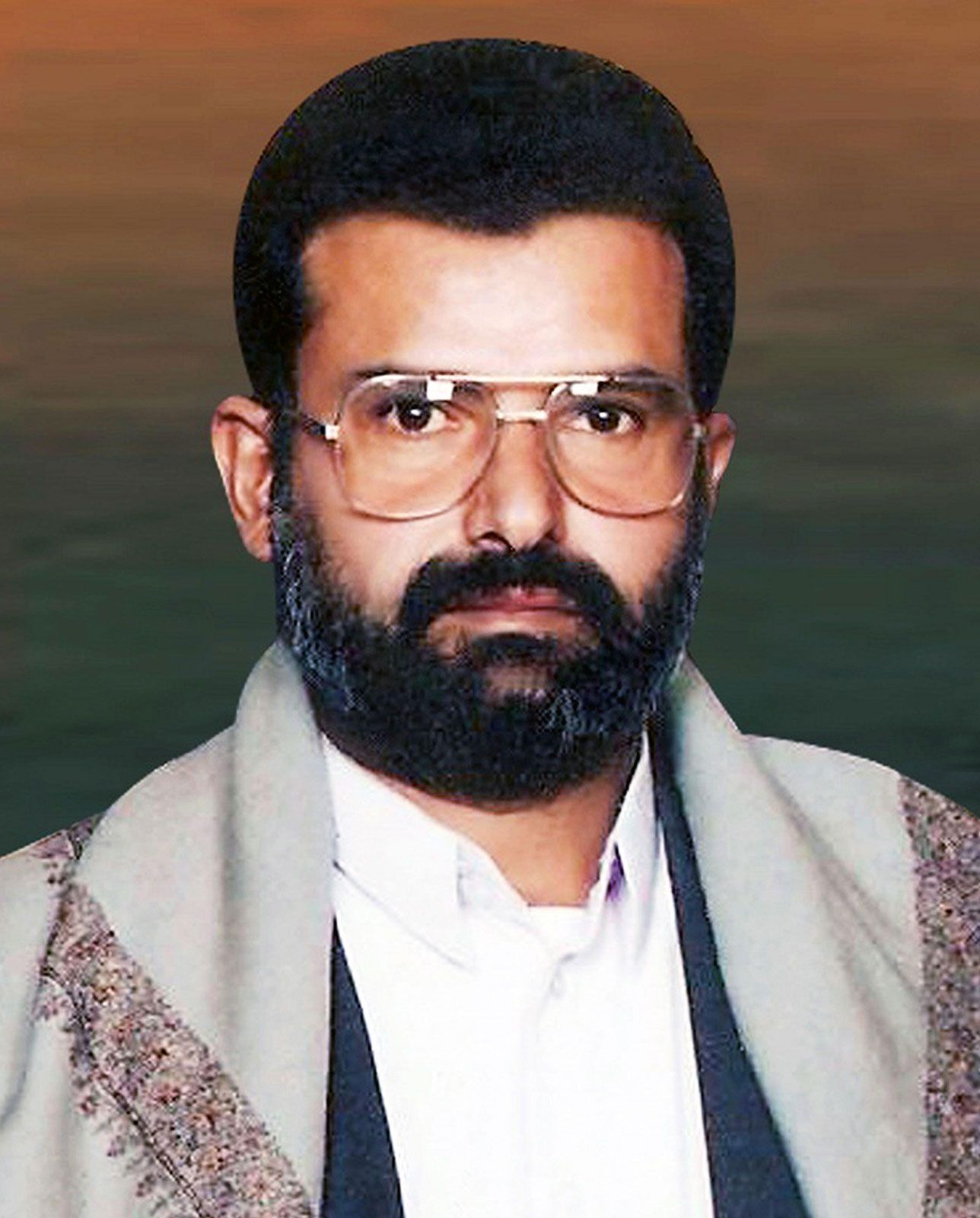
Hussein al-Houthi
Former Member of the Yemeni parliamentWikipedia
25
MENTIONS
13
EPISODES
13
PODCASTS
Search complete. 25 mentions across 13 episodes found for "Hussein al-Houthi".
Oct 30, 2026

speaker_2NARRATOR
a branch distinct from Iran's Twelver Shi'ism, but closer to Sunni practice than many assume.
speaker_2NARRATOR
The group was founded by Hussein Badreddin al-Huti, from whom the movement takes its popular name.
speaker_2NARRATOR
What began as a theological and cultural revival eventually became a militant resistance against what they saw as Saudi-imposed Wahhabi influence and political marginalization.
speaker_2NARRATOR
Ideology and religious foundation.

Mohammed al-BashaGUEST
But it's been 12 years since the Houthis have been using the full powers of the institutions of the historical capital of Yemen and Sana'a to indoctrinate millions of children at all levels of school.
Mohammed al-BashaGUEST
They've changed curriculums to the point where even the founding father of the Houthi movement, Hussein al-Houthi, is now a cartoon animation, like a cartoonish figure in the children books.
Mohammed al-BashaGUEST
So as a child, you're brought up looking at this character as being, oh, you know, this is...
speaker_2SOUNDBITE_SPEAKER
Wow, yeah.

Bridget ToomeyGUEST
But the Houthi family and some others did not kind of... toe that line.
Bridget ToomeyGUEST
Instead, you had, at the time, Hussein al-Houthi was really kind of pioneering the Saidi revivalist movement.
Bridget ToomeyGUEST
And he was also, he and his family were kind of in close contact with the Iranians.
Bridget ToomeyGUEST
They traveled to Iran, traveled to Lebanon.
Bridget ToomeyGUEST
So you had the civil war kick off in 2014 and really unfold until 2022 when a UN-brokered truce kind of quieted the fighting and The Saudi coalition was out and the front lines were kind of mostly steady with Houthis controlling the northwest of Yemen and then the Yemeni government forces controlling some of the south and the east central parts and then the eastern territory.
Bridget ToomeyGUEST
But...
Bridget ToomeyGUEST
And I should mention in 2004, Hussein al-Houthi, the group's founder, and he still holds kind of a mythical role in their ideology.
Bridget ToomeyGUEST
He was killed by the Yemeni government forces and ultimately the role of leader passed to his younger brother, Abdul Malik, who still kind of leads the group today and has been really instrumental in turning it from that guerrilla group in northern Yemen into a regional threat.

Shireen Al-AdeimiGUEST
And he was also in Saleh's government.
Shireen Al-AdeimiGUEST
And he was instrumental in the early days of the Sa'dah wars between 2004 and 2010, where he played a major role in killing the leader of Ansarullah, Hussein Badr al-Din al-Houthi.
Shireen Al-AdeimiGUEST
And he had worked with the US government in his troops trained with US troops and so forth.
Shireen Al-AdeimiGUEST
So you have people like that.

Fabian AschiascheHOST
They are a Shia Islamist political and paramilitary organization.
Fabian AschiascheHOST
And they were created in Yemen in 1994 by Hussein al-Houthi.
Fabian AschiascheHOST
And that's where they get their name from.
Fabian AschiascheHOST
Because this movement from the beginning has been dominated by the al-Houthi family, which is kind of a... larger clan, like, you know, pretty prevalent in countries in this part of the world, you know, in the Middle East.
Fabian AschiascheHOST
And so they're dominated by this family and they were founded by Hussein al-Houthi.
Fabian AschiascheHOST
And Hussein al-Houthi was killed in 2004.
Fabian AschiascheHOST
And since then, the movement has been headed by his brother, Abdul Malik al-Houthi.
Fabian AschiascheHOST
And they first emerged as an opposition government to the first president of Yemen, Field Marshal Ali Abdullah Saleh, who basically ruled the country since 1990 when the Soviet Union fell apart.

Jay TharappelGUEST
So the Ansarullah movement, they...
Jay TharappelGUEST
They emerged in 1994 with a man named Hussein al-Houthi.
Jay TharappelGUEST
And he was a political figure.
Jay TharappelGUEST
He was a former member of parliament as well.
Jay TharappelGUEST
So it's a little bit, but this is where it gets interesting with Wahhabism, because as I said, I mean, Wahhabism has this attitude where you have to be loyal to your leader.
Jay TharappelGUEST
And if Saudi Arabia is pumping this into Yemen, it's because they want Yemen to be loyal to them, right? That's the geopolitical essence of this ideology.
Jay TharappelGUEST
And Hussein al-Houthi, The founder of the Ansarullah movement, he understood this.
Jay TharappelGUEST
He understood that this was the agenda.

Negar MojtahediHOST
It's, it's on your Twitter page.
Negar MojtahediHOST
And in your documentary, you trace the Houthis' relationship with Iran back to Hussein al-Houthi's visit in 1995 to Iran, and you describe it as a turning point.
Negar MojtahediHOST
Uh, what happened inside Iran where he suddenly adopted Khomeiniism and, and why?
Baraa ShibanGUEST
So, um, a, uh, the unfortunate reality about a short documentary is that you don't get to tell the whole, uh, the whole-
Baraa ShibanGUEST
Now, in a, in a country that is still, uh, a, a new republic like Yemen, you, the, the, that didn't alert so much the, the, the state.
Baraa ShibanGUEST
Yes, it was concerned about, about the, um, about the Islamic, uh, Revolution, but you need to have a country that is inclusive for, uh, for all.
Baraa ShibanGUEST
But Hussein al-Houthi did travel to, uh, to Iran back in the, uh, 1980s.
Baraa ShibanGUEST
He wanted to join the fight between Iran and Iraq, so he wanted to join the part of the volunteers who wanted to join the, the fight.

Sami HamdiGUEST
And the Houthis since then never truly accepted the republic.
Sami HamdiGUEST
And in 1995, Hussein al-Houthi goes to Iran.
Sami HamdiGUEST
He moves the Houthis from Zaidis, which is closer to the Sunni trends.
Muhammad JalalHOST
Mm.

Layan Seema FuleihanHOST
Houthi is just a name of a family name.
Layan Seema FuleihanHOST
It's, comes from the name Hussein Badreddin al-Houthi, who was the founder of the movement.
Layan Seema FuleihanHOST
He was killed in 2004.
Layan Seema FuleihanHOST
His brother, Abdul Malik al-Houthi, is the leader of Ansar Allah today.

Elisabeth KendallGUEST
And so he comes from an eminent family where his father, Badruddin al-Husi, was a zaidi, that's a branch of Shiism, a cleric and scholar that gave them enormous credibility within the religious community.
Elisabeth KendallGUEST
And his older brother or older half-brother, Hussein al-Husi, was the founder of the Husi movement itself.
Elisabeth KendallGUEST
And he too was a scholar who spent time in places like Iran and Sudan studying and that really rubbed off on the movement.
Elisabeth KendallGUEST
Abdul Malik took over the mantle shortly after his elder brother died or was killed, in fact, in 2004.
Elisabeth KendallGUEST
And so...
Elisabeth KendallGUEST
You know, it's been Abd al-Malik al-Husi who has led this movement through all of its warring years, from 2004 to 2010 when there were six wars inside Yemen.
3 more episodes mention Hussein al-Houthi.
Create an account to see the whole feed, search across every transcript, and follow the entities you care about.