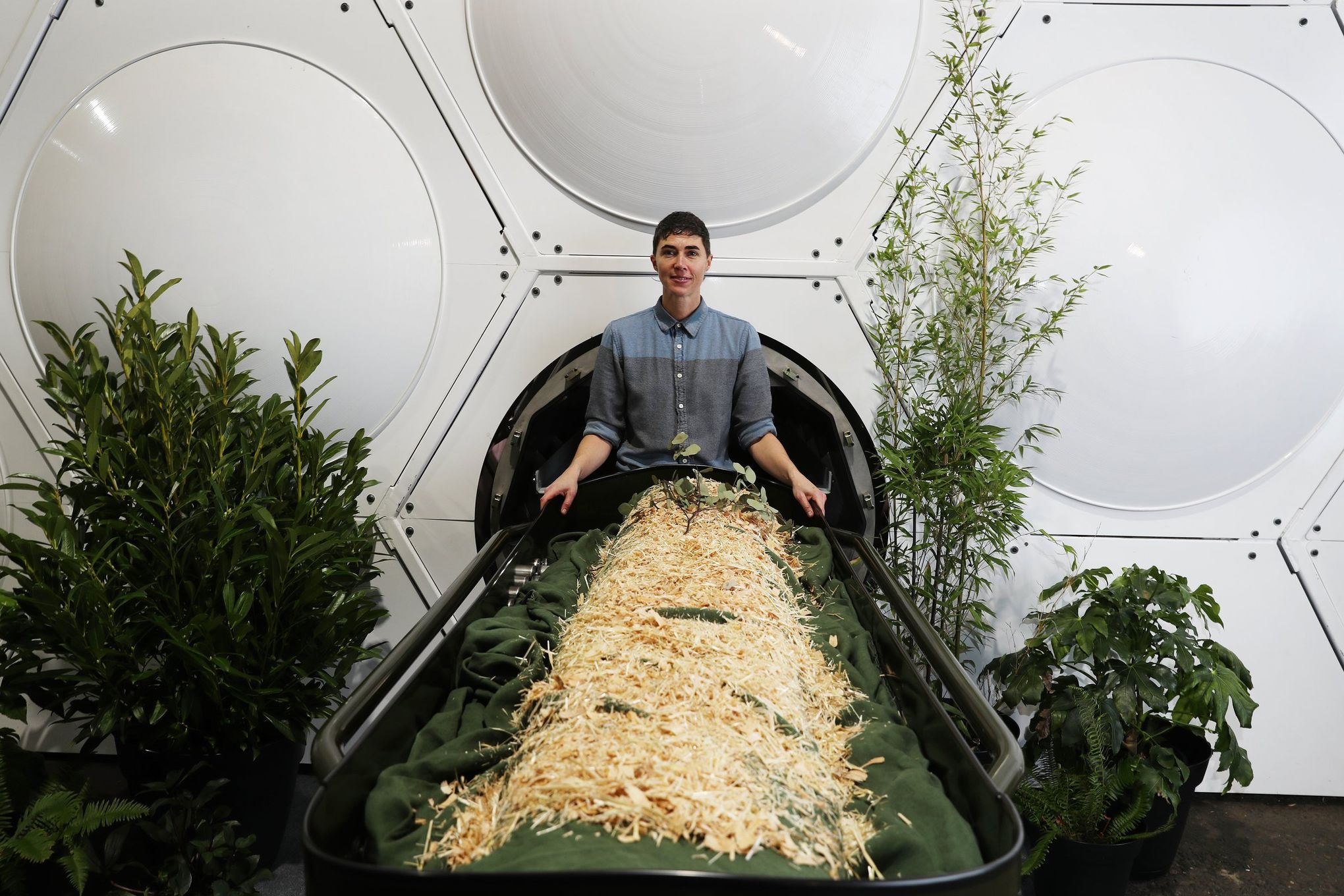
Human composting
7
MENTIONS
2
EPISODES
2
PODCASTS
Search complete. 7 mentions across 2 episodes found for "Human composting".
Sep 16, 2026

Sarah DurnHOST
Established in 1996, Ramsey Creek Preserve is largely considered the first modern green burial site in the United States.
Sarah DurnHOST
But is natural burial really the most eco-friendly way to go? How does it compare to cremation or newer technologies like human composting? If you want your final act on Earth to also be good for the Earth, what's the best option? Welcome to Ask Us Anything, from the editors of Popular Science, where we answer your questions about our weird world.
Sarah DurnHOST
From, do bears actually hibernate? Spoiler, they don't.
Sarah DurnHOST
To, do carrots really help your eyesight? No question is too zany or too simple.
5 MINS LATER
Sarah DurnHOST
One study in India found open-air cremations can use 880 to 1,100 pounds of wood per body, releasing 500 to 600 kilograms of carbon dioxide, which is a lot.
Sarah DurnHOST
Researchers there basically said, of course, these ancient rituals matter, but it would be great to find greener options.
Laura BaisasHOST
OK, so then there are these newer technologies such as aquamation and human composting, which we actually did a whole episode on and we'll link in the show notes.
Laura BaisasHOST
But are these new methods actually better for the planet? Yeah, it's complicated.

Gabriel GatehouseHOST
Okay, so-
Kristoffer HughesGUEST
Terramation facilities, industrial estates.
Gabriel GatehouseHOST
Right.
Gabriel GatehouseHOST
So I die, my body gets taken to an industrial s- uh, uh, estate where there's a terramation facility.