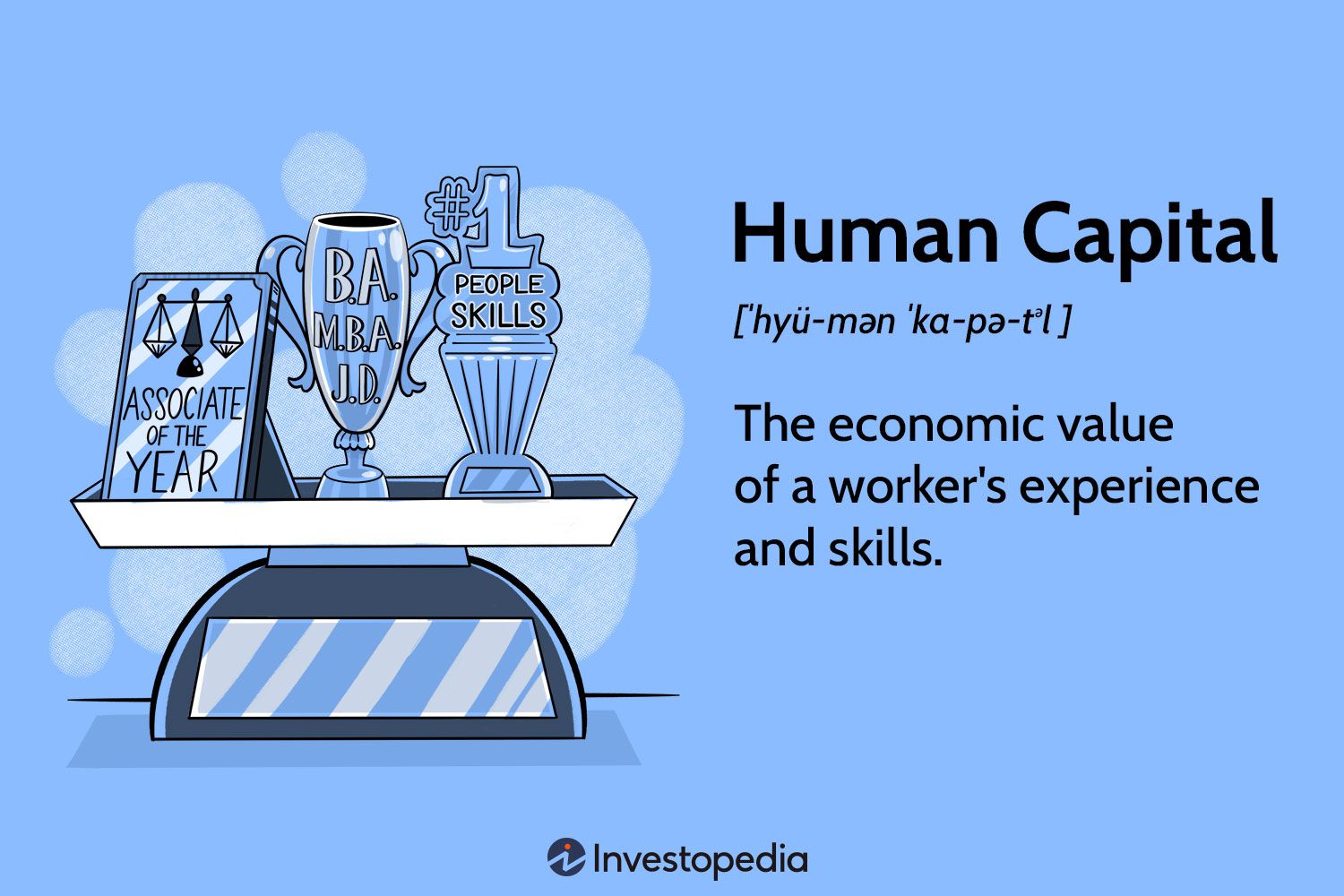
Human capital

Human capital

Search complete. 136 mentions across 38 episodes found for "Human capital".

Sep 11, 2026

Werd BadawiHOST
11:35
It said the boring company's loop has carried more than 4 million passengers in Las Vegas since 2021, arguing the technology has now moved beyond proof of concept as international expansion gathers pace.
Abdul Majid AwanHOST
11:49
And other investors include Human Capital, Y Capital, Valor Equity Partners, Sequoia Capital and recent Horowitz, Temasek, Singaporean Giant and Barron Capital.
Abdul Majid AwanHOST
11:59
The funding comes as the booring company expands beyond Las Vegas with work also underway on a new tunnel project in Nashville, Tennessee.
Werd BadawiHOST
12:08
Musk has spent years pitching underground transport as a way to tackle congestion, although the Boring Company has made limited progress toward the much larger vision originally promoted.
Robert KabushengaHOST
17:49
on rare earth minerals, but where's our liver? So,
Charles Onyango-ObboHOST
17:51
in fact, his argument then was that, I mean, the whole thing that we really need to unleash you know, more innovation, you know, the thing is human capital.
Charles Onyango-ObboHOST
18:11
That is really where, you know, the wealth is and just business.
Charles Onyango-ObboHOST
18:17
And if you see, there are some very interesting, you know, trends around African business, you know, African philanthropy.
Katie Decker EricksonHOST
4:54
Because when I look at interior design businesses, there are five areas I want to intimately understand.
Katie Decker EricksonHOST
5:01
It's your finances, your marketing, your human capital, your CEO leadership, and your products and offerings.
Katie Decker EricksonHOST
5:08
Those are the five.
Katie Decker EricksonHOST
5:09
And no, I'm not saying those are the only five things that exist inside a business.
Katie Decker EricksonHOST
8:47
You don't have to discount your offerings and go, gosh, does that number feel high? You don't have to convince the wrong client they should work with you.
Katie Decker EricksonHOST
8:55
And you can actually decide what kind of business you want to build.
Katie Decker EricksonHOST
8:59
All right, let's talk about number three, human capital.
Katie Decker EricksonHOST
9:02
The third area is this, and this one comes up constantly because here's what I hear you saying after years of coaching you.
speaker_0NARRATOR
0:26
And there's one finding that jumps out immediately.
speaker_0NARRATOR
0:30
Human capital matters more than AI benchmarks.
speaker_0NARRATOR
0:34
She actually says human capital absolutely dominated.
speaker_0NARRATOR
0:39
That's huge.
speaker_0NARRATOR
0:40
Right.
Ian GlennonHOST
10:15
I have AI, which honestly half the time is wrong.
Ian GlennonHOST
10:17
You should use AI when you have high human capital.
Ian GlennonHOST
10:19
You should use AI when you already know it, not to learn it.
Ian GlennonHOST
10:21
Because it's wrong all the time.

27 MINS LATER

Ian GlennonHOST
37:09
It's just like any tool.
Ian GlennonHOST
37:10
Just because I have a sewing machine doesn't mean that I can sew a shirt, right? They want to know that when you prompt that AI, you're prompting it correctly, and they want to know that when you're seeing the answer from the AI, you're not copy-pasting it, you're taking a critical lens to it.
Ian GlennonHOST
37:25
AI replaces low human capital.
Ian GlennonHOST
37:30
AI
Jeff AlpaughGUEST
0:03
In some cases, growth is what creates the next generation of risk.
speaker_1HOST
0:08
Hello, and welcome to this Human Capital Insight episode of On Aeon.
speaker_1HOST
0:12
This week, Aeon's Sharon Naglinski, rewards partner, and Jeff Alpar, president for North America, explore the rapid growth of digital infrastructure and why success depends on more than capital and technology.
speaker_1HOST
0:26
They discuss scaling risk, organizational capacity, talent, operational resilience, and the critical connection between human capital and risk capital.
Sharon EgilinskyGUEST
0:38
Good morning, Jeff.
Sharon EgilinskyGUEST
0:40
I'm really excited to have this conversation with you.
Jeff AlpaughGUEST
3:02
The question is not only whether you can build the asset, it's whether that business can execute repeatedly and reliably at scale.
Sharon EgilinskyGUEST
3:16
Yeah, I couldn't agree with you more, Jeff.
Damien RiehlGUEST
11:49
thinking a lot about, you know, we talk a lot about the micro of legal tech and then the little broader about legal in general.
Damien RiehlGUEST
11:55
I want to go even more broadly about what is society? What is it was going to happen with society? Because really, if we think about a lot of human capital, you know, in the past, in the 1700s and 1800s, the wealth accrued to the people that own the land.
Damien RiehlGUEST
12:08
But then in the 20th century, the wealth accrued to the people who had enough, the companies that had enough people, human capital, to be able to run all the business.
Damien RiehlGUEST
12:15
That was 20th century.
Damien RiehlGUEST
12:17
But it seems like in the 21st century, we are going to say now that human value, that human capital moves to whoever has the electricity and whoever has the GPUs.
Damien RiehlGUEST
12:26
Because a lot of what is currently human work goes into agents' work.
Damien RiehlGUEST
12:31
And then you can have agents run for a day, week, month to achieve the goals.
Damien RiehlGUEST
12:35
That requires electricity and GPU power.
Brad FisherGUEST
39:18
So it's a money stuff.
Brad FisherGUEST
39:20
The fourth scalability is around your human capital, which is actually your most valuable strategic asset, but people don't appreciate that most of the time.
Brad FisherGUEST
39:29
How do you attract people? How do you retain them? How do you develop them? How do you align them with your values and the mission of the company? The fifth is technology and other elements of infrastructure, mostly technology, but also plant and equipment and legal infrastructure compliance.
Brad FisherGUEST
39:49
The sixth one is your operational processes and innovation.
Brad FisherGUEST
39:53
Leadership and culture, number one, growth engine, number two.
Brad FisherGUEST
39:56
Number three is your business model and finance.
Brad FisherGUEST
40:00
Number four, human capital.
Brad FisherGUEST
40:01
Number five, technology and infrastructure.
G SampathHOST
11:03
of the constitution so that is there is there an economic argument as well because it is on the economic argument that it is consistently getting attacked saying you are violating fiscal discipline you are putting a burden on the exchequer whereas you should instead of having the government focus on spending to accelerate growth, you are spending on redistribution and therefore losing out on growth.
G SampathHOST
11:28
But then, as I said in my introduction, shouldn't this be a matter of common sense that for you to have a resilient economy and a sustained growth, your human capital has to be of high quality in terms of education, And health.
G SampathHOST
11:44
So doesn't this make it a matter of common sense, a matter of economic common sense that you have to invest in your people? Yes.
G SampathHOST
11:51
So why doesn't that happen? Even in your socialist phase, we did not do that despite being a socialist economy or a mixed economy.
Carr PrestonGUEST
21:41
But that's really, you know, the heart of it.
Carr PrestonGUEST
21:43
And the other nice thing about Akoya is kind of the origins of the firm really starts with Human Capital, the founder, built and sold a successful executive search firm.
Carr PrestonGUEST
21:54
So that evaluation, partnership, dynamic, strengthening, augmenting teams is kind of in our DNA.
Sean MooneyHOST
22:01
All the things you share there, I think were so on par.

28 more episodes mention Human capital.

Create an account to see the whole feed, search across every transcript, and follow the entities you care about.

We value your privacy

We use cookies to understand how you use our platform and to improve your experience. Click “Accept All” to consent, or “Decline non-essential” to opt out of non-essential cookies. Read our Privacy Policy.