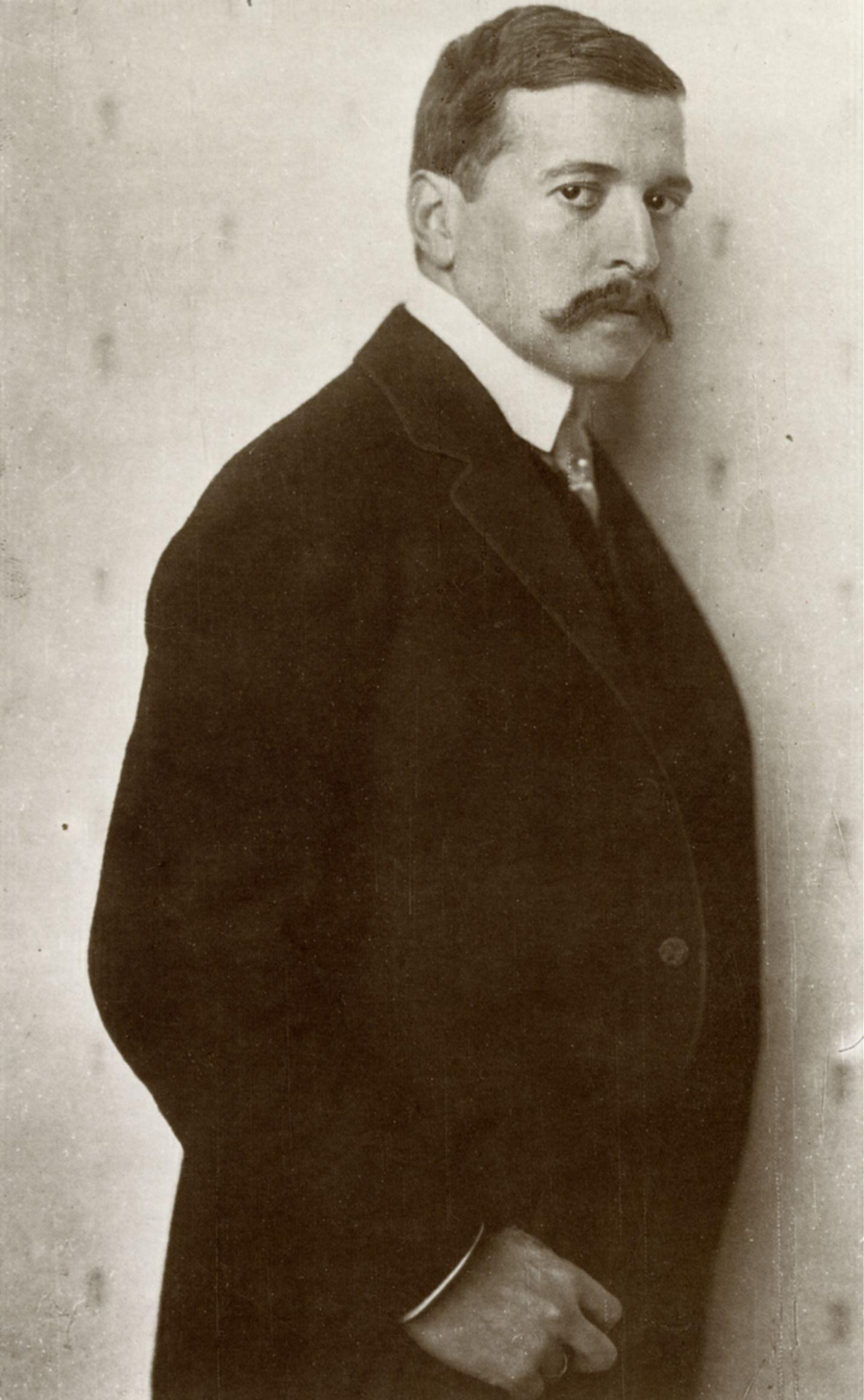
Hugo von Hofmannsthal
Austrian novelist and librettistWikipedia
6
MENTIONS
3
EPISODES
3
PODCASTS
Search complete. 6 mentions across 3 episodes found for "Hugo von Hofmannsthal".
Sep 20, 2026

speaker_0NARRATOR
Vienna in the eighteen eighties was a city of extraordinary intellectual ferment.
speaker_0NARRATOR
It was the Vienna of Gustav Mahler and Hugo von Hofmannsthal, of Sigmund Freud and Ernst Mach, a city where the boundaries between art, science, philosophy, and psychology were permeable and constantly being crossed.
speaker_0NARRATOR
The young Steiner absorbed this atmosphere like a sponge, moving between the precise world of mathematics and physics and the more speculative world of philosophy and aesthetics.
speaker_0NARRATOR
He was, by all accounts, an unusual student: intensely focused, intellectually voracious, and quietly certain that the conventional boundaries between disciplines were artificial and limiting.

David WalesNARRATOR
End of Part 2 there is scarcely any need to recount in any detail the early difficulties of salome in america when the scandalized cries that arose after the work received a single representation at the metropolitan opera house in new york only to be shelved as detrimental to the best interests of the institution after a solitary representation still ranks among the notorious and less creditable legends of the american stage strauss soon after this taste of the operations of american puritanism accused americans of hypocrisy the most loathsome of all vices he was handsomely avenged however when on january twenty eighth nineteen o nine oscar hammerstein revived the work with mary garden and salome at his manhattan opera house and started it on a triumphant american career which confounded all the ludicrous prognostications and horrified shouts with which it has been greeted only a short time earlier the work which followed salome was electra the text of which was the creation of hugel von hoffmannsthal here began a collaboration between poet and musician which was to last with fruitful results until the latter's death and to mark some of the high points of strauss's achievements the story of their joint labors is detailed in a priceless series of letters brought out in nineteen twenty five under the editorial supervision of the composer's son dr fraun strauss these letters afford glimpses into the workshop of librettist and composer which rank with some of the most illuminating exchanges of the sort the history of music supplies from them we learn that before settling on the tragedy of the house of agamemnon the collaborator seriously pondered as operatic material calderon's daughter of the air and also then early in 1908 they seemed to have agreed on Elektra.
David WalesNARRATOR
Hofmannsthal's version of the Greek legend, based on Sophocles, had been acted in Berlin, again with Gertrud Eiselt in the title role, and no sooner had Strauss witnessed the production than he concluded that the tragedy in this form was virtually made to order for his music.
David WalesNARRATOR
on july sixth nineteen o eight the composer wrote to hofmannsthal elektra progresses and is going well i hope to hurry up the premiere for the end of january at the latest strauss was as good as his word the first performance of elektra took place january twenty five nineteen o nine at the dresden opera ernst von schuch conducting with annie kruhl in the name part ernestine schumann-henck as clytemnestra and karl perron as orestes if strauss would have preferred to write a comic opera after salome the pull of the genre of horror opera was still strong upon him and he was not yet ready to loose himself from its grip electra was if one chooses gorier than salome and perhaps more genuinely psychopathic but less susceptible to provocations of outraged morality its instrumental requirements are rather larger than those of strauss's previous opera and the whole more nightmarish in its sensational atmosphere one had the impression however that with electra the composer had reached the end of a path he could hardly repeat himself with impunity along similar lines a turn of the road or something similar must come next unless strauss's achievements were to run up against a stone wall or lead him into a blind alley this was not fated to happen what the pair were now to achieve was what was to prove their most abiding triumph der rosenkavalier of all the operas of richard strauss the most lastingly popular and if not the indisputable best at all events the most loved and peradventure the most viable and if you will the healthiest if the piece is in some respects sprawling and overwritten it does contain a piece of moving character drawing which stands with the most memorable things the literature of musical drama affords in her musical and dramatic lineaments the aristocratic marchalaine whose common sense leads her on the threshold of middle age to renounce the calf-love of the seventeen-year-old rose-bearer octavian offers one of the finest and most convincing figures to be found in modern opera a creation not unworthy to stand by the side of wagner's hans the baron ox an outright vulgarian if the music accorded him does not lie is a figure who might have stepped out of the pages of rabelais sophie faninal and all the rest of the characters who enlivened this canvas inhabited by almost photographic types of eighteenth-century vienna add up to a truly memorable gallery with which hofmannsthal and strauss have brought to life an era and a culture strauss's score has indisputable prolixities and commonplaces but these traits may pass as defects of the opera's qualities and as such they can take their place in the vastly colorful pageant of hofmannsthal's comedy of manners it would be a mistake however to imagine that a piece as earthy as der rosenkavalier should pass without provoking dissent the german kaiser who had small use for strauss's operas yielded to the urging of the crown prince so far as to attend a performance then left the theatre with the words det is keine musik für mich that's no music for me to spare the feelings of the strait-laced kaiserin it was arranged to place the marshallin's bed in an adjoining alcove instead of in high visibility on the stage when the curtain rose nor were these the only objections and of course there were the usual exclamations about the length of the piece no end of suggestions were advanced about the best ways to shorten the work Strauss, in protest against some of the cuts von Schuch had practiced in Dresden, once insisted he had overlooked one of the most important possible abbreviations.
David WalesNARRATOR
Why not omit the trio in the last act, which only holds up the action? It should be explained that the great trio is the brightest gem of the act, perhaps indeed the lyric climax of the whole score.
6 MINS LATER
David WalesNARRATOR
But Strauss had no intention of sacrificing his composition without at least an attempt to salvage something from the wreck.
David WalesNARRATOR
The Ariadne portion, as well as the Zurbanetta companion piece, were preserved but carefully detached from the Moliere comedy.
David WalesNARRATOR
In place of this, Strauss and Hofmannsthal supplied a sort of explanatory prologue whereby arrangements are made, for better or worse, to combine the stylized opera Syria with Ariadne and her rescue on a desert island by the god Bacchus with the comic doings of Sir Benetta and her commedia della companions.
David WalesNARRATOR
In this shape, the piece has succeeded in surviving and actually makes an engaging entertainment, with the young composer, a trousered soprano, reminding one of a lesser Octavian.

David WalesNARRATOR
He was handsomely avenged, however, when on January twenty-eight, nineteen oh nine, Oscar Hammerstein revived the work with Mary Garden as Salome at his Manhattan Opera House and started it on a triumphant American career which confounded all the ludicrous prognostications and horrified shouts with which it has been greeted only a short time earlier.
David WalesNARRATOR
The work which followed Salome was Elektra, the text of which was the creation of Hugo von Hofmannsthal.
David WalesNARRATOR
Here began a collaboration between poet and musician which was to last with fruitful results until the latter's death and to mark some of the high points of Strauss's achievements.
David WalesNARRATOR
The story of their joint labors is detailed in a priceless series of letters brought out in nineteen twenty-five under the editorial supervision of the composer's son, Dr. Franz Strauss.