HTTPS
Internet protocolWikipedia
94
MENTIONS
35
EPISODES
31
PODCASTS
Search complete. 94 mentions across 35 episodes found for "HTTPS".
Sep 10, 2026

Dhruv BansalGUEST
And I think in this way specifically, right, the fact that we are using, we've armed dentists and everyday people with, you know, weapons-grade cryptography that is, you know, in a pocket ergonomic format, like this is a device from the future, right? When we all understand that the internet is a dangerous place and you can't just roll up with no credentials and you can't just trust anything and you kind of need strong cryptography just to do basic interactions on the internet.
Dhruv BansalGUEST
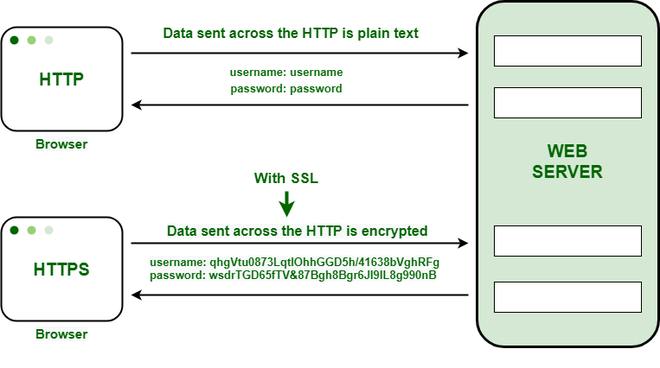
I mean, that has been true for 20 years with HTTPS, which is a form of cryptography to keep our communication safe.
Dhruv BansalGUEST
That's the little lock in your browser, right? There's a reason that's there.
Dhruv BansalGUEST
But we also remember there was a time when HTTPS was only ever used on payment pages.
Dhruv BansalGUEST
So like the entire internet was essentially plain text.
Dhruv BansalGUEST
And then only when you did a credit card transaction did you suddenly see the shield pop up or HTTPS in your browser URL.
Dhruv BansalGUEST
And then through the efforts of smart nerds, basically, there was an HTTPS everywhere movement.
Dhruv BansalGUEST
We just kind of moved to like, look, everything is going to be on HTTPS from now on, no matter what.

Favour Obasi-ikeHOST
Also, your website could be hard to trust and use.
Favour Obasi-ikeHOST
Why could your website be hard or trust to use? Because you may have a website, but it says HTTPS today and then tomorrow it's HTTP.
Favour Obasi-ikeHOST
Hypertext Transfer Protocol Secure.
Favour Obasi-ikeHOST
So if you don't have that secure padlock on your website, man, it's going to be hard for someone to purchase on your website because now you're putting that person at risk and you don't want that person at risk because if someone leaves their card information on file and then something happens to them because of your website, that's on you.

speaker_0NARRATOR
That is, whether two strangers can share a secret message over public channels, such as the Internet, without eavesdroppers having an efficient way to decipher it.
speaker_0NARRATOR
We rely on public key encryption every day for end-to-end encrypted messaging apps, virtual private networks, VPNs, and even the HTTPS protocol you're probably using to read this article.
speaker_0NARRATOR
But all of this is based on the unproven assumption that certain mathematical operations are intrinsically easier to do than to undo.
speaker_0NARRATOR
In fact, this assumption has already been undermined once.
speaker_0NARRATOR
A brief history of public key encryption.
speaker_0NARRATOR
Public key, also called asymmetric, cryptography forms the foundation of secure communication on the Internet.
speaker_0NARRATOR
Whenever you communicate with a website over HTTPS, the website sends you its public key.
speaker_0NARRATOR
Using only that public key, you can verify messages signed by the website and establish a shared secret key for encrypting everything else you send, even if the channel is being eavesdropped on.

Artificial IntelligenceNARRATOR
CyberPanel opens most of what it needs, but verify because a silently closed port looks identical to a broken service.
Artificial IntelligenceNARRATOR
Port protocol, what it is for 22/TCP SSH 80, 443/TCP HTTP and HTTPS Also needed for Let's Encrypt validation eight thousand and ninety TCP the CyberPanel interface two five TCP SMTP, server to server mail.
Artificial IntelligenceNARRATOR
This is the one providers block five eight seven TCP submission, what your mail client uses to send four six five TCP SMTPS, older implicit TLS submission, still widely used one hundred and forty-three.
Artificial IntelligenceNARRATOR
Nine nine three TCP IMAP and IMAP over TLS one hundred and ten.

Tom EstonHOST
Because that's just protecting the information that you're sending.
Tom EstonHOST
And by the way, that is still all encrypted through the use of HTTPS, which I know we've talked about that in the past where before, way back in the day, because Scott and I are old, we remember where you could use a tool called SSL strip, which would basically force a captive portal or another system into a plain text essentially so then you could intercept what people were doing on a hotel network uh very easily and today that is much harder to do uh from an attacker perspective
Scott WrightHOST
Yeah, and you probably have seen, I've seen this many times.
Scott WrightHOST
You go to a hotel and there'd be four or five Wi-Fi hotspots, right? And one of them will say, you know, Hilton guests or whatever.

Cary ParkerHOST
Domain blocking disables entire servers.
Cary ParkerHOST
Path-level HTTPS filtering inspects individual URLs to remove telemetry while keeping core app features running.
Cary ParkerHOST
We enable full HTTPS filtering for trusted apps like browsers.
Cary ParkerHOST
We exclude sensitive apps, such as banking apps, to keep your data secure.
Cary ParkerHOST
For other apps, we filter basic traffic but leave HTTP filtering off.
Cary ParkerHOST
This lets you stop hidden tracking without breaking your apps.
Cary ParkerHOST
All processing happens on your computer.
Cary ParkerHOST
Filtering with HTTPS inspection happens entirely on your device.

Ilyas RahimiGUEST
And by copying that, they had different approaches.
Ilyas RahimiGUEST
We had four VMs, two doing the HTTPS-based transfer, which was a full transfer, without looking at the SOA record, while the other two, they did an incremental update each time when the route actually changed and the SOA changed, they did an update.
George MichaelsonHOST
You were testing real systems, real systems code, like the bind code or the NLNet product or not.
George MichaelsonHOST
This wasn't a synthetic DNS resolver.
Willem TooropGUEST
for Unbound and for NotResolver.
Willem TooropGUEST
And Ilias installed Bind and Unbound and NotResolver.
Willem TooropGUEST
The software that could also fetch the root over HTTPS, which is Unbound and Not, had two versions, one doing DNS
George MichaelsonHOST
and the other one doing HTTPS.

ShaharHOST
I agree.
ShaharHOST
If you want to test only a web service, why would you go through the hassle of HTTPS at all, right? Or you could do something even kind of in between, which is if you're using a single tool to test, you could just maybe tell that tool, hey, I know it's HTTPS, but you know what? Actually just accept whatever certificate you're given, right? Yeah, curl.ke, right? not by memory, but yeah, there's a way to tell curl to just give up on
VictorAUDIENCE
security.
VictorAUDIENCE
There's also, uh, you could, uh, set up your own CA cert, uh, as in you could use a snake oil.
VictorAUDIENCE
Or else could you cut off the testing at the point where you see it sending a message to an Acme server and say, well, yes, that request looks legit, like I would expect it to send to a legit Acme server.
VictorAUDIENCE
So at that point, we shouldn't need to do any more testing because it's already talking to Acme in a sensible way.
ShaharHOST
I guess I can do the latter maybe, but I'd have to test not the actual thing, but I have to make some modification to the thing I'm testing because the thing I'm testing sets up only HTTPS.
ShaharHOST
And I redirect from HTTP to HTTPS.

speaker_0HOST
Right.
speaker_0HOST
HTTPS.
speaker_1HOST
Exactly.
speaker_1HOST
By tunneling through web sockets on that specific port, the attacker's command and control traffic becomes indistinguishable from a user browsing secure websites or watching a video stream.

Bart BusschotsPANELIST
This is Firefox continuing to do the right thing.
Bart BusschotsPANELIST
And Android are adding encrypted client hello, which is an improvement to the TLS protocol that powers HTTPS.
Bart BusschotsPANELIST
That's coming in Android 17.
Bart BusschotsPANELIST
That is also rolling out everywhere slowly in ECH.
25 more episodes mention HTTPS.
Create an account to see the whole feed, search across every transcript, and follow the entities you care about.