HTTP Live Streaming
137
MENTIONS
11
EPISODES
10
PODCASTS
Search complete. 137 mentions across 11 episodes found for "HTTP Live Streaming".
Nov 1, 2026

speaker_0NARRATOR
60.
speaker_0NARRATOR
What is the HLS streaming protocol and how does it work? HTML5 live streaming solutions have become more popular lately.
speaker_0NARRATOR
One of them is the HLS protocol.
speaker_0NARRATOR
There are some reasons why this is so popular, the most important of which is that RTMP lost its support by the end of 2020.
speaker_0NARRATOR
61.

Rich RedmondGUEST
And then even within that, naturally, the conversation was, oh, well, can I put my PPM encoding inside? Well, yeah, sure, we could do that.
Rich RedmondGUEST
Oh, I want to send HLS directly into it.
Rich RedmondGUEST
Well, yeah, we can do that.
Rich RedmondGUEST
And then that led into...
Rich RedmondGUEST
And so that kind of led to this idea.
Rich RedmondGUEST
And so to that point, In AMX, we have the Orban inside.
Rich RedmondGUEST
We have HLS.
Rich RedmondGUEST
We have the ability to add PPM encoding.

Jared WhiteHOST
That means for a single podcast feed, you can have your audio file in an enclosure, just like with any normal audio podcast feed, and then also have alternate enclosures for video files.
Jared WhiteHOST
These can be video files at different resolutions, like 720p, 1080p, but perhaps most importantly, you can have an enclosure for HLS.
Jared WhiteHOST
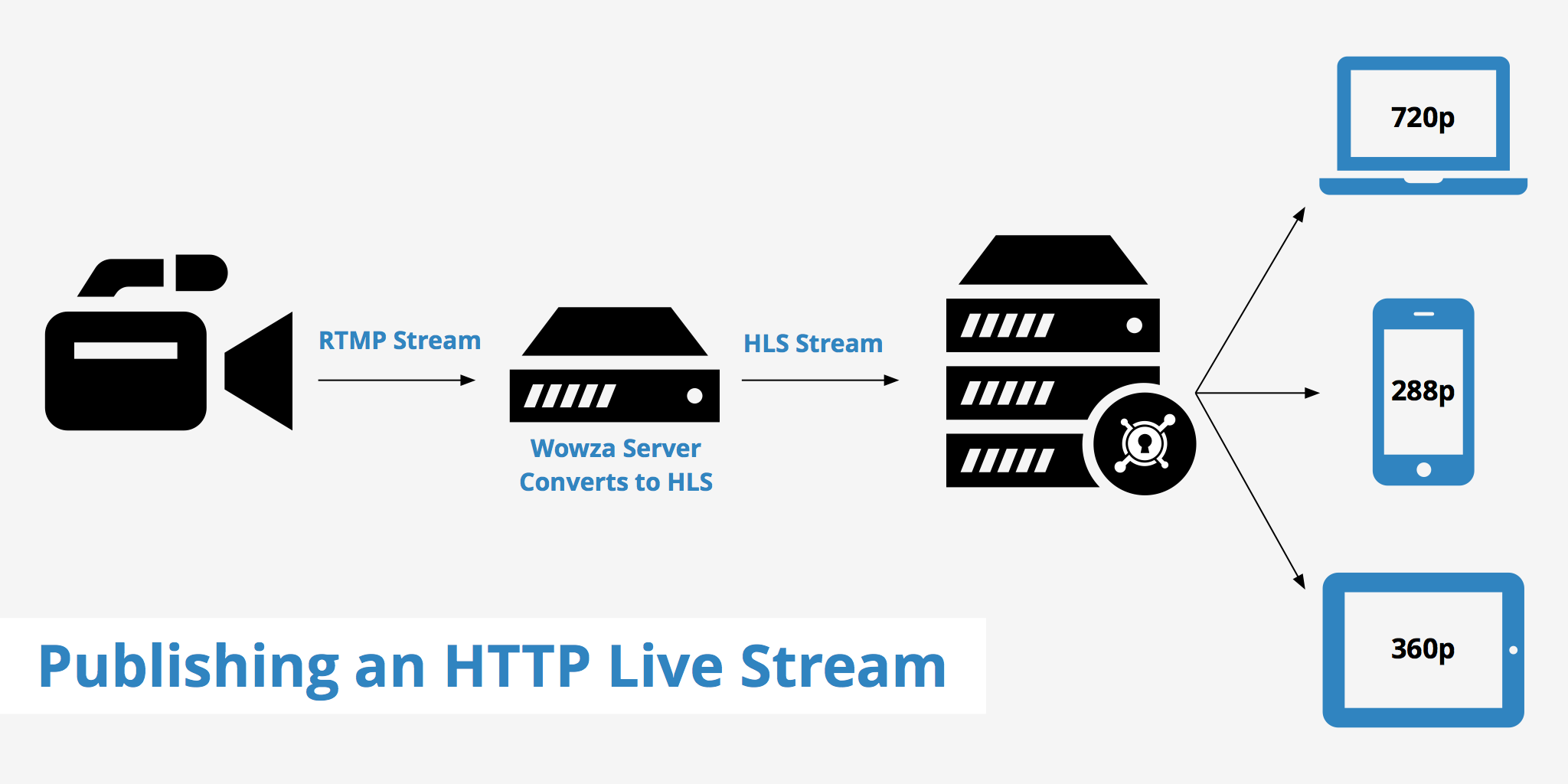
What is HLS? HLS stands for HTTP Live Streaming.
Jared WhiteHOST
It was originally invented by Apple, actually, and released in 2009.
Jared WhiteHOST
This has basically become the way video streaming works on the internet.
Jared WhiteHOST
When you play videos on YouTube, watch live streams on Twitch, Netflix, and chill, you are benefiting from HLS.
Jared WhiteHOST
HLS essentially breaks up an entire video in a bunch of small chunks and add a variety of resolutions and bit rates, and then during playback you get all the benefits of adaptive streaming.
Jared WhiteHOST
In a true live stream, these chunks are being generated on the fly and served to you in near real time.

Matt CundillHOST
Giving people an audio option is worthwhile when that option delivers a complete experience.
Matt CundillHOST
And if video is going to be a substantial part of your podcast business, use a podcast host with HLS support.
Matt CundillHOST
We recommend Art19.
Matt CundillHOST
We also recommend Captivate, Libsyn, Buzzsprout, Omni.
Matt CundillHOST
HLS, by the way, stands for HTTP Live Streaming.
Matt CundillHOST
The practical question is whether your host can deliver video properly to the podcast apps you want to serve.
Matt CundillHOST
Apple Podcasts now supports an HLS video experience through participating hosts, some of the ones I just mentioned, with availability depending on that provider and rollout.
Matt CundillHOST
Just ask the specific questions.

Barry OwenGUEST
TCP has a lot of overhead, and it builds latency when there's packet loss because it does retransmissions.
Barry OwenGUEST
And traditional streaming right now, we have HLS and Dash, which are the most common things for one-to-many streaming, right? If you're watching Netflix, if you're watching Apple TV, whatever it is, it's going to be HLS or Dash.
Barry OwenGUEST
WebRTC was originally designed for video conferencing.
Barry OwenGUEST
Still does a pretty good job of that.

Cara PacettiHOST
That is a great introduction and very good reason as to why we received this fan mail.
Cara PacettiHOST
So a podcasting Q&A listener from Denver, Colorado, sent me some fan mail asking, please do a full description of HLS format and what I should know.
Cara PacettiHOST
So Albin, I'm going to ask you some questions.
Cara PacettiHOST
Rapid fire.
Alban BrookeGUEST
Sure.
Alban BrookeGUEST
I mean, can I say first off, you don't need to know all of this.
Alban BrookeGUEST
Once you said HLS, you already know more than you really need to.
Alban BrookeGUEST
HLS is just a type of video file.

Norma Jean BelenkyHOST
Take a bite, because today we are talking to Apple.
Norma Jean BelenkyHOST
This episode features Jake Shapiro, head of creator partnerships at Apple, and we'll be speaking all about HLS video, how creators are implementing video in their omni-channel strategy, ad insertion in HLS video, and the iOS 27 podcast updates.
Norma Jean BelenkyHOST
Let's get down to Podbiz.
Norma Jean BelenkyHOST
Jake, thanks so much for joining us.
Norma Jean BelenkyHOST
Apple has a brand new CEO who is one of the original product guys of Steve Jobs.
Norma Jean BelenkyHOST
So we're going to see, hopefully, more interesting things continue to come out.
Norma Jean BelenkyHOST
But on the podcasting side – Launching HLS Video has been huge, right? Because like you were saying, you can go from audio to video and your experience and the way you consume the podcast may be fragmented, but your consumption now isn't.
Norma Jean BelenkyHOST
So tell us a little bit about, first of all, what you guys are seeing.

Losh MoodaleyGUEST
Or an option, right?
Rob GreenleeHOST
I mean, to have the audio and video option, since these platforms are increasingly through HLS streaming, they're putting it out where you can turn off the video and keep listening to the audio.
Rob GreenleeHOST
Over time, the audio track from the video is going to be the audio experience.
Rob GreenleeHOST
I think that's creating a lot of pressure on creators too, I think.
20 MINS LATER
Losh MoodaleyGUEST
That seems to kind of be what's happening.
Rob GreenleeHOST
Yeah, I would agree.
Rob GreenleeHOST
And I think all you have to do is look as far as Apple Podcasts and Spotify to see that with this focus on HLS streaming.
Rob GreenleeHOST
Because I think eventually the MP3 download of this pass-through concept is probably not going to be where we are five years from now.

Losh MoodaleyGUEST
Yeah.
Rob GreenleeHOST
I mean, I mean, to have the audio and video option, since these platforms are increasingly, through HLS streaming, they're putting it out where you can turn off the video and keep listening to the audio.
Losh MoodaleyGUEST
Sure.
Rob GreenleeHOST
O- over time, the audio track from the video is gonna be the audio-
20 MINS LATER
Rob GreenleeHOST
Mm-hmm.
Losh MoodaleyGUEST
That seems to k- to kind of be what's happening.
Rob GreenleeHOST
Yeah, I w- I would agree, and it, I think all you have to do is look as far as Apple Podcasts and Spotify to see that with this focus on HLS streaming because I think eventually the MP3 download-
Losh MoodaleyGUEST
Mm-hmm
Kirk HarnackHOST
So, Matt, I'm giving a talk here on this technology, the streaming tech.
Kirk HarnackHOST
It's been around a few years, called HLS.
Kirk HarnackHOST
It's Apple HLS, HTTP Live Streaming.
Kirk HarnackHOST
And it was invented for some reasons, which are actually maybe a little less important now, but...
Kirk HarnackHOST
It's useful for many other reasons.
Kirk HarnackHOST
Now, you were telling me about you were an early adopter of HLS for your radio stations.
Kirk HarnackHOST
Tell me about that experience, why you adopted this HLS over IceCast or ShoutCast.
Matt LevinGUEST
So, might have been 10 plus years ago, you know, as our streaming numbers were starting to really pick up, we had a lot of people complaining, you know, emailing us and saying, hey, I can't stream your Ice Cash stream.
1 more episode mentions HTTP Live Streaming.
Create an account to see the whole feed, search across every transcript, and follow the entities you care about.