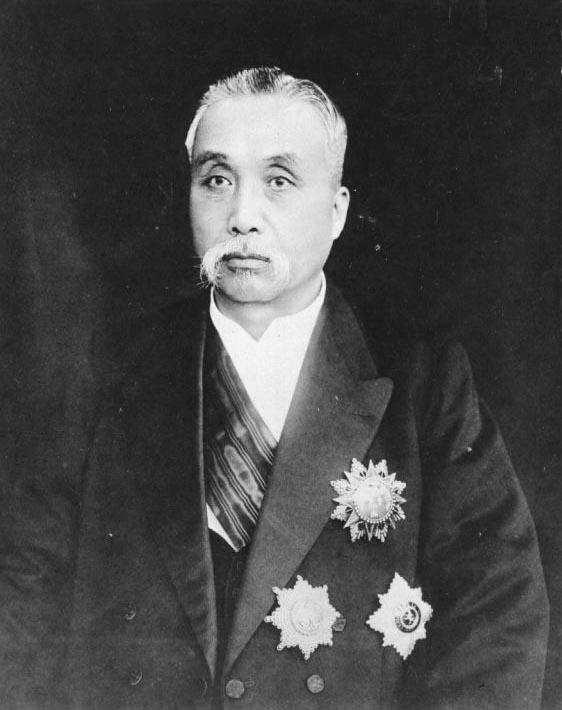
Hsu Shih-chang
Former President of the Republic of ChinaWikipedia
38
MENTIONS
4
EPISODES
4
PODCASTS
Search complete. 38 mentions across 4 episodes found for "Hsu Shih-chang".
Oct 9, 2026

Scott PruittHOST
The truth, however, can no longer be determined with certainty.
Scott PruittHOST
After passing through many hands, the Taibao Ding eventually entered the collection of Xu Shichang in 1917.
Scott PruittHOST
Xu was an influential political figure who had served as a high official under the Qing dynasty and later as premier of the Republic of China.
Scott PruittHOST
Interestingly, he himself once held the honorary title of Taibao.
Scott PruittHOST
People even referred to him as Prime Minister Xu, making his ownership of the Taibao Ding particularly fitting.
Scott PruittHOST
Perhaps the bronze brought him luck.
Scott PruittHOST
In 1918, amid a political stalemate among rival warlords, Xu Shichang was elected the second president of the Republic of China.
Scott PruittHOST
He served until 1922, becoming the longest-serving president during the Beiyang government period.

Nicholas CliffordNARRATOR
I come now to the system of selecting officials by competitive examination, without which it is hardly likely that so literary and unsuperstitious a system as that of Confucius could have maintained its hold.
Nicholas CliffordNARRATOR
The view of the modern Chinese on this subject is set forth by the present President of the Republic of China, Xu Shichang, in his book On China After the War, pages 59 to 60.
Nicholas CliffordNARRATOR
Footnote.
Nicholas CliffordNARRATOR
Translated by the Bureau of Economic Information, Peking, 1920.
2 HRS 2 MINS LATER
Nicholas CliffordNARRATOR
From the late Prince Ito's grossly misleading commentary on the Japanese constitution down to school compendiums, the absurd dates are everywhere insisted upon.
Nicholas CliffordNARRATOR
This question of fictitious early history might be considered unimportant.
Nicholas CliffordNARRATOR
like the fact that with us parsons have to pretend to believe the bible which some people think innocuous but it is part of the whole system which has a political object to which free thought and free speech are ruthlessly sacrificed as this same pamphlet says shinto a primitive nature cult which had fallen into discredit was taken out of its cupboard and dusted the common people it is true continued to place their affections on buddhism the popular festivals were buddhist buddhist also the temples where they buried their dead the governing class determined to change all this they insisted on the shinto doctrine that the mikado descends in direct succession from the native goddess of the sun and that he himself is a living god on earth who justly claims the absolute fealty of his subjects such things as laws and constitutions are but free gifts on his part not in any sense popular rights of course the ministers and officials high and low who carry on his government are to be regarded not as public servants but rather as executants of supreme one might say supernatural authority shinto because connected with the imperial family is to be alone honored all this is not mere theorizing it is the practical basis of japanese politics the mikado after having been for centuries in the keeping of the tokugawa shoguns was captured by the clans of satsuma and choshu and has been in their keeping ever since they were represented politically by five men the genro or elder statesmen who are sometimes miscalled the privy council only two still survive the genro have no constitutional existence they are merely the people who have the ear of the mikado they can make him say whatever they wish therefore they are omnipotent it has happened repeatedly that they have had against them the diet and the whole force of public opinion nevertheless they have invariably been able to enforce their will because they could make the mikado speak and no one dare oppose the mikado they do not themselves take office they select the prime minister and the ministers of war and marine and allow them to bear the blame if anything goes wrong the genro are the real government of japan and will presumably remain so until the mikado is captured by some other clique from a patriotic point of view the genro have shown very great wisdom in the conduct of affairs there is reason to think that if japan were a democracy its policy would be more chauvinistic than it is apologists of japan such as mr bland are in the habit of telling us that there is a liberal anti-militarist party in japan which is soon going to dominate foreign policy i see no reason to believe this undoubtedly there is a strong movement for increasing the power of the diet and making the cabinet responsible to it there is also a feeling that the ministers of war and marine ought to be responsible to the cabinet and the prime minister not only to the mikado directly footnote the strength of this movement may however be doubted murdoch op cit one page one hundred and sixty two says at present nineteen ten the war office and admiralty are of all ministries by far the strongest in the empire when a party government does by any strange hap make its appearance on the political stage the ministers of war and of marine can afford to regard its advent with the utmost insouciance for the most extreme of party politicians readily and unhesitatingly admit that the affairs of the army and navy do not fall within the sphere of party politics but are the exclusive concern of the commander-in-chief his imperial majesty the emperor of japan on none in the public service of japan are titles of nobility high rank and still more substantial emolument showered with a more liberal hand than upon the great captains and the great sailors of the empire in china on the other hand the military man is if not a pariah at all events an exceptional barbarian whom policy makes it advisable to treat with a certain amount of gracious albeit semi-contemptuous condescension end footnote but democracy in japan does not mean a diminution of chauvinism in foreign policy there is a small socialist party which is genuinely anti-chauvinist and anti-militarist this party probably will grow as japanese industrialism grows but so-called japanese liberals are just as chauvinistic as the government and public opinion is more so indeed there have been occasions when the genro in spite of popular fury has saved the nation from mistakes which it certainly would have committed if the government had been democratic one of the most interesting of these occasions was the conclusion of the treaty of portsmouth after the sino-japanese war which deserves to be told as illustrative of japanese politics footnote the following account is taken from mclaren op cit chapters twelve and thirteen close footnote in nineteen five after the battles of tsushima and mukden it became clear to impartial observers that russia could accomplish nothing further at sea and japan could accomplish nothing further on land the russian government was anxious to continue the war having gradually accumulated men and stores in manchuria and greatly improved the working of the siberian railway the japanese government on the contrary knew that it had already achieved all the success it could hope for and that it would be extremely difficult to raise the loans required for a prolongation of the war Under these circumstances, Japan appealed secretly to President Roosevelt requesting his good offices for the restoration of peace.
Nicholas CliffordNARRATOR
President Roosevelt therefore issued invitations to both belligerents to a peace conference.

Relativity: The Special & General Theory
Problem of China-Bertrand Russell
Sep 26 · 11 Mentions
Top 20%Nicholas CliffordNARRATOR
I come now to the system of selecting officials by competitive examination, without which it is hardly likely that so literary and unsuperstitious a system as that of Confucius could have maintained its hold.
Nicholas CliffordNARRATOR
The view of the modern Chinese on this subject is set forth by the present President of the Republic of China, Xu Shichang, in his book On China After the War, pages 59 to 60.
Nicholas CliffordNARRATOR
Footnote.
Nicholas CliffordNARRATOR
Translated by the Bureau of Economic Information, Peking, 1920.
1 HR 52 MINS LATER
Nicholas CliffordNARRATOR
The Dutch writers likewise were in the habit of referring to the shogun as "His Majesty," and on their annual pilgrimage from Deshima to Edo, Kyoto, where the mikado lived, was the only city which they were permitted to examine freely.
Nicholas CliffordNARRATOR
The privilege was probably accorded by the Tokugawa to show the foreigners how lightly the court was regarded.
Nicholas CliffordNARRATOR
Commodore Perry delivered to the shogun in Edo the autographed letter to the Emperor of Japan from the President of the United States, and none of the ambassadors of the Western powers seem to have entertained any suspicion that in dealing with the authorities in Edo, they were not approaching the throne.
Nicholas CliffordNARRATOR
In light of these facts, some other explanation of the relations between the shogunate and the imperial court must be sought than that which depends upon the claim now made by Japanese historians of the official type that the throne throughout this whole period was divinely preserved by the heavenly gods.