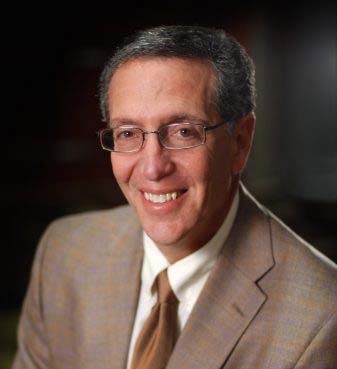
Howard Schubiner
45
MENTIONS
16
EPISODES
11
PODCASTS
Search complete. 45 mentions across 16 episodes found for "Howard Schubiner".
Oct 1, 2026

Jenette AuchterHOST
I love it.
Jenette AuchterHOST
And the work of researchers including Dr. Howard Schubiner, he, he, like, steps in and helps out with the PRT stuff, and, and looking at the role that fear and threat interpretation can play in certain forms of chronic pain.
Melissa WeissHOST
Yeah.
Jenette AuchterHOST
So this is really ins- interesting.

Damian EvansHOST
And this most recent one has really, really got to me.
Damian EvansHOST
Recently, I've been listening to a book by Dr. Howard Schubiner called Unlearn Your Pain.
Damian EvansHOST
And there was one chapter in particular called A Pain in the Back.
Damian EvansHOST
That chapter stopped me.
Damian EvansHOST
What does pain actually mean? Does pain equal damage? Can you hurt without damaging tissue? Can tissue damage exist without pain? Why can an old injury keep hurting after the tissue has healed? Why do MRI sometimes find scary looking abnormalities in people who feel completely fine? What happens when your brain starts predicting danger? And can fear itself alter pain? I've been diving into the work of Dr.
Damian EvansHOST
Howard Schubiner and the modern pain science surrounding chronic pain.
Damian EvansHOST
And some of this completely changes the way that you think about what pain is.
Damian EvansHOST
But we have to be very careful because I'm not going to tell you that pain is all in your head.

Adam DorseyHOST
I love that so much.
Adam DorseyHOST
You know, I've had Howard Schubiner on my podcast twice, and he's the protege of John Sarno, who's one of the PRP OGs.
Adam DorseyHOST
And it's just such good stuff.
Adam DorseyHOST
My older son says, you know, I can walk through poison oak.

Carolyn EvansGUEST
And it becomes pretty clear, like big aha moments there.
Elizabeth WestfieldHOST
Dr. Howard Schubiner says that having this understanding and believing that your pain can be fixed is crucial to successful treatment.
Howard SchubinerGUEST
If you think you have a chronic condition that's never going to get better and you're just pushing through it or you're just trying to distract yourself, the chance of that working extremely well is going to be low because in the back of your mind, you're like, oh yeah, this is damaged.
Howard SchubinerGUEST
It's broken.
9 MINS LATER
Howard SchubinerGUEST
Not everybody's going to jump on board when new things come about, when revolution occurs.
Elizabeth WestfieldHOST
Schubiner's book, Unlearn Your Pain, is available now.
Elizabeth WestfieldHOST
You can find more information about Dr. Howard Schubiner, Carolyn Evans, and all of our guests on our website, ingoodhealthpodcast.org. For more behind the scenes, follow In Good Health Pod on Facebook, Instagram, and X.
Elizabeth WestfieldHOST
Our writer-producer is Kristen Farah.
Carolyn EvansGUEST
And it becomes pretty clear, like big aha moments there.
Elizabeth WestfieldHOST
Dr. Howard Schubiner says that having this understanding and believing that your pain can be fixed is crucial to successful treatment.
Howard SchubinerGUEST
If you think you have a chronic condition that's never going to get better and you're just pushing through it or you're just trying to distract yourself, the chance of that working extremely well is going to be low because in the back of your mind, you're like, oh yeah, this is damaged.
Howard SchubinerGUEST
It's broken.
9 MINS LATER
Howard SchubinerGUEST
Not everybody's going to jump on board when new things come about, when revolution occurs.
Elizabeth WestfieldHOST
Schubiner's book, Unlearn Your Pain, is available now.
Elizabeth WestfieldHOST
You can find more information about Dr. Howard Schubiner, Carolyn Evans, and all of our guests on our website, ingoodhealthpodcast.org. For more behind the scenes, follow In Good Health Pod on Facebook, Instagram, and X.
Elizabeth WestfieldHOST
Our writer-producer is Kristen Farah.

Sean HersheyHOST
episode, the second episode of this podcast is called What is TMS? And that goes through like how how do you make the how do people make
Sean HersheyHOST
a diagnosis and how was i trained to make a diagnosis and there is a three-step process to do so so i would recommend people take a look at that um but even so people will go to like the top doctors like howard schubiner is the one who created that three-step process and he was on this podcast just recently and people will go to him and he will tell them like yup this is a neuroplastic condition uh you are safe you know you are cleared to do whatever you're cleared for exercise you're you're cleared to do this healing work psychologically because the problem is not a physical problem you are good and even then people will be like i don't know I don't know.
Sean HersheyHOST
So I just want to sort of underline what you're saying, which is like, the waters are muddy and it's hard to know what is what is um like what is what i guess but what i would just offer to people listening is that so much more of your pain is neuroplastic than you think it is so so so so much more
Tate O'DellGUEST
yeah yeah um so yeah the question i the question i had for you was so I alluded to the point earlier that it ends up being like the last box that's checked.

Gabby SandersonHOST
But what actually causes pain? What if pain isn't always a direct reflection of physical damage? What if, in some cases, pain is something our brains have learned and can consequently learn to unlearn? That's the fascinating idea we're exploring with today's guest, Dr.
Gabby SandersonHOST
Howard Schubiner, a doctor and clinical professor at Michigan State University's College of Human Medicine, who has spent decades studying the connection between the brain, the body, and our experiences of pain, anxiety, and depression.
Gabby SandersonHOST
Dr. Howard believes that while all pain is 100% completely real, it is created by the brain.
Gabby SandersonHOST
His work focuses on this.
Gabby SandersonHOST
So whether you live with chronic pain, know somebody who does, or you're simply fascinated by the relationship between the brain and the body, I think this conversation will give you plenty to consider.
Gabby SandersonHOST
And with that in mind, ready to find a healthier, happier you? Let's get started.
Gabby SandersonHOST
Welcome Dr. Howard Schubiner to the Happier Life Project podcast.
Gabby SandersonHOST
Thrilled to have you on the show and thank you so much for allowing me to read your book.

Becca KennedyHOST
I'm Becca Kennedy.
Howard SchubinerHOST
And I'm Howard Schubiner.
Becca KennedyHOST
And this is the Science Behind the Symptoms, where together we explore the science of neuroplasticity through a lens of curiosity.
Howard SchubinerHOST
And we are a podcast of the ATNS, the Association for the Treatment of Neuroplastic Symptoms.
19 MINS LATER
Joe StephGUEST
And she teached how to deal with pain, you know, without drugs and stuff.
Joe StephGUEST
And so I called her and set up appointment.
Joe StephGUEST
And the first day she told me about, hey, she's like, I had a training by Dr. Howard Schubeter.
Joe StephGUEST
You should look in these first five chapters of the book.

David MarkHOST
And perhaps more importantly, the brain can learn its way out of some forms of persistent pain.
David MarkHOST
I'm joined by Dr. Howard Schubiner, physician, researcher, and author of Unlearn Your Pain, whose work has hugely influenced our understanding
Gigi CockellGUEST
of mind-body conditions and chronic pain.
David MarkHOST
I'm also delighted that Gigi Cockerl is joining us today.
6 more episodes mention Howard Schubiner.
Create an account to see the whole feed, search across every transcript, and follow the entities you care about.