Homo
PrimateWikipedia
326
MENTIONS
52
EPISODES
38
PODCASTS
Search complete. 326 mentions across 52 episodes found for "Homo".
Nov 3, 2026

Stephen C. StearnsHOST
Or you go back 15 million years, and the Old World monkeys are going this way, and the Homenidae are going that way.
Stephen C. StearnsHOST
Or you go back seven million years, and the chimpanzees go that way, and Homo goes off in this other direction.
Stephen C. StearnsHOST
Basically, if you're looking at it as an evolutionary biologist, okay, some chunk of DNA went one way and some chunk of DNA went the other, down this branch, and they both managed to make it to this point, but you can't really derive any kind of morality about who has the right to dominate and who has the right to take over the resources of the world from that.
Stephen C. StearnsHOST
It's just a neutral pattern.
23 MINS LATER
Stephen C. StearnsHOST
The evolutionary or purely scientific point of view would be that there is no value in nature.
Stephen C. StearnsHOST
So whether the planet's dead or alive actually doesn't make any difference.
Stephen C. StearnsHOST
If we then place a human value on diversity for cultural reasons, as we saw with the Gibbons, or in our own culture, every one of you is probably sitting in this class because you had a nice experience with some kind of biodiversity at some Well basically what that does is we are placing a human value on something, and we've won the battle, and now our value system, which is our own Homo sapiens value system of one kind or another, and you've seen there are bunches of them, is being placed on the rest of the planet.
Stephen C. StearnsHOST
So some people spend to exploit the planet, some people spend to conserve it.

speaker_0HOST
Dinosaurs reached their greatest diversity alongside the newly evolved flowering plants.
speaker_0HOST
Each of these periods lasted tens of millions of years, longer than the entire history of the genus Homo, and the world changed profoundly within each one.
speaker_0HOST
The changes were slow, continents drifted, seas advanced and retreated, climates warmed and cooled, and the dinosaurs changed with them, evolving new forms to meet new conditions.
speaker_0HOST
The pace of evolution in dinosaurs was similar to the pace of evolution in modern animals.

Sid RothHOST
It's a shame that most people take these drawings and the stories they tell as fact, even when they contradict the actual evidence.
Sid RothHOST
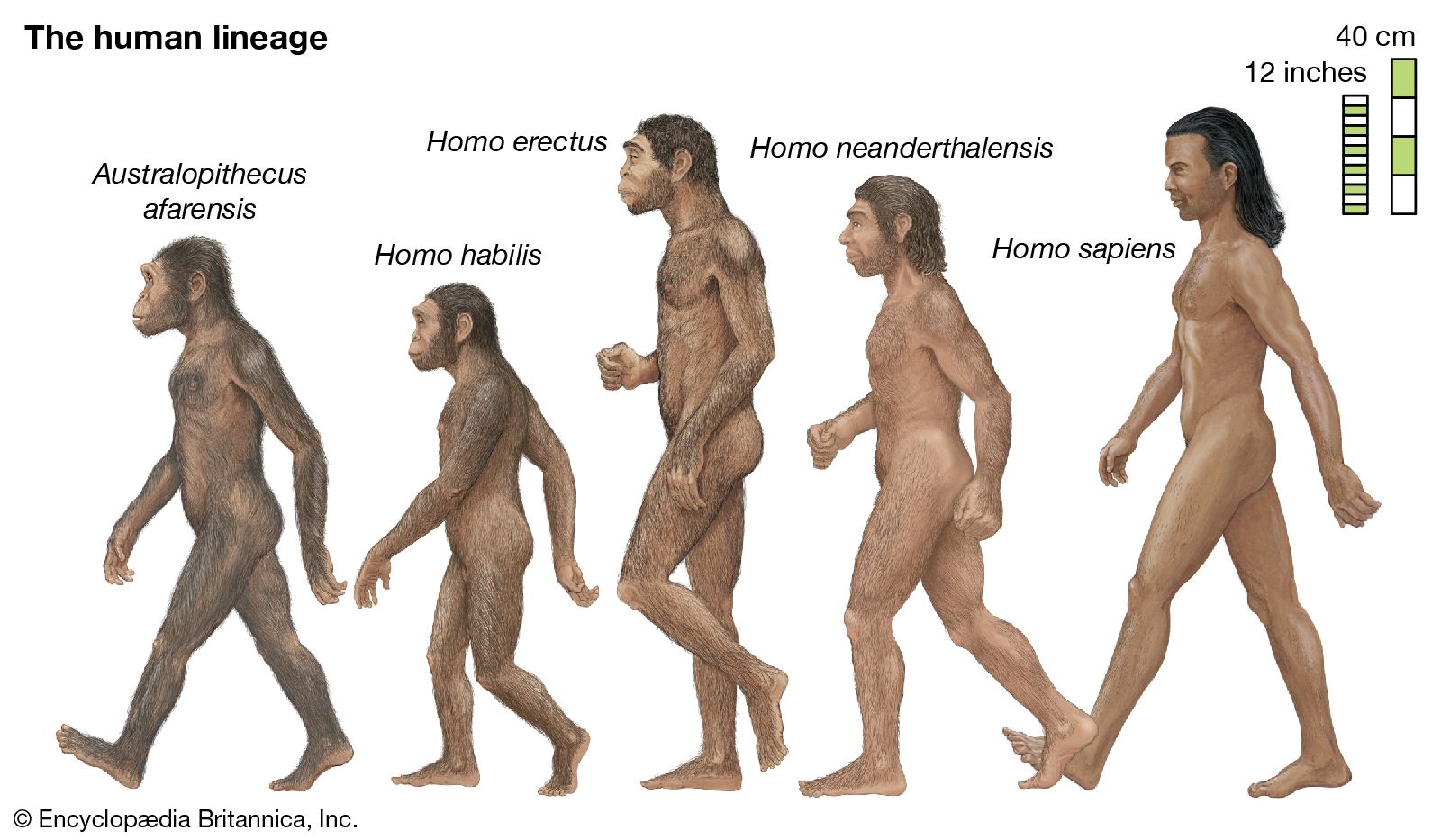
Take the drawings of Homo erectus, which often appear as intellectually inferior and far from human.
Sid RothHOST
But the fossil evidence paints a different picture.
Casey LuskinSOUNDBITE_SPEAKER
Below the neck, Homo erectus is almost identical to modern humans.
Casey LuskinSOUNDBITE_SPEAKER
And even its brain size is within the range of modern human beings.
Casey LuskinSOUNDBITE_SPEAKER
Homo erectus also used stone tools.
Casey LuskinSOUNDBITE_SPEAKER
They harnessed fire.
Casey LuskinSOUNDBITE_SPEAKER
And in fact, there's even some paleoanthropologists who believe that Homo erectus was capable of building boats.

Mark HubbeGUEST
I am pathologically curious.
Mark HubbeGUEST
So over my career, I've been intrigued by many different questions that took me from what we're talking today, right? The evolution of the genus Homo.
Mark HubbeGUEST
all the way to formation of caves in Brazil or the morphology of bats' wings.
Mark HubbeGUEST
So yeah, we've been doing a lot of things together.
Gabby LaperaHOST
So it's very refreshing to be talking to you today about evolution and having your sunshiny disposition and like you're like, let's all collaborate attitude about it.
Gabby LaperaHOST
We are going to talk specifically about an article of yours that just came out in Nature Communications.
Gabby LaperaHOST
It is called Evolutionary Drivers of Encephalization and Facial Reduction in the Genus Homo.
Gabby LaperaHOST
I think that we should start by just breaking down the title.

Matt O'DowdHOST
This episode is supported by 23andMe.
Matt O'DowdHOST
It's fun to think about humanity settling the galaxy, outposts of familiar Homo sapiens spread among the stars.
Matt O'DowdHOST
But there may be nothing at all familiar about these distant future spacefarers.
Matt O'DowdHOST
Human populations on other planets may quickly evolve into things that look nothing like humans as we know them.
Matt O'DowdHOST
But if those challenges are met, we may reach a time when many generations of humans have lived and died on the red planet.
Matt O'DowdHOST
Those people will be very different to us.
Matt O'DowdHOST
How will they change? Will Martian humans or human Martians actually evolve? Will they eventually become a species distinct from Homo sapiens? Humans have never stopped evolving.
Matt O'DowdHOST
Whenever a human population is isolated, characteristic genotypes develop.

Larry ChappHOST
perhaps, perhaps not, on the condemnation of polygyny in humanae generis by Pius XII.
Larry ChappHOST
The idea that modern science shows us that anatomically modern homo sapiens emerged you know by the thousands sort of rather rather you know we don't rather abruptly really chronologically but in other words there was no uh situation where there was some sort of mutation to sort of a homo habilis or something like that all of a sudden two two Primitive hominids gave birth to the same mutate.
Larry ChappHOST
All of a sudden, modern Homo sapiens popped out, anatomically modern Homo sapiens popped out, and so monogenism then becomes possible.
Larry ChappHOST
They were all descendants of those two things, whereas polygynism seems to be the more scientifically grounded thing.
Larry ChappHOST
Now, the catechetical instructions say – As it stands now, it doesn't seem that we can accept a polygenic sense of origins because it threatens the foundations of original sin and the unity of the human race.
11 MINS LATER
Larry ChappHOST
Yeah, that's great.
Larry ChappHOST
And there's also the point of, you know, there are sort of subsets of hominids that are close to our anatomy, like the Denisovans.
Larry ChappHOST
There's the hobbits in Southeastern Asia, the Florensis, Homo Florensis, I think it's called, or whatever.

Jared PolinHOST
Subaru.
Jared PolinHOST
Anyway, earliest fossil evidence of the genus Homo, the group that included modern humans, 2.8 million years ago.
Jared PolinHOST
And that's four or five-ish million years since the earliest known human ancestors separated from the evolutionary lineage leading to modern chimpanzees.
Jared PolinHOST
And that's 2 million roughly years when early human relatives started to walk upright.
Jared PolinHOST
1.9 million years ago, Homo erectus appeared, eventually spreading beyond Africa.
Jared PolinHOST
300,000 years ago, Homo sapiens, modern humans, first appeared in Africa.
Jared PolinHOST
Only 60,000 to 70,000 years ago, major migrations of modern humans out of Africa into Asia, Europe, and beyond disappeared.
Jared PolinHOST
12,000 years ago, agriculture began developing in several regions, eventually leading to permanent settlements and civilizations.

Ricardo LopesHOST
I'm your host, as always, Ricardo Lopes, and today I'm joined by Dr. Christian Thrien.
Ricardo LopesHOST
He is professor of anthropology at the University of Connecticut, and today we're going to talk about the Middle to Later Stone Age transition and some topics about the evolution of our species, Homo sapiens.
Ricardo LopesHOST
So, Dr. Thrien, welcome to the show.
Ricardo LopesHOST
It's a pleasure to have you
8 MINS LATER
Ricardo LopesHOST
Mm hmm.
Ricardo LopesHOST
Right.
Ricardo LopesHOST
So let's talk about the evolution of our species, Homo sapiens.
Ricardo LopesHOST
So I know that there's this, I guess it's still ongoing debate among anthropologists, particularly paleoanthropologists, maybe biological anthropologists as well, as to whether uh we evolved in subdivided populations across africa or we if we have one single origin in africa uh what is your take on that

Uche OdiatuGUEST
And I know I brought the subject up before, but average American, average person watching this is doing about 12 grams a day.
Uche OdiatuGUEST
Our bacteria, when you think of Homo habilis, Homo neanderthal, Homo florence, was consuming up to 100 grams of fiber for hundreds of thousands of years.
Uche OdiatuGUEST
It's only now in the last 70 years that we're doing 12 grams.
Uche OdiatuGUEST
It's an insult to these bacteria.
Uche OdiatuGUEST
I had the banana because it also has fiber in it and it's got insoluble and soluble fiber inside.
Uche OdiatuGUEST
I had a black coffee because my bacteria like polyphenols, no cream, no sugar.
Uche OdiatuGUEST
Bacteria hate sugar because for hundreds of thousands of years, the most, you know, Homo habilis and Homo florence had 200,000 years ago, was maybe three pounds of sugar a year.
Uche OdiatuGUEST
Average North American, 20 teaspoons a day adds up to 64 pounds a year.

Aiden ThornburyHOST
Essentially, the first thought that I would have is just...
Aiden ThornburyHOST
Something that, like, you know, if you go into the history of the human species and things like that and elements along the lines of, you know, let's say we're talking about the, you know, the Homo sapien related ancestors, but that were not actually Homo sapiens, like Homo halibus and things like that, things that were very similar to our species, but slightly different.
Aiden ThornburyHOST
of a similar like playing field skill level to some extent you could have that like element of okay they are like you know they are more of a threat in some instances than perhaps a lion or a wolf or things like that but i want to hear your reasoning
Aidan MattisHOST
all right so you're you just said one theory the other theory is that i the uncanny valley applies to things that are pale shallow eyed pale skinned um gaunt because we are naturally inclined to avoid sick people and corpses Uh, I don't like this one because human beings for the past, oh God, thousands of years had been known to care for the dead and also to care for the sick.
42 more episodes mention Homo.
Create an account to see the whole feed, search across every transcript, and follow the entities you care about.