Homo economicus
32
MENTIONS
12
EPISODES
11
PODCASTS
Search complete. 32 mentions across 12 episodes found for "Homo economicus".
Sep 17, 2026

Dinis GuardaHOST
But let's start with the conscious banking, because I think it's a concept that is very important.
Paolo SironiGUEST
OK, so you see, I always wrote about this dichotomy existing between the Homo sapiens and the economic sapiens, right, and the Homo economicus and the Homo sapiens.
Paolo SironiGUEST
So the previous theory of financial markets thought that the Homo economicus was a necessary rational being, so try to just work with rationality.
Paolo SironiGUEST
in order to make financial decisions.
Paolo SironiGUEST
The problem is that rationality is through only exposed.
18 MINS LATER
Paolo SironiGUEST
Otherwise, I sort of spoil the reading, right? However, I provide a deep insight and articulated review about the different opinions of the origins and the replication of consciousness.
Paolo SironiGUEST
I don't cover them all, just the tiny few that I believed were the most relevant, because there's much more happening out there, but I think these crystallize the key determinants of that.
Paolo SironiGUEST
But then, in the end, as much as in my previous work, I tried to reconcile the gap between Homo economicus and Homo sapiens, where Homo sapiens is the only actor living and breathing on this pale blue dot.

François AllissonHOST
And I'm very happy to have you on the show as a former colleague at the Centre Valos Pareto in Lausanne.
François AllissonHOST
The first paper we'll discuss about is the one that you wrote with Michele Bay and that was published in the Journal of Economics out in 2023, The Birth of Homo Economicus, The Methodological Debate on the Economic Agent from John Stuart Mill to Vilfredo Pareto.
François AllissonHOST
And so my first question to you would be, on that paper, what is the common understanding of Homo economicus today? Is it closer to John Stuart Mill's wealth-seeking individual or to Maffeo Pantaleoni's evolutionary agent, as you tell in your paper, or even to Vilfredo Pareto's choice machine? And perhaps the question behind that is what common misconceptions about Homo economicus were you hoping to challenge with your article?
Maxime Desmarais-TremblayGUEST
Okay, this is a great question, Francois.
Maxime Desmarais-TremblayGUEST
I guess the first one is easier and quicker for me to respond.
Maxime Desmarais-TremblayGUEST
I would say that modern microeconomics owes its understanding mostly to Edgeworth and to Pareto.
Maxime Desmarais-TremblayGUEST
And in micro, we see Homo economicus as a choice machine.
Maxime Desmarais-TremblayGUEST
This is Pareto's expression.

Gary NullHOST
But unfortunately, a whole generation grew up where he was the word.
Gary NullHOST
In his late lectures on what he called the birth of biopolitics described the rise of what he named Homo economicus.
Gary NullHOST
This is a version of the human being reimagined as a small, self-interested entrepreneur, entrepreneur, endlessly calculating its own advantage, increasingly stripped of the older bonds of mutual obligation that used to hold communities together.
Gary NullHOST
It was the we, and now it's me.

Bob PisaniGUEST
And I finally, after the dot-com thing, started reading this book and said, you know, this actually makes a lot of sense.
Bob PisaniGUEST
Because before that, I thought, you know, it's called Homo economicus, rational economic man.
Bob PisaniGUEST
That goes back to Adam Smith, people buy low and sell high and they act rationally.
Bob PisaniGUEST
And no, I said no.

ClaraHOST
Annette draws a very sharp contrast between secular economic theory and the church's vision.
AdrianHOST
He takes direct aim at the prevailing secular model of the human person, which economists call homo economicus.
AdrianHOST
Let's unpack this because it dictates so much of our modern world.
ClaraHOST
It really is the water we swim in.
AdrianHOST
It is.
AdrianHOST
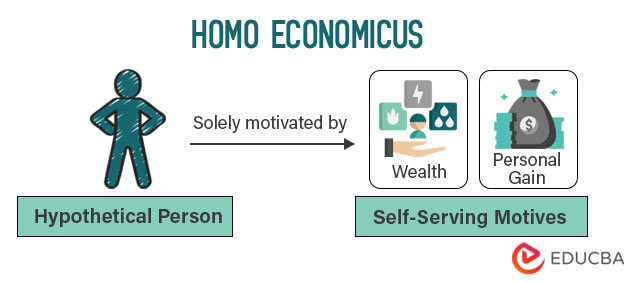
Homo economicus is the idea that a human being is essentially a perfectly rational, purely self-interested calculating machine.
AdrianHOST
Every decision you make is supposedly driven by maximizing your own personal utility and wealth.
ClaraHOST
It is a devastatingly bleak atomized view of humanity.

Nate HagensHOST
Um, well, maybe you can explain.
Nate HagensHOST
Like you, you mentioned Homo economicus and self, uh, interested rational utility maximizers.
Nate HagensHOST
Someone with a PhD in economics probably believes that, but the farmer down the street from me has never heard of that term.
Nate HagensHOST
So how does the whole culture fit into the story of separation?

Nick HanauerGUEST
And I could go on and on about the way in which that paradigm has, has shaped us.
Nick HanauerGUEST
But for, for example, the idea of Homo economicus, the pe-- the idea that people are reliably selfish.
Nick HanauerGUEST
If that was true, then it would be true by definition that selfishness is the cause of our prosperity.
Nick HanauerGUEST
And that is not true because we are Homo sapiens.

SophieHOST
And at the heart of it is this idea that we've been operating with a broken model of human nature.
SophieHOST
The Homo economicus assumption that we're all rational, self-interested calculators.
SophieHOST
Collier says that's a useful fiction for some math, but a disaster for building a society.
SamHOST
Yeah, because we're not just calculators.
SophieHOST
Then the neoclassical school, which is the big one today.
SophieHOST
That's where Homo economicus comes from, the rational, self-interested calculator.
SamHOST
But then there's Marx, who sees capitalism as class conflict, and the Austrians, who love free markets but hate the math.
SophieHOST
And Schumpeter, who talks about creative destruction through innovation.

T. Clifton GreenGUEST
But-
Markus BrunnermeierHOST
Can you say, I would like to have a rational Homo economicus outcome-
T. Clifton GreenGUEST
Yes
Markus BrunnermeierHOST
... please do the whole thing.
2 more episodes mention Homo economicus.
Create an account to see the whole feed, search across every transcript, and follow the entities you care about.