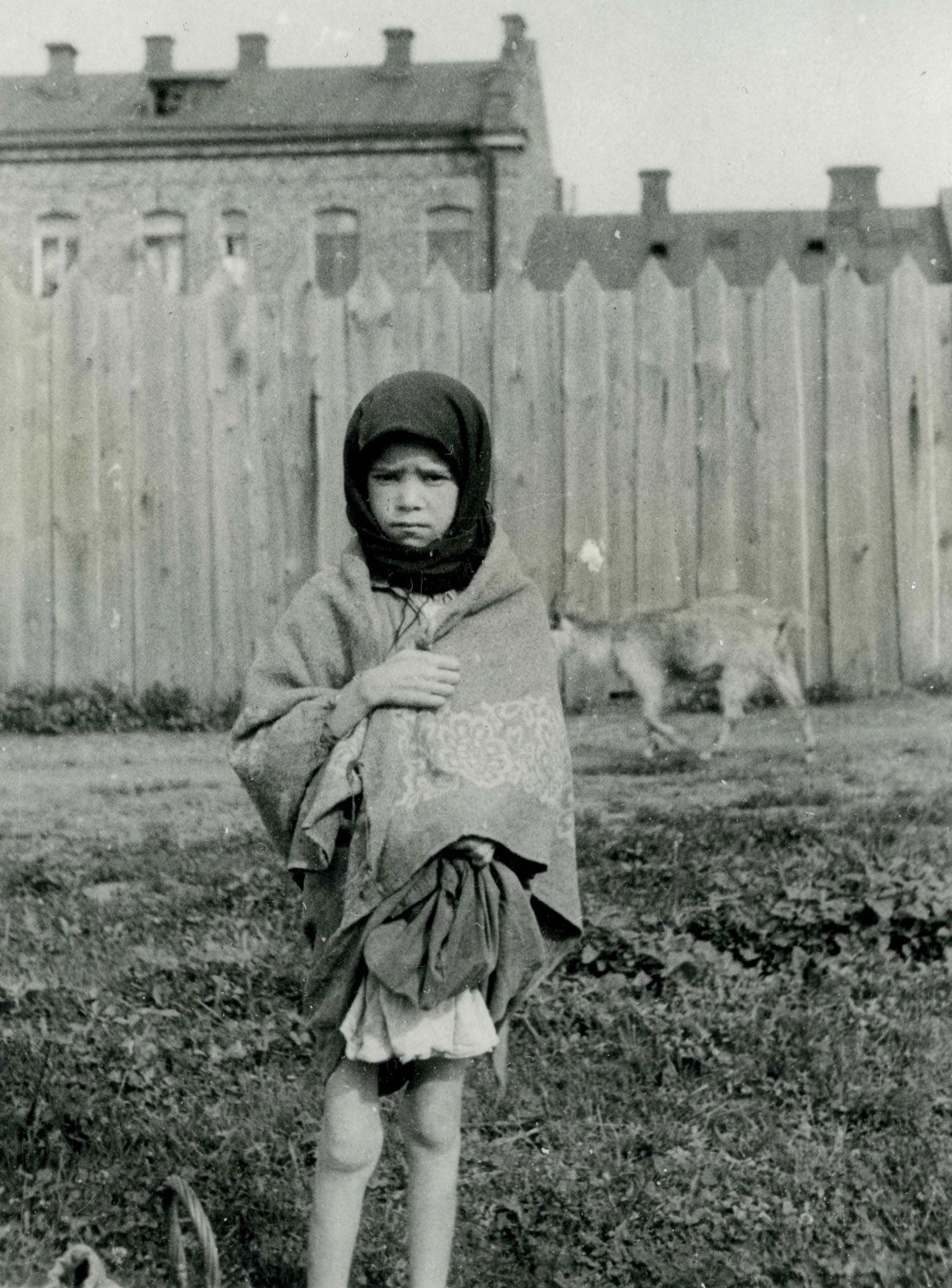
Holodomor
FamineWikipedia
80
MENTIONS
57
EPISODES
46
PODCASTS
Search complete. 80 mentions across 57 episodes found for "Holodomor".
Oct 19, 2026

Harry StourtonGUEST
So for most Ukrainians I speak to, it's a pretty easy choice what they want.
Harry StourtonGUEST
And they've had a pretty, if you know anything about Ukrainian history, it's had a pretty rough time at the hands of the Russians with the Holodomor, you know, the great...
Harry StourtonGUEST
In the mid-30s, the great starvation of 30 million people and the Second World War and the Soviet Union, they had a pretty hard time.
Harry StourtonGUEST
But it's a complicated history, and, you know, there was the Polish Empire, the Grand Duchy of Lithuania, and all these things.

J. Otto PohlGUEST
Uh, he was in power as head of the Gulag from '32 to '37, and then Israel Pliner.
J. Otto PohlGUEST
So you really have, during the 1930s, when you have dekulakization, the Holodomor, uh, and of course the Great Terror in '37 and '38, complete with national operations against diaspora groups, but not Jews, uh, because they didn't have, uh, a independent homeland at that time, uh, about 250,000, the largest group being the Poles, and second German, and then coming up, uh, Latvians.
Pete QuiñonesHOST
W- what was the justification for, um, for, basically for the extermination of Poles and Germans and Latvians?
J. Otto PohlGUEST
Uh, because they were, they were diaspora groups that had independent states, uh, outside of the Soviet Union.
40 MINS LATER
J. Otto PohlGUEST
Uh, but, you know, the, The Black Book of Communism, I would say the numbers in the chapter on the Soviet Union itself, and it, Werth, who was the French scholar who wrote it, doesn't give a total figure.
J. Otto PohlGUEST
His figures are pretty accurate, I would say, overall.
J. Otto PohlGUEST
What got controversy was the 100 million figure by Courtois for all communist regimes, uh, in the front, of which, um, 20 million were supposedly the USSR, and then of course the big chunk is gonna be China, particularly the famine after the Great Leap Forward, uh, which is, uh, less direct than something like the Holodomor, where you have, uh, a targeted area being deliberately deprived of food for a couple of years.
Pete QuiñonesHOST
years.What's the numbers on the Holodomor?

J. Otto PohlGUEST
They were 1.8% of the total population, about... five and a half percent of the communist party but uh under yagoda and yezhov uh the nkvd they were between uh almost 40 i think it was 38.5 percent and 20 percent up until the purged by Beria of them in November 38, of the top 100 or so NKVD officers, including, as I said, Yagoda himself, number one man, Leplevsky, number one man for the Ukrainian Soviet Socialist Republic, Boris Berman, number one man for the Russian Soviet Socialist Republic, Genrikh Lyushkov, the Far Eastern cry, head of the Gulag from 1930 to 1938, the three men, Kogan, Matvei Berman, who was the brother of Boris Berman, he was in power as head of the Gulag from 1932 to 1937, and then Israel Plinner.
J. Otto PohlGUEST
So you really have, during the 1930s, when you have de-Gulagization, the Holodomor, and of course the Great Terror in 1937 and 1938, complete with national operations against diaspora groups, but not Jews, because they didn't have an independent homeland at that time, about 250,000, the largest group being the Poles and second, German, and then coming up, Latvians.
Pete QuiñonesHOST
What was the justification for, basically, for the extermination of Poles and Germans and Latvians?
J. Otto PohlGUEST
because they were diaspora groups that had independent states outside of the Soviet Union.
53 MINS LATER
J. Otto PohlGUEST
What got controversy was the 100 million figure by Quarteau for all communist regimes in the front.
J. Otto PohlGUEST
of which 20 million were supposedly the USSR.
J. Otto PohlGUEST
And then, of course, the big chunk is going to be China, particularly the famine after the Great Leap Forward, which is less direct than something like the Holodomor, where you have a targeted area being deliberately deprived of food for a couple of years.
Pete QuiñonesHOST
What's the numbers on the Holodomor?

Chris de PloegGUEST
You know, we saw this with the mass Hannibal directive.
Chris de PloegGUEST
And I give a few more examples, like in Ukraine, we have the fascist tradition there as well, which collaborated with the Nazis and You know, supposedly this is now kind of retroactively justified with the so-called Holodomor, you know, basically the great Soviet famine, which was a quite complex, multi-causal famine.
Chris de PloegGUEST
And not only Ukrainians died, also in southern Russia and Kazakhstan, a lot of people died.
Chris de PloegGUEST
But supposedly this becomes uniquely aimed at the Ukrainian nation.

John PodhoretzHOST
I mean, not only did they, A, they tried to genoci- uh, to genocide.
John PodhoretzHOST
They tried to starve them out, right? With the Holodomor.
John PodhoretzHOST
They banned their language.
John PodhoretzHOST
They moved Ukrainians into Russia to have their children become Russian.

Marshall WeissHOST
This includes explicit denial in the case of posts that made the false claim that only 271,000 Jews were killed in the Holocaust.
Marshall WeissHOST
and not 6 million, as well as Holocaust distortion and minimization through false, widely exaggerated comparisons to the Soviet man-made famine in the 1930s known as Holodomor, which anti-Semites, including the Nazis, routinely blamed on Jewish Bolsheviks.
Marshall WeissHOST
He added that on the other most popular vertical video platform, TikTok, there are a host of other issues in terms of hate speech, but the company does remove pro-Nazi content and users.
Marshall WeissHOST
TikTok does have anti-Semitism, but it bans Nazism and white supremacy.

BillyHOST
Well, people have.
BillyHOST
I've been talking about it for years, and lately other people just started getting onto it, and that's the Holodomor.
BillyHOST
That was that butcher Stalin, and yes, he was a butcher.
BillyHOST
You ever notice that a lot of these butchers don't actually come from the countries that they run? Like for example, Stalin came from Georgia.
BillyHOST
Um, I didn't even know that homeschool was a real thing back then, so that was one of the big regrets, but he got an education when he came home around the dinner table, okay? And he heard his old man talk, and he heard me on radio back in the day, and I would make him memorize this stuff.
BillyHOST
I would ask, and you could probably ask him to this day, I'd say, "William, how many people, how many people did Pol Pot kill? How many people did Mao kill? How many people did y- you know, pick your dictator." And I would teach him this stuff.
BillyHOST
Well, the official numbers, depending on whom you ask, in the Holodomor is eight million people, and that's very conservative.
BillyHOST
Later figures have said anywhere between 10 to 12, or I think it was eight to 10 million, but who's counting? What do they say? You kill one person, you're a murderer.

Cyril GorllaGUEST
Uh, that becomes really important, right? And so one of our most re- uh, our most recent work that was covered, um- It's in The Washington Post, it's in, it's in Summit Four, is called Lineage Eval.
Cyril GorllaGUEST
And what that does is it actually measures how restrictive a model is in talking about a certain country's topics versus others, right? So for example, uh, we talk about the Great Leap Forward in China, um, historical famine, compared with the Holodomor in the, in the Soviet Union, right? Both broadly the same classes of, of types of events.
Cyril GorllaGUEST
Um, you know, both, both horrible, both, both, uh, have wide-reaching impact f-for their citizenry.
Cyril GorllaGUEST
And what's interesting is, uh, Chinese model, like DeepSeek V4-Flash, for the Holodomor, it'll give you a very detailed response.
Cyril GorllaGUEST
Uh, it'll give you something that's, uh, you know, looks very well-researched, has a lot of data points, um, has a very clear number of impacts.
Cyril GorllaGUEST
Uh, whereas for the Great Leap Forward, it'll give you a response that's sort of sanitized, right? That, that doesn't really, um, that sort of paints over a few things.

Jeff KuhnerHOST
It's called the, uh, Harvest of Sorrow.
Jeff KuhnerHOST
The Holodomor is how the Ukrainians refer to it, but in, in the West, it's known as the Harvest of Sorrow, and it was a systematic genocidal attempt to literally starve the Ukrainian peasantry to death.
Jeff KuhnerHOST
And, I mean, people dispute how many.
Jeff KuhnerHOST
It was at least 5 million.

Askold LozynskyjGUEST
What is on our side more than anything else, which, which makes me, uh, a bit, a bit optimistic, well, I, I'm an optimist by nature, is, is the fact that the, the world today is aware of what's going on.
Askold LozynskyjGUEST
In the past, you were able to hide the fact that you murdered 7 to 10 million Ukrainians during the Great Famine of '32, '33.
Askold LozynskyjGUEST
You can no longer do this, okay? Because, because of the internet and- Because of s- smartphones, because of computers, because of AI, because of all of that.
Askold LozynskyjGUEST
Okay? And, and i- it's...
47 more episodes mention Holodomor.
Create an account to see the whole feed, search across every transcript, and follow the entities you care about.