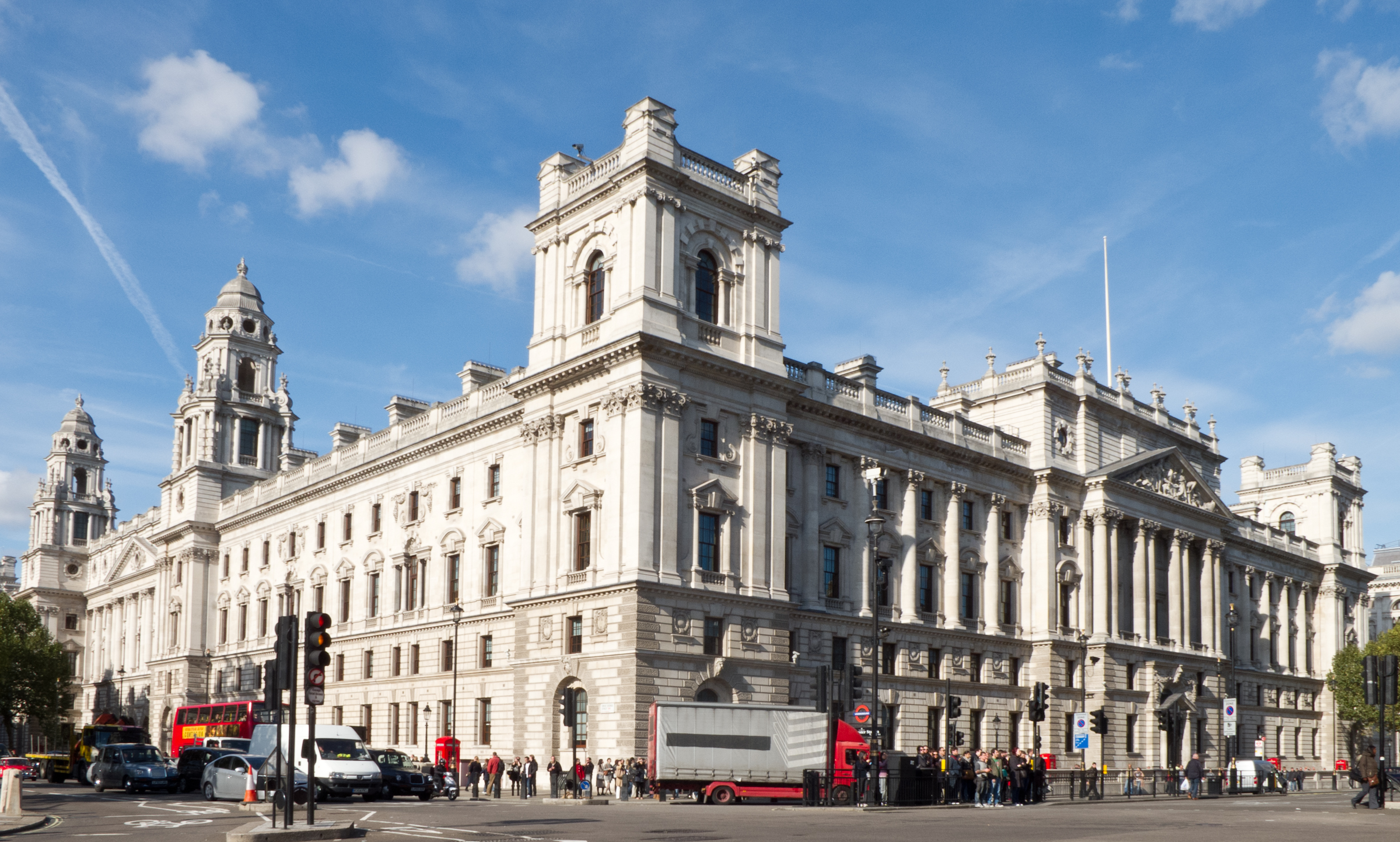
Historic England
Government departmentWikipedia
39
MENTIONS
23
EPISODES
21
PODCASTS
Search complete. 39 mentions across 23 episodes found for "Historic England".
Sep 30, 2026

Kelly O'DriscollGUEST
I think we also look at it from a completely different perspective, which is we have the most outstanding access, because I'm grade one listed, to amazing, you know, amazing people, amazing advisors, support.
Kelly O'DriscollGUEST
So although we're heavily constrained, I can just phone up Historic England and and get them on the phone.
Kelly O'DriscollGUEST
I can see the conservation officer when I want to.
Kelly O'DriscollGUEST
And that is not afforded to someone in a Grade 2 listed cottage.
Kelly O'DriscollGUEST
It just means I have conversations along the way.
Kelly O'DriscollGUEST
And my honest take is that if at Blenheim we can prove that change so long as it is incredibly well managed with a brilliant team on board and the philosophy.
Kelly O'DriscollGUEST
So when I speak to Historic England, we always talk about what is the philosophy in this intervention? What is the philosophy? What are we trying to achieve by it? And if we both, if we all agree on that, then I'm hoping that then the conservation officers, Historic England, the team involved, that information will eventually trickle down so that, people who do have these abundant grade two listed cottages are steadily allowed to adapt them so long as they have a good team around them so you know we can improve windows uh we can increase gutters we can adapt them for a changing climate we can make them accessible we can make them useful um because if we continue to um on the sort of path that we're currently at and if we don't educate those who own it to prove that change can happen, but so long as you do it in the right way with the right team, I think you're going to end up seeing either a lot of houses argue that then, you know, you see it all the time, don't you, developers tearing down historic buildings because they don't fit with the, they can't be adapted, they can't be changed, therefore, you know, they're in the way and it's for the greater good to remove them and make way for more housing you know you see that so often especially with undesignated heritage assets um i think if we can change minds um and create a better structure a better framework uh for adaptation and i can only see that it's a good thing for everybody i
Alexis NicolaidisHOST
completely agree and i do wonder though what you've just said there about people tearing things down if the way that the system is set up so if a building comes down, it's 0% VAT and you put a new building and it's 5% VAT currently.

Fred SchwassGUEST
And since, we've been focusing on, on some of the most exciting and, and interesting buildings.
Fred SchwassGUEST
Um, you know, we success- successfully delivered and, um, refurbished and, and completed the Walworth Town Hall, uh, in S- in Southwark, which is a set of, uh, late 1800s, early 1900s, uh, heritage buildings, one of which, um, suffered from a terrible fire damage in 2013 and, and the building was then put on Historic England's Heritage At Risk register.
Fred SchwassGUEST
Um, and, you know, was sitting empty, uh, costing the council tens of thousands of pounds monthly, um, until we came in as, uh, the preferred development partner with the council to redevelop the asset and, and that was a truly incredible journey.
Fred SchwassGUEST
But refurbishment also comes with a lot of challenges.

Toby DriverGUEST
You know, professional archaeologists just haven't got the time to do all this often.
Toby DriverGUEST
So contact Historic England, or if you're a county, contact your local museum, or contact your regional sites and monuments record, your historic environment record team as well.
Toby DriverGUEST
And very often, I should think, without exception, the archaeologist at the end of the phone, at the end of the email, will be pleased to see what you've got and try and give you some feedback on what that is.
Toby DriverGUEST
And quite often, you would have found something quite interesting and new.

Expat AndyHOST
First, the gloriously simple logistics.
Expat AndyHOST
A York day trip from London is one of the easiest big days out in England.
Expat AndyHOST
You walk into King's Cross, yes, the Harry Potter one, and you board a direct train run by the NLER, The fastest services do it in about an hour and 50 minutes.
Expat AndyHOST
Most take around two hours, and they run several times an hour.
5 MINS LATER
Expat AndyHOST
You board a little car and you ride through a reconstructed Viking street, the sounds, the smells, the whole lot.
Expat AndyHOST
It is unapologetically theme park, and trust me, it's a highlight of the trip, made all the more wonderful, since the actual artifacts underneath it, they're the real thing.
Expat AndyHOST
If you ever wondered why half of England's place names sound Scandinavian, this is the room that answers your questions.
Expat AndyHOST
1066 changes everything.

Karl FarrowGUEST
And most of them are like you can't even go near the building, let alone try and do anything with it.
Karl FarrowGUEST
But the good thing about the geothermal approach is, and this is something we've learned through doing the Kentwell Hall study and others, is that actually historic Britain and historic England actually see geothermal as one of the more favourable approaches for decarbonising these older buildings because you can create not necessarily heating temperature but you can create continual temperature in the building which then preserves all the materials what normally get, shall I say, damaged through heating and cooling effect through gas or humidity through other types of systems.
Karl FarrowGUEST
So by maintaining a building at, let's say, 12 degrees or 10 degrees, you can effectively preserve the artifacts and the structure of that building a lot more than you would do if you just had a central heating system in there kicking on every six hours and putting 23 degrees on it.
Karl FarrowGUEST
So it's actually a lot better to keep the building at a passive temperature.
Karl FarrowGUEST
So fabric maintenance or fabric first approach in a lot of these cases doesn't work.
Karl FarrowGUEST
applying a geothermal solution where you can put an underfloor heating, maybe, or something that preserves the infrastructure, you know, from the floor up, that's a lot better approach.
Karl FarrowGUEST
And again, it's been more approved by Historic England and a lot of the more, you know, National Trust and these other areas that are trying to support this.
Karl FarrowGUEST
So, and at the same time, you are, you know, reducing the chances of landowners getting serious penalisation and fines for not complying with EPC.

Sam WillisHOST
Rather than preserving individual ships or buildings in isolation, it celebrates entire maritime landscapes, places where historic keys, traditional skills, commercial activity and local communities continue to live alongside one another.
Sam WillisHOST
The scheme is led jointly by National Historic Ships UK, Historic England and the Maritime Heritage Trust.
Sam WillisHOST
And I think it's one of the most exciting maritime heritage initiatives in the country.
Sam WillisHOST
If you're interested in heritage harbours more generally, do go back through our archive and listen to the introductory episode where we explore the origins of the scheme, the history behind it and some of the opportunities and challenges facing these remarkable places.

Simon Chesters-ThompsonGUEST
She's a family division judge, but she's also Chancellor of our diocese, and a very good one.
Simon Chesters-ThompsonGUEST
So she considers, in effectively what is called court time time, The advice of the DAC about a fixed piece of work and also the advice which I seek on that proposal from Historic England, the Church Buildings Council, one of the numerous community societies like the Georgian group, and we don't have many Georgian churches, but Victorian society, we do, and SPAB, et cetera, and then she makes a judgment.
Simon Chesters-ThompsonGUEST
So it's quite an administrative job, and there's a lot more time on the computer than I thought there would be.
Simon Chesters-ThompsonGUEST
But it's a very engaging and interesting role.

Louis CurtisGUEST
from all over the UK and the world, actually all about different aspects of lime finishes.
Louis CurtisGUEST
And so, and then they've just in April did a conference with, in collaboration with Historic England in York.
Louis CurtisGUEST
And so I spoke at that about my dissertation research, which was, it was really nice because basically, like I say, it's almost all masonry building focused.
Louis CurtisGUEST
So I get to talk about timber frames in that world.

David TuckerHOST
They've been repaired, restored, and repainted in colors based on evidence for their historic appearance.
David TuckerHOST
And this summer, they were officially removed from Historic England's Heritage at Risk Register.
David TuckerHOST
172 years old, and looking rather pleased with themselves.
David TuckerHOST
But the thing they were built to accompany is gone.

Sam BiltonHOST
The image staring back at me intently is Conquest Man, a meticulously reconstructed visage based on a 1,000-year-old skeleton found at the Church of St Peter's in Barton-on-Humber.
Sam BiltonHOST
The face of Conquest Man has been revealed thanks to a research project combining the expertise of English Heritage, Historic England, the Crick Institute, the British Geological Survey, the University of Southampton, Muvis and Facelab.
Sam BiltonHOST
And it has revealed some surprising results.
Sam BiltonHOST
I had a chat with Kevin Booth, English Heritage's head curator of collections, to find out what their research has uncovered about the people living in Britain and their lives at the time of the Norman Conquest.
13 more episodes mention Historic England.
Create an account to see the whole feed, search across every transcript, and follow the entities you care about.