Histone deacetylase
29
MENTIONS
13
EPISODES
10
PODCASTS
Search complete. 29 mentions across 13 episodes found for "Histone deacetylase".
Nov 19, 2026

Sten SörensenGUEST
We completely agree on that one.
Sten SörensenGUEST
We have quite the opposite situation with one of our programs, or two of them, but the first program, which is a repurposed HDAC inhibitor with a new formulation, method of use, patents, and so on.
Sten SörensenGUEST
But in preclinical work, and then we pursued a phase 2a also, we've documented that it's actually effective in these models and the indication of efficacy in the phase 2a in the rare disease pulmonary arterial hypertension in much lower dosages than has been used for 60 years in man.
Sten SörensenGUEST
So we are fortunate there to have found, it seems, a mode of action that has been used for Epilepsia, actually, BPA, and then later was discovered to be an HDAC inhibitor, an epigenetic modulator, and then studied extensively for those characteristics into fibrosis, inflammation, muscular proliferation, etc., in animal work.
Sten SörensenGUEST
And we've taken that information and moved it into the initial rare diseases now.
Sten SörensenGUEST
So pH and then pH ILD, which is a lung disease with our second asset, but in much lower dosages.
7 MINS LATER
Sten SörensenGUEST
So high pi levels block a fibrinolytic endogenous protein, which is protecting us every day stored in our endothelial cell walls.
Sten SörensenGUEST
And in patients that have high risk of thrombosis, it's very scarce, the storage amount of TPA.

Nick NorwitzHOST
But then while I was just preparing the video, I thought I'd just do my due diligence and double check, triple check that ketones actually do inhibit HDAC6.
Nick NorwitzHOST
So I went back to a Keystone science paper that reported ketones inhibit class two and class one HDACs.
Nick NorwitzHOST
Remember HDAC6 is a class two HDAC.
Nick NorwitzHOST
And there was a line in the paper that I caught, which was, yes, beta-hydroxybutyrate inhibits class 1 and class 2 HDACs, with the notable exception of HDAC6, which it does not inhibit.
Nick NorwitzHOST
So that left me stroking my chin and thinking, huh, this is weird, because what we have here is something that would just make so much sense on a, you know, let's say clinical level.
Nick NorwitzHOST
You have an intervention that raises a molecule, beta-hydroxybutyrate, that inhibits a class of molecules that are the target and the topic of this paper.

Christina PohGUEST
But for patients who are not transplant candidates or who decide transplant is really not where they want to go, this is where maintenance becomes particularly interesting.
Christina PohGUEST
One strategy that's been explored is chidamide, and that's an HDAC inhibitor.
Christina PohGUEST
There's been prospective frontline studies that have incorporated chidamide maintenance with analysis that suggests potentially better outcomes than observation.
Christina PohGUEST
But we still need to interpret those findings cautiously because patients weren't necessarily randomized specifically to answer the maintenance question.
11 MINS LATER
Julia ZhangGUEST
Or sometimes we know that it's hard for pathologists to copy a TFH lymphoma.
Julia ZhangGUEST
So I'd I also included a patient with PT-CLNOS with epigenetic mutations.
Julia ZhangGUEST
The rationale is that we know that HDAC inhibitor really have activity in that biology.
Julia ZhangGUEST
So similar to Christina, we actually have two group of patients, patients that cannot get or does not want to get auto-transplant or patient that who had an auto-transplant and get Belinostat afterwards.
Nick NorwitzHOST
They're not particularly important, but just as examples of overlapping biology.
Nick NorwitzHOST
Both ketosis and the thyroid hormone receptor beta pathway, they can converge on epigenetic regulators like histone deacetylases, HDACs.
Nick NorwitzHOST
And they can also affect particular histone and DNA epigenetic motifs, things like lysine 27 trimethylation of histone 3.
Nick NorwitzHOST
That's a mouthful.

David HarperGUEST
And the AMPK itself also down-regulates mTOR.
David HarperGUEST
The other thing that we haven't discussed yet is the down-regulation of HDAC, histone deacetylase.
David HarperGUEST
And what that does when you down-regulate that is it allows the anti-cancer genes to be activated.
David HarperGUEST
And that's important too.

Nasha WintersGUEST
Granted, there are some theories, at least in cell line studies, that some cancers are more metabolically active than others, meaning some are more glucose sinks than others, but ultimately we all, can do well on a low glycemic diet, depending on what's going on.
Nasha WintersGUEST
So I want to kind of throw that little side note in there, but ultimately what we found is the other nine hallmarks of cancer are directly impacted by ketones themselves, by lack of food, so a fasted state itself, which does things like HDAC inhibition, which is all about epigenetic expression and methylation, which does things like induce apoptosis, which does things like stop cell proliferation, which does things like increase immune cell function.
Nasha WintersGUEST
I mean, just giving examples of some of the 10 hallmarks of cancer, I don't know of a single drug, more than two or three of those targets at any given time, and yet a fasted state or a state of ketones will hit all 10 of those simultaneously.
Nasha WintersGUEST
That's awesome.

Daniel J. GuerraHOST
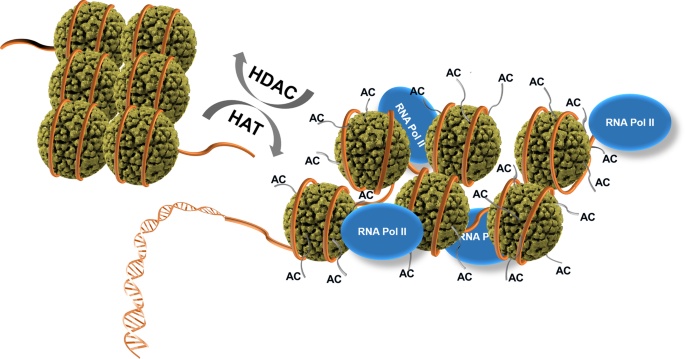
These are also known as HATs.
Daniel J. GuerraHOST
There's also the histone deacetylase, known as HDACs, and some of those are known as sirtuins.
Daniel J. GuerraHOST
And in general, HDACs metabolize nicotinamide adenine dinucleotide as they deacetylate histones.
Daniel J. GuerraHOST
So you have HAT proteins.
Daniel J. GuerraHOST
And you have deacetylases.

Peter OsborneHOST
Now, retinoic acid is vitamin A.
Peter OsborneHOST
And so you can see here, our data implicate that butyrate stimulates the epithelial capacity to produce retinoic acid, again, vitamin A, via an HDAC-dependent mechanism.
Peter OsborneHOST
Together, this helps in the understanding of how short-chain fatty acids can be associated with health benefits of dietary fiber.
Peter OsborneHOST
In other words, and you can see this diagram illustration of what these researchers found, is that the action of butyrate inhibits these deacetylation enzymes, which upregulates the production of retinoic acid or vitamin A, and then that vitamin A will then communicate to these specialized immune cells and help to regulate them, helps to regulate the production of different immune chemicals that keep balance of the immune system within the GI tract itself.

Jean BertoldoGUEST
close to what we see with histone tree, just bear in mind, so histone tree is the substrate in which all these epigenetic regulators work on.
Jean BertoldoGUEST
So, HDAC inhibitors, HAT inhibitors, chromatin remover inhibitors, they all work on histones.
Jean BertoldoGUEST
On histone 3, histone 4, especially histone 3 because that's the most post-translationally modified, right? So, the endotherm of histone 3 is full of sites that are many post-translation modifications identified by now.
Jean BertoldoGUEST
So, what we're doing is basically, what happens if you remove the substrate on all histones? in which all these modifications take place.
Jean BertoldoGUEST
So that's the first time we're showing this biologically, so we still don't know what to expect.
Jean BertoldoGUEST
But our comparison will be around EZH2 inhibitors, HDAC inhibitors, some chromatin remover inhibitors.
Jean BertoldoGUEST
That will be our basic comparison, but it will also depend which cancer.
Jean BertoldoGUEST
we are going to pursue.
Nick NorwitzGUEST
So we can see very clearly here from the same paper is that histone deacetylase 4 which modifies gene expression and decreases NHG6 expression, is much more active in ApoE4.
Nick NorwitzGUEST
So you can see here, the blue is the nuclei, the DAPE stain.
Nick NorwitzGUEST
And in ApoE4, you have a lot more HDAC4 translocation to the nuclei, more HDAC4 activity.
Nick NorwitzGUEST
So what you want to do is inhibit HDAC4.
Nick NorwitzGUEST
How do you do that? Well, you can do that with HDAC4
Paul MasonGUEST
inhibitors.
Paul MasonGUEST
obviously.
Nick NorwitzGUEST
This red column is APOE3.
3 more episodes mention Histone deacetylase.
Create an account to see the whole feed, search across every transcript, and follow the entities you care about.