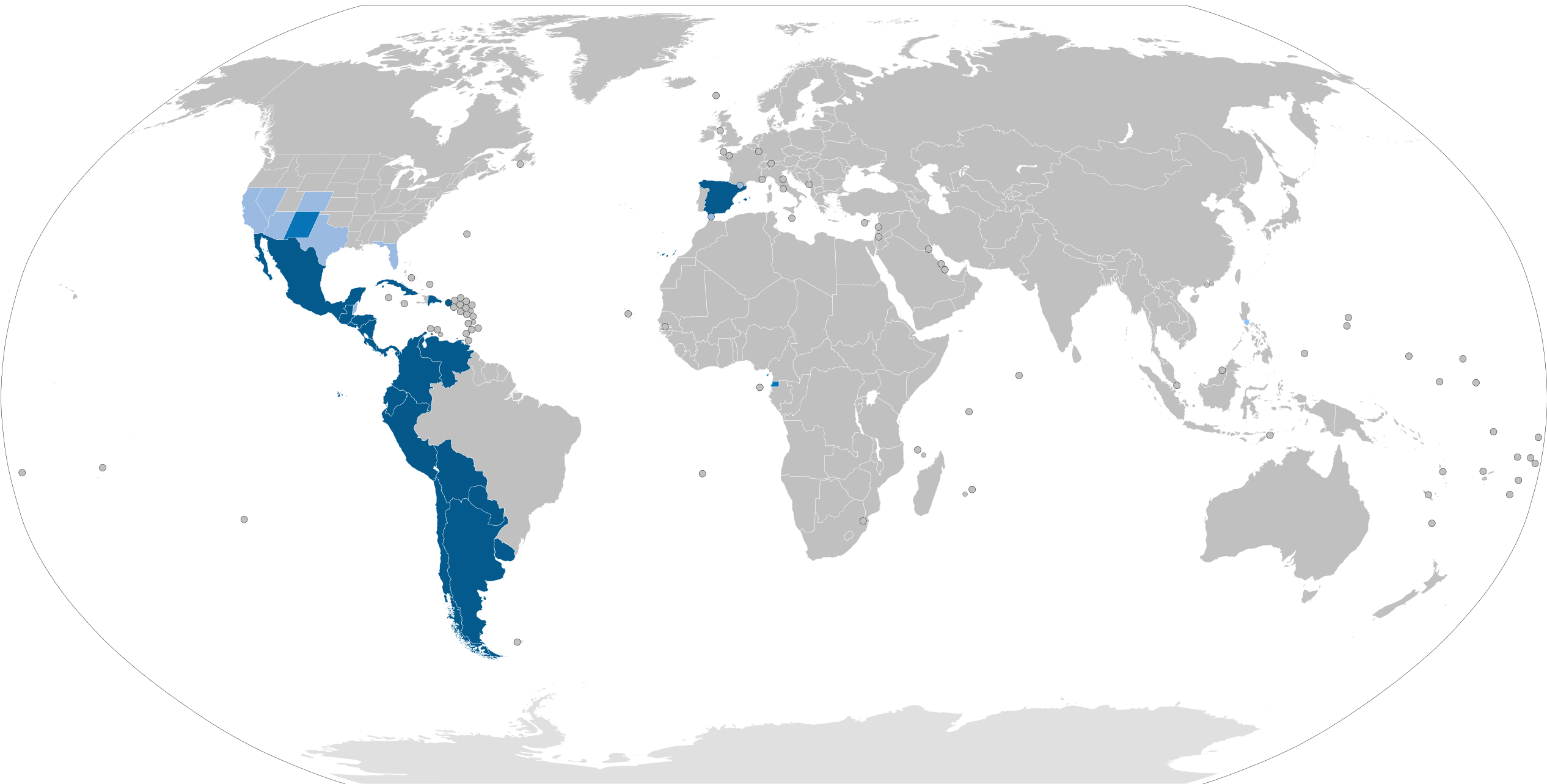
Hispanophone
13
MENTIONS
8
EPISODES
8
PODCASTS
Search complete. 13 mentions across 8 episodes found for "Hispanophone".
Nov 19, 2026

Noémie NdiayeGUEST
For instance, in chapter three, I'm looking at the interpolation of characters that represent indigenous people of the Americas, right? Their interpolation into those dramaturgies based upon a black and white binary.
Noémie NdiayeGUEST
And what I'm arguing is that what is happening on stage is a response to very real social anxieties that you can find in colonial documentation coming both from the Anglophone world and the Hispanophone world, where colonial administrators are very clearly saying...
Noémie NdiayeGUEST
if Black people and Indigenous people come together, we will not be able to stop them, right? Which is why the title of this chapter is How to Stop Revolutions.
Noémie NdiayeGUEST
On stage, you can see drama enacting various strategies in order to stop those solidarities in their tracks and make sure that the colonial administration remains in power.
22 MINS LATER
Noémie NdiayeGUEST
So there is a circulation, a way of looking at one another and also wanting to not look like each other.
Noémie NdiayeGUEST
Thinking about the Black Legend, for instance, thinking about how the English and the French are connected.
Noémie NdiayeGUEST
you know, using the history of colonial developments in the Hispanophone world and the history of violence, the well-known history of violence that characterizes those regions in order to say, oh, no, no, no, no, no, this is wrong.
Noémie NdiayeGUEST
We are the good guys.

Noémie NdiayeGUEST
For instance, in chapter three, I'm looking at the interpolation of characters that represent indigenous people of the Americas, right? Their interpolation into those dramaturgies based upon a black and white binary.
Noémie NdiayeGUEST
And what I'm arguing is that what is happening on stage is a response to very real social anxieties that you can find in colonial documentation coming both from the Anglophone world and the Hispanophone world, where colonial administrators are very clearly saying...
Noémie NdiayeGUEST
If Black people and Indigenous people come together, we will not be able to stop them, right? Which is why the title of this chapter is How to Stop Revolutions.
Noémie NdiayeGUEST
On stage, you can see drama enacting various strategies in order to stop those solidarities in their tracks and make sure that the colonial administration remains in power.
23 MINS LATER
Noémie NdiayeGUEST
So there is a circulation, a way of looking at one another and also wanting to not look like each other.
Noémie NdiayeGUEST
Thinking about the black legend, for instance, thinking about how the English and the French are connected.
Noémie NdiayeGUEST
You know, using the history of colonial developments in the Hispanophone world and the history of violence, the well-known history of violence that characterizes those regions in order to say, oh, no, no, no, no, no, this is wrong.
Noémie NdiayeGUEST
We are the good guys.

Noémie NdiayeGUEST
For instance, in chapter three, I'm looking at the interpolation of characters that represent indigenous people of the Americas, right? Their interpolation into those dramaturgies based upon a black and white binary.
Noémie NdiayeGUEST
And what I'm arguing is that what is happening on stage is a response to very real social anxieties that you can find in colonial documentation coming both from the Anglophone world and the Hispanophone world, where colonial administrators are very clearly saying...
Noémie NdiayeGUEST
if Black people and Indigenous people come together, we will not be able to stop them, right? Which is why the title of this chapter is How to Stop Revolutions.
Noémie NdiayeGUEST
On stage, you can see drama enacting various strategies in order to stop those solidarities in their tracks and make sure that the colonial administration remains in power.
23 MINS LATER
Noémie NdiayeGUEST
You can see how Europeans are looking at one another.
Noémie NdiayeGUEST
Like I was just mentioning, you know, those plays, those French plays from the 17th century dramatizing Spanish events.
Noémie NdiayeGUEST
But if you look at dictionaries, right, if you look at the French dictionaries at the time and the lexicon they have for thinking about blackness, right, they are always going to turn to those other European idioms, right? So there is a circulation, a way of looking at one another and also wanting to not look like each other, thinking about the Black Legend, for instance, thinking about how The English and the French are, you know, using the history of colonial developments in the Hispanophone world and the history of violence, the well-known history of violence that characterizes those regions in order to say, oh, no, no, no, no, no, this is wrong.
Noémie NdiayeGUEST
We are the good guys.

Noémie NdiayeGUEST
For instance, in chapter three, I'm looking at the interpolation of characters that represent indigenous people of the Americas, right? Their interpolation into those dramaturgies based upon a black and white binary.
Noémie NdiayeGUEST
And what I'm arguing is that what is happening on stage is a response to very real social anxieties that you can find in colonial documentation coming both from the Anglophone world and the Hispanophone world, where colonial administrators are very clearly saying...
Noémie NdiayeGUEST
if Black people and Indigenous people come together, we will not be able to stop them, right? Which is why the title of this chapter is How to Stop Revolutions.
Noémie NdiayeGUEST
On stage, you can see drama enacting various strategies in order to stop those solidarities in their tracks and make sure that the colonial administration remains in power.
23 MINS LATER
Noémie NdiayeGUEST
Like I was just mentioning, you know, those plays, those French plays from the 17th century dramatizing society.
Noémie NdiayeGUEST
Spanish events.
Noémie NdiayeGUEST
But if you look at dictionaries, right, if you look at the French dictionaries at the time and the lexicon they have for thinking about Blackness, they are always going to turn to those other European idioms, right? So there is a circulation, a way of looking at one another and also wanting to not look like each other, thinking about the Black legend, for instance, thinking about how The English and the French are, you know, using the history of colonial developments in the Hispanophone world and the history of violence, the well-known history of violence that characterizes those regions in order to say, oh, no, no, no, no, no, this is wrong.
Noémie NdiayeGUEST
We are the good guys.

Noémie NdiayeGUEST
For instance, in chapter three, I'm looking at the interpolation of characters that represent indigenous people of the Americas, right? Their interpolation into those dramaturgies based upon a black and white binary.
Noémie NdiayeGUEST
And what I'm arguing is that what is happening on stage is a response to very real social anxieties that you can find in colonial documentation coming both from the Anglophone world and the Hispanophone world, where colonial administrators are very clearly saying, If Black people and Indigenous people come together, we will not be able to stop them, right? Which is why the title of this chapter is How to Stop Revolutions.
Noémie NdiayeGUEST
On stage, you can see drama enacting various strategies in order to stop those solidarities in their tracks and make sure that the colonial administration remains in power.
Noémie NdiayeGUEST
So there I see, you know, I see the stage absorbing questions that had already been formulated in other epistemological domains than the theater.
22 MINS LATER
Noémie NdiayeGUEST
Like I was just mentioning, you know, those plays, those French plays from the 17th century dramatizing society.
Noémie NdiayeGUEST
Spanish events.
Noémie NdiayeGUEST
But if you look at dictionaries, right, if you look at the French dictionaries at the time and the lexicon they have for thinking about Blackness, they are always going to turn to those other European idioms, right? So there is a circulation, a way of looking at one another and also wanting to not look like each other, thinking about the Black legend, for instance, thinking about how the English and the French are You know, using the history of colonial developments in the Hispanophone world and the history of violence, the well-known history of violence that characterizes those regions in order to say, oh, no, no, no, no, no, this is wrong.
Noémie NdiayeGUEST
We are the good guys.

Mark VinetHOST
They founded numerous cities, many of them on locations with pre-existing indigenous settlements.
Mark VinetHOST
Their conquests established the basis for modern Hispanic America and the Hispanophone.
Mark VinetHOST
Perhaps the most famous conquistador was Hernán Cortés, who led a coalition army of Spanish forces and native warriors to vanquish the mighty Aztec Empire in 1521.
Mark VinetHOST
Let's examine the fascinating early life of this controversial explorer and military conqueror with the help of our friends at LibriVox.

Paul MalgratiHOST
You've spoken about Octavio Paz as well, for instance, so that interest, let's say, South American Spanish poetry.
Paul MalgratiHOST
I mean, the Hispanophone, Lusophone poetry that was kind of part of that, it seems.
Paul MalgratiHOST
But, yeah, can you just tell us a bit more about that? Your interest in translation in general, how it happened, but then that PhD, what you were trying to achieve, and...
Paul MalgratiHOST
something perhaps about your process or your method as a translator?

TanikaHOST
So the cocoa or coca, um, is a mythical ghost like monster equivalent to the boogeyman found in Spain and in Portugal.
TanikaHOST
Those beliefs have also spread in many Hiso, I think it's Hispanophone and Lusophone countries.
TanikaHOST
I don't know what that means, but I can guess.
TanikaHOST
Um, they can also be considered an, I think it's Iberian version of a bug bear as it is commonly used figure of speech representing an irrational or exaggerated fear.