Hirohito
Former Emperor of JapanWikipedia
105
MENTIONS
48
EPISODES
42
PODCASTS
Search complete. 105 mentions across 48 episodes found for "Hirohito".
Sep 17, 2026

Temidayo AbassHOST
A court.
Temidayo AbassHOST
Emperor's
Korede IzoboHOST
court.
Korede IzoboHOST
Emperor's court.
Korede IzoboHOST
Oh, I thought you said like he established a solution.
Korede IzoboHOST
I thought you said
16 MINS LATER
Temidayo AbassHOST
Guest list.
Temidayo AbassHOST
He invited 2,500 foreign dignitaries.

Juan NaulaNARRATOR
who were the military police arm of the army, but who also acted as the secret police within Japan itself, as well as its occupied territories.
Juan NaulaNARRATOR
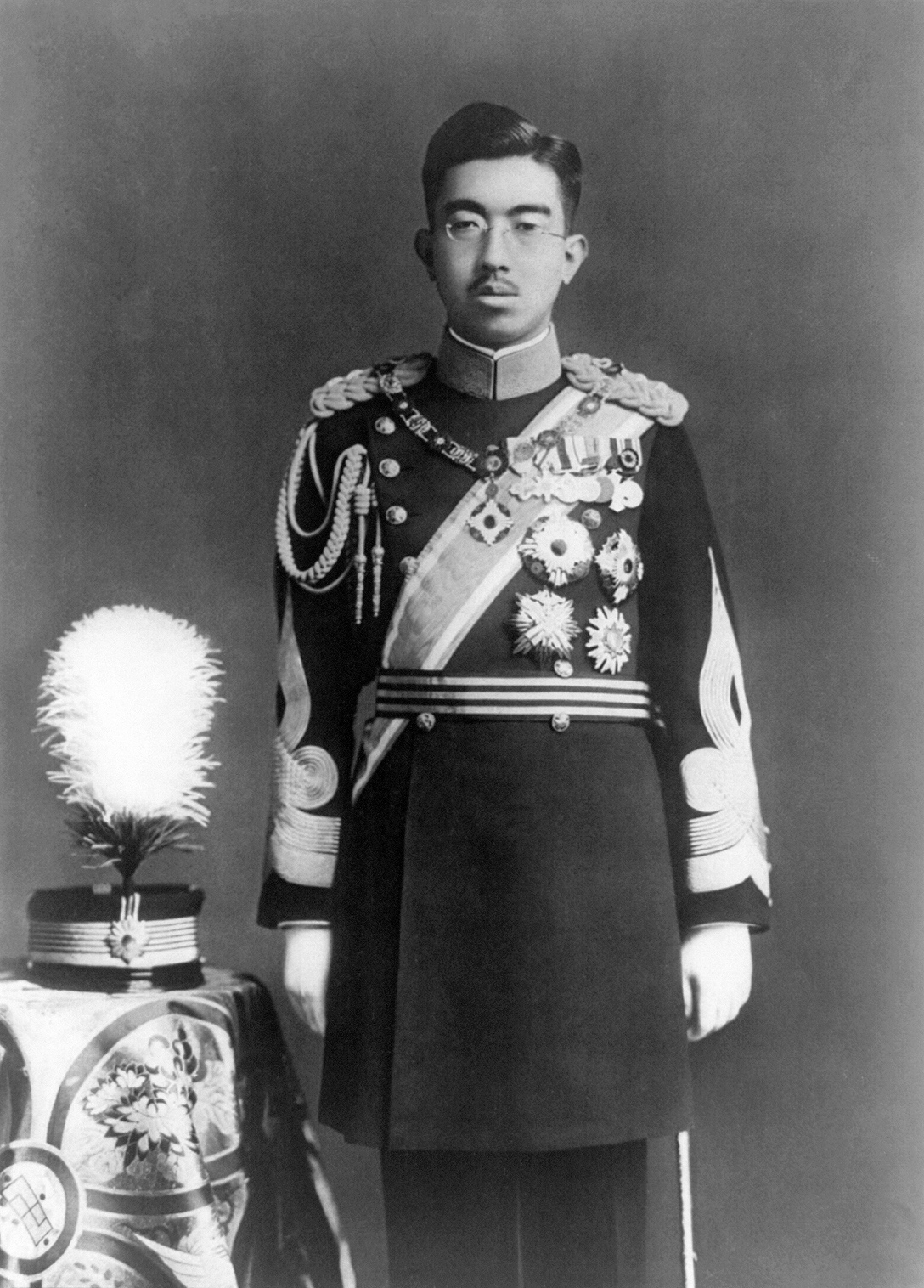
In 1926, the Japanese Emperor Yoshihito, the son of Emperor Meiji, died and was replaced by his young and timid son, the 124th Emperor Hirohito, who would largely, due to his inexperience, come increasingly under the influence of the now powerful militarists within the Japanese government, particularly factions within the army and navy, through the country's minister of war, who was only accountable to the emperor himself and had held a veto over all policy decisions within Japan since the turn of the century.
Juan NaulaNARRATOR
In 1928, Tojo was promoted to the rank of Colonel and placed in command of the 1st Inventory Regiment of the Imperial Army and, during this period, he earned the respect and admiration of those under him, as he fostered close relations with his subordinate officers and became well respected for his organizational skills as well as his insistence on the adoption of strict discipline.
Juan NaulaNARRATOR
This in turn gained him another promotion in 1934 to the rank of Major General in the Personnel Department of the Army Ministry, which was the conduit between the army and the government.
35 MINS LATER
Juan NaulaNARRATOR
The prosecution that was led by the former US Attorney General of Ohio, Joseph Keenan, who had formerly overseen the prosecutions of some of America's most notorious gangsters, including Machine Gun Kelly and Al Capone, rejected Tojo's claims as militaristic propaganda and presented the tribunal with evidence that Tojo had been fully aware of the mistreatment of prisoners and civilians by the Japanese army in so-called Class B war crimes.
Juan NaulaNARRATOR
In response, Tojo rejected Kenan's accusations as he claimed that killing people in wartime could hardly be seen as criminal.
Juan NaulaNARRATOR
However, both he and his fellow defendants unanimously accepted that starting the war had been their decision and continually stated that the Emperor Hirohito had only approved the instigation of hostilities due to their advice.
Juan NaulaNARRATOR
This was the militarists' last act of service to their master, as to them, the emperor was still, after all, a living god, who was blameless and above reproach.

Michael ShermerHOST
I, I love your example of Truman.
Michael ShermerHOST
Uh, I just read James Scott's, um, uh, great book, uh, Hirohito, Truman, and the Destruction of Japan.
Michael ShermerHOST
Uh, Empire of Ashes, it's called.
Michael ShermerHOST
It's just such a great story, but I didn't know that much about Truman.

Lorelei KingNARRATOR
This is the extraordinary inside story of the most controversial decision in the history of modern warfare, the order to drop the atomic bomb.
Lorelei KingNARRATOR
Drawn from firsthand accounts of those involved and declassified top-secret American and Japanese documents, this documentary drama unfolds through the eyes of the two people at the center of this world-changing event, President Harry S. Truman and Emperor Hirohito of Japan.
Lorelei KingNARRATOR
The President and the Emperor, Episode 4, The Decision.
Lorelei KingNARRATOR
President Harry S. Truman, in Berlin for the Potsdam Conference to plan the post-war world order, hears that the test of the first atom bomb has been a success.
Lorelei KingNARRATOR
Now he gathers his closest advisors to consider his next move.
5 MINS LATER
James F. BurnsVOICE_ACTOR
But gentlemen, will it end the war? I cannot conceive that Japan will fight on for one day after they've seen its destructive power.
William D. LeahyVOICE_ACTOR
Fact, the intensive firebombing we've already carried out has not collapsed the Japanese will to fight.
William D. LeahyVOICE_ACTOR
Despite being subjected to the most concentrated air raids of the war, even greater than that on German cities like Hamburg and Dresden, Japan's civilian population has not risen up against the Emperor.

Stavros HalkiasGUEST
He knows, he knows fucking, he knows history.
Will SassoGUEST
This is fucking Emperor Hirohito right here.
Stavros HalkiasGUEST
[laughs]
Will SassoGUEST
You're Emperor Hirohito.
Stavros HalkiasGUEST
This motherfu- this motherfucker's coming, dude.
Will SassoGUEST
You're the Sun God.
Will SassoGUEST
Hello.
Stavros HalkiasGUEST
I don't think-

Jimmie WhismanHOST
... take... [laughs] What was the, what was the emperor's name? Goddammit.
James PietragalloHOST
Hirohito.
Jimmie WhismanHOST
Yeah, Hirohito.
Jimmie WhismanHOST
[laughs]
James PietragalloHOST
[laughs] They're going, "Take that, Hirohito.
James PietragalloHOST
I just-
Jimmie WhismanHOST
[laughs]
James PietragalloHOST
...

Pamela BrowneGUEST
Correct.
Pamela BrowneGUEST
And we had, you know, in the rebuilding of Japan and Germany, of which the United States largely participated in under the Marshall Plan, et cetera, but they made a point of showing, you know, half the people in Japan never even saw Emperor Hirohito.
Pamela BrowneGUEST
So that whole stage piece, the signing of that document where he was tall and Hirohito was short, they brought him into looking like, look at this little man, this is your emperor.
Pamela BrowneGUEST
Right.

SamHOST
Which the book argues was essential to finally break the deadlock.
SamHOST
It forced Emperor Hirohito to intervene and overrule his generals.
SamHOST
For the first time, the Emperor spoke directly to his people, telling them to endure the unendurable.
SophieHOST
That moment is heartbreaking.
SophieHOST
He spoke in this formal, archaic language that many of his subjects couldn't even understand, but they got the message.

PatrickHOST
They're like, Oh, you're going to go kill Mussolini.
PatrickHOST
You're going to go find Hirohito.
PatrickHOST
Fuck it.
PatrickHOST
You're going to go after FDR.

Fred GalvinHOST
Unconditional surrender.
Fred GalvinHOST
Admiral Hirohito's or Emperor Hirohito's delegation- September 2nd, 1945, the starboard side midship of the USS Missouri there in Tokyo Bay, we stopped them.
Fred GalvinHOST
They believed in the same kind of using these tools of terror, suicide attacks, brutally killing civilians all across Asia and imposing their will on whoever.
Fred GalvinHOST
They had this mindset to dominate the world, and we stopped them, and we can do it today.
38 more episodes mention Hirohito.
Create an account to see the whole feed, search across every transcript, and follow the entities you care about.