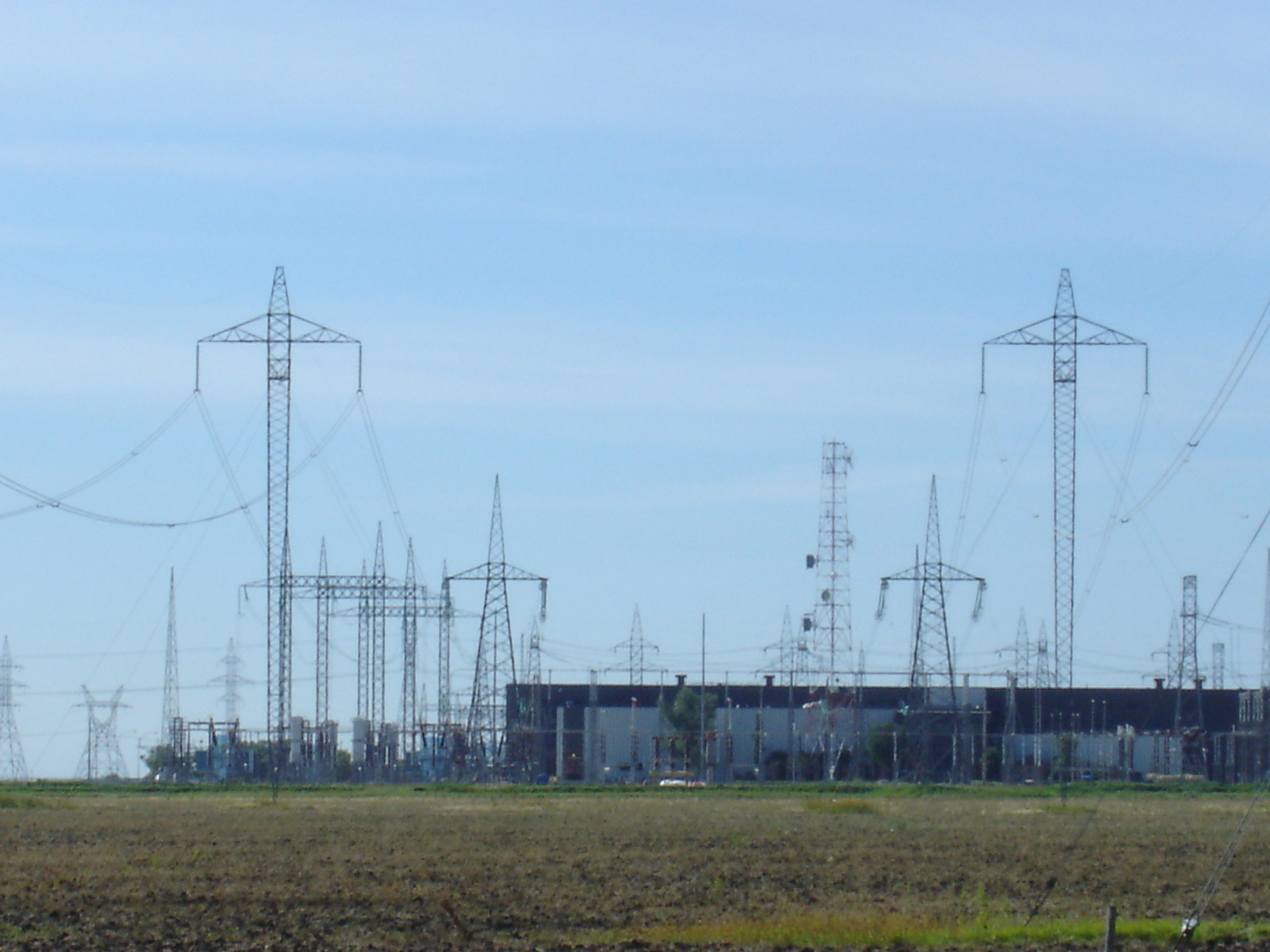
High-voltage direct current
83
MENTIONS
28
EPISODES
26
PODCASTS
Search complete. 83 mentions across 28 episodes found for "High-voltage direct current".
Oct 29, 2026

Deepa VenkateswaranGUEST
In the UK with the AST scheme, which is the Accelerated Strategic Transmission Scheme, the regulator has given companies enough visibility that we've been able to go sign up with our supply chain framework agreements.
Deepa VenkateswaranGUEST
Just today, Sumitomo is going to be inaugurating a new factory for HVDC in Scotland.
Deepa VenkateswaranGUEST
So again, these are examples of the European supply chain also rising up.
Deepa VenkateswaranGUEST
to the challenge.

Rick ConantGUEST
I'll just add it's a huge risk.
Rick ConantGUEST
Not that long ago, the HVDC project that was first proposed and awarded in the Massachusetts RFP was through New Hampshire.
Rick ConantGUEST
And the Northern Pass project was actually we had been through all of the planning processes most of the siting and permitting processes had sort of been had applications and was waiting for a project and only to get turned down after they went back for final approval and they had actually won the rfp and that's when massachusetts went back to the necec project as their alternative So there was a lot of money invested in the Northern Pass project that never moved forward.
Rick ConantGUEST
Huge risk.

Madeleine Gould-LoughlinGUEST
So Grid United, we're an independent transmission development company.
Madeleine Gould-LoughlinGUEST
We primarily focus on long distance HVDC interregional transmission, connecting the seams, the different grids, so the western and eastern interconnections.
Madeleine Gould-LoughlinGUEST
We have not done a very good job in this country of building those connections.
Madeleine Gould-LoughlinGUEST
And as we focus on extreme weather events, reliability, resiliency, these exact type of connections between seams become very compelling and valuable.
6 MINS LATER
Madeleine Gould-LoughlinGUEST
And demand is growing extremely fast, and the rules were created for kind of a grid of the past.
Madeleine Gould-LoughlinGUEST
So as we evolve, as the grid operators needs evolve, there's a need to re-examine what types of resources receive this accredited capacity.
Madeleine Gould-LoughlinGUEST
And HVDC transmission in particular and the resources that are enabled, the power that's able to flow over these lines delivers real tangible capacity benefits to regions, particularly over long distances as you have uncorrelated load and generation profiles.
Ed CrooksHOST
right so just to be clear about that then if you are a grid operator then you're looking for capacity to as you say make sure you can keep the lights on and you would uh calculate that on the basis of generation resources that are available to you and you'll have a certain capacity value for gas and one for coal and one for solar and wind and so on But you're saying you don't get any benefit at all or you don't kind of record any benefit at all from having transmission capacity running into your grid?

Michael TurnerGUEST
It's way more efficient and can accept solar and wind at any point along the way.
Michael TurnerGUEST
If you talk to Valley Link North in Loudoun County with their 260-mile line, which is a perfect example of what should be an underground HVDC line, they won't even talk to you about HVDC.
Michael TurnerGUEST
PJM had 65 bids for generation and transmission in the last auction.
Michael TurnerGUEST
Not a single one was for high voltage DC.

Yasmine MoeziniaGUEST
And, you know, they have a... electrification strategy around how to consolidate and make their system more efficient and um fit for purpose as well for the purposes of the ctpi work the um all of that is sort of left to the side and the focus is on the component piece parts really and um where there's comparative advantage in the European economy, and those are in a few areas.
Yasmine MoeziniaGUEST
So large power transformers is one of the major areas, HVDC cables is another, and grain-oriented electric steel is the third.
Yasmine MoeziniaGUEST
which are interesting areas in the North American market because of the latest round of U.S.-Canadian sort of tariff tit-for-tat.
Yasmine MoeziniaGUEST
Some of these components are sort of victim to the standoff that's happening there.

Dave BorlaceHOST
And that's why all the record-breaking Megalinks like the 3000km monsters in China that carry gigawatts across deserts and mountains, all transmit in DC, not AC.
Dave BorlaceHOST
The Changi-Guchuan project that I looked at in my original video remains the world's longest and most powerful UHVDC transmission line.
Dave BorlaceHOST
It's rated at 1100 kilovolts with a maximum carrying capacity of 12 gigawatts.
Dave BorlaceHOST
That's roughly equivalent to the generating capacity of the entire electricity grid of a country the size of Ireland, down a single transmission line.
Dave BorlaceHOST
The Chinese government reckons the project will lead to a further $14 billion worth of investment in secondary power equipment and the wider industrial chain, creating more than 100,000 jobs.
Dave BorlaceHOST
By 2050, the plan is for more than 10 HVDC and new HVDC power corridors to be coming out of the Tibetan plateau, exporting more than 500 billion kWh of electricity every year.
Dave BorlaceHOST
UHVDC systems like this show what's technically possible at continental scale.
Dave BorlaceHOST
But the engineering challenges are enormous.

Angelos PastrasGUEST
Now, grids are a problem.
Angelos PastrasGUEST
Five-year lead times on transformers, four-year lead times on HVDC cables.
Angelos PastrasGUEST
China is dominating on supply chains, on pretty much everything, solar batteries and so on.
Angelos PastrasGUEST
So there's a lot to be done.
Angelos PastrasGUEST
If we are to bring industry back in the UK and Europe, there's a lot of work.
Angelos PastrasGUEST
But we never said it was easy.
Erikka AskelandHOST
I was just recently in Niig, in the Highlands, at a ceremony involving Saki, I didn't drink any myself, I was driving, but we were at the launch of the first HVDC manufacturing facility, I think, established in the UK.
Erikka AskelandHOST
And as Douglas Alexander pointed out, this now brings the UK slightly in line with the rest of the G7 in terms of HVDC manufacturing capabilities.

Andrea McGuireCORRESPONDENT
And the main reason for that is the cost of converting hydroelectricity in Labrador.
Andrea McGuireCORRESPONDENT
So Mercer explained that large-scale hydroelectricity dams produce high-voltage direct current power, or HVDC, which he said is great for transmitting electricity over long distances, like from Churchill Falls to St. John's.
Andrea McGuireCORRESPONDENT
But to use this power inside your house, it has to be converted and stepped down from HVDC to AC or alternating current.
Andrea McGuireCORRESPONDENT
And to do that, you need infrastructure like substation transformers, and you'd also need to install transmission lines.
Andrea McGuireCORRESPONDENT
So here's Nick Mercer explaining more about that now.

Ashish KhannaGUEST
What prevents some of these huge regional interconnections is the three, four things.
Ashish KhannaGUEST
One, are they technically feasible? Till now, the world has done optic fiber interconnections between seas, but not huge HVDC transmission
Richa MishraHOST
cables.
Richa MishraHOST
So
18 more episodes mention High-voltage direct current.
Create an account to see the whole feed, search across every transcript, and follow the entities you care about.