High availability
10
MENTIONS
3
EPISODES
3
PODCASTS
Search complete. 10 mentions across 3 episodes found for "High availability".
Sep 22, 2026

Brandon PurcellGUEST
But within that as well, there's a couple of other features beyond that.
Brandon PurcellGUEST
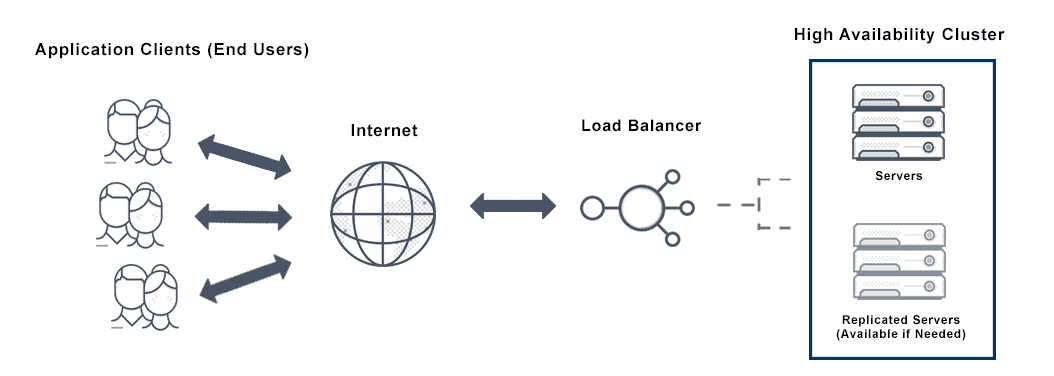
So the ability to have read replicas, HA replicas, all self-managed by their team, having a connection load balancer that sits on the outside.
Brandon PurcellGUEST
So if you need to scale up, if a single instance isn't going to suffice across many different instances, the ability to scale across those many different read replicas as well.
Brandon PurcellGUEST
One of the other features I think that's worth calling out that makes a big difference for users that want to retain a long history of data without keeping all of that data hot is tiered data.
22 MINS LATER
Brandon PurcellGUEST
The other area we have, and I mentioned so far two offerings.
Brandon PurcellGUEST
I mentioned the open source offering with TimescaleDB, and I mentioned Tiger Cloud.
Brandon PurcellGUEST
And as we grow in the physical world, in, in industrial operations, we're also building a product called TimescaleDB Enterprise, which is an on-prem version of the open source solution that uses a number of technologies to allow with its own console and platform to be able to stand up an HA environment with read replicas, with, you know, connection load balancing, backups, you know, automating a lot of the things that if you were gonna build yourself, you'd have to start with the open source product, add etcd, Patroni, other technologies on top of that to build a true HA configuration.
Brandon PurcellGUEST
We're providing that, uh, out of the box as well.

Ed HorleyHOST
For most enterprises that are running a distributed DDI platform configuration of some type, whether that's a commercial product or they're doing it themselves, sort of baked from open source.
Ed HorleyHOST
The reality is that coming up with high availability, redundancy, how do you build in redundancy? How do you deal with all the related dependencies that go on with allocations and scope management and hygiene and address tracking and all that other stuff? actually becomes a really hard architecture and design problem to sort of figure out about how you want to do it at scale.
Ed HorleyHOST
And so we wanted to just take a little bit of time and talk our way through some of the things that we think are maybe major issues or things to consider in sort of working your way through that.
Ed HorleyHOST
So I guess we'll kick it off and start from there and really sort of talk about maybe some of the the first challenges that go on for everything that we sort of talk about with V4 and V6, which is sort of the scale difference, right? There's just a fundamental scale difference between V4 and V6.
12 MINS LATER
Ed HorleyHOST
Yeah.
Ed HorleyHOST
And I think that's a real problem because how do you deploy at scale and figure out where you're getting exploited or where you have operational issues or why you're having login and authentication problems? Like all these things become exponentially harder at scale with the address space that you have, but also with the distributed portion of sort of building on these platforms.
Ed HorleyHOST
And I don't think anyone really has a great solution for like, at least for DHCPv6, you know, high availability in DHCPv6 is... not really super pretty, right? Split scope instead of actual redundancy.
Ed HorleyHOST
Yeah, split scope instead of redundancy is not a great answer.

Herman PoppleberryHOST
Karmada is a CNCF incubation project now.
Herman PoppleberryHOST
It provides centralized multi-cloud Kubernetes management, speaking Kubernetes, native APIs, with advanced scheduling including cluster affinity and multi-dimension HA across regions, availability zones, and providers.
Herman PoppleberryHOST
There's Cilium Cluster Mesh, which was used in a production case study for a regulated payments workload spanning AWS, GCP, and Azure.
Herman PoppleberryHOST
They reduced region level RTO from 22 minutes manual to 47 seconds automatic.
11 MINS LATER
CornHOST
Data restored from cloud storage backups.
CornHOST
Warm Standby, a minimal database instance, runs continuously in Google Cloud, receiving replicated transactions from the on-premise primary.
CornHOST
Hot HA, both sides serve production traffic simultaneously with
Herman PoppleberryHOST
DNS-weighted routing.