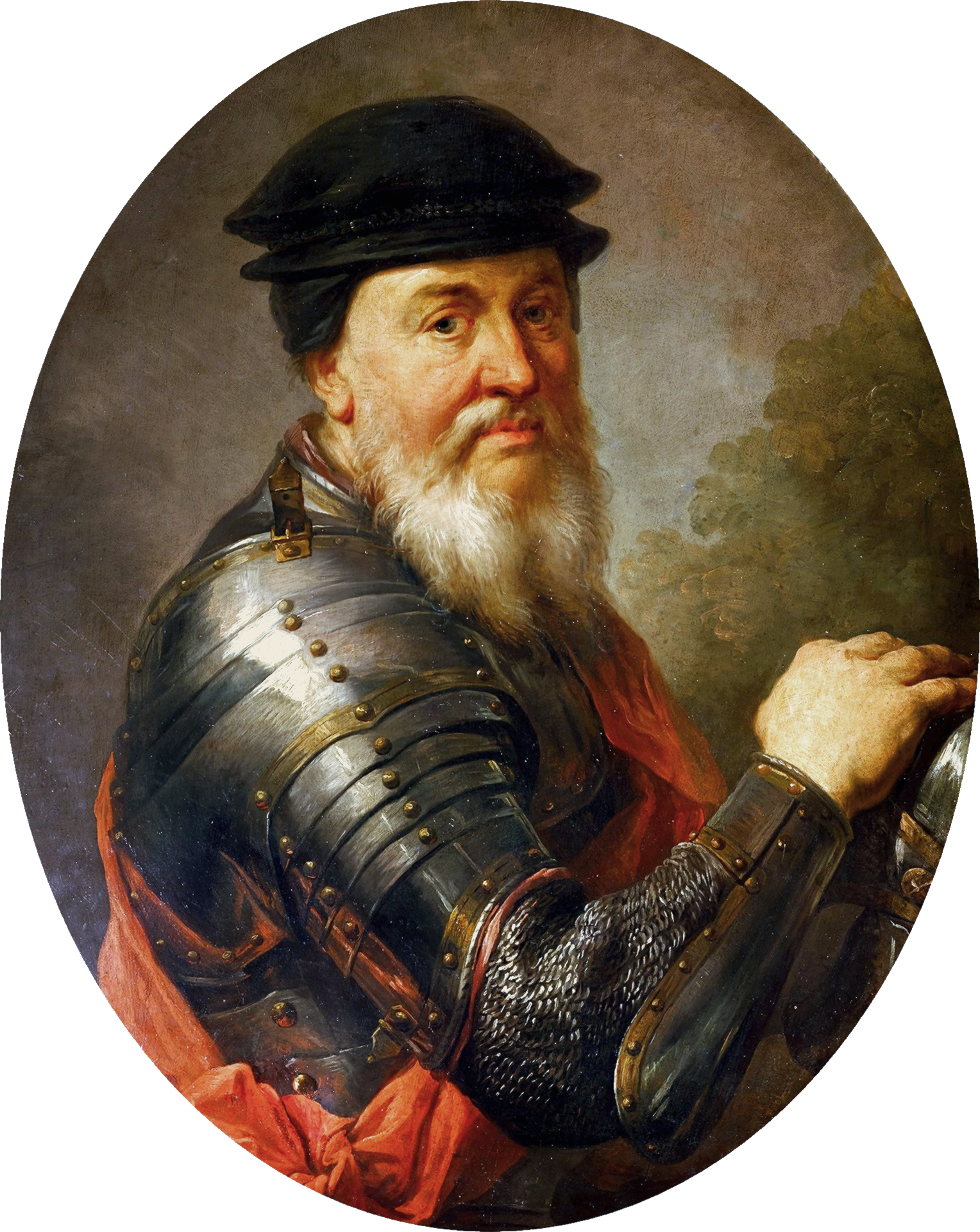
Hetman
78
MENTIONS
10
EPISODES
9
PODCASTS
Search complete. 78 mentions across 10 episodes found for "Hetman".
Sep 11, 2026

Addison AndersonNARRATOR
Their decades-long strategy of shifting alliances between Poland and Moscow has led to the partitioning of their lands.
Addison AndersonNARRATOR
In a desperate bid to reclaim independence and reunite the fractured Cossack state, their most recent leader, Hetman Petro Doroshenko, allied with the Ottoman Empire.
Addison AndersonNARRATOR
This alliance successfully freed the Zaporozhian Cossacks in the west from Polish dominion, but their victory was a bitter one.
Addison AndersonNARRATOR
Doroshenko's Ottoman allies ravaged the countryside, carrying off peasants into slavery, and outrage at allying with Muslims against fellow Christians cost him any remaining local support.

SichSOUNDBITE_SPEAKER
The enemy did not sleep, they constantly attacked, the sound of the scourge of the Cossacks called.
SichSOUNDBITE_SPEAKER
They stood up for Ukraine, saved the brothers, thanked the Hetman and shouted.
SichSOUNDBITE_SPEAKER
We will carry the flag for Ukraine We will carry the flag for our native land We will carry the flag for our motherland We will carry the flag for our native land The hundred years have already passed, the second one has already passed, and the Cossacks are still alive.
SichSOUNDBITE_SPEAKER
Our Zaporozhians have a banner in our hearts, they are going and singing in the steppe.

Matthew Raphael JohnsonGUEST
When I wrote my book, that's pretty much the idea of it.
Matthew Raphael JohnsonGUEST
We'll talk about the great Hetman here in a little bit.
Matthew Raphael JohnsonGUEST
But this is what, you know, any opposition to their dominance was called an anti-Semitic pogrom.
Matthew Raphael JohnsonGUEST
So in their minds, pogroms are happening constantly and everywhere.
Matthew Raphael JohnsonGUEST
So it has to impose itself by the barrel of a gun, like all leftist entities do.
Pete QuiñonesHOST
Yet soon after the conclusion of the Treaty of Brest-Litovsk, in which the Soviets ceded Ukraine to the Central Powers, as the government of independent Ukraine returned to Kiev under the aegis of Austrian and German bayonets in the beginning of February of 1918, the Hadamakas, spontaneous popular uprisings against Polish rule that took place in Ukraine in the 18th century, and free Cossacks began snatching and shooting any former Jewish commissars they could find.
Pete QuiñonesHOST
Yet those were not actual Jewish pogroms, and very soon Petliura's government was replaced by the Hetman government of Cossack leader Skoropadsky for the next seven months.
Pete QuiñonesHOST
The command of the units of the German army that had occupied Kiev in the spring treated the needs of Jewish population with understanding, and that population was not insubstantial.

Pete QuiñonesHOST
In 1919, 21% of Kiev's inhabitants were Jewish.
Pete QuiñonesHOST
A Jewish cadet, a member of the Russian Constituent Democrat Party, Sergei Gutnik, became the Minister of Trade and Industry in the Hetman government.
Pete QuiñonesHOST
Under the Hetmanate, Zionists acted with hin- without hindrance, and an independent Jewish Provisional National Assembly and a Jewish National Secretariat were elected.
Matthew Raphael JohnsonGUEST
Now, um, Skoropadsy, uh, uh, Skoropadsky, I'm sorry, was the guy I mentioned.
Matthew Raphael JohnsonGUEST
He, he, um, I've been writing about him for years.
Matthew Raphael JohnsonGUEST
Uh, and is-- the directory is a Masonic institution.
Matthew Raphael JohnsonGUEST
It was named for the directory in the, uh, French Revolution.
Pete QuiñonesHOST
Yet Hetmanate fell, and in December 1918, Kiev came under the control of the Directorate of Ukraine, led by Petlura and Vinnychenko.

speaker_2NARRATOR
Moscow held that the rights conferred by her on Khmelnytsky were only provisionary and that they were to be restricted little by little till the moment came when the Ukraine would become merely a province of the Muscovite Empire.
speaker_2NARRATOR
On the other hand, the men at the head of the Ukrainian government made every effort to maintain in its entirety the independence given to the administration of the Hetmans, as it was in the time of Khmelnytsky.
speaker_2NARRATOR
They endeavored to fortify and protect it against any attack on the part of the Muscovite government.
speaker_2NARRATOR
The right which the Moscow government assumed of controlling the choice of and unseating of the Hetmans, of naming Muscovite voivods as military commandants even of Ukrainian towns, of levying taxes and of interfering with the autonomy of the church were the chief points of disagreement.
speaker_2NARRATOR
Moscow took advantage of all Ukrainian troubles and difficulties arising under the administration of the directors, the starshina, that is to say the elders, in order to restrict the liberties of the country.
speaker_2NARRATOR
At the same time, each of these attempts awakened in the Ukrainian government an ardent desire to safeguard the autonomy of the country against such movements.
speaker_2NARRATOR
Moreover, there was a central idea to their policy which was to extend this autonomy to all the ethnographical regions of the Ukraine or, in other words, to place the entire nation under the suzerainty of the Hetmans, whose rule in the time of Khmelnytsky extended to the Dnieper district.
speaker_2NARRATOR
At the outset, the Ukraine hoped to gain the help of Sweden for this enterprise.
speaker_1NARRATOR
Moscow held that the rights conferred by her and Khmelnytsky were only provisionary and that they were to be restricted little by little till the moment came when the Ukraine would become merely a province of the Muscovite Empire.
speaker_1NARRATOR
On the other hand, the men at the head of the Ukrainian government made every effort to maintain in its entirety the independence given to the administration of the Hetmans, as it was in the time of Khmelnytsky.
speaker_1NARRATOR
They endeavoured to fortify and protect it against any attack on the part of the Muscovite government.
speaker_1NARRATOR
The right which the Moscow government assumed of controlling the choice of and unseating of the Hetmans, of naming Muscovite voivods as military commandants even of Ukrainian towns, of levying taxes and of interfering with the autonomy of the church were the chief points of disagreement.
speaker_1NARRATOR
Moscow took advantage of all Ukrainian troubles and difficulties arising under the administration of the directors, the starshina, that is to say the elders, in order to restrict the liberties of the country.
speaker_1NARRATOR
At the same time, each of these attempts awakened in the Ukrainian government an ardent desire to safeguard the autonomy of the country against such movements.
speaker_1NARRATOR
Moreover, there was a central idea to their policy which was to extend this autonomy to all the ethnographical regions of the Ukraine or, in other words, to place the entire nation under the suzerainty of the Hetmans, whose rule in the time of Khmelnytsky extended to the Dnieper district.
speaker_1NARRATOR
At the outset, the Ukraine hoped to gain the help of Sweden for this enterprise.

MarianneNARRATOR
They exploited Ukraine economically by requisitioning bread, cattle, and grain from the farmers.
MarianneNARRATOR
They also tried to rule the country politically and to this end they overthrew the Ukrainian government, a democratic regime deriving its powers from the will of the people, only to place in its stead a military dictator subservient to German commands to whom was given the historic Ukrainian title of Hetman.
MarianneNARRATOR
This individual, General Skoropadsky, was acceptable to the Teutons because he was a militarist, a large landholder, a conservative, and a willing tool in the German scheme, which was to make Ukraine the center and nucleus in a reconstruction of the old centralized Russian Empire, every part of which the Germans intended to control, both politically and economically.
MarianneNARRATOR
The result was foreseeable.
40 MINS LATER
speaker_6NARRATOR
The most important rebellion against this last measure was that led by Mazeppa in 1709, which was quelled by Peter the Great.
speaker_6NARRATOR
After the time of Mazeppa, Russia's policy of repression was pursued openly and ruthlessly.
speaker_6NARRATOR
Peter instituted a supervision over the autonomous Ukrainian administration, vesting authority in Muscovite officers, through whose hands passed everything pertaining to the Hetman's chancellery.
speaker_6NARRATOR
In 1722, the power of the Hetmans was cut down to nothing.

speaker_3NARRATOR
Moscow held that the rights conferred by her and Khmelnytsky were only provisionary and that they were to be restricted little by little till the moment came when the Ukraine would become merely a province of the Muscovite empire.
speaker_3NARRATOR
On the other hand, the men at the head of the Ukrainian government made every effort to maintain in its entirety the independence given to the administration of the Hetmans as it was in the time of Khmelnytsky.
speaker_3NARRATOR
They endeavored to fortify and protect it against any attack on the part of the Muscovite government.
speaker_3NARRATOR
The right which the Moscow government assumed of controlling the choice of and unseating of the Hetmans, of naming Muscovite voivods as military commandants even of Ukrainian towns, of levying taxes and of interfering with the autonomy of the church were the chief points of disagreement.
speaker_3NARRATOR
Moscow took advantage of all Ukrainian troubles and difficulties arising under the administration of the directors, the starshina, that is to say the elders, in order to restrict the liberties of the country.
speaker_3NARRATOR
At the same time, each of these attempts awakened in the Ukrainian government an ardent desire to safeguard the autonomy of the country against such movements.
speaker_3NARRATOR
Moreover, there was a central idea to their policy, which was to extend this autonomy to all the ethnographical regions of the Ukraine, or in other words, to place the entire nation under the suzerainty of the Hetmans, whose rule in the time of Khmelnitsky extended to the Dnieper district.
speaker_3NARRATOR
At the outset, the Ukraine hoped to gain the help of Sweden for this enterprise.

Luke HamiltonNARRATOR
The assembly was the only authority they recognized.
Luke HamiltonNARRATOR
The Hetman, headman, was elected by and was accountable to the assembly for his actions.
Luke HamiltonNARRATOR
If he offended, he was incontinently deprived of his office.
Luke HamiltonNARRATOR
Thus we find that while the Muscovites lived under an absolute monarchy, while the Poles were ruled by a haughty and exclusive aristocracy, in the Ukraine all were free under the Lithuanian kings, and republican institutions were gradually taking root.
Luke HamiltonNARRATOR
Then began constant warfare between the Poles and the Ukraine Cossacks.
Luke HamiltonNARRATOR
King Stefan Batory, a Polish king, but a Hungarian by birth, who reigned from 1576 to 1586, had practically recognized the complete autonomy of the Ukraine, but his successors did not follow his policy.
Luke HamiltonNARRATOR
In 1592, the Cossacks under Kozinski were defeated, but in 1612, under Hetman Konashevich-Sahaidichny, the Cossacks became again very powerful.
Luke HamiltonNARRATOR
They destroyed Sinope, pillaged Trebizond, and burnt the Turkish fleet, sailing across the Black Sea in small boats that would cause the southern mariner to shudder.