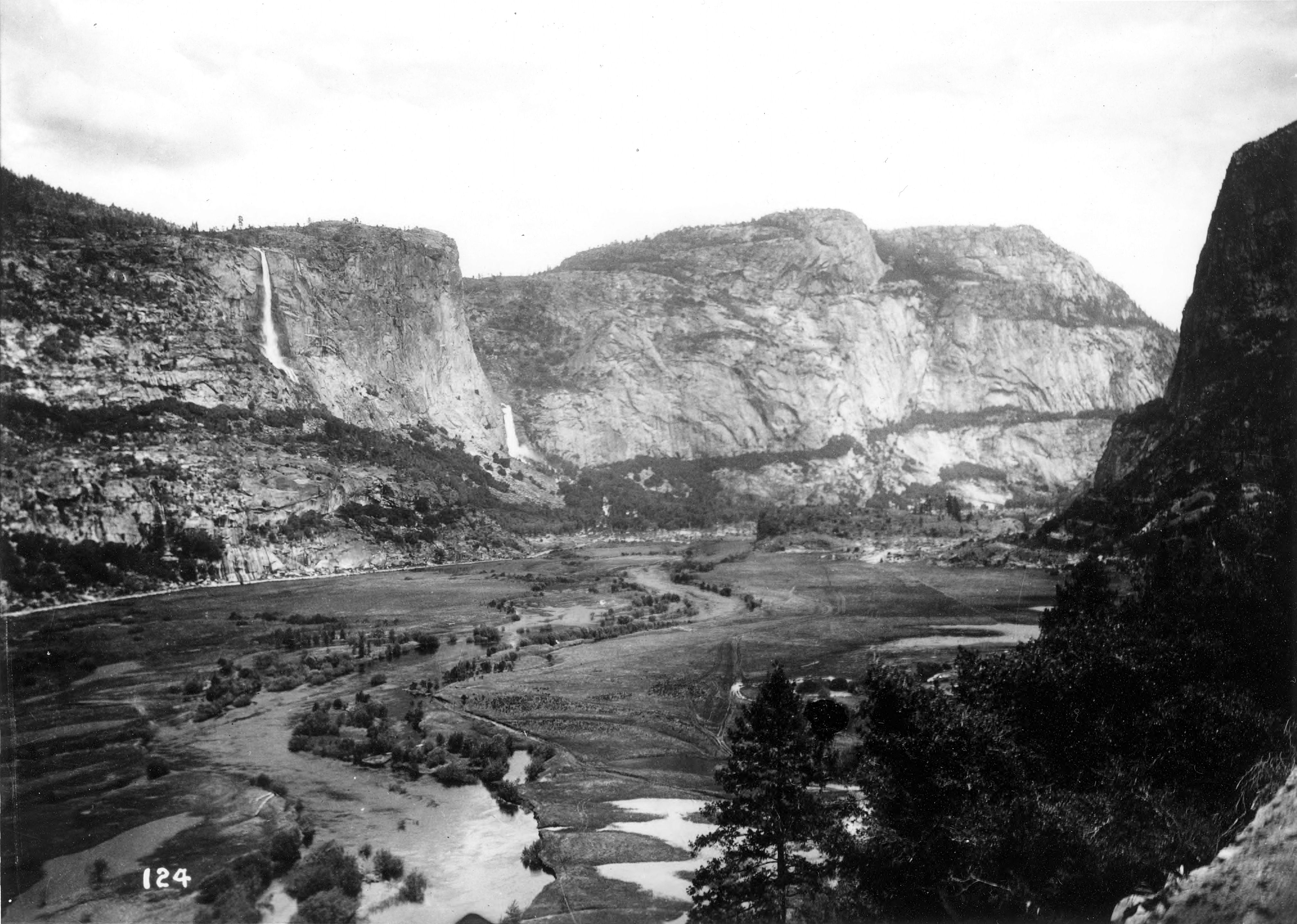
Hetch Hetchy
ValleyWikipedia
58
MENTIONS
23
EPISODES
10
PODCASTS
Search complete. 58 mentions across 23 episodes found for "Hetch Hetchy".
Sep 29, 2026

Steve StocktonHOST
If you have information that could help investigators piece together a timeline of events, or if you are in the Shoshone Lake area between September 12th through the 19th, 2021, please contact the National Park Service at 307-344-2428.
Steve StocktonHOST
31-year-old Joel Thomason went on a solo hike in Yosemite National Park, telling friends of his plans to hike from Hetch Hetchy to then fish in Lake Elinor and then return to Hetch Hetchy.
Steve StocktonHOST
He began on the 6th of September 2021 and was due back on the 9th.
Steve StocktonHOST
Joel is described as a white male standing 5 feet 10 inches tall with hazel eyes and brown hair worn buzzed short.
1 HR 58 MINS LATER
Steve StocktonHOST
Sonar equipment, dog teams, and helicopter crews also joined the effort, but no trace of Kim has been found.
Steve StocktonHOST
If you have information that could help investigators piece together a timeline of events, or if you are in the Shoshone Lake area between September 12th through the 19th, 2021, please contact the National Park Service at 307-344-2428.
Steve StocktonHOST
31-year-old Joel Thomason went on a solo hike in Yosemite National Park, telling friends of his plans to hike from Hetch Hetchy to then fish in Lake Elinor and then return to Hetch Hetchy.
Steve StocktonHOST
He began on the 6th of September 2021 and was due back on the 9th.
Steve StocktonHOST
If you have information that could help investigators piece together a timeline of events, or if you are in the Shoshone Lake area between September 12th through the 19th, 2021, please contact the National Park Service at 307-344-2428.
Steve StocktonHOST
Joel Thomason 31-year-old Joel Thomason went on a solo hike in Yosemite National Park, telling friends of his plans to hike from Hetch Hetchy to then fish in Lake Elinor and then return to Hetch Hetchy.
Steve StocktonHOST
He began on the 6th of September 2021 and was due back on the 9th.
Steve StocktonHOST
Joel is described as a white male standing 5 feet 10 inches tall with hazel eyes and brown hair worn buzzed short.

Paul FleischmanNARRATOR
In company with another young fellow, whom I persuaded to walk, I left the plains just as the first gold sheets were being outspread.
Paul FleischmanNARRATOR
My first plan was to follow the Tuolumne upward as I had followed the Merced downward, and, after reaching the Hetch Hetchy Valley, which has about the same altitude as Yosemite, and spending a week or so in sketching and examining its falls and rocks, to cross the high mountains past the west end of the Hoffman Range and go down into Yosemite by Indian Canyon, passing thus a glorious month with the mountains, and all their snows in crystal brightness, and all the nameless glories of their magnificent winter.
Paul FleischmanNARRATOR
But my plan went aglee.
Paul FleischmanNARRATOR
I lost a week's sleep by the pain of a sore hand, and I became unconfident in my strength when measured against weeks of wading in snow up to my neck.
6 MINS LATER
Paul FleischmanNARRATOR
I shall tie some flour and a blanket behind my saddle and return to the Mono region and try to decide some questions that require undisturbed thought.
Paul FleischmanNARRATOR
There I will stalk about on the summit slates of Dana and Gibbs and Lyle, reading new chapters of glacial manuscript and more if I can.
Paul FleischmanNARRATOR
Then perhaps I will follow the Tuolumne down to the Hetch Hetchy Yosemite, then perhaps follow the Yosemite stream back to its smallest source in the mountains of the Lyle Group and the Cathedral Group and the Obelisk and Mount Hoffman.
Paul FleischmanNARRATOR
This will, perhaps, be my work until the coming of the winter snows, when I will probably find a sheltered rock nook where I can make a nest of leaves and mosses and doze until spring.

Paul FleischmanNARRATOR
In company with another young fellow, whom I persuaded to walk, I left the plains just as the first gold sheets were being outspread.
Paul FleischmanNARRATOR
My first plan was to follow the Tuolumne upward as I had followed the Merced downward, and, after reaching the Hetch Hetchy Valley, which has about the same altitude as Yosemite, and spending a week or so in sketching and examining its falls and rocks, to cross the high mountains past the west end of the Hoffman Range and go down into Yosemite by Indian Canyon.
Paul FleischmanNARRATOR
passing thus a glorious month with the mountains, and all their snows in crystal brightness, and all the nameless glories of their magnificent winter.
Paul FleischmanNARRATOR
But my plan went aglee.
6 MINS LATER
Paul FleischmanNARRATOR
I shall tie some flour and a blanket behind my saddle and return to the Mono region and try to decide some questions that require undisturbed thought.
Paul FleischmanNARRATOR
There I will stalk about on the summit slates of Dana and Gibbs and Lyle, reading new chapters of glacial manuscript and more if I can.
Paul FleischmanNARRATOR
Then perhaps I will follow the Tuolumne down to the Hetch Hetchy Yosemite.
Paul FleischmanNARRATOR
Then perhaps follow the Yosemite stream back to its smallest source in the mountains of the Lyle Group and the Cathedral Group and the Obelisk and Mount Hoffman.
Steve StocktonHOST
Despite a thorough search effort, she was never located.
Steve StocktonHOST
A 30-year-old Army reservist and hiker named Joel Thomason had planned a solo hiking trip starting from Hetch Hetchy on September 6, 2021.
Steve StocktonHOST
He intended to fish in the Lake Eleanor area and return on September 9, 2021.
Steve StocktonHOST
However, he may have decided to extend his trip and head towards Cherry Lake or even as far as the Grand Canyon of the Tuolumne River.
Steve StocktonHOST
If you have information that could help investigators piece together a timeline of events, or if you are in the Shoshone Lake area between September 12th through the 19th, 2021, please contact the National Park Service at 307-344-2428.
Steve StocktonHOST
Joel Thomason 31-year-old Joel Thomason went on a solo hike in Yosemite National Park, telling friends of his plans to hike from Hetch Hetchy to then fish in Lake Elinor and then return to Hetch Hetchy.
Steve StocktonHOST
He began on the 6th of September 2021 and was due back on the 9th.
Steve StocktonHOST
Joel is described as a white male standing 5 feet 10 inches tall with hazel eyes and brown hair worn buzzed short.
Steve StocktonHOST
Joel Thomason.
Steve StocktonHOST
31-year-old Joel Thomason went on a solo hike in Yosemite National Park, telling friends of his plans to hike from Hetch Hetchy to then fish in Lake Eleanor and then return to Hetch Hetchy.
Steve StocktonHOST
He began on the 6th of September, 2021, and was due back on the 9th.
Steve StocktonHOST
Joel is described as a white male standing five feet, 10 inches tall with hazel eyes and brown hair worn buzzed short.
1 HR 33 MINS LATER
Steve StocktonHOST
Sonar equipment, dog teams, and helicopter crews also joined the effort, but no trace of Kim has been found.
Steve StocktonHOST
If you have information that could help investigators piece together a timeline of events, or if you were in the Shoshone Lake area between September 12th through the 19th, 2021, please contact the National Park Service at 307-344-2428.
Steve StocktonHOST
Joel Thomason 31-year-old Joel Thomason went on a solo hike in Yosemite National Park, telling friends of his plans to hike from Hetch Hetchy to then fish in Lake Eleanor and then return to Hetch Hetchy.
Steve StocktonHOST
He began on the 6th of September, 2021, and was due back on the 9th.

David WalesNARRATOR
The toll was collected at White and Hatches, approximately 12 miles from Mariposa.
David WalesNARRATOR
at clark's station wawona the trail detached itself from the indian route and ascended alder creek to its headwaters here it crossed to the bridal veil creek drainage and passed through several fine meadows gradually ascending to the highest point on the route above old inspiration point on the south rim of yosemite valley from this point it dropped sharply to the floor of the valley near the foot of bridalvale fall the present-day alder creek and pohono trails traverse much of the old route several years after the pioneer trail was built sheep camps were established on two of the lush meadows through which it passed they were known as west falls and ostranders the rough shelters existing here were frequently used by tired travelers who preferred to make an overnight stop on the trail rather than exhaust themselves in completing the saddle trip to the valley in one day usually however west falls or ostranders were convenient lunch stops for the saddle parties in eighteen sixty nine charles paragoy built a hotel the mountain view house at what had been known as westfall meadow and with the help of his wife operated a much-praised hospice every summer until eighteen seventy five when the coming of the stage road between wawona and yosemite valley did away with the greater part of the travel on the trail the mann brothers trail which was some fifty miles in length was purchased by mariposa county and made available to public use without charge before construction of the stage road from mariposa had been completed in eighteen fifty six the year that witnessed the completion of the mariposa yosemite valley trail l h bunnell george w coulter and others united in the construction of the coulterville free trail very little if any of this route followed existing indian trails the coulterville trail started at bull creek to which point a wagon road already had been constructed and passed through deer flat hazel green crane flat and tamarack flat to the point now known as gentry and thence to the valley its total length was forty-eight miles of which seventeen miles could be traveled in a carriage a second pioneer horse trail on the north side of the merced began in the village of biggle flat six miles north of coulterville and followed a route north of the coulterville free trail through garret to hardin's ranch on the south fork of the tuolumne river thence to its junction with the coulterville trail between crane flat and tamarack flat sections of all of these early routes passed over high terrain where deep snow persisted well into the spring early fall snowstorms in these vicinities sometimes contributed to the hazards of travel the trails found use during a relatively short season the merced canyon offered opportunity to establish a route at lower elevation but the difficulties of construction in the narrow gorge deterred all would-be builders until a short time prior to the wagon road era the heights cove route which came into use in the early seventies partly answered the need for a snow-free canyon trail heights cove where the john hight mine was located in eighteen sixty one is on the south fork of the merced some distance above its confluence with the merced river a wagon road eighteen miles in length made it accessible from mariposa tourists using this route stopped overnight in heights cove and then traveled twenty miles in the saddle up the merced canyon to the valley another means of reaching the valley on horseback via the merced canyon was developed soon after wagon roads had been built some yosemite visitors perhaps because of the poor condition of the roads at certain seasons elected to leave the coulterville stage route at dudley's from where they went to jenkins hill on the rim of the steep walls of the merced gorge here a horse trail enabled them to descend to the bottom of the canyon thence up the merced to the valley this thirty-mile saddle trip involved an overnight stop at hennessy's situated a short distance below the present el portal travel in the saddle of course was regarded by the california pioneer with few qualms likewise the conveyance of freight on the backs of mules was looked upon as commonplace and the success attained by these early packers is in this day and age wonderful to contemplate in hutchings california magazine for december eighteen fifty nine appears a most interesting essay on the business of packing as then practiced among the mountaineers of the gold camps pack animals and packers have not yet passed from the yosemite scene for much of the back country is and always will be we hope accessible by trail only government trail gangs are dependent for weeks at a time upon the supplies brought to them upon the backs of mules likewise those who avail themselves of high sierra camp facilities are served by pack trains present-day packing differs in no essential way from the mode of the fifties except that it is often done by indians instead of the old-time mexican what one visitor of the pre wagon days thought of the saddle trip into yosemite valley may be gathered from j h beetle in his undeveloped west beadle visited the sierra in eighteen seventy one and approached the valley from the north thirty-seven miles from garratt bring us to tamarack flat the highest point on the road the end of staging and no wonder the remaining five miles down into the valley must be made on horseback while transferring baggage very little is allowed to pack mules the guide and driver amuse us with accounts of former tourists particularly of anna dickinson who rode astride into the valley and thereby demonstrated her right to vote drink cocktails bear arms and work the roads without regard to age sex or previous condition of servitude they tell us with great glee of olive logan who when told she must ride thus into the valley tried practising on the back of the coach seats and when laughed at for her pains took her revenge by savagely abusing everything on the road when mrs katy stanton was here a few weeks since she found it impossible to fit herself to the saddle averring she had not been in one for thirty years our accomplished guide mr f a brightman saddled seven different mules for her she admits the fact in her report and still she would not risk it and while the guides laughed behind their horses and even the mules winked knowingly and shook their long ears comically still she stood a spectacle for men and donkeys in vain the skilful brightman assured her he had piloted five thousand persons down that fearful incline and not an accident she would not be persuaded and walked the entire distance equal to twenty miles on level ground and shall this much enduring woman still be denied a voice in the government of the country perish the thought with all these anecdotes i began to feel nervous myself for i am but an indifferent rider and when i observed the careful strapping and saw that my horse was enveloped in a perfect network of girths cruppers and circingles i inquired diffidently is there no danger that this horse will turn a somerset with me over some steep point oh no sir replied the cheerful brightman he is bitterly opposed to it we turn again to the left into a sort of stairway in the mountain side and cautiously tread the stony defile downward at places over loose boulders at others around or over the points of shelving rock where one false step would send horse and rider a mangled mass two thousand feet below and more rarely over ground covered with bushes and grade moderate enough to afford a brief rest it is impossible to repress fear every nerve is tense the muscles involuntarily make ready for a spring and even the bravest lean timorously toward the mountain-side and away from the cliff with foot loose in stirrup and eye alert ready for a spring in case of peril the thought is vain should the horse go the rider would infallibly go with him and the poor brutes seem to fully realize their danger and ours as with wary steps and tremulous ears emitting almost human sighs with more than brute caution they deliberately place one foot before the other calculating seemingly at each step the desperate chances and intensely conscious of our mutual peril mutual danger creates mutual sympathy everything animal everything that can feel pain is naturally cowardly and while we feel a strange animal kinship with our horses they seem to express a half human earnestness to assure us that their interest is our interest and their self-preservative instinct in full accord with our intellectual dread we learn with wonder that of all the five thousand who have made this perilous passage not one has been injured if injured be the word for the only injury here would be certain death one false step and we were gone bounding over rocks ricocheting from cliffs till all semblance of humanity is lost upon the flat rock below such a route would be impossible to any but those mountain trained mustangs to whom a broken stone staircase seems as safe as an ordinary macadamized road at length we reach a point where the most hardy generally dismount and walk two hundred feet descent in five hundred feet progress indeed half the route will average the descent of an ordinary staircase then comes a passage of only moderate descent and terror then another and more terrible stairway a descent of four hundred feet in a thousand i will not walk before and lead my horse as does our guide but trail my long rope halter and keep him before always careful to keep on the upper side of him springing from rock to rock and hugging the cliff with all the ardor of a young lover for now i am scared all pretence of pride is gone and just the thing i intend to risk is for that horse to stumble and in falling strike me over that fearful cliff at last comes a gentler slope then a crystal spring dense grove and grass-covered platte and we are down into the valley gladly we take the stage and are whirled along in the gathering twilight the vehicle that whirled beadle over the flat of the valley floor was brought to yosemite before roads were constructed and is now exhibited at the yosemite museum as the first wagon in yosemite valley the arrival of visitors prompted the building of shelters the first habitation to be constructed by white men in yosemite was a rough shack put up in eighteen fifty five by a party of surveyors of which bunnell was a member a company had been organized to bring water from the foot of the valley into the dry diggings of the mariposa estate it was supposed that a claim in the valley would doubly secure the water privileges the first permanent structure was built in eighteen fifty six by walworth and hight it was constructed of pine boards that were rived out by hand and occupied the site of the eighteen fifty one camp of bowling's party near the foot of the present four-mile trail to glacier point it was known as the lower hotel until eighteen sixty nine when it was pulled down and black's hotel was constructed on the spot in the spring of eighteen fifty seven be and hight put up a canvas-covered house in the old village the next year this was replaced by a wooden structure the planks for which had been whipsawed by hand j m hutchings was again in the valley in eighteen fifty nine and his california magazine for december of that year tells of the first photographs to be made in yosemite c l weed a pioneer photographer apparently working for r h vance packed a great instrument and its bulky equipment through the mountains to the yosemite scenes photography was just then taking its place in american life mr weed's first yosemite subject was this upper hotel of beardsley and hight hutchings and weed decided on this occasion that they must visit the fall now called illy luet and hutchings wrote the reader would have laughed could he have seen us ready for the start mr beardsley who had volunteered to carry the camera had it inverted and strapped at his back when it looked more like an italian hurdy-gurdy than a photographic instrument and he liked the grinder another carried the stereoscopic instrument and lunch another the plate holders and gun etc and as the bushes had previously somewhat damaged our broadcloth unmentionables we presented a very queer and picturesque appearance truly hutchings published a woodcut made from the first photograph of the yosemite hostelry in november of eighteen fifty nine his book in the heart of the sierras again alludes to his presence in the valley when this first photograph was taken naturally students of california history have been interested in learning more about the work of weed but in spite of various attempts to procure more information on this photographer of eighteen fifty nine nothing was brought to light it was then something of a thrill to me to find myself in possession of an original print from the earliest yosemite negative that the print is genuine seems to be a fact and the incidents relative to its discovery are worth a telling here its donor arthur rosenblatt resided as a small boy within a few blocks of the hutchings san francisco home on pine street mr rosenblatt and his brother played with the hutchings children in eighteen eighty the hutchings home was destroyed by fire the small boys of the neighborhood searched the debris for objects worth saving and irving and wallace rosenblatt salvaged a pack of large water-stained photographs arthur rosenblatt with forethought mounted these pictures in an old scrapbook he has cherished them through the years that have passed in june nineteen twenty nine he visited the yosemite museum and was interested in the historical exhibits in his study of the displayed materials he came upon a photographic copy of the old drawing of the hutchings house which has been taken from in the heart of the sierras he recognized its subject as identical with one of the old photographs which he had preserved since eighteen eighty he made his find known to the park naturalist and immediately phoned to his san francisco home and requested that the scrapbook be mailed at once to the yosemite museum upon its receipt the old hotel photograph was segregated from the others and comparisons were made with the drawing in the old hutchings book and with the building itself the print is obviously from the original weed negative hutchings visit of eighteen fifty nine apparently convinced him of the desirability of residing in yosemite valley during the next few years he spared no effort in making its wonders known to the world through his california magazine the spirited etchings of yosemite wonders that were reproduced in the magazine from weed's photos and from eyre's drawings did much to convince travelers of the magnificence of yosemite scenery the stream of tourists who entered the valley grew apace in spite of the hardships to be endured on the long journey in the saddle horace greeley was one of those who braved the discomforts in eighteen fifty nine and gave his description of the place to hundreds of thousands in the east greeley foolishly determined to make the fifty seven mile saddle trip via the mariposa route in one day he arrived at the upper hotel in yosemite valley at one a m more dead than alive yet shortly afterward he wrote i know no single wonder of nature on earth which can claim a superiority over the yosemite his visit was made in a season when yosemite falls contained but little water and he dubbed them a humbug but his hearty praise of the general wonders played a significant part in turning the interest of easterners upon the new mecca of scenic beauty in eighteen sixty four j m hutchings came to the upper hotel cedar cottage in the role of proprietor the mirth and discomfiture engendered among hutchings's guests by the cheesecloth partitions between bedrooms prompted him to build a sawmill near the foot of the yosemite falls in order to produce sufficient lumber to hard finish his hostelry it was in this mill that john muir found employment for a time the hotel was embellished with lean-tos and porches and an addition was constructed at the rear in which was completely enclosed the trunk of a large growing cedar tree hutchings built a great fireplace in this sitting room and proceeded to make the novel gathering place famous as the big tree room a winter spent in the frigid shade of the south wall of yosemite valley convinced the hutchings family that their big tree room was not a pleasant winter habitation they built anew and moved into the warm sunshine of the north side of the valley with their own hands members of the family constructed a snug cabin among giant black oaks near the foot of yosemite falls and there spent the remainder of their yosemite days papers letters and photographs relating to the yosemite experiences of the hutchings family have been preserved by j m hutchings's daughter mrs gertrude hutchings mills and by the family of his wife the walkingtons of england materials generously donated from these sources take important places in the collections of the yosemite museum and have greatly aided in the preparation of this volume j m hutchings invested heavily in the construction of the sentinel group of buildings and continued to be identified with the yosemite as publicity agent hotel proprietor resident official guardian and unofficial champion until nineteen o two in that year he met his death on the zigzags of the big oak flat road in the nineteen o two register of the hotel which was once the hutchings house is the following entry made by mrs hutchings the second wife of j m hutchings november eighth nineteen o two to day leaving the yosemite and all i love best emily a hutchings thinking that some who come here may wish to know a little about the sad tragedy of mr j hutchings death i would like to write a few words because i had never seen yosemite in the autumn my dear husband brought me here for a short holiday on our way to san francisco we started from the calaveras big trees and came via parrott's ferry and its beautiful gorge the wonderful old mining center of columbia and its hitherto only surface skimmed gold fields sonora and its good approaches in its oiled and well graded roads and thence to chaffey and chamberlain's and to crocker's and their hearty hospitality it has been a very pleasant experience to see many friends on the way most of them honored old-timers who have been the thews and sinews of the state and who still hold their own in the rugged strength which has brought them through to nineteen o two from crocker's we started on the last day of our journey october thirty one nineteen o two continuing through the glorious forests of the sierras the autumnal tints of which this year have been of unusual grandeur these beauties all being intensified in yosemite coming down the grade we were impressed beyond expression and when we reached the point where el capitan first presents itself my husband said it is like heaven there was no apparent danger near but one of the horses took fright probably a wild animal was at hand and dashed away when the angel of death reached mr hutchings a few moments later under the massive towering heights of that sun illumined cliff he found him in the full vigor of life and high energetic purpose but his grief-stricken wife prayed in vain that the ebbing tide would stay from the moment the sad accident was known the greatest sympathy and kindness were shown loving hands gave reverent aid and on sunday november second nineteen o two my dear husband was born from the big tree room and its time-honored memories the residents of the valley and many of the indians who had long known him followed we laid him to rest surrounded by nature in her most glorious garb and under the peaks and domes he had loved so well and had explored so fearlessly emily a hutchings november eighth nineteen o two in nineteen forty one and for several years thereafter yosemite valley was visited by cosey hutchings mills daughter of j m hutchings born october five eighteen sixty seven the second white child born in the valley elizabeth h godfrey of the yosemite museum obtained from mrs mills both written and oral statements regarding the pioneer experiences of the hutchings family in yosemite the interviews with mrs mills were recorded by mrs godfrey her manuscript chronicles of cossey hutchings mills and mrs mills written reminiscences are preserved in the yosemite museum chapter five chapter six of one hundred years in yosemite chapter six stage coach days for twenty-three years after the coming of the first sightseers yosemite valley was accessible only by horse trail the twelve thousand tourists who frantically clung to their yosemite bound steeds during this period included many easterners and europeans not accustomed to mountain trails they had departed surcharged with enthusiasm but sometimes were caustic in their expressions regarding their mode of conveyance and the crudity of the facilities found at their disposal both en route and in the valley not a few of the comments made by visitors found their way into print yosemite bibliography is not limited to items printed in english the entire world sent representatives to the valley during that first period of travel and foreign literature carried the story of yosemite wonders quite as did american publications the reader may form some opinion of what the printed word has done for yosemite if he will scan the titles which are given in the bibliography appended to this volume in addition to these of course are hundreds of books and articles to which no reference has been made in the present work the merchants of the towns along the routes of approach as well as the business men within the valley itself felt the need of providing more adequately for the greater numbers that might be brought to their attractions foremost among the provisions naturally was the construction of wagon roads to dr john t mclean the president of the coulterville and yosemite turnpike company belongs the honor of first making the yosemite valley accessible to wheeled vehicles the coulterville company was formed in eighteen fifty nine it had extended its road to crane flat and at the insistence of dr mclean arranged with the yosemite commissioners to build and maintain a toll road to the floor of yosemite valley the commissioners had agreed that this company should have exclusive rights on the north side of yosemite valley that is no other company was to build a road into the valley from the north for a period of ten years under this agreement the coulterville road was projected in eighteen seventy and completed to the merced river in eighteen seventy four the following paragraph from a letter sent by dr mclean to the president of the yosemite national park commission gives interesting information on the discovery of the merced grove of big trees as well as a statement regarding the opening of the coulterville road while making a survey for this road a grove of big trees was discovered its existence not having been previously known except to indians before these explorations for the building of this road were prosecuted it was determined to carry the road directly through this grove which was named the merced grove by me because of its nearness to the merced river in order to carry the proposed road through this new-found grove of sequoia gigantea it was necessary in order to secure the best grades and shortest distances to yosemite to leave the road already built at hazel green instead of at crane flat six miles farther east it was thought the greater length of road required to start from hazel green and build through the merced grove would be compensated by the advantage the road would have of passing through this grove of over fifty sequoias on the way to yosemite the additional cost in construction of the road by reason of this new departure from hazel green instead of from crane flat was about ten thousand dollars the work of construction was vigorously prosecuted and on june seventeenth eighteen seventy four the yosemite was first opened to travel by wheeled vehicles over this road on that day a number of stage coaches and passenger and freight teams passing over it to the level of the valley the big oak flat and yosemite turnpike company applied to extend their road to yosemite valley after the commissioners had conveyed exclusive rights to the coulterville road the commissioners refused to violate their agreement with mclean's company but the big oak flat company secured the passage of an act by the state legislature which granted the privilege asked in july eighteen seventy four the big oak flat road was completed to the floor of yosemite needless to say this second road functioned to the everlasting detriment of the coulterville route in the fall of eighteen seventy four washburn chapman kaufman co of mariposa sought the right to extend their mariposa road to yosemite valley the commissioners granted their request on the same terms as given to the coulterville company on july twenty second eighteen seventy five amid much celebrating the mariposa road was completed to the valley floor the easier mode of travel introduced by this road construction coupled with the increased publicity from the pen and brush of enthusiasts made for a substantial increase in the number of yosemite visitors in keeping with this wagon road building was the steady extension of the central pacific railroad stockton modesto copperopolis veranda merced and madeira were in turn the terminals seven routes to yosemite made bids for the tourist travel the milton and calaveras route permitted of railroad conveyance to milton those who were induced to take the veranda grant springs route took the train to raymond the madeira fresno flats route afforded the railroad coach transportation to madeira the modesto coulterville route meant leaving the rails at modesto the merced coulterville route involved staging from merced the mariposa route also required deep training at merced but the stage route followed took travelers through hornitos and mariposa those tourists who chose the milton big oak flat route left the train at copperopolis and traveled in the stage to chinese camp priests and into the valley on the big oak flat road dodgers pamphlets and guide-books furnished by the competing towns and stage companies produced a confusion to say the least the conveyances were of two types at the height of the season when travel was heavy and roads dry the standard concord coach was employed at other times a vehicle commonly termed a mud wagon was put to use during this era of horse-drawn vehicles the trains of pack mules were of course replaced by great freight wagons today in driving over the old wagon roads one is led to wonder how passenger vehicles succeeded in passing the great freight outfits some years ago in searching through the objects left in a deserted house in the ghost town bodie i came upon a manuscript describing staging as it was practiced in that famous mining camp what the unknown author has to say about the business there applies to neighboring mountain regions and is a reminder of a phase of life of the eighties the stage-coach is to california what the modern express train is to indiana and people unaccustomed to mountain life can form but little conception of the vast amount of transportation carried on by means of coaches and freight wagons even though california may truly be termed the eden of america yet there is not a county in the state but has more or less traffic for the stage-coach and in the northern and eastern part of the state especially there is an entire network of well graded roads resembling eastern pikes these roads are mostly owned by corporations and consequently are toll roads over these are run the fast stages drawn by from two to ten large horses and the great freight wagons drawn by from fourteen to twenty mules the stage lines have divisions as do railroads and at the end of each division there is a change of horses thus giving the greatest possible means for quick conveyance over each line there are generally two stages per day one each way these carry passengers mail and all express traffic at each town is a wells fargo office and business is carried on in a similar manner to that of railroad express offices telegraph lines are in use along the most important roads the stage lines have time cards similar to railroads and in case a stage is a few minutes late it causes as much anxiety as does the delay of an o m express a crowd is always waiting at the express office some are there for business others through some curiosity and to size up the passengers a stage from a mining town usually contains a bar of gold bullion worth twenty five thousand dollars which is being shipped to the mint bullion is shipped from each mine once a month but people always know when this precious metal is aboard by the appearance of a fat burly officer perched beside the stage driver with two or three double-barreled shotguns he of course is serving as a kind of scarecrow to the would-be stage robbers the average fare for riding on a stage is fifteen cents per mile the manner in which freight is transported is quite odd especially to the hoosier wagons of the largest size are used some of these measure twelve feet from the ground to the top of the wagon bed then bows and canvas are placed over this making a total height of fifteen feet at least usually three or four of these wagons are coupled together like so many cars and then drawn by from fourteen to twenty large mules all these are handled by a single driver a team of this kind travels when heavily loaded about fifteen miles per day the same being spoken of always as the slow freight in some mining districts however where business is flush extra stages are put on for freight alone these are termed the fast freights this business involves a large capital and persons engaged in it are known as forwarding companies even the freight or express on goods from new york is sometimes collected a hundred miles from any railroad and so even to those living in the remote mountain regions this is about as convenient and they seem to enjoy life as well as if living in a railroad town the city of bodie has its entire freight and passenger traffic carried as mentioned above a short time ago its population was ten thousand there were three daily papers and free mail delivery and all the improvements necessary to any modern town or city the prospect of a hold-up always added to the thrill of staging yosemite literature is not replete with road agent episodes but highwaymen did occasionally appear along the routes to the valley black bart whose fame as a gentleman stage robber was world-wide during the early eighties met his downfall in the yosemite region on his twenty eighth robbery black bart was a very unusual bandit he took no human lives in fact he never fired a weapon in any of his exploits he carried an unloaded shotgun and bluffed successfully twenty-seven times his forays began in eighteen seventy seven and his returns were such that he was enabled to reside in san francisco as a respected and rather dapper citizen his absence from the city on the occasions of his robberies was accounted for through his story of visiting mines in which he held interests his desire to be well dressed and dispensioned for clean linen proved his undoing it was a laundry mark on a handkerchief which brought about his capture after his twenty-eighth robbery not all the hold-ups along yosemite roads took place in the distant past d j foley's yosemite tourist for july tenth nineteen o six carries the following account of a robbery that brings the melodramatic influence of highwaymen into the very end of the period of stage-coach days it was entitled five stages held up by the lone highwayman of the chowchilla an event full of excitement and interest and reads this is the story of a plain ordinary hold-up of the raymond wawona yosemite stages and the time was saturday afternoon at ten minutes of four the place was about six miles this side of ahwahnee upon the side of the chowchilla mountain about a mile and a half this side of where a similar but less important event took place last august the point carefully selected by the bold robber was an ideal one the road here is in the form of the letter s flattened out and he selected the upper part of the letter about all the other parts being visible the first stage was in charge of will palmer one of the new drivers puffing and sweating the team of four were rounding the turn in the road when walter brodie who with mrs f j house occupied the front seat yelled hold up for up the road a hundred or more feet away he saw the fellow jump out from behind some brush and with his old forty four winchester up to his shoulder he was advancing toward them and in tones musical and soft but determined he said throw out that box the driver was not aware of the presence of the express box but it was there and mr seth hart threw it out like a gentleman get out of that stage came the cool determined command supplemented with that ugly-looking forty-four and out they got then he requested one of the ladies miss bowen to pass the hat around which she did under protest the other stage was then about due and so he moved down the road a bit to a point where he could keep them well covered and yet not be seen by the approaching stage in the meantime all their hands were up for that big forty-four was pointed their way around the turn came the second stage with josh wren as driver no special importance was attributed to the unusual sight believing it to be a joke but the illusion was quickly dispelled when out rang that soft and musical command get out of the stage and out they got the vicious-looking forty-four being much in evidence he lined them up with the others and then ordered a boy of about fifteen to pass the hat around the boy was badly scared and justly too and was about to comply with the request when up spoke c e macstay a well-known businessman of los angeles who very kindly offered to take the boy's place to this the robber consented not suspecting the job that was so quickly put up on him for job it was and one too that saved the passengers many dollars and valuables i quickly thought of and settled this proposition said mr macstay if that boy passes the hat and searches us for this is what he was ordered to do he will not use any discretion and we will all be heavy losers whereas if i can do that honour i shall take but little unless i have to all this and more too was thought out by mr macstay in less time than it takes to write this and so he acted at once and to him is due the credit of the buncoing that followed for this mild-mannered soft-voiced lone highwayman of the chowchilla was most thoroughly buncoed in this change of hat-passers and he suspected it even before the first stage was ordered to move on but that's another story and so in the fullness of his nerve it's the real california los angeles kind too mr mcstay became the apparent chief assistant of the lone highwayman of the chowchilla the third stage drove up in due time with the experience of the second stage duplicated the fourth wagon had a load of ladies and he did not order them to get out though thus honored it was from this wagon that he secured most of his coin the passengers of the fifth wagon lined up with the others on this stage in charge of the driver ed gordon was a sack for the sugar pine mills with over five hundred dollars in it from the zigzag below they saw the crowd lined up and they suspecting the cause helped the driver to hide the sack under the cushion of the seat during the forty-year period which rightly may be considered as the stage-coach era a combination of influences were at work politics sadly affected the management of the state grant brought into existence in eighteen sixty four and sheep threatened the upper country not under the jurisdiction of the yosemite commissioners a national park came into existence which physically encompassed the state park and figuratively engulfed the state management improvements grew apace new hotels and public campgrounds were created trails were built the road system was improved and enlarged electricity developed and a climax reached with the construction of a railroad almost to the very gates of the valley in nineteen o seven the yosemite valley railroad changed the entire aspect of stagecoach days by bringing its coaches to el portal with the advent of this new transportation the long stage ride was no longer necessary but great fleets of horse-drawn vehicles were still employed to convey visitors from the railroad to yosemite valley the various stage companies continued to operate but except for the big tree routes their traffic was greatly reduced the yosemite valley railroad menaced the business of staging but a far more ominous threat had already appeared on the scene motor driven vehicles were proving to be a success the automobile was introduced to yosemite more than a decade prior to the time when its official entry was permitted by park regulations the first car to climb the yosemite grades was a stanley steamer and its driver was a e holmes of san jose in a letter to v j lloyd mr holmes testifies as follows the trip was made in the month of july nineteen hundred by way of madeira and raymond in a stanley steamer car that was manufactured just outside of the city of boston i was accompanied on this trip by my brother f h holmes at that time boyson took our photographs in the valley one at the foot of yosemite falls and another near mirror lake the body that is shown in the photograph is not the original body that came with the car but one that was made just for the trip into the yosemite to what extent noisy automobiles were regarded as a menace may be sensed upon considering the following instruction posted about the park and published with rules and regulations during the later years of the stage coach era four bicycles the greatest care must be exercised by persons using bicycles on meeting a team the rider must stop and stand at side of road between the bicycle and the team the outer side of the road if on a curve or grade in passing a team from the rear the rider should learn from the driver if his horses are liable to frighten in which case the driver should halt and the rider dismount and walk past keeping between the bicycle and the team nine miscellaneous automobiles and motor cycles are not permitted in the park what the railroad did to the stagecoach the automobile aided by storm did to the railroad on december eleventh nineteen thirty seven as a result of prolonged and heavy warm rains which melted the early snow cover at elevations as high as ten thousand feet a flood developed in the basins of yosemite and tenaya creeks and to a lesser degree in the other yosemite watersheds the notch at the top of yosemite falls was filled almost to the brim with muddy water that was estimated to leap a hundred and fifty feet away from the cliff at the top in the valley itself yosemite creek was half a mile wide and the merced river overflowed its banks in a similar rampage flood scars were clearly visible in the chutes of the valley walls nine years later in the merced canyon far below the valley several miles of both the all-year highway and the yosemite valley railway were destroyed the expense of replacing miles of twisted rails and missing roadbed the loss of passenger traffic to automobile travel and finally the loss of freight revenue when the yosemite sugar pine lumber company sold its major holdings combined to put the railway out of business in nineteen forty five wrecking crews took up the track and another pioneer railroad disappeared chapter six chapter seven of one hundred years in yosemite by carl parcher russell the influx of travelers even in the days of horse-trails and the stage-coach brought a demand to know more of the valley and the region as a whole maps were needed and the desires of travelers for dependable information brought survey parties into the park the first of these the geological survey of california was in yosemite in the years eighteen sixty three eighteen sixty seven jos dwight whitney was director of the survey and william h brewer his principal assistant a guide-book based upon their investigations was published in eighteen sixty eight most of the mapping was done by clarence king charles f hoffman and james t gardner king was later to become the first director of the united states geological survey and to write a dramatized account of his adventures in yosemite and the sierra as one of the important contributions to the literature of the range mountaineering in the sierra nevada later mountaineers have not always been able to find terrain hazards he described but they have enjoyed his story admittedly written for an armchair audience and have made due allowance for an aspect of greater severity that existed in the sierra of his day a party of the wheeler survey under george montague wheeler in general charge of the geographical surveys west of the hundredth meridian was in yosemite in the late seventies and early eighties and in eighteen eighty three produced a large-scale topographic map of yosemite valley and vicinity lieutenant m m maycomb was responsible for the yosemite work during july and august of eighteen ninety professor george davidson of the united states coast and geodetic survey together with his assistants occupied the summit of mount conus for the purpose of closing a link in the main triangulation which connected with the transcontinental surveys large instruments and much equipment had to be transported to the summit of the mountain by pack animals and upon the shoulders of men astronomical observations were made at night and during the daylight hours horizontal angles were measured on distant peaks in the coastal ranges from which heliotropes were constantly showing toward mount a small square wooden observatory eight by eight feet housed the twenty-inch theodolite mounted upon a concrete pier sixteen twisted wire cables fastened the observatory to the granite mountain top and kept it from being blown away the officers of the coast and geodetic survey party under professor davidson were j j gilbert isaac winston fremont morse and frank w edmunds as a result of his own travels and surveys in the region j n leconte prepared a map of the sierra adjacent to yosemite and hetch hetchy valleys which was published by the sierra club in eighteen ninety three and army officers in charge of park administration did much important map-making in the eighteen nineties the united states geological survey began its mapping of the region embraced within the present park in eighteen ninety one and completed the surveys in nineteen o nine r b marshall and h e l fussier surveyed the yosemite dardanelles and mount weill sheets a h sylvester and george r davis the bridgeport quadrangle operating as they did with limited funds their efforts spread over a vast territory and confronted with a short season they inevitably made some errors on their maps in correct editions of these maps some ridges lakes and canyons have been moved but today's travelers may still find lakes and glaciers which are not on the map and may find a few of these features on the map but not on the ground it is not the errors of sierra mapmakers however but the measure of success they achieved which is remarkable in the higher reaches of the sierra today it is extremely difficult to discover after a particularly heavy winter which snowfield conceals a lake and which covers merely a meadow or an expanse of ice nor is the sierra itself utterly static at least two small lakes which formed behind dams of glacial moraine have disappeared recently when the dams were undermined perhaps the ultimate in yosemite mapping from the geomorphologist's point of view is the yosemite valley sheet prepared by the united states geological survey in cooperation with the state of california the map is of large scale and the topography the work of francois e mates is extremely accurate giving it something of the quality of a relief map on a plain surface even the overhangs of the cliffs are depicted the nineteen forty six edition of this sheet falls short in that detail has been lost through the overprinting of topographical shading considered for their practical guidance to the user of yosemite trails the u s geological survey maps of the back country are most important the seven hundred odd miles of maintained trails which make much of the park accessible to the hiker and rider appear upon these topographical maps in true relationship to the physical features through which they pass a useful guide-book covering the routes in and around yosemite valley as well as many of the park trails south of the tuolumne river is the illustrated guide to yosemite valley by virginia and ansel adams in this volume road and trail diagrams are stylized to impart simply and directly information on distances altitudes and relative positions walter a starr jr s guide to the john muir trail in the high sierra region includes a section on the trails of the yosemite national park region and the map which accompanies it relates the high country trails to the road systems of both the east and west slopes this guide published by the sierra club is kept up to date through the production of frequent editions early indian routes before the story of trail building within the national park is presented it is worth while to review briefly the history of the approach routes outside the present limits of the park the trails followed by the indian fighters and miners most of the early routes of the white man across the yosemite sierra and out of the valley itself followed indian trails the discovery of arrow points and knife blades on the slopes of some of the higher yosemite peaks indicates that the miwok indians entered the high rough country in pursuit of game their regularly established trade with the monos also is a matter of record indian canyon and the vernal and nevada falls gorge of the merced provided two much-used routes out of the valley to the east and the old inspiration point wawona fresno flats coarse gold route gave access to the foothill country to the west there were other ancient routes on the valley walls accessible to an able-bodied indian however except in emergency they probably found little use walker westbound in eighteen thirty three followed the miwok mono trail on the divide between the merced and tuolumne watersheds having reached this divide in all likelihood via the maze of canyons formed by the tributaries of the east walker river and the feeder streams of the tuolumne river white men in pursuit of eastward fleeing indians in penetrated to the tenaya lake basin and one party in eighteen fifty two crossed to the east side via bloody canyon as already described this party returned to the san joaquin on a branch of the mono trail which crossed cathedral pass thence into little yosemite valley mono meadows paragoy meadows and wawona in all these travels definite trails of the aborigines could be followed even though many parts of the routes were buried in snow in the foothill region west of the park ancient indian paths enabled gold-seekers to reach much of the terrain in which they were interested barrett and gifford nineteen thirty three page one twenty eight report that a mr woods discovered gold on woods creek near the present jamestown tuolumne county in june eighteen forty eight several months before the general rush of miners into the territory of the southern in this locality indian trails connected the several rancherias near the present town sonora with similar indian villages on the merced in the tuolumne country also a primitive trans-mountain route gave access via sonora pass to the favored locality now known as bridgeport valley the wagon road which was opened here very early in the gold rush period followed closely the route of the indians that there were prehistoric lanes of travel in the high mountains which connected the sonora pass and mono bloody canyon routes seems likely but no record of such north-south trails of the indians has been handed down other than the statements made by walker and leonard regarding their route from the walker river country to the tuolumne merced divide the country south of the merced drainage system was popular both with the miwok and the chukchansi group of the yucats indians grover nineteen twenty five page four forty six or eighty one eighty two five twenty six has recorded the distribution of ancient miwok villages on the south fork of the merced on marifosa creek and on the chowchilla and fresno rivers the primitive trails which connected these villages provided a network of lanes through the hills well known to j d savage and his contemporary forty-niners who frequented the hills and stream courses north of the san joaquin river these indian trails became the first routes followed by the miner and his pack outfits a few were improved by their first white users to become fairly good horse trails and later some of them were transformed into wagon roads today the old routes are not easily distinguished from the more recent logging roads which lace back and forth everywhere through the pine country south of the park but the investigative motorist who will check against the maps made prior to the period of logging at the turn of the century may identify the old routes and follow them in exploring the country surrounding wawona mariposa miami niponawassee heights cove fish camp bear valley ornitos and several other historic and prehistoric sites in the mariposa region the chukchansi a northernmost of the yokets occupied the country south of the fesno river and at times crossed that stream and overlapped upon the lands of the miwok prior to the yosemite indian war with the whites eighteen fifty to fifty two they seem to have been on friendly terms with the miwok chukchansi villages close to the border of miwok territory existed at fresno flats near the present oakhurst madeira county coarse gold magnet and on the san joaquin near hutchins as was true of the miwok villages primitive trails connected these rancherias and extended into the country of the chukkaiminya on the south and into the mono territory to the east in this part of the sierra the monos claimed a goodly part of the west slope including the present bass lake region and the higher country drained by the san joaquin and king's rivers at the time of the yosemite indian war these west slope piutes monos were allied with the chowchillas and the chukchansi the intricate trail system of the densely populated belts characterized by the digger pine upper sonoran zone and the oaks and ponderosa pine transition zone fed westward into the major routes to the great san joaquin valley and eastward to high passes on the crest of the sierra of these last-mentioned routes those across sonora pass bond pass buckeye pass bloody canyon agnew pass mammoth pass mono pass headwaters of the south fork of the san joaquin river pine creek pass and piute pass were especially important to the indians of the yosemite region at least some of these passes were traversed by horses before the advent of the white man more than a few of the indians of the yosemite region had prior to the gold rush lived in the spanish mission towns along the coast adam johnston indian agent at the time of the yosemite indian war stated of the chowchilla and chukansi the most of them are wild though they have among them many who have been educated at the missions and who have fled from their real or supposed oppressors to the mountains these speak the spanish language as well as their native language russell nineteen thirty one page one seventy two as might be expected the mountain tribes maintained their long-established contact with the indian population of the lower valleys and numerous routes led from the rancherias of the hill tribes out upon the san joaquin valley and to the coast as we have seen the first penetration of the yosemite valley by white men was the result of miners activities in the mariposa hills in reaching the hills and in entering the valley the white prospectors of the gold rush period followed well-defined trails long used by indians within a few years after the close of hostilities with the sierra tribes the events described in the chapter on early mining excitements east of yosemite took place here also the primitive paths of the indian opened the way the sheepherder contemporary with the miner of the high country also followed the trails of the indian and his flocks together with the cattlemen's herds did their part in grading the roots and making them conspicuous trail builders when yosemite national park was created in eighteen ninety the u s army took over the administration of the federal area which almost surrounded the state reservation to aid patrolling in the park a full program of exploration and mapping was launched captain alexander rogers colonel harry g benson major w w forsyth and lieutenants n f mcclure and milton f davis made particularly important contributions to the work the existing fine system of trails so important to protection and enjoyment of yosemite national park had its inception in the plan of the u s army almost at once after assuming responsibility for the care of the park commanding officers initiated construction of trails and at this juncture the location of primitive indian trails was no longer a prime consideration in defining routes the story of trail building by the u s army will be told in a later part of this chapter it was inevitable that in the exploration for trails and passes certain peaks should be climbed the first recorded ascents of yosemite's peaks are attributed to members of the various survey parties perhaps the first was the ascent of mount hoffman in eighteen sixty three by whitney brewer and hoffman king climbed it in eighteen sixty four and with gardiner climbed mount conness that same year following with an ascent of mount clark not without adventure in eighteen sixty six mu climbed mounts dana and hoffman and far more difficult cathedral peak three years later probably the first yosemite ascent for the challenge of it by a casual tourist was that of mount lyle highest peak in the park in eighteen seventy one according to hutchings members of the state geological survey corps having considered it impossible to reach the summit of this lofty peak the writer was astonished to learn from mr a t tillotson john boys tillotson of boston after his return to the valley from a jaunt of health and pleasure in the high sierra that he had personally proven it to be possible by making the ascent incredible as it seemed at the time three of us found mr tillotson's card upon it some ten days afterward mr tillotson writing to his wife from clark moore's after the climb on mount lyle explained that he ascended nearly to the snow line on august twenty eighth eighteen seventy one and next morning climbed the mountain and reached the top of the highest pinnacle inaccessible according to the state geological survey before eight tillotson nineteen twenty two pages eighty nine to ninety john muir reached the summit of mount lisle later that year muir undoubtedly climbed in part as a response to the challenge of summits but could hardly be considered a casual tourist four years later another summit of which whitney had said it never has been and never will be trodden by human foot was ascended by a man climbing merely for the fun of it in eighteen seventy five george g anderson continuing where john conway a valley resident had been stopped by difficulty and danger tackled the climb of half dome with ideas of his own according to muir anderson began with conway's old rope which had been left in place and resolutely drilled his way to the top inserting eye bolts five or six feet apart and making his rope fast to each in succession resting his feet on the last bolt while he drilled a hole for the next above occasionally some irregularity in the curve or slight foothold would enable him to climb a few feet without the rope which he would pass and begin drilling again and thus the whole work was accomplished in less than a week anderson's climb was the beginning of a search for routes to prominent heights in yosemite that continues to-day the fame of yosemite's wonders was spreading throughout the world and the advent of stage roads brought a multitude of visitors who preferred to see the region without having to drill to do so it was imperative that officials in charge of the state reservation improve and multiply the faint indian trails in order that eager visitors might reach the valley rim and the high sierra beyond because appropriations made by the state legislature for the use of the yosemite valley commission were too small to enable that executive body to undertake a program of trail building toll privileges were granted to certain responsible individuals in return for the construction of some of the much-needed trails albert snow john conway james mccauley washburn ann mccready and james hutchings were prominent in this contractual arrangement with the yosemite commissioners two trails antedate the regime of the yosemite valley commissioners the trail to mirror lake and the vernal fall trail no record exists identifying the builders of these pioneer trails albert snow eighteen seventy built a horse trail from register rock on the vernal fall trail via clark point to his la casa nevada on the flat between vernal and nevada falls in eighteen seventy one john conway working for macaulay started construction of the four-mile trail from the base of sentinel rock to glacier point the project was completed in eighteen seventy two the old monotrail of the indians between little yosemite and glacier point was followed by washburn and macready when they constructed their toll route here in eighteen seventy two in eighteen seventy four james hutchings met the cost of a horse trail up indian canyon which by eighteen seventy seven already had fallen into such disrepair as to make it accessible only to hikers the disintegration progressed rapidly and the improved aboriginal route to the north rim found use during a comparatively few years of yosemite tourist travel geographically and topographically it has much to commend it in the current master plan of yosemite national park it is carried as the trail proposal calculated to provide the best all-year access to the upper country on the north side of the valley early action is expected which will place it on the map again the yosemite falls trail started by john conway in eighteen seventy three and completed to the north rim in eighteen seventy seven was carried by its builder and owner still higher to the summit of eagle peak highest of the three brothers john conway's homemade surveying instruments used in trail building are preserved in the yosemite museum by eighteen eighty two the state legislature initiated a program of purchasing and maintaining the yosemite trails which had been privately built and operated on a toll basis the four-mile trail to glacier point was first on the docket a number of the other toll trails reverted to the state at this time through the expiration of leases in eighteen eighty six rights to all remaining trails and to those portions of the coulterville and big oak flat roads within the boundary of the yosemite grant were purchased by the state and made free to the public at the time yosemite national park was established a great part of the northern section of the reservation was quite unknown except to cattlemen sheepmen and a few prospectors and trappers as previously mentioned the u s army officers responsible for the administration of the national park at this time opened a new era in high sierra trail development from eighteen ninety one to nineteen fourteen a succession of officers with a number of troops of cavalry worked with diligence and with great ingenuity in locating trails in contracting for their construction and in counteracting the forces of exploiters who looked upon this great mountain domain as their own at that time the back country trails were limited to the tioga road which had deteriorated to the status of a horse trail a trail along the southern boundary from wawona to crescent and johnson lakes and chiquito pass thence to devil's post pile the old indian route from wawona to tuolumne meadows via cathedral pass two trails to hetch hetchy and lake eleanor from hog ranch near the present mather rager station and a trail from tuolumne meadows to mount connes this dearth of marked routes was corrected quickly regular patrol routes for protective purposes were established and the soldiers located marked and supervised the construction of the trails needed in policing the area the large t blazed on the trees along the routes of the cavalry remain as evidences of the army's activities and are still familiar signs in much of the yosemite back country by the time of the return of the yosemite grant and the mariposa grove of big trees to federal administration in nineteen o six the army had worked wonders in providing a system of trails c frank brockman nineteen forty three page ninety six summarizes the story as follows the original trail system of eighteen ninety one had been extended to include a trail up little yosemite valley to merced lake vogelsang pass and thence down rafferty creek to tuolumne meadows a route that is familiar to all high sierra hikers of the present day the iceberg pass trail to the east boundary of the park had been marked and fernandez pass farther to the south had also been rendered accessible by a trail that branched from the original trail along the southern boundary the present trail from tuolumne meadows up the lyle fork of the tuolumne to donahue pass also dates from this period from tuolumne meadows a trail also reached out into the remote northern portion of the park to the vicinity of glen island thence up alkali creek to cold virginia and matterhorn canyons from the latter point this route continued westward to schmedberg lake down rogers canyon eventually passing through pleasant valley and over rancheria mountain to hetch hetchy valley the tin lakes area was accessible by means of a trail originating on the tioga road near white wolf and from hetch hetchy valley trails radiated to tilt hill mountain miguel meadow lake eleanor vernon lake and up moraine ridge to a point near what is today known as the golden stairs overlooking the lower portion of jack mayne canyon a route approximating the present forsyth trail from little yosemite around the southern shoulder of cloud's rest to tenaya lake had been established and from tenaya lake the point now known as glen allen could be reached by the magee lake trail the routes taken by these early trails were essentially the same as those of the present day and points mentioned will be familiar to all who enjoy roaming about the yosemite back country when the national park service came into existence in nineteen sixteen the broad design of the trail system was essentially as it is at present the more important trails constructed during the last years of army administration and in the first years of the national park service regime include the tenaya zigzags built in nineteen eleven the glen allen pate valley route nineteen seventeen nineteen twenty five the babcock lake trail the yosemite creek ten lakes trail the ledge trail to glacier point nineteen eighteen the harden lake pate valley trail nineteen nineteen pate valley pleasant valley trail nineteen twenty and the ottaway lakes washburn lake trail in nineteen forty one gabriel so who for more than thirty years supervised the construction of yosemite trails once outlined for me the amazing story of the evolution of the trail system from indian roots and sheep trails so nineteen twenty eight page twenty five to twenty eight mr sobolewski stated most of these improvements were made on my suggestion and sometimes at my insistence yet it is necessary to bear in mind that the credit is not all due to me even though i did work hard i share the credit with all the superintendents under whom i have served they gave me freedom to do the work which i have enjoyed immensely colonel h c benson one of the superintendents referred to by mr zawilewski wrote in nineteen twenty four the successful working out of the trails and the continuation of developing them is due largely to the loyalty and hard work of mr gabriel too much credit cannot be given to this man for the development of yosemite national park brockman nineteen forty three page one o two the john muir trail a fitting climax to the high sierra trails in yosemite national park is found in that portion of the trail system which has been designated the john muir trail beginning at the leconte lodge in yosemite valley this route follows the merced river trail to little yosemite thence along the ancient indian route over cathedral pass to tuolumne meadows up the lyle fork of the tuolumne to donahue pass where the trail leaves the national park along the east slope to island pass then back to the headwaters of westward flowing streams to devil's post pile and red's meadow on the san joaquin south to mono creek and other tributaries of the south fork of the san joaquin into king's canyon national park at evolution valley over muir pass to the headwaters of the middle fork of the king's over mather pass in the south fork of the king's over pinchot pass glen pass and into sequoia national park at forester's pass thence south to mount whitney at whitney pass the route descends the east slope until it connects with the spur of the el camino sierra at whitney portal above the town of lone pine along the route are a hundred and forty eight peaks more than thirteen thousand feet in height the sierra crest itself is more than thirteen thousand feet above the sea for eight and one-half miles adjacent to mount whitney the trail traverses one of the most extensive areas yet remaining practically free from automobile roads in sequoia national park the high sierra trail from giant forest to mount whitney enters the john muir trail on wallace creek a tributary of the kern thus does the john muir trail connect the national parks of the sierra traversing in some two hundred and sixty miles most of the grandest regions of the high sierra the national park service the forest service and the state of california have cooperated in making the john muir trail a reality the phenomenal route had its inception during the nineteen fourteen sierra club outing when it was suggested to officers of the club that the state of california might well appropriate funds with which to develop trails in the high sierra upon the death of john muir president of the club appropriation bills were introduced for the purpose of creating a memorial trail the first appropriation of ten thousand dollars enabled the state engineer wilbur f mcclure to explore a practical route along the crest of the sierra from yosemite to mount whitney mcclure made two trips into the sierra and then conferred with the sierra club and officers of the u s forest service before designating the route during the next twenty years several state appropriations were forthcoming and the federal agencies most concerned the forest service and the national park service entered into the program of locating and building the trail the earlier explorations of muir solomons leconte and numerous state and federal survey parties contributed to the success of the undertaking the maps of the geological survey greatly facilitated the work while stephen t mather was still assistant secretary of the interior and before the national park service was created the mather mountain party of nineteen sixteen assembled in yosemite valley preparatory to an inspection of the john muir trail this expedition received the support of the geological survey frank b ewing at that time an employee of the geological survey was chief guide and general manager as an employee of the national park service he has remained in yosemite national park ever since that early march along the john muir trail and has been a principal party to the national park service trail developments previously described the section of the john muir trail in yosemite national park was born and has matured under ewing's personal supervision mr mather's expedition of nineteen sixteen helped to crystallize ideas regarding the muir trail and established it in the official minds and master plans of the new national park service and the u s forest service robert sterling yard a member of the mather party and later editor for the new bureau wrote a sparkling account of the expedition yard nineteen eighteen the route at that time was the same within yosemite national park as it is today but the physical condition of the trail has improved mightily the mather party traveled the john muir trail to evolution valley beyond which the trail was described as impassable to horses from there the party moved westward to the north fork of the kings then south to the tehipati valley kanawayers on the south fork and yet further southward to the giant forest to-day the giant forest is more accessible from the john muir trail via the high sierra trail in promoting the development of the john muir trail and in fostering the use of high sierra trails generally the sierra club has ever been preeminent among the advocates of mountaineering among its members are many individuals who have contributed to the shaping of national park service policies this club which was organized about the same time that yosemite national park was created defined its purposes to explore enjoy and render accessible the mountain regions of the pacific coast to publish authentic information concerning them to enlist the support and cooperation of the people and the government in preserving the forests and other natural features of the sierra nevada for nearly half a century the sierra club has centered its attention upon the security and well-being of the natural attributes of yosemite and has worked to make those attributes known and appreciated the national parks national forests and state parks generally have benefited greatly by the continuous interest of the club and the trail and road system of yosemite national park especially have received its study a new emphasis on the high country with the completion of an all-year highway into yosemite valley and the realignment of portions of the big oak flat and tioga roads the accessibility of yosemite national park to the motorist reached its peak and since that time serious thought has been given to modification of the road system the commonwealth club in a comprehensive report entitled should we stop building new roads into california's high mountains concluded that accessibility had already reached if it had not passed a desirable maximum on the basis of a stand for the preservation of mountain wilderness values made by many sportsmen's organizations and the sierra club the national park service gave consideration in its yosemite master plan to the abandonment and obliteration of certain roads which were either superseded by highways or which could be relocated to reduce any detrimental effects upon the mountain landscape colonel c g thompson led in establishing this trend studies were made by the park administration the concessionaire and various organizations outside of the park of means by which present-day visitors who were now arriving by automobile in hurried throngs numbering as many as thirty thousand persons on a single holiday week-end might enjoy the park to some degree at least in the manner that the pioneers had enjoyed it improvement of the trails of outlying facilities education in the means of trail travel and the development of an all-season program that would help to spread the peak of travel into a plateau were steps taken and which are being taken in the attempt to halt the tendency of the public to make of yosemite valley an urban resort high sierra camps were developed as described elsewhere in this book they were visited by travellers afoot or in the saddle and foot-burners and pack outfits visited the remote regions of the park where no improvements upon nature are permitted other than those which a man can carry in and carry back out again when he leaves the numbers of people who are attracted to the back country have increased mightily but the congestion of crowds in yosemite valley is still great this fact in itself constitutes a reason for increasing the effort to introduce visitors to the wonders of the wild high country david r brower an officer of the sierra club and an ardent proponent of rock climbing as a sport and an accomplished skier has reviewed the development of these forms of recreation in yosemite he has kindly agreed to my use of the following portion of an enlightening account most of which has not previously appeared in print to a few people fortunately perhaps a very few even a trail detracts a little from the feeling of roughing it too clearly the foot of man or of mule has trod there before them consequently those who would get especially close to nature have become skilled in woodcraft so as to take care of themselves and have then struck off not only from the highways and roads but also from the horse trails and footpaths muir and anderson were pioneers in this form of recreation a few have carried on where they left off routes were found through trail-less tenaya canyon to the high country above muir gorge in the grand canyon of the tuolumne presented an obstacle where the waters of that river were confined in a narrow vertical walled box canyon but it has proved not to be an obstacle to good swimmers in periods of low water muir discovered a firm ledge and crossed it along the tremendous face of the yosemite falls cliff until he was under the upper fall itself charles michael years later and william katt to this day followed muir's footsteps and made new ones of their own on other yosemite byways such as the gun site to the top of bridal vale fall mount star king the lower brother for the most part these men and others of similar bent climbed alone michael was almost to regret it when on an ascent of piute point he fell a few feet broke his leg and was just able to drag himself back to the valley to climb again when the brake had knitted these pioneers of the byways were limited not by lack of enterprise but by lack of modern equipment and the technique for its use both of these required assets came to yosemite in nineteen thirty three a year before that a rock climbing section was formed in the sierra club and its members brought alpine technique which they had practiced and improved in local metropolitan rock parks to yosemite skillfully using rope and piton technique and developing their balance climbing to a point where they were able to ascend half dome without recourse to any artificial aids much less cableways members of this and similar sections men and women alike have pioneered many new routes on the valley walls some extremely difficult the present total of routes to the rim exclusive of the trails is forty-five spires and pinnacles not accessible by other means were especially challenging the higher and lower cathedral spires were climbed in nineteen thirty four by the party of jules m eichorn richard m leonard and bestor robinson the routes for this and other climbs are described in the yosemite valley section of a comprehensive climber's guide to the high sierra being published serially by the sierra club constructed at present as the ultimate in technical rock climbing was the ascent september second nineteen forty six of the lost arrow by the party of jack arnold robin hansen fritz lippmann and anton nelson the party used more than a thousand feet of rope and many pounds of mountaineers hardware they first managed to throw a light line over the summit two men remained in support at the rim the other two went down a rope to the notch separating the pinnacle from the valley wall and with expert technique were able to climb one hundred feet of the rock's outer face nearly three thousand sheer feet above the valley floor until they could reach the lower end of the line with this they pulled rope over the summit another one hundred feet of climbing on that rope with help from the men on the rim brought them to the top on the evening of the third day on the crowded rounded summit they drilled small holes for two expansion bolts anchored ropes to them and in the moonlight worked across the gap to the rim on the airy swinging ropes needless to say such climbs as this should not be undertaken without the necessary background of experience foolhardy attempts by the over-optimistic to take short cuts or cross-country routes into unknown hazards all too often result in arduous and dangerous rescue operations by park rangers the national park service requires in yosemite and in other mountaineering parks that persons desiring to climb off the trail register first at park headquarters where as a matter of the visitor's own protection he can be advised whether he has the adequate equipment or skill for his proposed undertaking and where he announces his destination so that rangers will know where to look for him in case of trouble if trails or cross-country routes have afforded the summer visitor a fuller knowledge of yosemite national park and its hidden wild places certainly the improvement of access to various park areas in winter has also increased the enjoyment of the superlative scenery for which yosemite was set aside as a national park in the first place in the first days of winter sports in yosemite snowballing tobogganing skating and sliding down small hills on toe-strapped skis was enough for the winter visitor snow to californians at least was novelty enough in itself but the surge of interest in skiing as a sport of skill that arrived after world war i the resulting vast improvement in ski equipment and apparel and the winter accessibility brought about by use of snow removal equipment inevitably stimulated skiers to demand greatly improved facilities for skiing the national park service required by law to be custodians of outstanding scenic resources for all the people in all seasons for present and future enjoyment very properly made haste slowly other areas administered by agencies whose obligations were less exacting developed facilities far more rapidly and the pressure on the national park service in yosemite and elsewhere was greatly increased ski development in yosemite involved serious scenic economic and geographic considerations the development should not damage the scenic values for which the park was created it should nevertheless be so situated that the skier could enjoy that scenery without going far beyond the areas in which utilities were available otherwise the facilities would be used primarily by persons who wanted only to ski and not to enjoy the yosemite scene such persons could be better accommodated elsewhere the area developed for skiing should not be so close to the valley rim as to be dangerous from the concessionaire's standpoint the development should make use of and not duplicate hotel facilities already available otherwise it would not be worth the financial risk where the park service was concerned economically it should be close enough to the valley not to require excessive road maintenance and snow removal and should not be too difficult to administer for the park service after all could only spend what congress appropriated in the annual budget as for the man who skied in yosemite for the sake of skiing his wants were simple in the aggregate he wanted high and low-cost accommodations built at an elevation where the best snow lay the longest and the slopes were most open he wanted satisfactory uphill transportation to enable him to spend most of his time and energy sliding down he wanted cleared runs and marked trails outlying huts for touring and excellent ski instruction patterned after the best european ski schools he wanted ski competition scheduled and long courses on which to race he moreover wanted all this in a quantity that would take care of four thousand or more skiers on a week-end without overcrowding the facilities or overburdening his purse what could the national park service do the development at badger pass was the result the ski house up ski rope tows constand lifts the runs of various types the ski school the cleared roads and parking area the ranger ski patrol the marked touring trails and the touring hut at ostrander lake are all part of a development that is compatible with the national park concept improvements will inevitably follow in the development so far full enjoyment has been provided for the tens of thousands of skiers who although they like improvements would still prefer that the administrators of the national parks continue to make haste slowly in any attempt to improve upon the natural scene chapter seven chapter nine of one hundred years in yosemite chapter nine east side mining excitement frequently each summer those who climb to the sierra crest within the yosemite national park come upon the remains of little cities near the mountain tops because the story of these deserted towns now within the boundaries of the park is so interwoven with the story of mono mining affairs in general this chapter will of necessity take some account of the events of the mono basin immediately east of yosemite the first white men to visit the mono country were undoubtedly the american trappers followed shortly afterward by the explorers and immigrants the first records of mineral finds in this region however are those that pertain to lieutenant treadwell moore's indian fighting expedition to the yosemite in june eighteen fifty two which crossed the sierra at the northern mono pass and brought back samples of gold ore the miners who soon followed and with a few others continued to work in the mono region were apparently unthought of by their former associates west of the sierra john b trask in his report on mines and mining in california made to the legislature of california in eighteen fifty five says in my report of last year it was stated that the placer ranges were at that time known to extend nearly to the summit ridge of the mountains but this year it has been ascertained that they pass beyond the ridge and are now found on the eastern declivity having nearly the same altitude as those occurring on the opposite side within the past season many of these deposits have been examined and thus far are found to be equally productive with those of similar ranges to the west and with the favorable season ensuing they will be largely occupied it is probable that trask's statements were based on reports of the work done by lee vining's party at any rate in eighteen fifty seven it became known among the miners of the mother lode that rich deposits had been found at dogtown and monoville and a rush from the tuolumne mines resulted the monotrail from big oak flat through tamarack flat tenaya lake tuolumne meadows and bloody canyon following in general an old indian route was blazed at this time and came into great use the sonora pass route was used also and it was over this trail that the discoverer of the famous bode district later to become the center of all mono mining made his way it is not my purpose however to write the history of mono county or even to make this a lengthy story of mono mining camps rather would i present a concise account of the origin of the relics found by sierra enthusiasts and incidentally tell something about the astonishing town of bode the name tayoga and the beautiful region which its mention suggests are now familiar to thousands who annually drive over the route that bisects yosemite national park the original location of the mineral deposit now known as the tioga mine was made in eighteen sixty consequently it is here that our present chronicle of yosemite summit events should begin in eighteen seventy four william bruski a prospector came upon a prospect hole shovel pick and an obliterated notice at this place the notice indicated that the mine had been located as the sheepherder in eighteen sixty it was presumed by bruski that the original locators were returning to mariposa or tuolumne from mono diggings bodie or aurora when they made the find he flattered the claim by supposing that the original locators probably perished as it is not likely that they would abandon so promising a claim he relocated it as the sheepherder in eighteen seventy eight e b burdick samuel baker and w j bevan organized the tioga district most of the mines were owned by men of sonora although some eastern capital was interested the district extended from king's ranch at the foot of bloody canyon over the summit of the sierra and down the tuolumne river to limbert's soda springs it was eight miles in extent from north to south at one time there were three hundred and fifty locations in the district bennettville now called tioga was headquarters for the great sierra mining company offices which concern was operating the old sheepherder as the tioga mine the company apparently suffered from no lack of funds and operations were launched on a grand scale great quantities of supplies and equipment were packed into the camp at enormous expenditure of labor and money at first the place was accessible only via the bloody canyon trail and mexican packers contracted to keep their pack animals active on this spectacular mountain highway a trail was then built from the busy camp of lundy and that new route to tioga proved most valuable the homer mining index of march fourth eighteen eighty two describes the packing of heavy machinery up four thousand feet of mountain side to tioga in winter the transportation of sixteen thousand pounds of machinery across one of the highest and most rugged branches of the sierra nevada mountains in midwinter where no roads exist over vast fields and huge embankments of yielding snow and in the face of furious windstorms laden with drifting snow and the mercury dancing attendance on zero is a task calculated to appal the sturdiest mountaineer and yet j c kemp manager of the great sierra consolidated silver company of tioga is now engaged in such an undertaking and with every prospect of perfect success at an early day so complete has been the arrangement of details and so intelligently directed is every movement the first ascent from mill creek to the mouth of lake canyon is nine hundred and ninety feet almost perpendicular from that point to the south end of lake oneida a distance of about two miles is a rise of eight hundred and forty five feet most of it in two hills aggregating half a mile in distance the machinery will probably be hoisted straight up to the summit of mount warren ridge from the southwest shore of lake oneida an almost vertical rise of two thousand one hundred and sixty feet from the summit the descent will be made to saddlebags lake thence down to and along leivining creek to the gap or pass in the dividing ridge between leivining and slate creeks and from that point to tunnel a distance of about one mile is the rise of about eight hundred feet most of it in the first quarter of a mile the machinery consists of an engine boiler air compressor ingersoll drills iron pipes etc for use in driving the great sierra tunnel it is being transported in six heavy sleds admirably constructed of hard wood another or rather a pair of bobsleds accompanies the expedition the latter being laden with bedding provisions cooking utensils etc the heaviest load is four thousand two hundred pounds ten or twelve men two mules four thousand five hundred feet of one inch manila rope heavy double block and tackle and all the available trees along the route are employed in snaking the machinery up the mountain the whole being under the immediate supervision of mr kemp who remains at the front and personally directs every movement it is expected that all the sleds will be got up into lake canyon today and then the work will be pushed day and night with two shifts of men meantime the tunnel is being driven day and night with three shifts of men under jeff mcclelland such difficulties prompted the great sierra mining company to construct the tioga road that they might bring their machinery in from the west side of the sierra the road was completed in eighteen eighty three at a cost of sixty four thousand dollars in eighteen eighty four one of those financial disasters which always seem to play a part in mining camp history overtook the great sierra mining company and all work was dropped records show that three hundred thousand dollars was expended at tioga and there is no evidence that their ore was ever milled persons who have climbed into that interesting summit region above gaylor lakes have no doubt pondered over the origin of the picturesque village of long deserted rock cabins clustered about a deep mine shaft this is the mount dana summit mine one of the important locations of the tioga district its owners were determined to operate in winter as well as in summer in the homer mining index lundy of october thirtieth eighteen eighty we are told that the superintendent of this mine visited lundy and employed skilled miners to spend the winter there in december of the same year one of them descended to bodie to obtain money with which to pay those miners he got tripped up on bodie whiskey and was drunk for weeks some of the miners returned to lundy from the summit mine the distance is but seven miles but they were two days making the trip and suffered many hardships later f w pike took charge of the summit mine but no record appears to have been handed down of the final demise of the camp another camp of the main range of the sierra that received much notice and actually produced great wealth was lundy situated but a few miles north of tioga prior to eighteen seventy nine w j lundy was operating a sawmill at the head of lundy lake his product helped to supply bode's enormous demand for timber in the spring of eighteen seventy nine william d wasson took his family to mill canyon near lundy lake and engaged in prospecting he was followed by c h nye and l l homer who located rich veins of ore j t mcclinton of bode investigated and was persuaded by what he found to bring capital to the new camp at once homer district was organized at wasson's residence at emigrant flat in mill creek canyon september fifteenth eighteen seventy nine prior to this time the region was included in the tioga district but because the books of the tioga recorder were kept at an inconvenient point a new district was formed l l homer for whom the district was named bowed down by financial troubles committed suicide in san francisco a few months later it is worthy of mention that in eighteen eighty one the sierra telegraph company extended its line from lundy to yosemite valley where it made connection with streets line to sonora a trail was built from tioga over the divide from lee vining canyon into lake canyon thence down mill creek canyon to lundy in eighteen eighty one archie leonard renowned as a yosemite guide and ranger put on a ten-horse saddle train between lundy and yosemite the trip was made in a day and a half and the fare was eight dollars one way reports of the state mining bureau indicate that something like three million dollars was taken from the may lundie mine the town of lundie proved to be substantial for many years and the homer mining index printed there is the best of all the newspapers that were produced in the ephemeral camps of mono something of the spirit of mining camp journalism may be gathered from the following note taken from a december eighteen fifty number of the index the index wears a cadaverous aspect this week it is the unavoidable result of a concatenation of congress circumstances the boss was gone to bodie on special business the devil has been taking medicine so that his work at the case has been spasmodic and jerky the printing office is open on all sides and the snow flies in wherever it pleases in the morning everything is frozen solid then we thaw things out and the whole concern is deluged with drippings it is hard to set type under such conditions when the office is dry it is too cold to work when it is warm the printer needs gum boots and oil skins in fact it has been a hell of a job to get this paper out like the other camps lundy is now defunct the may lundy mine has not operated for some years and the building of a dam has raised lundy lake so that a part of the town site is submerged another old camp that many yosemite fishermen and hikers come upon is the aggregation of dwellings about the golden crown at the very head of bloody canyon within mono pass are to be found sturdily built log cabins in various stages of decay from the homer mining index it has been possible to glean occasional bits of information regarding this old camp it is stated in an eighteen eighty number of the index that fuller and haight or hoyt discovered large ledges of antimonial silver there in eighteen seventy nine the mammoth city herald of september three eighteen seventy nine contains a glowing account of the wealth to be obtained from the golden crown as the mine was christened and predicts that thousands of men will be working at the head of bloody canyon within one year the mammoth city herald of august twenty seventh eighteen seventy nine under the heading something besides pleasure in store for yosemite tourists contains an enthusiastic letter regarding these prospects when one observes the great number of mining claims staked out throughout the summit region about white mountain mount dana mount gibbs and coonah peak it is not surprising to learn that some yosemite valley business men ventured to engage in the gamble albert snow proprietor of the famous la casa nevada between vernal and nevada falls owned a mine in parker canyon and a g black of black's hotel owned the mary b mine on mount dana some twenty miles south of the tayoga district in a high situation quite as spectacular in scenic grandeur as any of the camps of the main range of the sierra was lake district in which mammoth and pine city flourished for a time a very brief time in june of eighteen seventy seven j a parker b n lowe b s martin and n d smith located mineral deposits on mineral hill at an altitude of eleven thousand feet lake district was organized here that same summer activity was not great until eighteen seventy nine when great riches seemed inevitable and a rush of miners swelled the population of mammoth and pine city a mill was built for the reduction of ores that were not in sight and two printing establishments cut each other's throats the mammoth city herald first on the ground and the mammoth city times for a time hope was high j s french built a toll trail from fresno to mammoth city french's saddle trains met the yosemite stages at fresno flats and traveled to bayshaw or besore meadows little jackass meadows sheep crossing cargill meadow red's meadow through mammoth pass and then to mammoth city a distance of fifty-four miles livestock to supply the mammoth markets was driven from fresno flats over this trail also the first winter after propaganda had inveigled capital to take a chance on mammoth all activities persisted through the winter like those hardy men who suffered the hardships of winter on mount dana the inhabitants of mammoth contended with great difficulties after the winter of eighteen seventy nine eighty it became apparent that the mammoth enterprise was unwarranted the mill constructed with such optimism was poorly built had it been mechanically perfect the fate of the camp would have been no better for the expected ore was not forthcoming mammoth was another of those camps which engulfed capital and produced little or nothing in the winter of eighteen eighty eighty one the place closed benton bodie and aurora are quite removed from the area likely to be reached by sierra travelers yet to close this account without some mention of their birth growth and death would be to omit some of the most important affairs of mono mining the first settlement in the region immediately south of mono was made by george w parker who located the adobe meadows in eighteen sixty in eighteen sixty one e c kelty sent black taylor a partner of the discoverer of bode district to winter some cattle in hot springs valley where he was killed by indians william mcbride entered the region in eighteen fifty three and engaged in ranching float rock was found in october eighteen sixty three by robinson and stewart in the foothills of the white mountains east of benton in february eighteen sixty four these men organized the montgomery district and succeeded in attracting some attention to their find the region flourished for a season but soon declined and became deserted a few very rich deposits existed but there seem to have been no continuous veins explanation of sketch map of yosemite region discovery in eighteen thirty three the joseph walker party crossed the sierra entering the yosemite national park region from the northeast and approximately following the route shown green creek glen island present tioga road route several members looked into yosemite valley on a scouting trip from a camp along the merced to alamy divide the party discovered the big trees tuolumne or merced grows first entry in eighteen forty nine fifty j d savage maintained a trading post and mining camp below yosemite valley at the confluence of the merced and its south fork in the spring of eighteen fifty this station was attacked by indians savage then removed his post to a safer location on mariposa creek in december eighteen fifty indians destroyed this post and murdered those in charge savage had established a branch store on the fresno river and this station was also burned in december as a result the white settlers organized a volunteer company to punish the indians a camp of five hundred indians was found on a tributary of the san joaquin river the savages were routed general mcdougall then authorized organization of the mariposa battalion on march nineteenth eighteen fifty one they set out for yosemite mariposa wawona old inspiration point the battalion's first yosemite valley camp was near bridalvale creek their second was at indian canyon they explored the valley to the vicinity of snow creek falls and the foot of nevada fall later in eighteen fifty one captain bowling and party returned to yosemite to make final disposition of the indians fort miller mariposa wawona after two weeks of scouting they located the indians at tenaya lake via indian canyon the entire tribe was captured and brought to the reservation on the fresno river old chief tenaya was later permitted to take his family back to yosemite other members of his tribe soon ran away to join him in eighteen fifty two eight prospectors entered the valley and two of them were killed by the yosemites as a result regular soldiers from fort miller under lieutenant moore made a third expedition to yosemite they followed the fleeing indians to mono lake tenaya lake soda springs mono pass but captured none of them on moore's return soda springs little yosemite glacier point vicinity to mariposa he exhibited mineral specimens found in the summit region and lee vining was induced to go to the region to prospect in eighteen fifty three according to bunnell wrathy mono indians trailing stolen horses came over the mountains and ended all yosemite indian troubles by virtually exterminating tenaya's band but maria labrador a survivor denied this east side mining excitement in eighteen fifty seven five years after lieutenant moore's findings word reached miners west of the range that rich plasters had been found at mono diggings a rush from the tuolumne region followed this excitement lasted but a few years in eighteen sixty the sheepherder mine was located at tioga a prospect hole shovel pick and obliterated notice were found in eighteen seventy four by william brusche who relocated the load the tioga district was organized october eighteenth eighteen seventy eight in eighteen fifty nine at brodigan doyle garrity and w s bodie had located a rich ground at bodie by eighteen seventy nine there were eight thousand people in bodie more than twenty four million dollars has been produced here in eighteen seventy nine the homer district was organized at lundy on ground discovered by c h nye in eighteen eighty two eighty three a wagon road following the old alignment of the present tioga road was built from crockers to bennettville in order that machinery might be brought up the west slope road construction cost sixty four thousand dollars and approximately another three hundred thousand was spent on development at tioga the mine never produced present-day culture the sketch map also shows the yosemite national park boundary as of nineteen forty six the boundaries at one time included mount ritter and the present devils post-pile national monument cherokee joe found lead ore in a long low granite hill which rises abruptly out of the valley west of the white range and it was here that benton started in eighteen sixty five james larne built the first house and soon the camp became quite populous like the others it attracted a printer and for a time the mono weekly messenger flaunted taunts at neighboring camps and exploited the virtues and possibilities of benton like the others too the camp failed and the printer moved this time to mammoth where he founded the short-lived mammoth city herald when in the late seventies the turbulent town of bodie was attaining its reputation as a tough place a newspaper of truckee california quoted the small daughter in a bodie bound family as having offered the following prayer good-bye god i'm going to bodie an editor of one of the several bode papers rejoined that the little girl had been misquoted what she really said was good by god i'm going to bode according to accounts printed when excitement at bode was high the discoverer of the bode wealth w s bode came to california on the sloop matthew vassar in eighteen forty eight he had lived in poughkeepsie new york and there left a wife and six children in november eighteen fifty nine body garrity doyle taylor and brodigan crossed sonora pass to test the mono possibilities on their way back to the west side of the mountains they dug into placer ground in a on the east side of silver hill one of those now pock-mark hills just above bodie the partners apparently remained on the ground and equipped themselves to work their claims in march eighteen sixty a body and a black tailor went to monoville for supplies and en route were overtaken by a severe snowstorm bodie became exhausted and taylor attempted to carry him but was forced to wrap a blanket around him and leave him taylor returned to their cabin obtained food and then wandered about all night in a vain search for his companion it was not until may that bodie's body was found when it was buried on the west side of the black ridge southwest of the present town taylor's fate has already been mentioned other miners came into the vicinity and at a meeting with e green presiding bodie mining district was organized subsequent usage changed bodie to bodie in the summer of eighteen sixty prospectors located loads a few miles north of bodie that were destined to put the bodie find in the shade for some years to come this was the aurora discovery upon which the esmeralda district organized in eighteen sixty centred aurora forged ahead and became a wildly excited camp but its bloody career was little more than a drunken orgy the rich ores which had induced extravagance and wild speculation disappeared when shafts had been sunk about one hundred feet and the excitement came to a sudden end it is worthy of note that the first board of county supervisors of the county of mono met in aurora june thirteenth eighteen sixty one by eighteen sixty four it was discovered that the camp was some miles within the state of nevada so bridgeport was named the county seat just before the move was made a substantial court house had been built in aurora and the old building still stands e a sherman first editor of the esmeralda star of aurora journeyed to the eastern states prior to eighteen sixty three sixty four and took with him a fifty-pound specimen of rich aurora ore this chunk of rock had been sold and resold at mining camp auctions to swell the sanitary fund the civil war red cross thousands of dollars were added to the fund by this one specimen just as had been done through repeated sale of the celebrated austin nevada sack of flour mr sherman met mr davis of the pilgrim society in plymouth massachusetts and exchanged the aurora ore for a piece of plymouth rock this fragment of plymouth rock was brought back to aurora and when the mono county courthouse was built there the plymouth rock fragment was placed in the cornerstone the fifty pound chunk of aurora ore still may be seen in the plymouth society's venerable museum mark twain at one time resided in aurora and engaged in his humorous exaggerations his cabin there which even in eighteen seventy eight when wasson wrote his bodie and esmeralda had become somewhat mythical was recently located and moved to reno nevada where it is now exhibited at any rate an aurora cabin was found which might have been occupied by mark twain one part of the original mark twain cabin certainly did not reach reno according to the mammoth times of december sixth eighteen seventy nine bob howland who had lived with mark twain in aurora returned to their old domicile in eighteen seventy nine and took down the flagpole he had it made into canes which he distributed among his friends the truly important activity in the esmeralda region prompted the building of the sonora pass wagon road the mono county supervisors ordered that road bonds on the sonora and mono road be issued on november five eighteen sixty three the road was projected in eighteen sixty four and opened to travel in eighteen sixty eight bode in the meantime had not given up the ghost although only a comparatively few miners occupied the camp from its discovery until eighteen seventy seven an average of twenty votes were polled each year in eighteen seventy eight however the bode mining company made a phenomenally rich strike of gold and silver ore and the entire mining world was startled stock jumped from fifty cents to fifty-four dollars a share the news swept all western camps like wildfire and by eighteen seventy nine bode's crowd and reputation were such that the little girl's prayer of good-bye god i'm going to bode was representative of the opinion held by contemporaries even w s bodie whose body had moldered in a rocky grave for nearly twenty years was not undisturbed by the activity in eighteen seventy one j g mcclinton had discovered the forgotten bodie grave while searching for a horse he made no move to change the burial site however until some one of bode's several newspapers launched erroneous reports of the whereabouts of bode's remains in the fall of eighteen seventy nine m'clinton and joseph watson exhumed the skeleton exhibited it to bode's motley populace and then gave it an elaborate burial not excluding an eloquent address by the hon r d ferguson now these honoured bones occupy a grave that is quite as neglected as the sage-grown niche in which they originally rested but at least they share a place with the other several hundred dead disposed of in bodie's forgotten cemetery to make bode's story short let it suffice to say that for four years the camp maintained the same high-pressure activity men mined milled played fought and hundreds died some fifty companies tunneled into bode bluff and all but turned it inside out probably twenty-five millions in bullion were conveyed in bode stage-coaches to the railroad at carson city nevada perhaps an amount almost as great was sunk into the hills by the numerous companies that carried on frenzied activity but produced no wealth only the standard and the bode had proved to be immensely profitable and in eighteen eighty one the stock market went to pieces bode's mines one after another closed down in eighteen eighty seven the standard and the body consolidated and operated sanely and profitably for some twenty years longer but the camp's mad days of wild speculation and excessive living were gone gradually activity ceased and a few years ago the picturesque blocks of frame buildings were consumed by flames to meet the opportunities of nineteen forty one some several hundred people occupied bodie to salvage minerals from her old mine dumps but there was little progress in rebuilding the town it is interesting to note however that the bodie miners union hall of the seventies still stands within it mr and mrs d v kane have exhibited the relics of bodie's boom days chapter chapter x the interpreters the superlative qualities of the scenic features and such outstanding biological characteristics as the forests of the yosemite region compelled the interest of scientists as soon as the area received wide mention in the press the miners concern with mineral values directed the attention of mining engineers upon the sections both east and west of yosemite valley as early as eighteen fifty three professor john b trask attempted to explain the geology of the tuolumne merced watersheds the california state geological survey was established in eighteen sixty josiah dwight whitney of harvard university was made state geologist he enlisted the services of several young men who were destined to become leaders in american geological and topographical work william h brewer william ashburner chester averill charles hoffman william m gabb james t gardner and clarence king were among the members of the whitney survey over a period of ten years they penetrated the remote and unknown canyons and climbed the peaks of the sierra nevada recording their findings and mapping the wild terrain they made the first contribution to accurate and detailed knowledge of the region embraced in the present yosemite national park in eighteen sixty three whit himself began studies in the yosemite region he concluded that the yosemite valley resulted from a sinking of a local block of the earth's crust his assistant king recognized evidences of a glacier's having passed through the valley but whitney although he published this fact in his official report later stoutly denied it whitney at first believed the domes to have risen up as great bubbles of fluid granite galen clark while not a trained geologist was a careful observer and commanded considerable respect from the public he believed that yosemite valley originated through the explosion of close-set domes of molten rock and that water action then cleared the gorge of debris and left it in its present form king although he was the first to observe glacier polish and moraines in the yosemite valley did not attribute any great part of the excavation of the valley to the glacier he regarded the yosemite as a simple crack or rent in the crust of the earth john muir who followed these early students maintained that ice had accomplished nearly all the yosemite sculpturing h w turner on the other hand found no reason to believe that anything other than stream action influenced by the peculiar rock structure had had an important role in the origin of the valley although he recognized that it had been the pathway of a glacier joseph leconte w h brewer m g maycomb george davidson i c russell george f becker willard d johnson e c andrews douglas w johnson f l ransom j n leconte a c lawson elliott blackwelder ernest cluse john p buwalda m e beatty and george d louderback have all studied the geology of the yosemite valley or the yosemite region and have published the results of their work the influences of the topography of the sierra nevada upon meteorological conditions were studied and reported upon by w a glassford in the early nineties prior to nineteen thirteen however no one had made a comprehensive study of the geology of the entire yosemite region ideas regarding the origin of the valley and related features were still hazy in nineteen thirteen at the instance of the sierra club the u s geological survey sent out a party of scientists to begin a systematic and detailed investigation these men were francois e martes and frank c calkins the former was to study especially the history of the development of the yosemite valley the latter to study the different types of rocks in the years that have elapsed mattheis has carried his investigations over the entire yosemite region and into the areas to north and south thus he has worked out quite definitely back to its beginning the story of the origin of the yosemite and of the other valleys of the same type in the sierra nevada his conclusions published by the government have stood the test of criticism by other members of his profession an extensive bibliography of the geology of yosemite appears in a bibliography of national parks and monuments west of the mississippi river volume one nineteen forty one pages ninety five to a hundred and six the list of mat's contributions to yosemite literature is long probably the most significant and generally useful item is geologic history of the yosemite valley this is a thorough report on the author's study and also contains a paper by frank c calkins on the granite rocks of the yosemite region indians provided the motive for the first penetration of the whites into yosemite valley but the ethnology of the region received scant attention during the first years of contacts with the aborigines lafayette h bunnell a member of the discovery party of eighteen fifty one has provided satisfying accounts of the primitive ahuaniches in the valley and galen clark who was intimately acquainted with members of the original band recorded their history customs and traditions many years after his early contacts with them in the early seventies stephen powers gave to them the attention of a professional ethnologist and constance f gordon cumming studied them in the eighties in eighteen ninety eight the bureau of american ethnology investigated the indians of the tuolumne country and william h holmes published the findings samuel a barrett first published on the geography and dialects of the miwok of which the yosemite indians were a part in nineteen o eight barrett's work with the miwok continued for many years and he is credited with several important papers alfred l kroeber a leading authority on california indians first published on the miwok in nineteen o seven and since has published extensively on the ahwahneches and all their neighbors e w gifford who has been associated with both barrett and crober in the ethnological work of the university of california has made important contributions to the published history and culture of the miwok his first paper on his work in the yosemite region appeared in c hart merriam devoted careful study to the myth folk tales and village sites of the yosemite indians early in the nineteen hundreds and his published accounts appeared in nineteen ten and nineteen seventeen missus h j taylor working in yosemite valley obtained much important data from one of the last members of the yosemite band maria labrado and since nineteen thirty two has published several significant items in nineteen forty one elizabeth h godfrey of the yosemite museum staff compiled a popular summary of the work done on the yosemites entitled yosemite indians yesterday and today yosemite nature notes nineteen forty one the yosemite museum collections of objects and documents include valuable local indian materials which provide a most interesting and convincing story of the ahwahneches in the field of biology the yosemite forest attracted the first attention of scientists botanists generally agree that in the big tree the sugar pine the yellow pine ponderosa and geoffrey the red and white firs and the incense cedar of the sierra is the finest and most remarkable group of conifers in the world the big tree sequoia gigantia of course is the most phenomenal and claims first place chronologically in the scientific literature in the number of workers concerned with it and in the quantity of their writings the big tree also holds a respected place among the early writers who dealt with the big tree groves of the present yosemite national park were hutchings whitney asa gray isaac bromley j otis williams muir bunnell and clark the latter was among the first to study the sequoia groves of the yosemite but he did not publish for nearly half a century after he made his first observations following the early announcements of the existence of the tuolumne merced and mariposa another group of botanists and semi-professional workers concentrated upon the study of the big tree walter g marshall charles palash paul shoup julius stark george dollar and w r dudley made their contributions at this time and muir redoubled his initial efforts after the turn of the century botanists and foresters in numbers concentrated upon the big tree their publications are too numerous to list but special mention must be made of the work of willis l jepson george b sudworth ellsworth huntington james c shirley l f cook and the continued inspired writing of muir the sequoia oldest living thing is now and always will be a fascinating subject for scientific and philosophical study until a thorough investigation of the ecology of a grove of giant sequoias has been made and its result published there remains a practical need for research in this realm botanical studies other than investigations of the big tree were limited in the pioneer days to the work of john muir in the early nineteen hundreds harvey m and carlotta c hall did important work in the present national park and their published works continue to be dependable guides for present-day botanists enid michael long a resident in yosemite valley was untiring in her field studies and her many published articles about the flora of the park are of importance to all investigators carl w sharsmith has studied intensively in the high mountain gardens of the park mary c tressiter published a very useful guide to the trees of the park in nineteen thirty two emil f ernst has studied the forest and forest enemies in the park for many years willis l jepson's work constitutes a substantial basis for all botanical studies in yosemites as it is for other parts of the state and the investigations of leroy abrams nineteen eleven have been important to subsequent workers the studies of george m wright during his residence in the park in the nineteen twenties resulted in significant papers on life zones in yosemite and were the groundwork for the later important studies by him and his associates in founding and conducting broad biological surveys in the entire national park system an undertaking briefly described later in this chapter the yosemite fauna elicited no particular attention from pioneers other than james capon adams who in eighteen fifty four captured grizzly bears for exhibit purposes and john muir who applied himself to certain bird and mammal studies quite as enthusiastically as he did to botany and geology in the opening years of the twentieth century a few bird students among them w otto emerson w k fisher virginia garland c a keeler m s ray and o widman published on their observations in the present park but not until joseph grinnell initiated his publication program in nineteen eleven did yosemite zoology find a reasonable representation in scientific journals grinnell and his staff from the museum of vertebrate zoology of the university of california began formal field work in yosemite in the fall of nineteen fourteen and continued through nineteen twenty in making a complete survey of the vertebrate natural history of the region grinnell tracy i storer walter p taylor joseph dixon charles l camp gordon f ferris charles d holliger and donald d mclean participated in the work the results of this survey grinnell and storer's animal life in the yosemite published by the university of california press in nineteen twenty four constitutes an exhaustive and most useful reference on the subject david starr jordan considered it the best original work on life histories published in the west this study like the geological works by mattis was endorsed and facilitated by the sierra club after the museum of vertebrate zoology paved the way wildlife studies in the park increased and yosemite found better representation in the biological literature most of the workers who had participated in grinnell's survey published extensively others who made notable contributions are charles w and enid michael barton w everman a b howell vernon bailey j m miller john a comstock e o essig and edwin c vandyke after nineteen twenty when the national park service instituted a park naturalist program in yosemite the regular and seasonal employees of the naturalist department made many contributions to the scientific knowledge of the park among the permanent park naturalists who conducted biological investigations are ansell f hall carl p russell george m wright c a harwell c c presnall a e borrell m e beatty james cole c frank brockman m v walker harry parker and russell grader d d mclean who participated in the grinnell survey also made further contributions as a regular employee of the naturalist department dr h c bryant first as a seasonal employee and later as a regular member of the director's staff published extensively on his studies in the park and was influential in starting many other workers on investigations of biological nature one important development in biological research in yosemite had an influence on the wild life program of the entire national park service george m wright ranger and assistant park naturalist during the late nineteen twenties sensed the dangers of the uncoordinated wildlife policy of the national park service and determined that there should be better administrative understanding of the normal biotic complex of yosemite and all other national parks in nineteen twenty nine wright was placed on a field status in order that he might organize a central unit of wildlife investigators to survey the wildlife problems of the national park service and recommend a broad service-wide policy of wildlife management joseph s dickson and ben w thompson were employed by wright to assist him in this undertaking their work during the next several years was conducted from headquarters in berkeley california and from washington d c it demonstrated that a wildlife division was an important administrative adjunct in the director's organization in nineteen thirty six wright lost his life while in the course of his significant work such progress had been made in establishing policy and procedure that the program persisted it holds a strategic place in the regular administrative setup of the director's office and reaches all field areas with its guidance the bibliography of scientific work done in yosemite national park since world war one is too extensive to be included here a goodly part of it is contained in a bibliography of national parks and monuments west of the mississippi river references to research projects published since the appearance of that bibliography appear in the publications of the yosemite natural history association particularly the monthly journal yosemite nature notes especially significant items dealing with wildlife policy and trends in park management are included in the references appended to the present volume in brief it may be said that the wild-life problems of yosemite national park are now fairly well defined and that administrative and technical practices are so aligned as to assure preservation of the faunal and floral characteristics of the reservation within the concept of public enjoyment and use of today and tomorrow as director of the national park service newton b drury has said it is national park policy to display wild life in a natural manner the normal habits of animals are interfered with as little as possible and artificial management is refrained from except for protective purposes and then only as a last resort the pauperizing or domestication of the native animals is avoided as is also the herding or feeding of these animals to provide shows under this policy the park is a wild-life refuge but it is neither a circus or a zoo the wild life of yosemite like its forests and wild-flower displays its renowned cliffs and waterfalls its glacial pavements its meadows and valleys and its spectacular mountain tops has enthralled its lay visitors quite as it has galvanized the scientist and technician when stephen t mather assumed the directorship of the national parks in nineteen sixteen he determined at the outset to provide park visitors with the information on the natural and historical features which they wanted educational endeavors were made a part of this projected program even before a staff had been organized surveys of outdoor educational methods and nature teaching as practiced in several european countries had been made in nineteen fifteen by c m goethe and his reports of the success of this work had inspired a few americans to establish similar educational work in the united states the california fish and game commission in sent its educational director dr harold c bryant into the sierra to reach vacationists with the message of the conservationist yosemite national park and the playground areas about lake tahoe witnessed the introduction of nature guiding several years prior to the inclusion of the work in the broad field program of the national park service in nineteen twenty mister matter and some of his friends joined in supporting this nature teaching in yosemite and dr bryant and dr loy holmes miller were employed to lay the foundation of what has continued to be an important part of the program of the branch of natural history a personal letter from dr miller university of california los angeles provides a first-hand account of his pioneering in interpretative work in yosemite i think john muir was the first yosemite guide see a son of the wilderness by l m wolfe we smaller folk could only strive to emulate my first experience in the valley involved a six-week period during the summer of nineteen seventeen under private auspices professor m l mcallen geology and i biology held a summer school for public school teachers who were largely from long beach california the work consisted of lectures and field trips about the valley floor and the trails to the rim and to merced lake during the summer of nineteen nineteen i was doing similar work at tahoe when mr stephen t mather came through on a flying trip he asked me to confer with him on the subject of nature guide work in yosemite and urged me to come at once to the valley and begin the work there it was late in the season and i had spent most of my free time for the year furthermore it seemed to me that there should be some preparation made for the work including a measure of publicity in the park guide-books i therefore urged mr mather to wait until nineteen twenty for the inauguration of an official nature guide service he agreed and we parted with a definite plan for nineteen twenty in the meantime mr c m goethe of sacramento had become interested in the movement and had engaged dr h c bryant in a tour of certain summer camps i also urged the appointment of dr bryant for the yosemite work in nineteen twenty my university schedule was such that dr bryant was able to report earlier than i he therefore gave the first official work in the valley we cooperated in it after my arrival i knew that i could not devote many summers to the service because of other duties as an officer of the university furthermore it seemed to me that dr bryant was just the man to carry on to a larger field of development i therefore urged repeatedly that he make a full-time activity of the movement this end was ultimately realized bryant made all the official reports of our work with my endorsement those reports are in the files of the superintendent's office in the park during the month of january nineteen twenty one doctor bryant and i gave our services to the cause in an extended lecture tour through the eastern and middle western states this effort was underwritten personally by mr the purpose and theme in this series was to publicize and stimulate interest in the natural history values of the park and the appreciation of nature through an increased knowledge and understanding i returned to yosemite in the summer of nineteen twenty one again in cooperation with dr bryant the movement seemed to be well on its feet so i withdrew at the end of that summer we were appointed as temporary rangers with duties informally defined each morning a field trip was conducted by one or the other of us alternately the alternate holding office hours for questions by visitors questions averaged forty-five to the hour in the afternoon a children's field class was held in the evening we alternated with talks at camp curry and the old village near sentinel bridge they were busy days but interest was good weekends were devoted to overnight trips by one or the other of us at the urgent request of mr ansell hall i initiated the same type of work at crater lake park oregon in nineteen twenty six and continued it in nineteen twenty seven my son alden miller was associated with me and two students miss lee marian larson and miss ruth randall acted as volunteers in charge of wildfire display reports of this work should be in the crater lake files during the summer we were visited by mr mather by dr john c merriam and by mr john d rockefeller and family the interest of these men was immediate and finally bore material fruit in improvement of crater lake park and the whole nature guide movement in america just as had been the case at yosemite we were appointed as rangers my duties at crater lake included nature guiding directing traffic comforting crying babies rounding up stray dogs and a wild drive down the mountain to medford hospital with a writhing appendicitis patient and his distracted wife in the rear seat i have not been officially connected with the work since but have sent many graduate students to the yosemite field school with what i hope was the right point of view my own retirement at seventy years leaves me out of the picture except in an advisory capacity just last week in conference with my associates here i urged park naturalist activity as one of the public services for which our department should train young men so you see that my interests are still with the movement it is a field of infinite horizon sincerely yours loy miller march eighteenth nineteen forty six doctor h c bryant the co-worker referred to by dr miller became assistant director of the national park service in charge of interpretative work for all national parks to dr miller's statement may be added bryant's words about interpretative work in the spring of nineteen twenty one through a cooperative arrangement with the california fish and game commission the national park service instituted a free nature guide service in yosemite the aim of this service was to furnish useful information regarding trees wild flowers birds and mammals and their conservation and to stimulate interest in a scientific interpretation of natural phenomena the means used to attain this aim were trips afield formal lectures illustrated with lantern slides or motion pictures ten-minute camp-fire talks given alternately at the main resorts of the park a stated office hour when questions regarding the natural history of the park could be answered a library of dependable reference works and a flower show where the common earth wild flowers properly labeled were displayed occasionally visiting scientists helped by giving lectures about this same time a yosemite ranger ansell f hall conceived the idea of establishing a yosemite museum to serve as a public contact center and general headquarters for the interpretive program superintendent w b lewis endorsed the plan and the old chris jorgensen artist studio was made into a temporary museum hall was placed in charge as permanent educational officer the same year found a museum program under way in yellowstone national park where milton p skinner was made park naturalist and in mesa verde national park where superintendent jesse nussbaum organized a museum to care for the archeological treasures brought to light among the ruins of the prehistoric man's abode glacier grand canyon mount rainier rocky mountain sequoia and zion quickly organized educational programs similar to those established by yosemite and yellowstone and in nineteen twenty three hall with headquarters in berkeley was designated to coordinate and direct the interpretive work in all parks working with dr frank r ostler hall in nineteen twenty four organized a comprehensive plan of educational activities and defined the objectives of the naturalist group in nineteen twenty four c j hamlin was president of the american association of museums the opportunities opened by national park museums were called to his attention by all and the american association of museums immediately investigated the possibilities of launching adequate museum programs in the parks in response to recommendations made by the association and the national park service the laura spellman rockefeller memorial made funds available with which to construct a fireproof museum in yosemite national park this one of the first permanent national park museums became the natural center around which revolves the educational program in yosemite even before the yosemite museum installations had been opened to the public demonstration of the effectiveness of the institution as headquarters for the educational staff and visiting scientists convinced leaders in the american association of museums that further effort should be made to establish a general program of museum work in national parks additional funds were obtained from the laura spelman rockefeller memorial and new museums were built in grand canyon and yellowstone national parks dr herman c bumpus who had guided the museum planning and construction in yosemite continued as the administrator representing the association and rockefeller interests and herbert meyer was architect and field superintendent on the construction projects it was dr bumpus who originated the focal point museum idea when the museums of yosemite grand canyon and yellowstone had demonstrated their value to visitors and staff alike they were accepted somewhat as models for future work and upon the strength of their success the service found it possible to obtain regular government appropriations with which to build several additional museums in national parks and monuments when pwa funds became available further impetus was given to the museum program and a museum division of the service was established in nineteen thirty five embracing historic areas of the east as well as the scenic national parks it was my privilege to serve as the first head of this unit the work of the museum division has expanded until there are more than one hundred small national park and monument museums and historic house museums more are planned for the future in order to stimulate balanced development of interpretive programs ray lyman wilbur secretary of the interior appointed a committee of educators under the chairmanship of dr john c merriam to study the broad educational possibilities in national parks see wilbur nineteen twenty nine in nineteen twenty nine this committee recommended that an educational branch with headquarters in washington be established in the service it was further recommended that the committee continue to function on a permanent basis as an advisory body whose duty it shall be to advise the director of national parks on matters pertinent to educational policy and developments dr bryant who since nineteen twenty had served as a summer employee on the yosemite educational staff and who had been a member of the committee on study of educational problems in national parks was made head of the new branch on july first nineteen thirty antedating the establishment of the branch by one year was the previously mentioned wildlife survey instituted in national parks by george m wright who began his career in the national park service as a park ranger in yosemite in nineteen twenty seven thus it is evident that the pioneer interpretive work done in yosemite projected its influence and its personnel into the wider fields of nature guiding and museum programs throughout the national park service it may be shown also that the educational work done by the yosemite staff has been instrumental in advancing the naturalist programs in state parks and elsewhere where out-of-door nature teaching is offered to the public some three hundred public areas and agencies in the united states provide naturalist services modeled on the yosemite plan only ten per cent of these are in the national park service one of the far-reaching influences of the yosemite naturalist department is the yosemite school of field natural history a summer school for the training of naturalists where emphasis is placed on the study of living things in their natural environment the school was founded in nineteen twenty five by dr h c bryant in answer to a demand for better trained naturalists for the yosemite staff there was need for a training not furnished by the universities the california fish and game commission cooperated with the national park service in starting this school program the staff is composed of park naturalists and the regular yosemite ranger naturalist force aided by specialists from universities and other government bureaus the last week of the field period is spent in making studies at timberline as the name implies emphasis is placed on field work the work is of university grade although no university credit is offered graduates of this school are filling positions as nature guides in parks and summer camps throughout the country many of the naturalist and ranger naturalist positions in the national park service are held by graduates of this field school The park naturalist position in Yosemite National Park has been held by Ansel F.
David WalesNARRATOR
Hall , Carl P. Russell , C.
David WalesNARRATOR
A. Harwell , C. Frank Brockman , and now Donald Edward McHenry.
22 MINS LATER
David WalesNARRATOR
Perhaps Muir knew of the use he would make of the natural history data he was gathering, but few of his associates sensed the fact that he would soon make the nation quicken with new views of Yosemite values.
David WalesNARRATOR
He first made his influence felt in the early 70s when he began publishing on Yosemite in journals and periodicals.
David WalesNARRATOR
his material awakened responses everywhere on february five eighteen seventy six he published an article in the sacramento record union which was one of the initial steps in his forceful appeal to america to save the yosemite high country from the devastation of sheep and the incendiary fires of sheepherders it is likely that few who today enjoy the yosemite high sierra realize that sheep hoofed locusts were responsible for the creation of yosemite national park the people of california awakened to the danger by the warnings of muir and others attempted to secure an enlargement of the state park selfish local interests frustrated the plan in eighteen eighty nine john muir allied himself with the century magazine and a plan was launched which was designed to arouse a public sentiment that could not be shunted muir produced the magic writings and robert underwood johnson editor of the century secured the support of influential men in the east on october one eighteen ninety a law was enacted which set aside an area larger than the present park as reserved forest lands within this reserve were the state-controlled yosemite and mariposa grove grants the reactions of residents of the regions adjacent to the new national park to this legislation was typical of the period citizens of the counties affected could not foresee the coming of unbroken streams of automobile traffic which eventually would bring millions of dollars to their small marts of trade the thought of losing some thousands of acres of taxable land caused county seats to seethe with unrest the local press painted pictures of dejected prospects and near ruin the following summary of a lengthy wail from a contemporary paper reveals the fears that prevailed let us summarize the results of our analysis on the one side we have nine hundred and thirty two thousand six hundred acres of land taken away from the control and use of the people at large and of the people of mariposa tuolumne mono and fresno counties in particular for the ostensible purpose of preserving timber mineral deposits and natural curiosities or wonders within said reservation for whose benefit the act does not say but presumably for the benefit of tourists on the other hand we find that the avowed object of preserving forest appears to be only a false pretence to cover up the real object of the scheme whatever it may be that to preserve mineral deposits will prevent untold treasures from being employed in industry and commerce and prevent the employment of thousands for many years to come in the exploration of these mineral deposits that to preserve natural curiosities and wonders it is not necessary to fling away nearly a million acres of land when all that is necessary can be accomplished by attaching to each wonder as much land as through natural formation contributes in any measure towards its maintenance that if on the one hand these claims are respected it will condemn hundreds of american settlers to poverty if on the other hand these claims are bought out it will entail an expense of many millions on the country whilst the claimants themselves will never receive anything like the amount their properties would be worth in the course of time if this matter of the country is left to its own development without government interference and all the settlements now existing will be left to fall into decay and ruin or will have to be worked by a system of tenantry a curse as contemporary history shows which ought never to be allowed to take root in our country the preservation of the full watershed of the yosemite valley is not only a legitimate but a desirable object the same holds good with the hetch hetchy valley or any other grand work of nature every alienation of land beyond this is of evil this local feeling resulted in immediate attempts to change the park boundaries the first attempt was frustrated largely through the efforts of the sierra club this organization came into existence shortly after yosemite national park was created and has always been one of the most important agencies that have promoted the safety of yosemite treasures its publication the sierra club bulletin which first appeared in eighteen ninety three is a rich source of yosemite history for twenty-two years john muir was the president of the club his vim in leaping to the defense of the great natural preserve was no less than had been his vigor in working for its creation muir aided in the preservation of national monuments as well in early may nineteen o three theodore roosevelt then president visited yosemite via raymond and the mariposa grove governor george c pardee benjamin eyed wheeler president of the university of california and john muir were among those who interpreted this scene for the president conservation matters were discussed by muir and the legislation which was to become famous as the antiquities act of nineteen o six was given some definition at this time it was truly an important occasion chief among the sierra club defenders of yosemite who have carried on since the death of muir is william e colby he served forty-four years as secretary of the organization two years as president and is now as a director a frequently sought source of counsel he led the club's summer outings for more than three decades throughout this period colby has unceasingly built the sierra club's prestige in the field of conservation for the past six years he has served as a member of the yosemite advisory board and has been in close touch with past and current park problems the failure of the national government to provide funds with which to extinguish private claims within the park involved the administration in difficulties which are being felt even yet by nineteen o four relations between administrative officers and the large number of owners of private holdings had become so strained that legal action was imperative boundary revisions were required major hiram c chittenden headed the commission appointed to investigate possible boundary changes upon the recommendation of this commission large areas on the east and west were lopped off in nineteen o six a tract on the southwest was cut off and since that time small changes have been rather numerous private lands still exist within the park and constitute an ever-present source of trouble from the first the control of yosemite national park has been vested in the secretary of the interior immediately after the passage of the act of creation military units were detailed to take charge of all national park lands the state retained its plan of administration of the original yosemite grant and so came about the dual control which for sixteen years colored the yosemite administration with petty misunderstandings and hindered progress in the maintenance of the entire region galen clark's old ranch wawona became headquarters for the acting superintendent of the federal preserve from this eccentric hub patrols of cavalrymen were sent into the unbounded wilderness area of the new preserve a trail system and accurate maps did not exist one of the first undertakings of the early superintendents was to make the rough country accessible by horse trail the topography was studied and a good map was prepared following the practice established in yellowstone national park patrolling stations were established and the united states army had the safety of yosemite's fauna and flora fairly within its keeping since pioneer days sheep and cattlemen had enjoyed unrestricted use of the excellent range which was now forbidden them naturally they were reluctant to abandon it their trespass was the most formidable threat with which the troopers were confronted and concerted ingenious work was necessary to expel the intruders when the first culprits were taken into custody it was found that no law provided for their punishment congress had failed to provide a penalty for the infraction of park rules nothing daunted the superintendents put the captured herders under arrest and escorted them across the most mountainous regions to a far boundary of the park there they were liberated the herders sheep were driven out of the reserve at another distant point by the time the herder had located his animals his losses usually were so great as to represent a more severe punishment than could have been meted out by the court had the law applied several years of this practice caused neighboring ranchers to keep their animals out of the forbidden territory captain abram epperson wood was the first superintendent with detachments from the fourth cavalry he arrived in the park on may nineteenth eighteen ninety one and continued in charge until his death in eighteen ninety four each year the troopers came in april or may and withdrew in the fall during the winter two civilian rangers attempted to patrol the area with such inadequate winter protection it is small wonder that poachers grew to feel that the wild life of the reserve was their legitimate prey it was not until eighteen ninety six in fact that a determined effort was made to keep firearms out of the park at any time of the year for twenty-three years the department of the interior continued to call upon the war department for assistance in administering yosemite national park eighteen army officers took their turn at the helm some of them assumed leadership after some years of yosemite experience as subordinate officers others were placed in command with no previous service in the park lieutenant later colonel harry c benson and major w w forsyth were perhaps the most distinguished of the superintendents benson was certainly more than a superintendent he was an explorer mapmaker trail builder fish planter and nemesis of the sheepmen among the subordinate officers and enlisted men a number left their mark by way of accomplishments n f mcclure and milton f davis are remembered for their explorations and excellent mapmaking william f breese and w r smedberg worked with mcclure and benson in stocking the headwaters of the yosemite rivers with trout a arndt pioneered an exploration of some of the northern sections of the park many others in the military organizations are remembered in place names throughout the yosemite high sierra yosemite was fortunate in having within its national park service personnel one man gabriel soveluski who pioneered with these early units and who was acting superintendent of the park in nineteen o eight nineteen o nine and again in nineteen fourteen for thirty-five years mr sowaluski was actively engaged in caring for yosemite an unpublished manuscript on his national park service experiences is preserved in the yosemite museum within it he comments upon the yosemite work of united states troops national parks in california and yosemite especially owe much to the late colonel h c benson no one who has not participated in these strenuous years of hard riding and incessant fighting of natural and human obstacles can ever realize the need for indomitable spirit and unselfish devotion to a cause that existed during those first years in yosemite national park sheep and cattle overran the country they were owned by men who knew every foot of the terrain they were ordered to eliminate them there were few or no trails and maps did not exist reliable guides were unobtainable and we had more than a thousand square miles to cover officers with detachments set out upon patrols that would keep them away from our base of supplies for thirty days at a time many times rations were short and sixteen to twenty hours of action per day covering sixty miles in the saddle was not unusual constant hammering at the offending cattlemen continued for several years and at last they were convinced that they must vacate the territory set aside for national park purposes the would-be poachers and the entire countryside were taught a moral lesson which still has its effect today some of the present-day administrative problems are made easier because of the foundation laid in those early years of the park's existence the duplication of effort and expense which resulted from the anomaly of state and federal administration within the reserve brought about controversies which finally caused many californians to conclude that their yosemite state grant of eighteen sixty four might well be placed in the hands of the federal government to be managed by the same officers who controlled the surrounding national park the sierra club and many civic organizations took the lead in urging recession not a few citizens felt that the proposed move was an affront to state pride this group proved to be an obstacle but was overcome in nineteen o five when the state legislature reseated to the united states the yosemite valley and the mariposa big tree grove a formal acceptance by congress brought the yosemite state park to an end on august one nineteen o six major benson removed military headquarters from camp a e wood wawona and fort yosemite came into existence on the site of the present yosemite lodge for seven years the administrative organization set up by the military continued to function the succeeding superintendents found their responsibilities increased considerably other national parks were coming into existence and a national conscience was beginning to recognize the value of wilderness preserves in nineteen ten the american civic association had launched a campaign for the creation of a national park bureau president taft favored central administration of the parks and bills were introduced creating such a bureau major william t littlebrant was in command in yosemite when dr adolph c miller a civilian became assistant to secretary lane and was placed in charge of the national parks the next year troops did not come to yosemite mark daniels was made superintendent and civilian employees undertook the work that had been done by the troopers a few civilian rangers had assumed the care of the park each winter when troops were withdrawn archie o leonard had been the first of these and he remained in the service when the administrative change was made in nineteen fourteen a park rangers came into existence under authorization of secretary lane they patrolled the park as had the troopers but unlike the troopers they remained in touch with their problems throughout the year chapter eleven part one chapter eleven of one hundred years in yosemite chapter eleven guardians of the scene part two in nineteen sixteen congress created the national park service dr miller in the meantime had been called to other work and stephen t mather who had followed dr miller as assistant to the secretary was made director of the national park service he was authorized by law to promote and regulate the federal areas known as the national parks monuments and reservations conservation of scenery and wildlife of the areas was declared by congress to be a fundamental purpose of the new organization mr mather's first undertaking was to balk exploitation schemes unfortunately yosemite had already been raided in nineteen thirteen congressman john e raker had introduced a bill granting to san francisco right to the hetch hetchy as a water reservoir secretary garfield had opened the way to this move in nineteen o eight in spite of much opposition the raker bill was passed by the house and senate and approved by president wilson since that time the hetch hetchy dam has become a reality and provides all the administrative difficulties and troubles that were expected private holdings in yosemite were rather large even after the boundary changes of nineteen o five and nineteen o six were made timber companies possessing tracts of choice forests constituted the greatest menace some of these private lands have been bought up and others have been exchanged during nineteen thirty much progress was made in the acquisition of private holdings in the national park there were fifteen thousand five hundred and seventy acres of land involved which cost approximately three million three hundred thousand dollars half of the cost of purchasing these lands was defrayed by john d rockefeller jr the remainder coming from the fund provided by congress for the acquisition of private holdings in national parks the following statements regarding timber holdings in and near yosemite national park are taken from the report of the director of national park service for nineteen thirty it is impossible to overstate the importance of this yosemite forest acquisition it brought into perpetual government ownership the finest remaining stands of sugar-pine timber in the area and reduced the total area of private holdings in the park to five thousand thirty four acres this total will be materially reduced when two pending deals are consummated a tract containing six hundred and forty acres is now in course of acquisition with funds contributed by george a ball of muncie indiana as is another of about three hundred and eighty acres half the funds for the latter transaction being contributed through the co-operation of dr don tressiter president of the yosemite park and curry company additional timber holdings in the tuolumne river watershed fine stands of sugar and yellow pine remain in private ownership outside the park one cannot help regretting that they are imperiled and it is hoped by all friends of these majestic forests that they may yet be saved in order that the beauty of the big oak flat road may be unimpaired arrangements have been made between the sugar pine lumber company the forest service the state and the park service to preserve the roadsides through selective cutting of the larger trees and careful removal of any trees that are taken out particularly interesting and valuable stands of timber which should be preserved untouched will be made the subject of exchanges between the forest service and the sugar pine lumber company this land acquisition program was finally assured of success in july nineteen thirty seven when legislation authorized the secretary of the interior to acquire the carl inn tract comprising some seven thousand two hundred acres of magnificent sugar pine forest bordering the western boundary of the park after a year and a half of negotiations with the yosemite sugar pine lumber company owner of most of the tract agreement was reached on a price of one million four hundred and ninety five thousand five hundred dollars to be paid by the united states the purchase was consummated early in nineteen thirty nine senator william gibbs mcadoo and representative john s mcgrority both of california were the ardent supporters who introduced the bills as seventeen ninety one and h r fifty three ninety four in their respective houses policies regarding the toll roads by which tourists could enter the park constituted another perplexing problem with which the young national park service was confronted the routes had been privately constructed and were privately owned and controlled by turnpike companies government funds were not available with which to purchase them outright one company was persuaded to turn the wawona road over the public in exchange for a grant for the exclusive rights to the route during a certain number of years the government assumed responsibility for the maintenance of the road during this period the owners of the coulterville road could not be persuaded to agree to such a plan as a result that part of it which is within the park has not been maintained and because of erosion has fallen into disuse the tioga road had been constructed in eighteen eighty two eighty three by the great sierra consolidated silver mining company for the purpose of serving the tioga mine the mining venture terminated in eighteen eighty four after an expenditure of three hundred thousand dollars had been made the road had become impassable during the many years of neglect but it was still the property of private owners when the region through which it passes became a national park stephen t mather and some of his friends bought it privately and in nineteen fifteen turned it over to the federal government the state of california purchased the portion of the route which were outside of the park and extended the road eastward down the vining canyon so giving yosemite a remarkable high mountain highway free from toll which connects yosemite valley with the routes of the mono basin tolls were also removed from the big oak flat route every effort was made to put all recognized routes in the best of condition consistent with government appropriations travel to the park grew apace and yosemite had indeed entered a new era the first scheme of centralized administration of the national park system was promising in theory but proved faulty in practice more than a few difficulties appeared on the park's horizon the national preserves were regarded in washington somewhat as orphans and were not receiving the specialized attention so necessary for their proper administration the introduction of mather ideals and methods was required to bring about coordination the story is told that one day in nineteen fifteen stephen mather walked into the office of secretary lane and expressed indignation over the way things were run in sequoia and yosemite steve said lane if you don't like the way those parks are run you can run em yourself mr secretary i accept the job was mather's rejoinder the genial secretary of the interior showed him into a little office and said there's your desk stevenow go to work with that lane went out and closed the door but presently opened it and said by the way steve i forgot to ask what your politics are with such brief preliminaries did stephen t mather assume directorship of the national parks he served through the presidential administrations of wilson harding and coolidge but the matter of his politics was never inquired into by any party stephen mather was born on the fourth of july eighteen sixty seven in san francisco his ancestry traces back to richard mather a massachusetts clergyman of the days of the pilgrim fathers stephen t mather was not a zion of wealth as a young man he made his way through college by selling books he graduated from the university of california in and for several years was a newspaper reporter thereafter he entered the employ of the pacific coast borax company and was identified with the trade name twenty mule team borax that became well known around the world for ten years he engaged in the production of profits for his employers and then organized his own company it was in borax that he built up his business success and accumulated the fortune which he later shared so generously with the nation through his investments in scenic beauty on which the people received the dividends for more than twenty-five years stephen mather resided in chicago illinois but his loyalty to his native state california never waned he was the leading spirit in the organization of the california society of illinois and as its secretary always secured donations of a carload of choice california fruits to be served at the society's annual banquets mather then saw to it that these affairs were well written up by the press and telegraphed throughout the country on the associated press wires in this publicity the spirit and motives of the present californians inc had their birth as might well be expected mather was a member of the sierra club and participated in many of its summer outings see far war nineteen twenty five pages fifty two fifty three he became acquainted with national park areas on these trips and it is said that his ideal of a unified administration of the parks resulted from the intimacy so acquired it was his ambition to weld the parks into a great system and to make them easily accessible to rich and poor alike at the time mather undertook his big task there were thirteen parks some of them were difficult of access and provided few or no facilities for the accommodation of visitors government red tape stood in the way of action in the business of park development but mather cut the red tape when government appropriations could not meet the situation he usually produced appropriations of his own it was such generosity on his part which gave the tioga road to the government and saved large groves of big trees in the sequoia national park in his own office it was necessary for him personally to employ assistants because of the lack of government funds he expended twice his own salary in securing the personnel needed to set his parked machines in operation the national benefits derived from the early mather activity in the parks were recognized by congress and that body took new cognizance of national park matters larger appropriations were made available and the mathers plans were put into effect for fourteen years he gave of his initiative and strength as well as his money his ideas took material form and the park system came into being as he had planned his work was recognized and appreciated in nineteen twenty one george washington university bestowed upon him the honorary degree of doctor of law his alma mater the university of california conferred the same degree in nineteen twenty four president w w campbell on that occasion characterized him as follows stephen ting mather mountaineer and statesman lover of nature and his fellow men with generous and far-seeing wisdom he has made accessible for a multitude of americans their great heritage of snow-capped mountains of glaciers and streams and falls of stately forests and quiet meadows in nineteen twenty six he was awarded the gold medal of the national institute of social sciences for his service to the nation in national parks development the american scenic and historical preservation society awarded the pugsley gold medal in recognition of his national and state park work and he was made an honorary member of the american society of landscape architects in the fall of nineteen twenty eight mathers health failed he suffered a stroke of paralysis which forced his retirement from public service in january nineteen twenty nine for more than a year he fought to regain his strength but in january nineteen thirty he was suddenly stricken and died quickly indeed the world is much the poorer for his passing as it is much the richer for his having lived one of mather's first acts as director of national park service was to appoint a strong man to the superintendency of yosemite national park on the staff of the geological survey was an engineer of distinction washington b dusty lewis mather appointed him to the yosemite task and he became the first park superintendent on march three nineteen sixteen the yosemite problems were complicated and trying from the beginning the park was even then attracting more visitors than had been provided for public demands kept steadily ahead of facilities that could be made available through government appropriations for more than twelve years w b lewis expended his energy and ingenuity in bringing the great park through its formative stages Under his superintendency, practically all of the innovations which today characterize the public service of a national park were instituted in Yosemite.
David WalesNARRATOR
Motor buses replaced horse-drawn stages, tolls were eliminated on all approach roads, the operating companies were reorganized, and adequate tourist accommodations were provided at Glacier Point and yosemite valley a modern school was provided for local children the housing for park employees was improved the best of electrical service was made available the park road and trail system was enlarged greatly and improved upon the construction of an all-year highway up the canyon of the merced made the park accessible to a degree hardly dreamed of provision of all-year park facilities met the demands of winter visitors a new administrative center was developed the yosemite high sierra camps were opened and an information service was devised the ranger force was so organized as to make for public respect of national park ideals and personnel the interpretive work which makes for understanding of park phenomena and appreciation of park policies was initiated in yosemite and has taken a place of importance in the organization of the entire national park system in short the present-day yosemite came into existence under the hands of lewis and his assistants how well the demands of the period were met and future requirements provided for is evidenced by the continued healthy growth and present success of the yosemite administrative scheme in the fall of nineteen twenty seven lewis was stricken by a heart attack he later returned to his office but in september nineteen twenty eight it became apparent that he should no longer subject himself to the strain of work at the high altitude of yosemite valley he removed to west virginia and there partly regained his strength director mather then sought his services as assistant director of the national parks and in that capacity he functioned until the summer of nineteen thirty his physical strength however failed to keep pace with his ambitious spirit and after another attack he died at his home in a washington suburb on august twenty eighth nineteen thirty soon after lewis accepted his washington appointment director mather experienced the breakdown which brought about his resignation as director there was but one man to be thought of in connection with filling the difficult position that man was horace m albright who had been mather's right-hand man since the national park service had existed a native of inyo county california and a graduate of the university of california he became an assistant attorney in the department of the interior washington d c in order to advance his learning and there took a keen interest in plans then developing for the establishment of the national park service he was detailed to work in connection with park problems and had already become familiar with them when stephen t mather assumed their directorship the secretary of the interior assigned him to mather as a legal aide which position quickly grew in responsibilities as the two men became acquainted from the first albright was the director's chief reliance and when the national park service was organized in nineteen sixteen he was made assistant director in nineteen seventeen nineteen eighteen and nineteen nineteen he aided in the creation of mount mckinley grand canyon acadia and zion national parks at twenty-nine he was made superintendent of the largest of all parks yellowstone and in addition shouldered the job of field director of the park service in that capacity he compiled budgets presented them to congress and handled general administrative problems in the west outstanding among his special interests in park problems was his vigorous participation in programs launched to conserve and re-establish the native fauna of national parks he gained an intimate understanding of the needs of american wildlife and actively engaged in attempts to supply its wants he allied himself with such organizations as the national geographic society the american game protective association the american forestry association the american bison society the american society of mammologists the boone and crockett club the save the redwoods league and the sierra club he became an expressive factor in american conservation and in his own domain the national parks practiced what he preached he recognized the importance of ecological study of the great wilderness areas with the safety of which he was charged and pressed into service a special investigator to work on yellowstone mammal problems later he seized upon the opportunity to extend this research to all parks in keeping with his desire to assemble scientific data for the preservation of fauna and flora he had an ambition to popularize the natural sciences as exemplified in the varied park wonderlands he engaged actively in the development of plans for the museum lecture and guide service which today distinguishes the national parks as educational centers as well as pleasure grounds upon the resignation of director mather in nineteen twenty nine it was but natural that albright should succeed him he entered into the yosemite administrative scheme by actual residence in the park and study of its problems from the yosemite personnel he drew new executives for other parks field officers for the service at large and administrative assistants for his washington office he turned to crater lake national park to obtain a superintendent who would succeed lewis colonel c g thompson had distinguished himself as the chief executive of crater lake and in nineteen twenty nine was called to yosemite some of the developments in yosemite for which thompson was largely responsible included the construction and improvements of the wawona road and tunnel improvement of the glacier point road commencement of the big oak flat road and tioga road realignment the installation of improved water systems at the mariposa big trees wawona and tuolumne meadows construction of the new government utility buildings and many smaller projects such important land acquisition programs as the wawona basin project and the carl n sugar pine addition constituted heavy administrative responsibilities imposed upon the superintendent's office during his regime the establishment of emergency programs ccc cwa wpa and pwa greatly expanded the development activities in the park after nineteen thirty three and the inclusion of the devil's post pile national monument and joshua tree national monument in the yosemite administrative scheme increased the duties of the superintendent in nineteen thirty seven colonel thompson was stricken by a heart ailment and died in the lewis memorial hospital on march twenty three in eulogy frank a kittredge said colonel thompson has through his dynamic personality and energy and the wealth of his experience been an influence and inspiration not only to the thousands of park visitors with whom he has had personal contact but especially to the park service itself his keen sense of the fitness and desire for the harmony of things in the national parks has made itself felt in the design of every road every structure and every physical development in the park he recognized the importance and practicability of restricting and harmonizing necessary roads and structures into a natural blending of the surroundings he has set a standard of beauty and symmetry in construction which has been carried beyond the limits of yosemite into the entire national park system the harmony of the necessary man-made developments and the unspoiled beauty of the yosemite valley attest to the colonel's injection of his refinement of thought and forceful personality into even the everlasting granite itself of the yosemite he loves so well in june nineteen thirty seven lawrence campbell merriam a native californian was transferred to the superintendency of yosemite national park he had received a degree in forestry from the university of california in nineteen twenty one had become a forest engineer and had later gone into emergency conservation work in the state parks throughout the united states upon the death of thompson secretary of the interior harold l ixe appointed merriam senior conservationist in the national park service and designated him acting superintendent of yosemite during his four years as the chief executive of the park he renewed the service's efforts to restore the natural appearances of the valley and modified the master plan to provide suitable areas for the operators utilities in august nineteen forty one marion became regional director of region two national park service with headquarters at omaha nebraska frank a kittredge succeeded him in yosemite during world war i kittredge served as an officer in the army corps of engineers and saw service in france afterward while with the bureau of public roads he was identified with park work he made the location survey of the going to the sun highway in glacier national park did the first road engineering in hawaii national park and devoted his attention to national park road matters handled by the bureau in nineteen twenty seven kittridge was appointed chief engineer of the national park service and continued in that capacity for ten years when he was made regional director region for a position involving supervision over park service programs in washington oregon california idaho nevada and utah glacier national park in montana and the territories of alaska and hawaii in august nineteen forty he was made superintendent of grand canyon national park from which position he was transferred in nineteen forty one to the chief executive position in yosemite national park in all this varied experience with the scenic masterpieces of the national park system frank kittredge maintained a sincerity of purpose in safeguarding the natural and historic values of the parks as was true of mather and albright succeeding directors of the national park service have taken personal interest and active part in the management of yosemite national park on july seventeenth nineteen thirty three arno b cammerer formerly associate director succeeded albright in the washington post during his incumbency nineteen thirty three to forty the national park system increased from a hundred and twenty eight areas to two hundred and four units and in addition to regular appropriations nearly two hundred million dollars was expended by the service in connection with the programs of the civilian conservation corps the public works administration and the emergency relief appropriation acts under camerer's directorship five ccc camps were established in yosemite national park with the help of ccc cwa and pwa many management and construction projects in the park were advanced far ahead of regular schedule the wauna road tunnel project was completed and notable progress was made in constructing the tioga and big oak flak roads on modern standards winter use of the park increased mightily and the yosemite park and curry company developed the badger pass ski center in accordance with service plans because of failing health camerer resigned as director in nineteen forty and newton b drury a californian and a member of the yosemite advisory board was appointed to the position on june nineteenth nineteen forty since nineteen nineteen drury had been a leader in the movement to preserve distinctive areas for park purposes as executive head of the save the redwoods league he had become a nationally recognized authority on park and conservation affairs and was intimately acquainted with the problems of yosemite national park through personal studies the normal problems of the park and of the service generally were greatly complicated by the circumstances resulting from world war two and the years nineteen forty two to nineteen forty five were probably the most critical in the history of national parks but in spite of pressure exerted by production interests and those who sought to capitalize on the park's assets under the guise of war necessity the natural values of yosemite were held inviolate and it is to the everlasting credit of director drury and his staff and associates in central offices and the field that during the years of all-out warfare serious inroads were nowhere made upon national park values each year more than half a million people benefit by the great park's offerings and each year witnesses new demands for expansion of public utilities provided by the operators and the government to meet these demands and at the same time guarantee benefit and enjoyment of yosemite values for future generations of visitors is one of the most exacting tasks engaged in by public servants anywhere two hundred years one hundred fourteen years have elapsed since the explorers in joseph walker's party first made their way to some point on the north rim of yosemite valley and beheld a tremendous scene beneath them it is to be hoped that the yosemite visitor to-day will have his enjoyment of yosemite national park somehow enhanced by the recorded story of the human events during the past century particularly by the story of the human effort that made yosemite accessible to him but not too accessible yosemite like other national parks has its master plan upon it is set down in rather definite form the conception of the park staff of needs for physical improvements this prescription is reviewed by technicians and executives in central offices and made to delimit the maximum development necessary to meet the requirements of staff and public the master plan also contains an analysis of the inspirational and recreational experiences which attract the multitude of visitors to the park as might be expected this analysis of yosemite's offerings points to the fact that one of the notable values of the reservation is found in its capacity to stimulate pride in the understanding of the heritage of natural beauty preserved within the park's boundaries another important value is indicated in the capacity of the park to serve as a repository of scientific treasures in this last-named role as museum of the out-of-doors yosemite national park reasonably may be expected to become increasingly important as the less protected areas of the sierra nevada are more and more encroached upon by exploiters the exploiters are not always concerned with livestock minerals or timber the aggressiveness of those who cater to recreation seekers even of the recreation seekers themselves constitute a force to be reckoned with and this group particularly lays siege to the structure of national park service conservatism it is well that the visitor to this and other national parks extend his kin we know something of what has happened since eighteen thirty three but what will have happened to the yosemite region by the year twenty thirty three a d two hundred years after white man's first glimpse of the valley will the men of great enterprise have built ladders touching the sky changing the face of the universe and the very color of the stars or will there still be a remnant of mountain sanctuary where the handiwork of to-day's and to-morrow's visitors will be as hard to discern as joe walker's footsteps are to trace end of chapter eleven part two end of one hundred years in yosemite by karl parcher russell

Sarah WrightCORRESPONDENT
Now you can see San Francisco downtown.
Sarah WrightCORRESPONDENT
This place here in the middle of San Mateo County stores the fresh water that comes all the way from the Hetch Hetchy Reservoir.
Tim RamirezSOUNDBITE_SPEAKER
In the watershed plan that was adopted, drinking water quality is still the primary objective.
Sarah WrightCORRESPONDENT
Ramirez explains that the idea for the trail began back in the 1990s.
Steve StocktonNARRATOR
If you have information that could help investigators piece together a timeline of events, or if you are in the Shoshone Lake area between September 12th through the 19th, 2021, please contact the National Park Service at 307-344-2428.
Steve StocktonNARRATOR
Joel Thomason 31-year-old Joel Thomason went on a solo hike in Yosemite National Park, telling friends of his plans to hike from Hetch Hetchy to then fish in Lake Elinor and then return to Hetch Hetchy.
Steve StocktonNARRATOR
He began on the 6th of September 2021 and was due back on the 9th.
Steve StocktonNARRATOR
Joel is described as a white male standing 5 feet 10 inches tall with hazel eyes and brown hair worn buzzed short.
13 more episodes mention Hetch Hetchy.
Create an account to see the whole feed, search across every transcript, and follow the entities you care about.