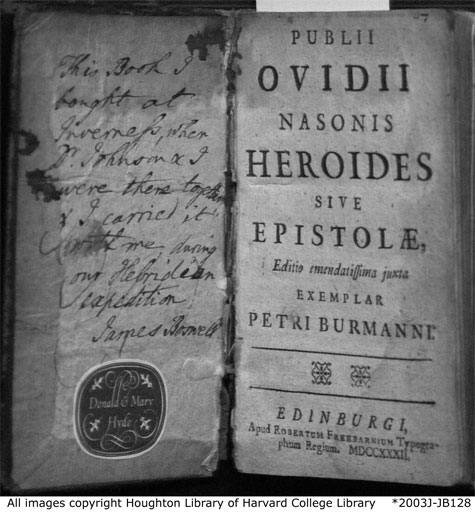
Heroides
Poem by OvidWikipedia
11
MENTIONS
6
EPISODES
6
PODCASTS
Search complete. 11 mentions across 6 episodes found for "Heroides".
Sep 14, 2026

Mark HarringtonNARRATOR
none the less at the time when our poet was busied with the adventures of his imaginary corinna and her ridiculous lover he was planning greater things the new work should be not epic for he had burned his fingers in that fire but tragedy ovid was fond of the drama as allusions in the tristia and adaptations into metamorphoses amply show his play on the familiar subject of media has not come down to us but it won the plaudits of competent critics like tacitus and quintilian with the help of seneca's tragedy on the same theme it is perhaps possible to infer that the conception of media in ovid's play was more stern and heroic than that which appears in his later works.
Mark HarringtonNARRATOR
Heroides O silly woman, full of innocence, full of pity, of truth and conscience, what maketh you to men to trust and sow? Chaucer Ignotum hoc aliis ille noavit opus Ovid Whatever the merits of his play, Ovid was not encouraged to send others in his train.
Mark HarringtonNARRATOR
Instead, he hit on a happy device, of which a suggestion had appeared in Propertius, whereby both his interest in tragedy and his wit, wholesomely sobered, could find scope.
Mark HarringtonNARRATOR
He invented a series of letters, sent by lonely or desperate heroines to the men who had caused their distress.
Mark HarringtonNARRATOR
it is varied enough it attends the patient longings of penelope the humorous timidities of laodamia the tumultuous passion of sappho the poet has a modest garden but he cultivates it intensively the writers in the heroides are thus after all characters in elegy rather than tragedy and perforce characters in the kind of elegy that ovid had made his own the use of the elegiac metre is thus appropriate if not inevitable wit the poet's supporting virtue and his embarrassing vice breaks forth in season and out briseis he cannot forget is heroine not only in the iliad but in harse's ode to a young friend in love with a maid servant in ovid's poem humor plays delicately on the surface of pathos dangerous skating which horace would have applauded laodamia is treated with a freer hand she well-nigh becomes matter for comedy as her husband sails with the army for troy she cautions him to beware of hector on the field his campaigns are elsewhere in love not war a parfit gentle knight so let my dear one love while others fight and let him be cautious in the landing in the thousand ships be his the thousandth and of all on board be he the last to leap ashore all this would turn the lament into burlesque if this were all again as in briseis the undertone is pathos with an approach to tragic irony for protesilaus was to leap forth first not last and fall by hector's spear the strands of grave and gay fail to unite in the heroides when gayety brings us from the heroic age plump into that of augustus tell-tale reminiscences of the amores are all too plentiful penelope apprehends from her husband the dreadfully ovidian reproach of rusticity briseis slips from her tent quite in the manner of corinna eluding the concierge phdra has studied an advanced copy of the art of love the heroine of euripides to be sure is as adroit and hippolytus delivers a kind of anti ovidius siwe de arte non amandi but all this finesse is in the play caught up into tragedy with its deep questionings of divine justice and human fate when in the letter jove is displayed as the first augustine and critic of rusticity illusion takes wings and the atmosphere of the amores is about us that ancient piety doomed soon to die lasted through saturn's rustic dynasty jove called things righteous if they pleasant be wedded his sister and made morals free ovid does not quite turn phaedra's appeal into comedy would that he had done so he has merely out euripidized euripides the poems of the herodes despite their artificialities lapses in taste and the presence of jocoseness where one looks for grief are alive to-day for the reason that ovid has accomplished the chief purpose for which he wrote them we should regard them not as unsuccessful attempts at tragic monologue but as thoroughly competent studies of woman's moods to catullus and the other predecessors of ovid in love elegy woman is an unsolved riddle the poet can analyze his own emotions but back of them is the impenetrable cause from which he moves uneasily away lesbia is vividly a person because her worshipper is we can reason back theologically from effect to cause and have no doubt that she very much exists we know that she is beautiful and passionate and wicked she bites but what the inner workings of her soul are catullus cannot tell he can get no farther than sentio et excrucior tibullus and propertius are still less capable of an answer we doubt the reality even of their own feelings their mistresses fade into the background of literary conventions it matters not whether plania was really hostia or who she was nor has ovid in the amores much place for an analysis of woman's moods his chief amusement is in the invention of his myth and in the ridicule of the romantic lover who figures in it But Ovid is equipped by a super-feminine acuteness, I speak as a man, to understand women.
Mark HarringtonNARRATOR
He is a member of that small coterie to which Euripides before him, Chaucer, Boccaccio, Shakespeare, and Meredith after him, had right of entrance.
Mark HarringtonNARRATOR
It is in the Heroides that our poet blithely embarks upon the great adventure.
Mark HarringtonNARRATOR
Insano you wat indulgere furori.

Mark HarringtonNARRATOR
medea in one of the poems of the amores ovid describes the ancient and solemn rites of juno which he witnessed with his wife at philarei a town just over the etruscan border the sudden revelation of ovid as a sober family man taking a steep road to attend a religious festival is a bit disconcerting yet the tone of the poem is serious or even devout ovid like a true roman has a relish for liturgy tis worth the toil to see us splendid right though rough the hills that take us to the sight as the horrors of tragedy are lightened and intensified by scenes of comic relief so there is a kind of serious relief the use of which ovid well understands satire said thackeray must walk arm in arm with sympathy humour needs pathos to give it depth and the audacity of ovid's wit calls loudly for sobriety the poet sometimes hears and sometimes does not the thrunody on the death of tibullus in the amores is spoiled of its seriousness by over-pretty conceits and the amusing cat-fight of delia and nemesis at their lover's funeral one often asks of ovid with dryden if this were wit was this a time to be witty wit as ovid observed was his undoing none the less at the time when our poet was busied with the adventures of his imaginary corinna and her ridiculous lover he was planning greater things the new work should be not epic for he had burned his fingers in that fire but tragedy ovid was fond of the drama as allusions in the tristia and adaptations into metamorphoses amply show his play on the familiar subject of media has not come down to us but it won the plaudits of competent critics like tacitus and quintilian with the help of seneca's tragedy on the same theme it is perhaps possible to infer that the conception of media in ovid's play was more stern and heroic than that which appears in his later works.
Mark HarringtonNARRATOR
Heroides O silly woman, full of innocence, full of pity, of truth and conscience, what maketh you to men to trust and sow? Chaucer Ignotum hoc aliis ille noavit opus Ovid Whatever the merits of his play, Ovid was not encouraged to send others in his train.
Mark HarringtonNARRATOR
Instead, he hit on a happy device, of which a suggestion had appeared improportious, whereby both his interest in tragedy and his wit, wholesomely sobered, could find scope.
Mark HarringtonNARRATOR
He invented a series of letters, sent by lonely or desperate heroines to the men who had caused their distress.

Mark HarringtonNARRATOR
pulsand est magnis aria major equis ovid medea in one of the poems of the amores ovid describes the ancient and solemn rites of juno which he witnessed with his wife at philarei a town just over the etruscan border the sudden revelation of ovid as a sober family man taking a steep road to attend a religious festival is a bit disconcerting yet the tone of the poem is serious or even devout ovid like a true roman has a relish for liturgy tis worth the toil to see us splendid right though rough the hills that take us to the sight as the horrors of tragedy are lightened and intensified by scenes of comic relief so there is a kind of serious relief the use of which ovid well understands satire said thackeray must walk arm in arm with sympathy humour needs pathos to give it depth and the audacity of ovid's wit calls loudly for sobriety the poet sometimes hears and sometimes does not the thrunody on the death of tibullus in the amores is spoiled of its seriousness by over-pretty conceits and the amusing cat-fight of delia and nemesis at their lover's funeral one often asks of ovid with dryden if this were wit was this a time to be witty wit as ovid observed was his undoing none the less at the time when our poet was busied with the adventures of his imaginary corinna and her ridiculous lover he was planning greater things the new work should be not epic for he had burned his fingers in that fire but tragedy ovid was fond of the drama his allusions in the tristia and adaptations into metamorphoses amply show his play on the familiar subject of media has not come down to us but it won the plaudits of competent critics like tacitus and quintilian than that which appears in his later works.
Mark HarringtonNARRATOR
Heroides O silly woman, full of innocence, full of pity, of truth and conscience, what maketh you to men to trust and sow? Chaucer Ignotum hoc aliis ille noavit opus Ovid Whatever the merits of his play, Ovid was not encouraged to send others in his train.
Mark HarringtonNARRATOR
Instead, he hit on a happy device, of which a suggestion had appeared improportious, whereby both his interest in tragedy and his wit, wholesomely sobered, could find scope.
Mark HarringtonNARRATOR
He invented a series of letters, sent by lonely or desperate heroines to the men who had caused their distress.

speaker_4NARRATOR
After the second part came the so-called replies, all in the same year, and their publisher tells us in the preface that he is assured that the gentleman who wrote them has returned to Portugal.
speaker_4NARRATOR
Shortly afterwards appeared the new replies, but this time they were given for what they were, a jeu d'esprit, for which the example of Aulus Gellinus writing replies to the Heroides of Ovid, and above all the beauty of the first Portuguese Letters, should serve as an excuse.
speaker_4NARRATOR
The motive, then, for the production of the second part of the Portuguese Letters, as for that of the new replies, is satisfactorily explained.
speaker_4NARRATOR
But how about the replies themselves? Can we not account for them by supposing that it was felt necessary, on the part of the friends of Chamilly, to attenuate the sympathy expressed on all sides for the unfortunate nun and the censure which must naturally have followed such a base betrayal? Hence proceed Senhor Cordeiro, the author of this suggestion.

Mark HarringtonNARRATOR
medea in one of the poems of the amores ovid describes the ancient and solemn rites of juno which he witnessed with his wife at philarei a town just over the etruscan border the sudden revelation of ovid as a sober family man taking a steep road to attend a religious festival is a bit disconcerting yet the tone of the poem is serious or even devout ovid like a true roman has a relish for liturgy tis worth the toil to see a splendid rite though rough the hills that take us to the sight as the horrors of tragedy are lightened and intensified by scenes of comic relief so there is a kind of serious relief the use of which ovid well understands satire said thackeray must walk arm in arm with sympathy humour needs pathos to give it depth and the audacity of ovid's wit calls loudly for sobriety the poet sometimes hears and sometimes does not heed the threnody on the death of tibullus in the amores is spoiled of its seriousness by over-pretty conceits and the amusing cat-fight of delia and nemesis at their lover's funeral one often asks of ovid with dryden if this were wit was this a time to be witty wit as ovid observed was his undoing none the less at the time when our poet was busied with the adventures of his imaginary corinna and her ridiculous lover he was planning greater things the new work should be not epic for he had burned his fingers in that fire but tragedy ovid was fond of the drama as allusions in the tristia and adaptations in the metamorphoses amply show his play on the familiar subject of media has not come down to us but it won the plaudits of competent critics like tacitus and quintilian than that which appears in his later works.
Mark HarringtonNARRATOR
Heroides O silly woman, full of innocence, full of pity, of truth and conscience, what maketh you to men to trust and sow? Chaucer Ignotum hoc aliis ille noavit opus Ovid Whatever the merits of his play, Ovid was not encouraged to send others in his train.
Mark HarringtonNARRATOR
Instead, he hit on a happy device, of which a suggestion had appeared improportious, whereby both his interest in tragedy and his wit, wholesomely sobered, could find scope.
Mark HarringtonNARRATOR
He invented a series of letters, sent by lonely or desperate heroines to the men who had caused their distress.

speaker_0NARRATOR
SECTION I.
speaker_0NARRATOR
OF OVID'S HEROIDES.
speaker_0NARRATOR
penelope to ulysses dear ulysses your penelope sends this epistle to you so slow in your return home write not any answer but come yourself troy is no more that city so justly odious to the grecian dames scarcely were prime and all his kingdom worth such a mighty stir oh how i wish that the infamous adulterer when he sailed for lacedaemon with his fleet had been swallowed up by the raging seas i had not then lain cold in a solitary bed nor thus forlorn complained of the tedious days the pendulous web would not then have tied my tender hands while by such means i sought to elude the lingering nights how often has my apprehension magnified your dangers love is a passion full of anxiety and fear I often fancied you to myself assorted by furious Jojans, and on hearing the name of Hector always turned pale.
speaker_0NARRATOR
If any one informed me that Antilochus had been slain by that hero, the fate of Antilochus proved the cause of fresh disquiet to me.
43 MINS LATER
KalindaNARRATOR
Think, while you read over the words of your Phaedra, that you see also the tears streaming from her eyes.
speaker_0NARRATOR
SECTION V.
speaker_0NARRATOR
OF OVID'S HEROIDES.
speaker_0NARRATOR
oignoni to paris may i hope that you will read this or overawed by your new ride must you treat it with neglect read it over i entreat you it is no threatening letter sent you from my I, the nymph Oinone, famous in the Phrygian woods, complain of injuries received from you, whom I am still fond to call mine, if you permit.