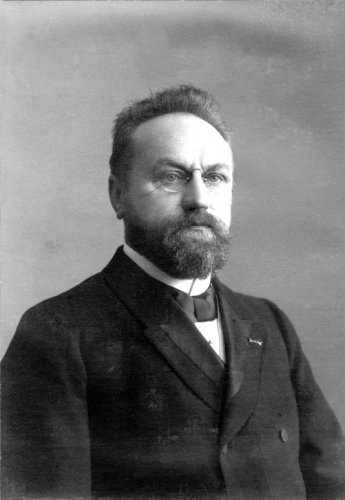
Herman Bavinck
Dutch philosopher and theologianWikipedia
35
MENTIONS
11
EPISODES
10
PODCASTS
Search complete. 35 mentions across 11 episodes found for "Herman Bavinck".
Sep 14, 2026

David SchrockHOST
What's the importance of that distinction that is there?
Stephen WellumGUEST
Well, I mean, at the importance of the distinction, and, you know, this is clearly picked up in, you know, Geerhardus Vos and, and Herman Bavinck and so on, that I'm, you know, greatly indebted to, uh, you know, I'm basically [chuckles] in terms of my doctrine of creation, uh, you know, following them and, and reform theology at this point.
Stephen WellumGUEST
But their point is, is that we are made as creatures.
Stephen WellumGUEST
The covenant is added in the sense that it, it... you have to make a logical distinction.

JesseGUEST
However, many different faiths believe in God, small g, and even atheists have some idea of what they mean by God, even if they don't believe that he actually exists.
JesseGUEST
So really, the question then is, what is unique about our Christian confession of God? In essence, today I'm going to endeavour to answer the question, who or what is God? One theologian I read stated that this question is probably actually the most fundamental matter in Christian theology.
JesseGUEST
So...
JesseGUEST
The first line of the creed reads, I believe in God, the Father Almighty, creator of heaven and earth.
9 MINS LATER
JesseGUEST
For as our creator, he is owed our allegiance, our fidelity.
JesseGUEST
To accept this belief is to accept God and conversely to reject that belief is to reject him.
JesseGUEST
A theologian Herman Baving put it this way, the knowledge of God gave us life but the life that was given leads us back to the knowledge of him.
JesseGUEST
In God we find all our well-being and all our glory.

Bob McEvoyHOST
here.
Bob McEvoyHOST
Herman Bavinck.
Bob McEvoyHOST
One of the most precise commentators says, blasphemy against the Holy Ghost consists in a conscious and deliberate attribution of what has been clearly perceived as God's work to the influence and activity of Satan.
Bob McEvoyHOST
Right, let's try and balance these two things.

Dan RagusaGUEST
And that was something Gerardus Vos himself grew up on, right? So that preceded Vos, right? Uh, and Vos himself learned that, the Heidelberg Catechism, and learned to understand that and, and in many ways developed it, utilized it in response to what Lane had mentioned previously regarding, uh, the rise of a kind of liberal bib- biblical theology that didn't take the scriptures in its own right and in its own story, but instead sought to impose some kind of historical narrative upon it in order to bring about contradictions and, and different, uh, um, differences within the text itself.
Dan RagusaGUEST
And, and so Vos, um, is, is drawing, I, I would say from that rich Dutch Reformed history, um, along with Herman Bavinck and others, um, and then you have a, a, a plethora of Dutch Reformed writers, um, in Dutch, then some later in English, even think of like a Herman Ridderbos later on, um, del- developing these things.
Dan RagusaGUEST
Um, and so it's, it's, it's a wonderful, uh, tradition, um, and a very helpful one.
Dan RagusaGUEST
Now, thinking, you know, there's a number of ways in which that approach to the scriptures is helpful.

David MeredithHOST
You've got an Augustine and Calvin, you know, a few every generation.
David MeredithHOST
I mean, folk talk about a Bavinck revival, the Bavinck boys and the Bavinck girls as well.
David MeredithHOST
Yes.
David MeredithHOST
Hopefully, Cunningham will become in.
Thomas DavisGUEST
I mean, it's a workout, you know, you do have to work quite hard to read through it.
Thomas DavisGUEST
But again, the key thing, the big thing that I would come back to with Cunningham is precision, which I think is hugely important.
Thomas DavisGUEST
You mentioned the revival of interest in Bavinck and wider neo-Calvinism.
Thomas DavisGUEST
I think that's been such a fantastic development lately.

Cornelis VenemaGUEST
We confess one holy Catholic Church.
Cornelis VenemaGUEST
Gotta read Herman Bavinck on catholicity.
Cornelis VenemaGUEST
It means you...
Cornelis VenemaGUEST
The whole, the whole of what is good and has developed and that has been accomplished in the history of theology needs to be, uh, appreciated.
Camden BuseyHOST
That's a wonderful thing.
Camden BuseyHOST
I'm just thinking about what happened with the Bavinck translations back in 2003 and then the following years, and now we're seeing all this flourishing of Bavinck scholarship over the last several.
Joel BeekeGUEST
Yeah.
Camden BuseyHOST
Perhaps-
Joel BeekeGUEST
Yeah, when I handed in my doctoral dissertation, Camden, back in, uh, I don't know, 40, almost 40 years ago now.
Camden BuseyHOST
Yeah.
Joel BeekeGUEST
Then Dick Gaffin said to me, "Okay, now that you've got this out of the way, you've got to translate Bavinck." I said, "Well, Dick, my Dutch isn't good enough to be the translator-
Camden BuseyHOST
[laughs]

Camden BuseyHOST
I'm just thinking about what happened with the Bavink translations back in 2003, and then the following years.
Camden BuseyHOST
And now we're seeing all this flourishing of Bavinck scholarship over the last several.
Camden BuseyHOST
Perhaps there'll be a figure that comes out of the Dutch Puritans that'll be the same.
Joel BeekeGUEST
Yeah.

Gavin OrtlundHOST
If, if you think you can refute this massive reality called Protestant Christianity with something that you can kind of see in five seconds, there's probably people who've thought of that, and, and these are some of the things where I'm wanting to say, "Let's raise it up and look at these historic..." I, I, I realize, and some of the dialogues I have done and the things I, I do, I realize many people have simply never studied Protestantism, uh, and yet they're speaking about it very caustically.
Gavin OrtlundHOST
And so, but they've never read Herman Bavinck.
Gavin OrtlundHOST
They've never read Richard Hooker.
Gavin OrtlundHOST
They've never really gone in and, and, and done the homework, and so, um, and now the... our, our side as Protestants can do the same thing, you know.
Gavin OrtlundHOST
Of course, there's Catholic views on this verse, but I'm just saying those are the kinds of texts you gotta get into.
Gavin OrtlundHOST
So if you, if you, uh, disagree with Luther on justification, the thing to do is to dive into these, uh, historical points and do what people like Eric Ybarra do in this book where he gives really smart engagements with the Protestant arguments.
Gavin OrtlundHOST
That's one reason I like engaging with Eric is he's pretty familiar with the best of the Protestant tradition, like a Herman Bavinck or Johann Gerhard or Richard Hooker and these kind of folks.
Gavin OrtlundHOST
But that requires going beyond just the assertion of invention and, and just working through the data.

Gray SutantoHOST
I think he and Mike Ray are, uh, gonna be getting due credit for that, and he's been an inspiration to all of us who've been considering how to understand theology and, and how to understand theology using analytic philosophy in particular to, um, articulate core Christian doctrine.
Gray SutantoHOST
But Oliver is also here because he's gonna be speaking on Herman Bavinck, especially in a few months here in the Bavinck Centennial at the Brisbane School of Theology, organized by Dr. Bruce Paz.
Gray SutantoHOST
We thought this would be a great opportunity to just discuss about how Reformed and analytic theology go together, and perhaps how Oliver's work might intersect with Herman Bavinck studies in particular, in anticipation of that centennial.
Gray SutantoHOST
But perhaps before we get to talking about Oliver's paper for that centennial, uh, coming here in a couple months, maybe I'd, I'd love to ask you this question here, Oliver.
Gray SutantoHOST
A lot of people might seem to think that Reformed theology and analytic theology are contradictory or even enemies at worst, right? How would you respond to that as someone who's both a Reformed theologian and also an analytic theologian?
10 MINS LATER
Gray SutantoHOST
And before that, Tom McCall's Invitation to Analytic Theology, which really showed that this is just really a, a tool, an analytic tool to uncover, uh, the, the logical issues contained in a particular doctrine, um, a way of getting clear on what the issues really are, and really a way of systematically drawing out logical implications of Christian doctrine.
Gray SutantoHOST
So that's been, uh, useful to me to think about.
Gray SutantoHOST
But coming back now to someone like Herman Bavinck, uh, you know, you mentioned Edwards, uh, in particular, and we can see that analytic theology and Edwards do seem to go organically together, uh, [chuckles] to use a Bavinckian term.
1 more episode mentions Herman Bavinck.
Create an account to see the whole feed, search across every transcript, and follow the entities you care about.