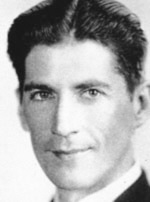
Herbert Morrison
American journalistWikipedia
18
MENTIONS
12
EPISODES
12
PODCASTS
Search complete. 18 mentions across 12 episodes found for "Herbert Morrison".
Nov 3, 2026

Catherine Grace KatzGUEST
So the guy who is the voice of the famous, oh, the humanity, which I'm sure many people are familiar with, may not even realize it belongs to the Hindenburg disaster.
Catherine Grace KatzGUEST
His name is Herbert Morrison, and he was a young radio announcer from WLS Chicago.
Catherine Grace KatzGUEST
He had recently befriended some folks from a fledgling upstart aviation company called American Airlines.
Catherine Grace KatzGUEST
And they were the first airline that was capable of turning a profit carrying passengers rather than just airmail.
Catherine Grace KatzGUEST
And so American Airlines had a service where they would fly to Lakehurst, where the Zeppelin landed, pick people up and fly them to other destinations across the United States.
Catherine Grace KatzGUEST
So they were trying to market themselves as the Hindenburg with wings, these DC-3s, which are kind of the early passenger planes.
Catherine Grace KatzGUEST
And they wanted to raise their profile, including kind of piloting a new form of paid ad, essentially, on the radio, where they wanted Herbert Morrison, who was kind of like-minded about wanting to advance the technology and the capabilities of what radio could do, including through recording.
Catherine Grace KatzGUEST
And so they wanted to kind of have a trial of recording content that might then be played because it was newsworthy.

AdrianHOST
Yes.
AdrianHOST
He listened to the real-life announcer, Herbert Morrison, obsessively.
AdrianHOST
He studied how Morrison's voice swelled, how it broke, how he literally gasped for air as he watched the airship burn.
ClaraHOST
And Reddick channeled that exact cadence.

Rebecca MessinaHOST
And so this gave a slightly bigger role to Frank Reddick, who's playing the news anchor.
Rebecca MessinaHOST
He had obtained a record of the Hindenburg News Report to mimic Herbert Morrison's infamous narration of the disaster.
Rebecca MessinaHOST
They also had Kenneth Delmar, who was playing the role of the Secretary of the Interior, but he was really good at doing an impression of Franklin D. Roosevelt.
Rebecca MessinaHOST
Impersonating the president on the radio was not actually allowed, but he managed to get close enough that some listeners would later say they had heard it from the president.

Catherine Grace KatzGUEST
It wasn't for news.
Catherine Grace KatzGUEST
And so the fact that there's this guy named Herbert Morrison... from WLS Chicago at the airfield in Lakehurst, New Jersey that day is purely kind of an accident.
Catherine Grace KatzGUEST
He's not there to serve as a reporter.
Catherine Grace KatzGUEST
That's not his job.
Catherine Grace KatzGUEST
He's actually there to do kind of like a new form of paid ad, essentially, with this fledgling airline called American Airlines.
Catherine Grace KatzGUEST
which wants to advertise its service of where they'll come and pick up passengers arriving on the Hindenburg and carry them off to other destinations around the U.S. kind of as a way of highlighting their service and combating the idea that airplanes are dangerous by positioning themselves as the Hindenburg with wings, which is crazy to think about.
Catherine Grace KatzGUEST
But Herbert Morrison is there to test out some new equipment and kind of do this experimental sort of paid ad for a potential sponsor for the radio programs when he happens to be there that day capturing the sounds of the Hindenburg disaster unfolding in front of him.
Catherine Grace KatzGUEST
His famous cry that we all remember is, oh, the humanity.

Tara McClellan McAndrewGUEST
And when it was landing or mooring at its dock, it famously burst into flames, crashed, and killed, oh, dozens.
Tara McClellan McAndrewGUEST
And there was a WLS radio reporter, Herbert Morrison, who famously did an on-the-scene report broadcast later about watching the Hindenburg Fall, and let's listen to it here.
Herbert MorrisonSOUNDBITE_SPEAKER
And it's falling on the mooring mass, and all the folks between us, this is terrible, this is one of the worst catastrophes in the world.
Herbert MorrisonSOUNDBITE_SPEAKER
Oh, it's like 20, oh, 400 or 500 feet into the sky, and it's a terrific crash, ladies and gentlemen, it's smoke and it's flames now, and the flames rising to the ground, not quite to the mooring mass, all the humanity and all the furniture screaming around it.

Catherine Grace KatzGUEST
It's the biggest thing that's ever flown in history.
Catherine Grace KatzGUEST
And more than anything, I think people are shocked when they see the newsreel images, the photographs, hear the anguished cry of Herbert Morrison, oh, the humanity, which we all remember.
Catherine Grace KatzGUEST
I think people are just astounded that anyone could have survived, let alone the majority of the people on board.
Catherine Grace KatzGUEST
Of the nearly 100 passengers and crew, two thirds of them survived.

Brian MackeyHOST
And it's just a breathless story from start to finish.
Brian MackeyHOST
When I started reading it, I sort of like came to this light bulb moment where I realized I needed to sort of like inhabit the voice of Raymond Chandler, Detective Philip Marlowe, or maybe Herbert Morrison, the journalist who's best known for that radio report on the Hindenburg disaster.
Brian MackeyHOST
Feel free to take issue with my description there, but how did you come to decide on the voice for this story?
Daniel KrausGUEST
Well, I had started writing Aims Down in kind of a more traditional format.

speaker_3HOST
Yeah, the LZ-129 Hindenburg, this giant passenger-carrying airship, just bursts into flames as it nears the mooring mast.
speaker_3HOST
You can still hear the raw, unscripted horror in radio reporter Herbert Morrison's famous broadcast, Oh, the Humanity.
speaker_4HOST
Such an iconic, chilling piece of audio.
speaker_3HOST
But the mystery for decades was, how did it happen so fast?

DerekHOST
Mm.
MarcHOST
Big headline at the time, but the, the, the broadcaster, Herb Morrison, was on the radio at the time, and as he's watching this fireball go up in the sky, "Oh, the humanity."
DerekHOST
Mm-hmm.
MarcHOST
Yeah.

Catherine Grace KatzGUEST
And it's the stories of the humanity in the story that I really, really wanted to keep at the heart of the book.
Catherine Grace KatzGUEST
The famous line we all know, Herbert Morrison, oh, the humanity, is the one that resonates with us.
Catherine Grace KatzGUEST
But in the aftermath of the tragedy, it's almost like the humanity got stripped away, somewhat through kind of conspiracy theories that swarmed around in the aftermath, sometimes deliberately in the way that the German state memorialized the disaster.
Catherine Grace KatzGUEST
And so with this book, more than anything, I wanted to put that humanity and the people who experienced the disaster front and center into the heart of the book.
Catherine Grace KatzGUEST
Thanks to a handful of photographers who were there on the scene, from the AP, from Hearst Service, some of whom are kind of annoyed at being there because they photographed the Hindenburg the whole year before, they think this is old news, they're waiting around all day because it's delayed, and yet they capture some of the most incredible moments in history.
Catherine Grace KatzGUEST
You also have newsreel crews that are there.
Catherine Grace KatzGUEST
They are capturing the images of the disaster, not with sound, but just the visuals, and some of you may have seen this, and you may have seen it paired with audio of a broadcaster, he wasn't a journalist, named Herbert Morrison, who, you know, he cried out, oh, the humanity, as he sees the Hindenburg burst into flames.
Catherine Grace KatzGUEST
The Herb Morrison piece is really interesting, and that's kind of where the story is such a turning point in the history of breaking news and the way that we think about media today.
2 more episodes mention Herbert Morrison.
Create an account to see the whole feed, search across every transcript, and follow the entities you care about.