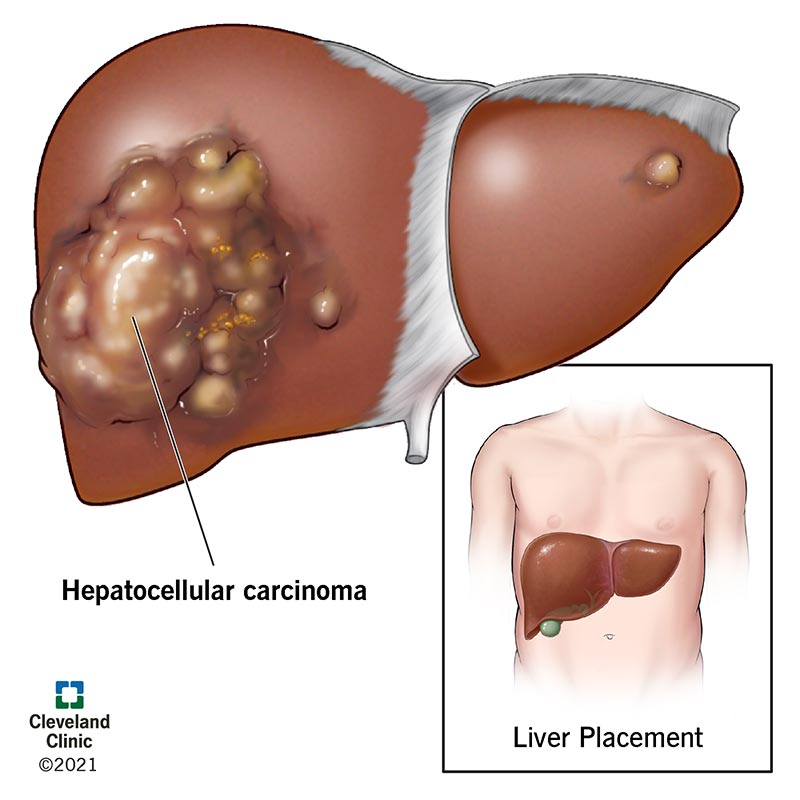
hepatocellular carcinoma
DiseaseWikipedia
166
MENTIONS
18
EPISODES
17
PODCASTS
Search complete. 166 mentions across 18 episodes found for "hepatocellular carcinoma".
Oct 28, 2026

Amit SingalGUEST
Yeah, so Matthias, I think it's a great question and a great place to start.
Amit SingalGUEST
So when we think through HCC, we know that this is a cancer that unfortunately continues to currently have a poor prognosis overall, although there is a marked difference in terms of prognosis if one is found at an early stage versus more advanced stage.
Amit SingalGUEST
And so this really underscores, honestly, the biggest premise of HCC surveillance in general.
Amit SingalGUEST
And then when we go to look at the data, we can see that the data, albeit imperfect, are supported by a large randomized clinical trial in China over 20 years ago among patients with chronic hepatitis B.
Amit SingalGUEST
So in brief, this trial randomized over 18,000 patients to receive HCC surveillance versus not in a sort of block randomization manner.
Amit SingalGUEST
And the trial showed a 37% reduction in the risk of dying from HCC.
Amit SingalGUEST
Now, we do not have randomized clinical data among patients with cirrhosis.
Amit SingalGUEST
There was a large randomized clinical trial that was attempted in Australia years ago and had to be stopped prematurely because both patients and providers refused to enroll in the clinical trial, given the fact that they wanted to be randomized to the surveillance arm.

Lawrence VardakounisHOST
We've got a few questions for you.
Lawrence VardakounisHOST
Our first one to start, how do you decide between Atizo, Bev, Epi, Nevo and Stride in first-line therapy for unresectable HCC? Well, Lawrence, this is a
Ken LiuGUEST
very topical question at the moment.
Ken LiuGUEST
As you know, we haven't had much choice in Australia until very recently.
Lawrence VardakounisHOST
Our second question, what clinical or biological features push you towards dual IO therapy rather than IO therapy with anti-VEGF therapy?
Ken LiuGUEST
So yeah, this is an extension of the previous question.
Ken LiuGUEST
I think this is an area of active research to try and personalize systemic therapy for HCC.
Ken LiuGUEST
And again, there's no robust biological data to say one type of tumor responds better to dual IO versus IO plus Bevacizumab.

Bharat TewarieGUEST
A blood test can be ordered during routine visit and completed in the same familiar lab that patients already are using.
Bharat TewarieGUEST
And we know from real-world evidence that, you know, uh, there is a study done among Medicare patients who later were diagnosed with HCC, which showed actually that only 21% of these people had received even one ultrasound in those three years, right? That's one.
Bharat TewarieGUEST
So starting with ultrasound.
Bharat TewarieGUEST
Then follow-through is another important, right? You, you, you have to come back every six months for life because you're at high risk for liver cancer, and that doesn't happen.
16 MINS LATER
Bharat TewarieGUEST
The last one that was presented, because a lot of doctors are very interested in the real world use of it, right, was a simulation study which was evaluating whether surveillance when HelioLiver is being used could increase the detection of tumor while they are still able to go for, you know, curative options, right? What's called early stage treatment category.
Bharat TewarieGUEST
And that definitely is there.
Bharat TewarieGUEST
And you know, all of this is only possible because the biology, the change in biology when you have liver cancer, when you have HCC, begins long before the tumor is large enough to be clearly visualized on imaging.
Bharat TewarieGUEST
And this is one of the quotes of the doctor, right, who's involved in this.

Lorenzo LaniGUEST
I'm a PhD candidate in biochemical and neuromotor sciences at the University of Bologna.
Lorenzo LaniGUEST
Today, I would like to present my research project, which focuses on improving the surveillance and the early diagnosis of hepatocellular carcinoma, or HCC, in patients with liver cirrhosis.
Lorenzo LaniGUEST
Hepatocellular carcinoma is the most common primary liver cancer and represents a major global health challenge.
Lorenzo LaniGUEST
In fact, it accounts for about ninety percent of all primary liver cancers and is one of the leading causes of cancer-related death worldwide.
Lorenzo LaniGUEST
Most cases develop in patients with underlying cirrhosis, a chronic condition characterized by progressive liver fibrosis and impaired liver function.
Lorenzo LaniGUEST
One of the major problems with HCC is that it is usually asymptomatic in its early stages.
Lorenzo LaniGUEST
As a result, many patients are diagnosed only when the disease is already advanced and treatment options are limited.
Lorenzo LaniGUEST
Current surveillance programs generally recommend liver ultrasound, sometimes combined with alpha fetoprotein measurement, every six months for all patients considered at risk.

speaker_0NARRATOR
[outro music] The following podcast is part of a certified educational activity titled "Redefining Therapeutic Progress in Hepatocellular Carcinoma: Extending the Benefits of Immunotherapy to Earlier Stages of Disease." Access the entire activity and complete the post-test at peerview.com/PEH860.
speaker_0NARRATOR
Downloadable slides are also available.
Ghassan Abou-AlfaGUEST
Welcome everybody, and, uh, this is an educational program, Redefining Therapeutic Progress in HCC.
Ghassan Abou-AlfaGUEST
My name is Ghassan Abou-Alfa, GI medical oncologist at Memorial Sloan Kettering Cancer Center in New York City.
Ghassan Abou-AlfaGUEST
I'll be discussing the latest developments in regard to modern therapies for patients with HCC, including the new evidence arising from the twenty twenty-six ASCO annual meeting.
Ghassan Abou-AlfaGUEST
Let's begin with our educational goals for today.
Ghassan Abou-AlfaGUEST
During this presentation, we will learn together that evidence is rapidly emerging, supporting the use of immunotherapy for HCC in early stage disease.
Ghassan Abou-AlfaGUEST
It's essential to develop a personalized treatment plan that considers the latest data, clinical practice guidelines, and unique patient needs.

speaker_0NARRATOR
[outro jingle] The following podcast is part of a certified educational activity titled "Redefining Therapeutic Progress in Hepatocellular Carcinoma: Extending the Benefits of Immunotherapy to Earlier Stages of Disease." Access the entire activity and complete the post-test at peerview.com/PEHeight-six-zero.
speaker_0NARRATOR
Downloadable slides are also available.
Ghassan Abou-AlfaGUEST
Welcome everybody, and, uh, this is educational program Redefining Therapeutic Progress in HCC.
Ghassan Abou-AlfaGUEST
My name is Ghassan Abou-Alfa, GI Medical Oncologist at Memorial Sloan Kettering Cancer Center in New York City.
Ghassan Abou-AlfaGUEST
I'll be discussing the latest development in regard to modern therapies for patients with HCC, including the new evidence arising from the twenty twenty-six ASCO annual meeting.
Ghassan Abou-AlfaGUEST
Let's begin with our educational goals for today.
Ghassan Abou-AlfaGUEST
During this presentation, we will learn together that evidence is rapidly emerging, supporting the use of immunotherapy for HCC in early stage disease.
Ghassan Abou-AlfaGUEST
It's essential to develop a personalized treatment plan that consider the latest data, clinical practice guidelines, and unique patient needs.

speaker_0NARRATOR
Downloadable slides are also available.
Ghassan Abou-AlfaGUEST
Welcome everybody, and, uh, this is an educational program, Redefining Therapeutic Progress in HCC.
Ghassan Abou-AlfaGUEST
My name is Ghassan Abou-Alfa, GI medical oncologist at Memorial Sloan Kettering Cancer Center in New York City.
Ghassan Abou-AlfaGUEST
I'll be discussing the latest developments in regard to modern therapies for patients with HCC, including the new evidence arising from the twenty twenty-six ASCO annual meeting.
Ghassan Abou-AlfaGUEST
Let's begin with our educational goals for today.
Ghassan Abou-AlfaGUEST
During this presentation, we will learn together that evidence is rapidly emerging, supporting the use of immunotherapy for HCC in early stage disease.
Ghassan Abou-AlfaGUEST
It's essential to develop a personalized treatment plan that considers the latest data, clinical practice guidelines, and unique patient needs.
Ghassan Abou-AlfaGUEST
And of course, team-based approach can be comprehensively addressed, the practical aspects of patient care and enhance adherence and clinical outcomes.

Ghassan Abou-AlfaGUEST
Downloadable slides are also available.
Ghassan Abou-AlfaGUEST
Welcome, everybody, and this is an educational program redefining therapeutic progress in HCC.
Ghassan Abou-AlfaGUEST
My name is Kassan Abu-Alfa, GI Medical Oncologist at the Board of Stonecate Cancer Center in New York City.
Ghassan Abou-AlfaGUEST
I'll be discussing the latest development in regard to modern therapies for patients with HCC, including the new evidence arising from the 2026 ASCO Annual Meeting.
Ghassan Abou-AlfaGUEST
Let's begin with our educational goals for today.
Ghassan Abou-AlfaGUEST
During this presentation, we will learn together that evidence is rapidly emerging supporting the use of immunotherapy for HCC in early stage disease.
Ghassan Abou-AlfaGUEST
It's essential to develop a personalized treatment plan that consider the latest data, critical practice guidelines, and unique patient needs.
Ghassan Abou-AlfaGUEST
And of course, team-based approach can be comprehensively address the practical aspects of patient care and enhance adherence and clinical outcomes.

speaker_0NARRATOR
Downloadable slides are also available.
Ghassan Abou-AlfaGUEST
Welcome, everybody, and this is an educational program redefining therapeutic progress in HCC.
Ghassan Abou-AlfaGUEST
My name is Kassan Abu-Alfa, GI Medical Oncologist at Medibor, the Stonecate Cancer Center in New York City.
Ghassan Abou-AlfaGUEST
I'll be discussing the latest development in regard to modern therapies for patients with HCC, including the new evidence arising from the 2026 ASCO Annual Meeting.
Ghassan Abou-AlfaGUEST
Let's begin with our educational goals for today.
Ghassan Abou-AlfaGUEST
During this presentation, we will learn together that evidence is rapidly emerging supporting the use of immunotherapy for HCC in early stage disease.
Ghassan Abou-AlfaGUEST
It's essential to develop a personalized treatment plan that consider the latest data, critical practice guidelines, and unique patient needs.
Ghassan Abou-AlfaGUEST
And of course, team-based approach can be comprehensively address the practical aspects of patient care and enhance adherence outcomes.

Livie WellsHOST
No worries.
Terri MiltonGUEST
But, um, that diagnose- diagnosis progressed to, um, to actually to HCC, Hepatocellular Carcinoma.
Terri MiltonGUEST
Uh, and then from there is actually is from 2017 until 2022 is when I actually had a liver transplant.
Terri MiltonGUEST
So there was a lot of stuff in between, and by the time everything was said and done, I was pretty sick.
8 more episodes mention hepatocellular carcinoma.
Create an account to see the whole feed, search across every transcript, and follow the entities you care about.