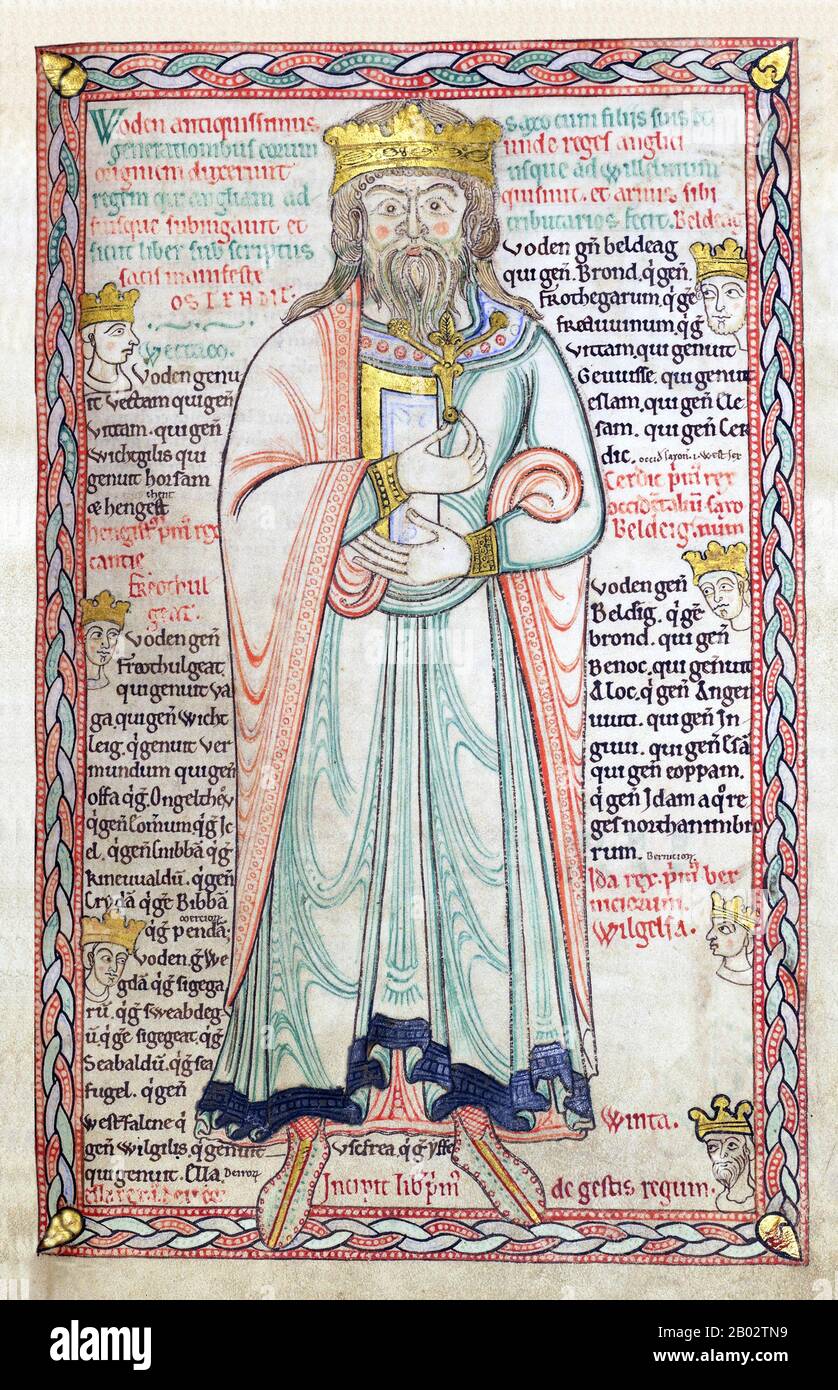
Henry of Huntingdon
English historianWikipedia
45
MENTIONS
8
EPISODES
6
PODCASTS
Search complete. 45 mentions across 8 episodes found for "Henry of Huntingdon".
Oct 26, 2026

JonathanHOST
So says Charles Spencer in his book The White Ship.
JonathanHOST
Spencer continues, quote, Henry of Huntingdon eulogized Queen Matilda thoughtfully.
JonathanHOST
Quote, successes did not make her happy, nor did troubles make her sad.
JonathanHOST
Troubles brought a smile to her, successes fear.

Graham DukeHOST
He's earned a reputation as an attractive and chivalric young man.
Graham DukeHOST
Henry of Huntingdon even asserted that he was now the king's sole heir and judged worthy in the expectation of all.
Ali HoodHOST
So there's got to be a process of giving a badge back then.
Ali HoodHOST
No one's thinking of Stephen.
12 MINS LATER
Graham DukeHOST
Okay.
Graham DukeHOST
Much more.
Graham DukeHOST
So, Henry of Huntingdon reported that Henry was much distressed by this.
Ali HoodHOST
Why? Oh, Henry I.

JimmyHOST
It would be the better part of two days before anyone worked up the nerve to tell him what he'd heard, and by then almost everyone he'd built his life around was at the bottom of the sea.
JimmyHOST
By the autumn of 1120, Henry I was the most successful ruler in Western Europe.
JimmyHOST
He was the fourth son of William the Conqueror, the one who wasn't supposed to get anything.
JimmyHOST
He'd taken the English throne in August 1100 within days of his brother William Rufus being assassinated on a hunting trip.
JimmyHOST
Six years later, he'd beaten his other brother, Robert Kurt Hose, at Tinchabray and taken Normandy off him too.
JimmyHOST
Robert spent the rest of his life, nearly 28 years, as Henry's prisoner, forced to watch his brother's ascendancy.
JimmyHOST
But for King Henry, it turned out that holding Normandy was much harder than taking it.
JimmyHOST
Louis VI of France backed Robert's son, William Clito, as the rightful duke, and from 1116 onward, the border was permanently on fire.

Justin PollardGUEST
He's it's a term.
Justin PollardGUEST
He starts being given long after he's dead, you know, by people like Jeffrey Gamer and, uh, Henry of Huntingdon.
Justin PollardGUEST
And it becomes a big thing in the 19th century because the British Empire and they've got to look for a founding father.
Justin PollardGUEST
And so they call Alfred the founder of the British Navy without looking too closely at the sort of Navy he founded.
JonathanHOST
So Louis was taking it out on Blois.
JonathanHOST
Apparently, Henry's reinforcements allowed Theobald to, as Henry of Huntingdon records, "...cause considerable damage to King Louis." What's more was that this decade just wouldn't quit when it came to giving everybody fits.
JonathanHOST
The Anglo-Saxon chronicles also say, "...this was a very vexatious and destructive year with respect to the fruits of the earth, through the immoderate rains that fell soon after the beginning of August, harassing and perplexing men till Candlemas Day." Now, 1116 was a mixed bag of news for England and France.
JonathanHOST
First, on May 31st, Queen Matilda received word that her sister, just 34 years old, died.

Tom HollandHOST
And Jeffrey's book is taken as fact.
Tom HollandHOST
The guy who is the Lord Dacre of this whole shenanigans is an English chronicler called Henry of Huntingdon.
Tom HollandHOST
He's traveling to Rome, and in January 1139, he stops off at an abbey called Beck in Normandy.
Tom HollandHOST
In this abbey, he is shown Geoffrey's recently completed text.
Tom HollandHOST
It's just been not exactly published, but it's appeared.
Tom HollandHOST
He reads it, and he declares himself stupefied.
Tom HollandHOST
And this matters because Henry of Huntingdon is a much admired historian himself.
Tom HollandHOST
And to boot, he is the Archdeacon of Huntingdon.
Ali HoodHOST
Yeah.
Graham DukeHOST
Henry of Huntingdon takes things up a notch by saying that William and his companions died as an act of divine vengeance for their sins.
Ali HoodHOST
All right, wind it in.
Graham DukeHOST
William and Richard and many nobles were shipwrecked, besides the kings, butlers, stewards and bakers, all or most of whom were said to have been tainted with the sin of sodomy.

Vanessa RichardsonHOST
The first time it was mentioned in print was around 1130 CE.
Vanessa RichardsonHOST
That's when medieval historian Henry of Huntingdon discussed it in his book Historia Anglorum, which covered all of English history up until that point.
Vanessa RichardsonHOST
Henry described Stonehenge as one of the four great wonders of England, and just like every other historian who would write about Stonehenge over the next 896 years, he was completely mystified by it.
Vanessa RichardsonHOST
In his account, Henry wrote, quote, "No one can work out how the stones were so skillfully lifted up to such a height or why they were erected there." Six years later, another writer offered the first recorded theory of how Stonehenge was constructed, and his explanation was simple.