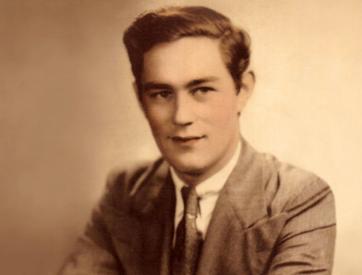
Henry Molaison
20
MENTIONS
9
EPISODES
8
PODCASTS
Search complete. 20 mentions across 9 episodes found for "Henry Molaison".
Oct 13, 2026

speaker_5HOST
Right.
speaker_5HOST
And this brings us to one of the most famous and really tragic figures in medical history, patient H.M.
speaker_6HOST
Yes, Henry Molaison.
speaker_6HOST
He was known in the medical literature for decades simply as H.M. to protect his privacy.
speaker_6HOST
His case completely revolutionized our understanding of memory.
speaker_5HOST
What happened to him?
speaker_6HOST
The raw sensory data was hitting his brain, but without the hippocampus to bind it and file it, the memory simply vanished the moment his attention shifted.
speaker_5HOST
It's hard to even fathom what that existence would feel like.

Addison AndersonNARRATOR
Dr. Scoville was one of the most renowned neurosurgeons of his time.
Addison AndersonNARRATOR
And the young man was Henry Molaison, the famous patient known as H.M., whose case provided amazing insights into how our brains work.
Addison AndersonNARRATOR
As a boy, Henry had cracked his skull in an accident and soon began having seizures, blacking out, and losing control of bodily functions.
Addison AndersonNARRATOR
After enduring years of frequent episodes and even dropping out of high school, the desperate young man had turned to Dr. Scoville, a daredevil known for risky surgeries.

Patti KatterHOST
Sometimes it cannot reliably create certain kinds of new memories at all.
Patti KatterHOST
In 1953, a 27-year-old man named Henry Molaison underwent an experimental brain operation.
Patti KatterHOST
Henry had severe epilepsy.
Patti KatterHOST
His seizures were interfering with his life, and doctors were attempting to find a way to reduce them.

CaraHOST
The multi-store model was hugely influential, but memory is more complicated than three boxes and a few arrows.
CaraHOST
One important source of evidence came from people with amnesia, including Henry Molaison, better known for decades as patient HM.
CaraHOST
After surgery involving both medial temporal lobes, HM had profound difficulty forming new long-term declarative memories.
CaraHOST
While some immediate memory abilities and some forms of learning were preserved that helped demonstrate that memory is not one single undivided ability, But HM doesn't prove that the multi-store model is literally correct in every detail.

Anish CharyanHOST
That wasn't a a thought experiment.
Anish CharyanHOST
It was the actual life of a man named Henry Molaison.
Anish CharyanHOST
It was the actual life of a man named Henry Melissa.
Anish CharyanHOST
Known for science for 50 years, only by his
Anish CharyanHOST
This is your host, Anish Charyan.
Anish CharyanHOST
And if you are first time to this segment, this podcast, welcome home.
Anish CharyanHOST
For our story today, we can talk about the man who lived In a permanent present tense, the story is about Henry Molaison, a 27-year-old young boy.
Anish CharyanHOST
And this happened in the year 1953, September 1st.

Oliver BarnstedtGUEST
And to be fair, there's been a paper by Gooden from 1896, which already implicated this brain region with memory.
Oliver BarnstedtGUEST
And this was... more than 50 years before patient H.M. and hippocampus became famous about memory function.
Oliver BarnstedtGUEST
So in a way, that already gave the hint that, OK, mammillary body might be important for memory.
Oliver BarnstedtGUEST
And then in 1937, basically, James Pappas put it into his infamous Pappas circuit that was supposedly important for emotional regulation.

speaker_0HOST
Right.
speaker_1HOST
And much of what we know about this comes from one of the most famous patients in medical history, Henry Molaison, known as Patient H.M.
speaker_0HOST
Oh, I've heard of him.
speaker_1HOST
Yeah.