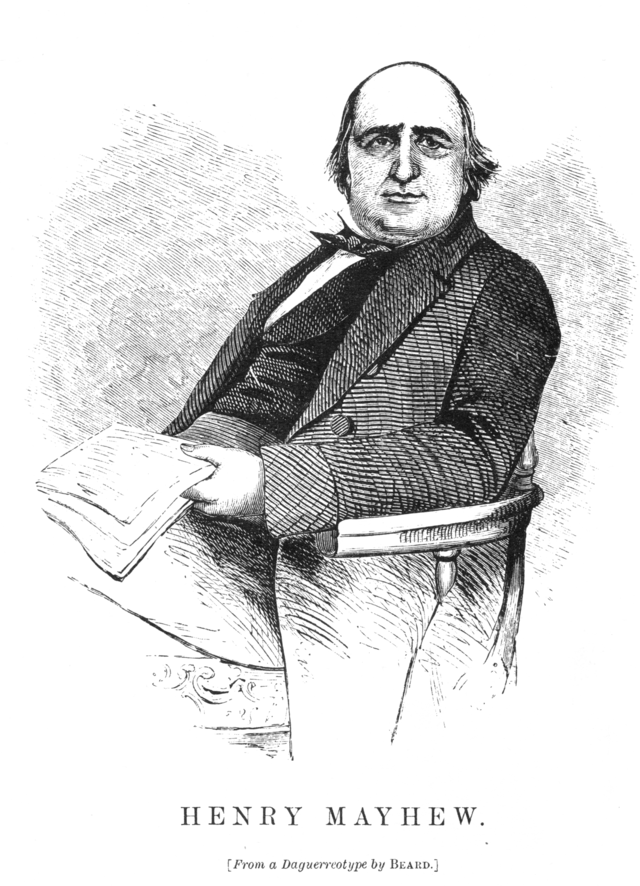
Henry Mayhew
English journalist and playwrightWikipedia
3
MENTIONS
2
EPISODES
2
PODCASTS
Search complete. 3 mentions across 2 episodes found for "Henry Mayhew".
Sep 27, 2026
London Was Talking. I Wasn’t Listening.
D
2:39David TuckerHOST
I was studying Dickens.
D
2:41David TuckerHOST
Henry Mayhew had lived farther up Albany Street.
D
2:45David TuckerHOST
There's a blue plaque at number 55.
D
2:48David TuckerHOST
Mayhew, the great investigator of Victorian London, the man who went into the streets and asked questions, who talked to costermongers, mudlarks, crossing sweepers, sewer hunters, rat catchers, and street sellers.
D
3:05David TuckerHOST
Mayhew wanted to know how London worked, how Londoners earned a living.
D
3:10David TuckerHOST
What they ate, where they slept, how they survived.
D
3:15David TuckerHOST
And there was I, studying Dickens, living almost within hailing distance of Henry Mayhew, taking no interest in him whatsoever.
D
3:24David TuckerHOST
That is quite an achievement.
P
Unknown podcast
Freak Show Capitalism: How Victorian Britain Turned Curiosity into Commerce
Sep 12 · 1 Mention
S
5:46speaker_1UNKNOWN
In Merrick's case, he survived multiple thefts while on tour before being left in Brussels.
S
5:53speaker_1UNKNOWN
In the 1890s, journalists like Henry Mayhew began to criticize freak shows as part of a larger critique of Victorian morality, arguing they exploited those who were already socially ostracized.
S
6:06speaker_1UNKNOWN
However, the show's profitability ensured that regulators had little appetite to restrict it, especially when governments saw sideshows as a form of public amusement akin to fairs and circuses.
S
6:19speaker_1UNKNOWN
By the end of the Victorian era, the decline began, not from moral condemnation alone, but also from shifting public interests and the rise of new entertainment technologies like cinema that could capture exotic spectacles in moving images.