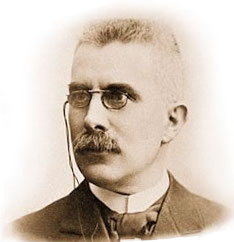
Henry Louis Le Chatelier
French chemistWikipedia
13
MENTIONS
4
EPISODES
3
PODCASTS
Search complete. 13 mentions across 4 episodes found for "Henry Louis Le Chatelier".
Nov 23, 2026

ForthHOST
So we've taken this complex concept and made it into a little story.
ForthHOST
From chemistry, we're going to use the example of Le Chatelier's principle.
ForthHOST
So we're looking at how a chemical system in equilibrium responds to outside changes.
ForthHOST
So imagine a seesaw with two friends balanced perfectly in the middle.

Dave FarinaHOST
The Ka of acetic acid is larger than the Kb of acetate, so the forward reaction of the top equilibrium will be more prevalent, and there will be hydronium ions in solution.
Dave FarinaHOST
Therefore, if we add a little bit of strong base, it will react with the few hydronium ions present, and since the ionization of acetic acid is in equilibrium, removing hydronium will push the equilibrium to the right and more acetic acid will ionize to restore the hydronium concentration back to its original value, as we would expect from our knowledge of Le Chatelier's principle.
Dave FarinaHOST
This means the pH will change very little or not at all.
Dave FarinaHOST
Likewise, if we add a strong acid, it will simply react with the acetate ions instead of water molecules, which will only generate more acetic acid, so this too will have very little effect on the pH, since no hydronium or hydroxide is formed in that ionization.
Dave FarinaHOST
And remember, we have to recall the common ion effect here.
Dave FarinaHOST
The common ion effect is a manifestation of Le Chatelier's principle.
Dave FarinaHOST
Because what we're saying is sodium chloride has an ion in common with silver chloride, the chloride ion.
Dave FarinaHOST
And so...
Dave FarinaHOST
What that means is that we have additional chloride ion, and from Le Chatelier's principle, we know that if we have more of one of these, it's as though we're adding additional chloride to the solution.
Dave FarinaHOST
So whatever this equilibrium would be doing in pure water, now we have extra chloride from the sodium chloride.
Dave FarinaHOST
And if we have more product, Le Chatelier is going to tell us that is going to shift the equilibrium to the other side.
Dave FarinaHOST
in this case to the left, to sodium chloride.

Richard SemelkaGUEST
You have to realize that in the agents or metals that bind into bone, they are very resistant to removal.
Richard SemelkaGUEST
So you have to use a property that works in all forms with all these heavy metals, which is Le Chatelier's principle that everything strives to be in equilibrium.
Richard SemelkaGUEST
So for instance, if you're chelating for gadolinium lead or cadmium, you remove most of it from the soft tissues, including the brain, but very little is removed from bone.
Richard SemelkaGUEST
To get the removal from bone, you require the natural tendency to return to equilibrium.
Richard SemelkaGUEST
Because when we're treating patients, we want to think of total heavy metal content.
Richard SemelkaGUEST
We're not just thinking, you know, one and done.
Richard SemelkaGUEST
We're thinking of how do we remove the entire burden of heavy metal? And you have to do it by applying Le Chatelier's principle of which is probably subtly different for other metals which bind in different locations.
Richard SemelkaGUEST
Like mercury has a tendency to go to fatty structures like brain.