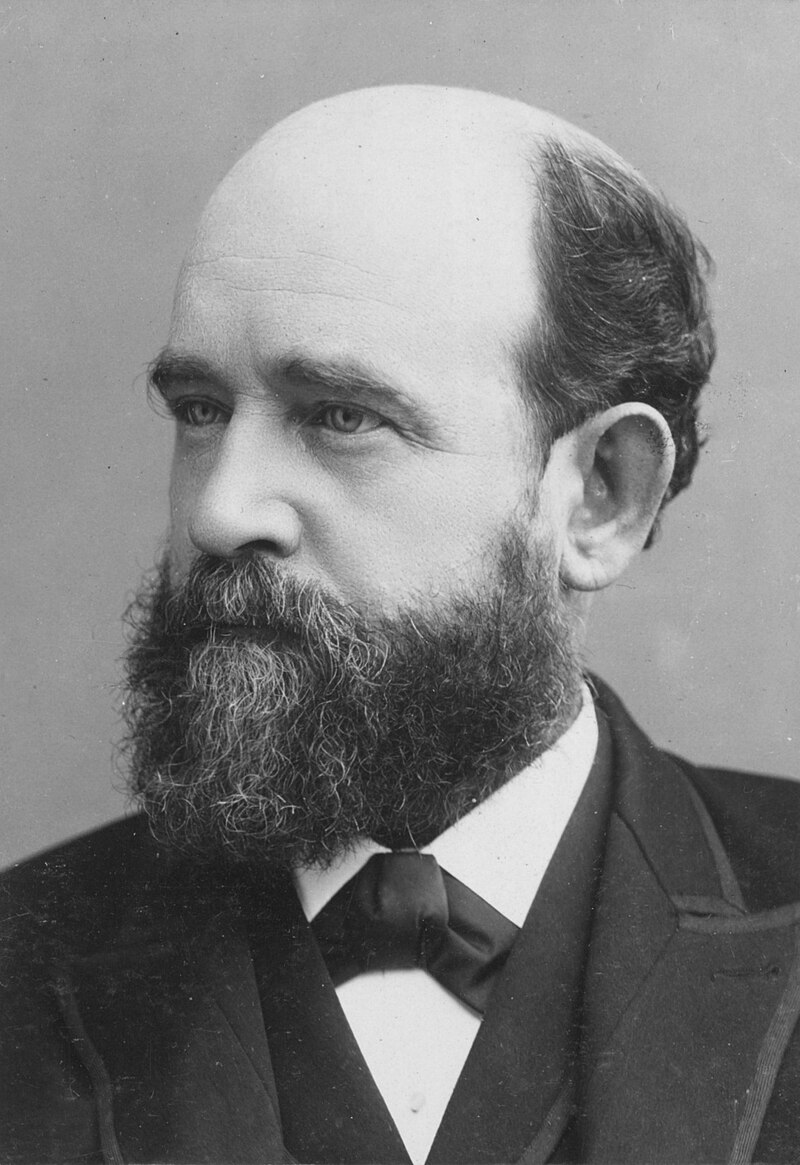
Henry George
American economistWikipedia
77
MENTIONS
31
EPISODES
28
PODCASTS
Search complete. 77 mentions across 31 episodes found for "Henry George".
Oct 28, 2026

David SchleicherGUEST
And I think that most advocates of land value taxes are imagining big jurisdictions.
David SchleicherGUEST
They're imagining New York City, like Henry George ran for mayor, or they're imagining statewide land value taxes.
David SchleicherGUEST
And that would be a very powerful push for building.
David SchleicherGUEST
But as long as local power to zone is untrammeled, and we have these state exemption laws and other things, but to the extent it is untrammeled, you have to factor that in when you think about the effect of taxes on building.

Scott AlexanderHOST
This is an audio version of Astral Codex X, Scott Alexander's Substack.
Scott AlexanderHOST
If you like it, you can subscribe at astralcodex10.substack.com. Hi, this is Lars Doucet, author of the book review of Henry George's Progress and Poverty that won the first ACX book review contest, as well as the three-part follow-up guest post series, Does Georgism Work? A lot has happened since then, including Land Value Tax, or LVT, enablement laws passing this year in two US states, and the election of LVT-friendly national leaders in the UK and South Korea.
Scott AlexanderHOST
As for me, I now work full-time at the Centre for Land Economics and write for Progress and Poverty Substack.
Scott AlexanderHOST
I'd like to reflect on what I wrote five years ago, what I was right about, what I've changed my mind on, and what the outlook for LVT is in 2026.
Scott AlexanderHOST
But first, here's a brief summary for those who either have no idea what I'm talking about or just need a refresher.
Scott AlexanderHOST
1.
Scott AlexanderHOST
Progress and Poverty In 2021, I wrote a book review for ACX on the book Progress and Poverty, the magnum opus of the famed 19th century economist and populist firebrand Henry George.
Scott AlexanderHOST
If I had to summarise the book in a single sentence, I would put it this way.

Nick HanauerGUEST
But no one knows the history of that idea.
Nick HanauerGUEST
So in 1879, A guy named Henry George writes a book called Poverty in Progress, which is basically the sort of pickety of his time.
Nick HanauerGUEST
It's like the rich are taking advantage of us, and we should find a way to get out from under it.
Nick HanauerGUEST
This book wasn't just a bestseller.

Tom PogsonGUEST
They make all kinds of fun ones and things.
Tom PogsonGUEST
There's one really crazy experience that I had where I'm a fan of basic income, a fan of the work of Commonwealth Canada, which they're more kind of based on a UBI-based, UBI-funded through land value tax in the style of Henry George.
Tom PogsonGUEST
and um that's a whole thing in and of itself of course yeah but um there was two commonwealth canada meetings that happened here in victoria actually there was three but i'll do the main i'll do the two um there was two that happened one was in a meeting room in a pub in james bay called the black no not black stilt the bent mass pub and the other was downtown and swan's pub and at the bent mast one it was more like a classroom environment where there was a there was a professor at the front i unfortunately i can't remember the gentleman's name but it was that it was really really good and it was like i think he was like connected to the henry george um um society of canada or something like that and he's doing this really great talk and my brain is gone it's like i'm right back at school again i'm all of a sudden i'm like he's got interesting hair like it's just gone it's just like i'm and this is a subject that i really really like
Brent FrainHOST
yeah tom is is that sometimes i'll have the train of thought is it yeah yeah and then all of a sudden boom it just freezes like
Tom PogsonGUEST
yeah yeah but over a swan's pub one It's like, it wasn't in a separate room.

Robert MorelNARRATOR
This LibriVox recording is in the public domain.
Robert MorelNARRATOR
The Sources of Fabian Socialism The ideas of the early eighties, the epoch of evolution, sources of Fabian ideas, Positivism, Henry George, John Stuart Mill, Robert Owen, Karl Marx, The Democratic Federation, The Christian Socialist, Thomas Davidson.
Robert MorelNARRATOR
Britain as a whole was never more tranquil and happy, said the spectator, than the organ of sedate liberalism and enlightened progress in the summer of 1882.
Robert MorelNARRATOR
No class is at war with society or the government.
Robert MorelNARRATOR
In April 1883, Émile de Levallée described with alarm the progress of socialism.
Robert MorelNARRATOR
On the continent, he wrote, socialism is said to be everywhere.
Robert MorelNARRATOR
To it he attributed, with remarkable inaccuracy, the agrarian movement in Ireland, and with it he connected the fact that Henry George's new book, Progress and Poverty, was selling by thousands in an ultra-popular form in the back streets and alleys of England.
Robert MorelNARRATOR
And then he goes on to allude to Prince Bismarck's abominable

Evan ConradGUEST
And then we have some capacity that...
Evan ConradGUEST
Are you familiar with Henry George? Also, no.
Evan ConradGUEST
Okay.
Evan ConradGUEST
There was an old economist named Henry George, and he created a thing called a land value tax.
Evan ConradGUEST
Oh, okay.
Evan ConradGUEST
Yes.

speaker_1NARRATOR
The book, be it said, was by no means so dry as he thought it, and it had some other admirable qualities.
speaker_1NARRATOR
It was clear and thorough, and the battles by sea and land, especially the former, which involved the armaments and crews the size and speed of the ships engaged in the famous frigate and sloop actions of which we won eleven out of thirteen were given with a minute accuracy never before attempted in the accounts of this war and which made the book an authority a position it holds to this day this was a good deal of sound work for a boy's first year out of college but it did not content roosevelt inherited influences and inborn desires made him earnest and eager to render some public service in pursuit of this aspiration he joined the twenty-first assembly district republican association of the city of new york for by such machinery all politics were carried on in those days it was not an association composed of his normal friends in fact the members were not only eminently practical persons but they were inclined to be rough in their methods they were not dreamers nor were they labouring under many illusions roosevelt went among them a complete stranger he differed from them with entire frankness concealed nothing and by his strong and simple democratic ways his intense americanism and the magical personal attraction which went with him to the end made some devoted friends one of the younger leaders joe murray believed in him became especially attached to him and so continued until death separated them through murray's efforts he was elected to the new york assembly in eighteen eighty one and thus only one year after leaving college his public career began he was just twenty-three very few men make an effective state reputation in their first year in the lower branch of the state legislature i never happened to hear of one who made a national reputation in such a body roosevelt did both when he left the assembly after three years service he was a national figure well known and of real importance and also a delegate at large from the great state of new york to the republican national convention of eighteen eighty four where he played a leading part energy ability and the most entire courage were the secret of his extraordinary success it was a time of flagrant corporate influence in the new york legislature of the black horse cavalry of a group of members who made money by sustaining corporation measures or by levying on corporations and capital through the familiar artifice of strike bills roosevelt attacked them all openly and aggressively and never silently or quietly he fought for the impeachment of a judge solely because he believed the judge corrupt which surprised some of his political associates of both parties there being as one practical thinker observed no politics in politics he failed to secure the impeachment but the fight did not fail nor did the people forget it and despite perhaps because of the enemies he made he was twice re-elected he became at the same time a distinct well-defined figure to the american people he had touched the popular imagination in this way he performed the unexampled feat of leaving the new york assembly which he had entered three years before an unknown boy with a national reputation and with his name at least known throughout the united states he was twenty-six years old when he left chicago at the close of the national convention in june eighteen eighty four he did not return to new york but went west to the badlands of the little missouri valley where he had purchased a ranch in the previous year the early love of natural history which never abated had developed into a passion for hunting and for life in the open he had begun in the wilds of maine and then turned to the west and to a cattle ranch to gratify both tastes the life appealed to him and he came to love it he herded and rounded up his cattle he worked as a cow-puncher only rather harder than any of them and in the intervals he hunted and shot big game he also came in contact with men of a new type rough sometimes dangerous but always vigorous and often picturesque with them he had the same success as with the practical politicians of the twenty-first assembly district although they were widely different specimens of mankind but all alike were human at bottom and so was roosevelt he argued with them rode with them camped with them played and joked with them but was always master of his outfit they respected him and also liked him because he was at all times simple straightforward outspoken and sincere he became a popular and well-known figure in that western country and was regarded as a good fellow a white man entirely fearless thoroughly good-natured and kind never quarrelsome and never safe to trifle with bully or threaten the life and experiences of that time found their way into a book the hunting trips of a ranchman interesting in description and adventure and also showing a marked literary quality in eighteen eighty six he ran as republican candidate for mayor of new york and might have been elected had his own party stood by him but many excellent men of republican faith the timid good as he called them panic-stricken by the formidable candidacy of henry george flocked to the support of mr abram hewitt the democratic candidate as the man most certain to defeat the menacing champion of single taxation roosevelt was beaten but his campaign which was entirely his own and the precursor of many others his speeches with their striking quality then visible to the country for the first time all combined to fix the attention of the people upon the losing candidate roosevelt was the one of the candidates who was most interesting and again he had touched the imagination of the people and cut a little deeper into the popular consciousness and memory two years more of private life devoted to his home where his greatest happiness was always found to his ranch to reading and writing books and then came an active part in the campaign of eighteen eighty eight resulting in the election of president harrison who made him civil service commissioner in the spring of eighteen eighty nine he was in his thirty-first year civil service reform as a practical question was then in its initial stages the law establishing it limited in extent and forced through by a few leaders of both parties in the senate was only six years old the promoters of the reform strong in quality but weak in numbers had compelled a reluctant acceptance of the law by exercising a balance of power vote in certain states and districts it had few earnest supporters in congress some lukewarm friends and many strong opponents all the active politicians were practically against it mr conkling had said that when dr johnson told boswell that patriotism was the last refuge of a scoundrel he was ignorant of the possibilities of the word reform and this witticism met with a large response civil service reform meaning the establishment of a classified service and the removal of routine administrative offices from politics had not reached the masses of the people at all the average voter knew and cared nothing about it when six years later roosevelt resigned from the commission the great body of the people knew well what civil service reform meant large bodies of voters cared a great deal about it and it was established in spreading its control we have had many excellent men who have done great work in the civil service commission although that work is neither adventurous nor exciting and rarely attracts public attention but no one has ever forgotten that theodore roosevelt was once civil service commissioner he found the law struggling for existence laughed at sneered at surrounded by enemies and congress and with but few fighting friends he threw himself into the fray congress investigated the commission about once a year which was exactly what roosevelt desired annually too the opponents of the reform would try to defeat the appropriation for the commission and this again was playing into roosevelt's hands for it led to debates and the newspapers as a rule sustained the reform senator gorman mourned in the senate over the cruel fate of a bright young man who was unable to tell on examination the distance of baltimore from china and thus was deprived of his inalienable right to serve his country in the post-office roosevelt proved that no such question had ever been asked and requested the name of the bright young man the name was not forthcoming and the victim of a question never asked goes down nameless to posterity in the congressional record as merely a bright young man then general grobner a leading republican of the house denounced the commissioner for crediting his district with an appointee named rufus putnam who was not a resident of the district and roosevelt produced a letter from the general recommending rufus putnam as a resident of his district and a constituent all this was unusual hitherto it had been a safe amusement to ridicule and jeer at civil service reform and here was a commissioner who dared to reply vigorously to attacks and even to prove senators and congressmen to be wrong in their facts the amusement of baiting the civil service commission seemed to be less inviting than before and worse still the entertaining features seemed to have passed to the public who enjoyed and approved the commissioner who disregarded etiquette and fought hard for the law he was appointed to enforce the law suddenly took on new meaning and became clearly visible in the public mind a great service to the cause of good government after six years service in the civil service commission roosevelt left washington to accept the position of president of the board of police commissioners of the city of new york which had been offered to him by mayor strong it is speaking within bounds to say that the history of the police force of new york has been a chequered one in which the black squares have tended to predominate the task which roosevelt confronted was then as always difficult and the machinery of four commissioners and a practically irremovable chief made action extremely slow and uncertain roosevelt set himself to expel politics and favoritism in appointments and promotions and to crush corruption everywhere in some way he drove through the obstacles and effected great improvements although permanent betterment was perhaps impossible good men were appointed and meritorious men promoted as never before while the corrupt and dangerous officers were punished in a number of instances sufficient at least to check and discourage evil-doers discipline was improved and the force became very loyal to the chief commissioner because they learned to realize that he was fighting for right and justice without fear or favor the results were also shown in the marked decrease of crime which judges pointed out from the bench then too it was to be observed that a new york police commissioner suddenly attracted the attention of the country the work which was being done by roosevelt in new york his midnight walks through the worst quarters of the great city to see whether the guardians of the peace did their duty which made the newspapers compare him to haroun alraschid all appealed to the popular imagination a purely local office became national in his hands and his picture appeared in the shops of european cities there was something more than vigour and picturesqueness necessary to explain these phenomena the truth is that roosevelt was really laboring through a welter of details to carry out certain general principles which went to the very roots of society and government he wished the municipal administration to be something far greater than a business man's administration which was the demand that had triumphed in the polls he wanted to make it an administration of the working-men of the dwellers in the tenements of the poverty and suffering which haunted the back streets and hidden purlieus of the huge city the people did not formulate these purposes as they watched what he was doing but they felt them and understood them by that instinct which is often so keen in vast bodies of men the man who was toiling in the seeming obscurity of the new york police commission again became very distinct to his fellow-countrymen and deepened their consciousness of his existence and their comprehension of his purposes and aspirations striking as was the effect of this police work it only lasted for two years in eighteen ninety seven he was offered by president mckinley whom he had energetically supported in the preceding campaign the position of assistant secretary of the navy he accepted at once for the place and work both appealed to him most strongly the opportunity did not come without resistance the president an old friend liked him and believed in him but the secretary of the navy had doubts and also fears that roosevelt might be a disturbing and restless assistant there were many politicians too especially in his own state whom his activities as civil service and police commissioner did not delight and these men opposed him but his friends were powerful and devoted and the president appointed him his new place had to him a peculiar attraction he loved the navy he had written its brilliant history in the war of eighteen twelve he had done all in his power in stimulating public opinion to support the new navy we were just then beginning to build that war was coming with spain he had no doubt we were unprepared of course even for such a war as this but roosevelt set himself to do what could be done the best and most far-seeing officers rallied round him but the opportunities were limited there was much in detail accomplished which cannot be described here but two acts of his which had very distinct effect upon the fortunes of the war must be noted he saw very plainly although most people never perceived it at all that the philippines would be a vital point in any war with spain for this reason it was highly important to have the right man in command of the asiatic squadron roosevelt was satisfied that dewey was the right man and that his rival was not he set to work to secure the place for dewey through the aid of the senators from dewey's native state and others he succeeded dewey was ordered to the asiatic squadron our relations with spain grew worse and worse on february twenty fifth eighteen ninety eight war was drawing very near and that saturday afternoon roosevelt happened to be acting secretary and sent out the following cablegram dewey hong kong order the squadron except the monarchy to hong kong keep full of coal in the event of declaration of war spain your duty will be to see that the spanish squadron does not leave the asiatic coast and then offensive operations in the philippine islands keep olympia until further orders roosevelt i believe he was never again permitted to be acting secretary but the deed was done the wise word of readiness had been spoken and was not recalled war came and as april closed dewey all prepared slipped out of hong kong and on may first fought the battle of manila bay roosevelt however did not continue long in the navy department many of his friends felt that he was doing such admirable work there that he ought to remain but as soon as war was declared he determined to go and his resolution was not to be shaken nothing could prevent his fighting for his country when the country was at war congress had authorized three volunteer regiments of cavalry and the president and secretary of war gave to leonard wood then a surgeon in the regular army as colonel and to theodore roosevelt as lieutenant colonel authority to raise one of these regiments known officially as the first united states volunteer cavalry and to all the country as the rough riders The regiment was raised chiefly in the southwest and west, where Roosevelt's popularity and reputation among the cowboys and the ranchmen brought many eager recruits to serve with him.
speaker_1NARRATOR
After the regiment had been organized and equipped, they had some difficulty in getting to Cuba, but Roosevelt, as usual, broke through all obstacles and finally succeeded with Colonel Wood in getting away with two battalions, leaving one battalion and the horses behind.
speaker_1NARRATOR
behind the regiment got into action immediately on landing and forced its way after some sharp fighting in the jungle to the high ground on which were placed the fortifications which defended the approach to santiago colonel wood was almost immediately given command of a brigade and this left roosevelt colonel of the regiment in the battle which ensued and which resulted in the capture of the positions commanding santiago and the bay the rough riders took a leading part storming one of the san juan heights which they christened kettle hill with roosevelt leading the men in person it was a dashing gallant assault well led and thoroughly successful santiago fell after the defeat of the fleet and then followed a period of sickness and suffering the latter due to unreadiness where roosevelt did every thing with his usual driving energy to save his men whose loyalty to their colonel went with them through life the war was soon over but brief as it had been roosevelt and his men had highly distinguished themselves and he stood out in the popular imagination as one of the conspicuous figures of the conflict he brought his regiment back to the united states where they were mustered out and almost immediately afterwards he was nominated by the republicans as their candidate for governor of the state of new york the situation in new york was unfavorable for the republicans and the younger men told senator platt who dominated the organization and who had no desire for roosevelt that unless he was nominated they could not win thus forced the organization accepted him and it was well for the party that they did so the campaign was a sharp one and very doubtful but roosevelt was elected by a narrow margin and assumed office at the beginning of the new year of eighteen ninety nine he was then in his forty-first year many problems faced him and none were evaded he was well aware that the organization under senator platt would not like many things he was sure to do but he determined that he would have neither personal quarrels nor faction fights he knew being blessed with strong common sense that the republican party his own party was the instrument by which alone he could attain his ends and he did not intend that it should be blunted and made useless by internal strife and yet he meant to have his own way it was a difficult role which he undertook to play but he succeeded he had many differences with the organization managers but he declined to lose his temper or to have a break and he also refused to yield when he felt he was standing for the right and a principle was at stake thus he prevailed he won on the canal question changed the insurance commissioner and carried the insurance legislation he desired as in these cases so it was in lesser things in the police commission he had been strongly impressed by the dangers as he saw them of the undue and often sinister influence of business finance and great money interests upon government and politics these feelings were deepened and broadened by his experience and observation on the larger stage of state administration the belief that political equality must be strengthened and sustained by industrial equality and a larger economic opportunity was constantly in his thoughts until it became a governing and guiding principle meantime he grew steadily stronger among the people not only of his own state but of the country for he was well known throughout the west and there they were watching eagerly to see how the ranchman and colonel of rough riders who had touched both their hearts and their imagination was faring as governor of new york the office he held is always regarded as related to the presidency and this joined to his striking success as governor brought him into the presidential field wherever men speculated about the political future it was universally agreed that mckinley was to be renominated and so the talk turned to making roosevelt vice-president a friend wrote to him in the summer of eighteen ninety nine as to this drift of opinion then assuming serious proportions do not attempt he said to thwart the popular desire you are not a man nor are your close friends men who can plan arrange and manage you into office you must accept the popular wish whatever it is follow your star and let the future care for itself it is the tradition of our politics and a very poor tradition that the vice-presidency is a shelf it ought to be and there is no reason why it should not be a stepping-stone put there by the popular desire it would be so to you this view quite naturally did not commend itself to governor roosevelt at the moment he was doing valuable work in new york he was deeply engaged in important reforms which he had much at heart and which he wished to carry through and the vice-presidency did not attract him a year later he was at philadelphia a delegate at large from his state with his mind unchanged as to the vice-presidency while his new york friends anxious to have him continue his work at albany were urging him to refuse senator platt for obvious reasons wished to make him vice-president another obstacle to his taking it roosevelt forced the new york delegation to agree on some one else for vice-president but he could not hold the convention nor could senator hanna who wisely accepted the situation governor roosevelt was nominated on the first ballot all other candidates withdrawing he accepted the nomination little as he liked it thus when it came to the point he instinctively followed his star and grasped the unvacillating hand of destiny little did he think that destiny would lead him to the white house through a tragedy which cut him to the heart he was on a mountain in the adirondacks when a guide made his way to him across the forest with a telegram telling him that mckinley the wise the kind the gentle with nothing in his heart but good-will to all men was dying from a wound inflicted by an anarchist murderer and that the vice-president must come to buffalo at once a rapid night drive through the woods and a special train brought him to buffalo mckinley was dead before he arrived and that evening governor roosevelt was sworn in as president of the united states Theodore Roosevelt, an address delivered before the Congress of the United States by Henry Cabot Lodge.

Phil AndersonGUEST
It just leads to more and more problems.
Phil AndersonGUEST
Henry George himself, back in the day, 1870, he said government would get as big as the problems that needed to be solved.
Phil AndersonGUEST
And it's just really easy to blame government and then ask government to solve all the issues.
Phil AndersonGUEST
The issue and the blame rests with the people themselves.
16 MINS LATER
Phil AndersonGUEST
But these movements, the cohesiveness of any particular group that comes together usually is because they're all attached to one particular idea that brings benefits to you.
Phil AndersonGUEST
Yes.
Phil AndersonGUEST
The Citizens' Dividend idea, and indeed the whole way Henry George started it, The groups that coalesce around that, the idea does not bring any benefit at all to an individual.
Phil AndersonGUEST
It's a communal thing and it's very hard to get people to act in a non-selfish manner like

BiffHOST
That's not wrong.
BiffHOST
There was a guy, 19th century, Henry George.
BettyHOST
Progress and Poverty, 1879.
BiffHOST
He looks around at railroads, telegraphs, all this miraculous invention, and asks, why is there still so much poverty? His answer? Every great invention just raises the value of land, and the landlords pocket it.

speaker_1ADVERTISER
Since 1900.
speaker_2NARRATOR
Welcome to the Henry George School podcast series.
speaker_2NARRATOR
This series features interviews with economists, political scientists, and social thinkers exploring George's philosophies and today's society in order to create a more productive national economy that encourages inclusive prosperity.
speaker_2NARRATOR
For today's episode, Cameron Sejady examines the land problem through the complementary ideas of Henry George and Silvio Gassel.
speaker_2NARRATOR
and asks how modern technology might help put their theories into practice.
speaker_2NARRATOR
Using Detroit as a case study, he demonstrates how geographic information systems can reveal patterns of land value, vacancy, speculation, and unequal taxation across the city.
speaker_2NARRATOR
we'll look at Detroit's proposed land value tax, why developed properties often carry a heavier burden than idle or underused land, and how interactive maps can make these economic relationships visible to voters and policymakers.
IbrahimaHOST
Ladies and gentlemen, welcome back to the Henry George School for this special webinar dedicated to my two favorite thinkers, Henry George and Sylvia Gazelle.
21 more episodes mention Henry George.
Create an account to see the whole feed, search across every transcript, and follow the entities you care about.